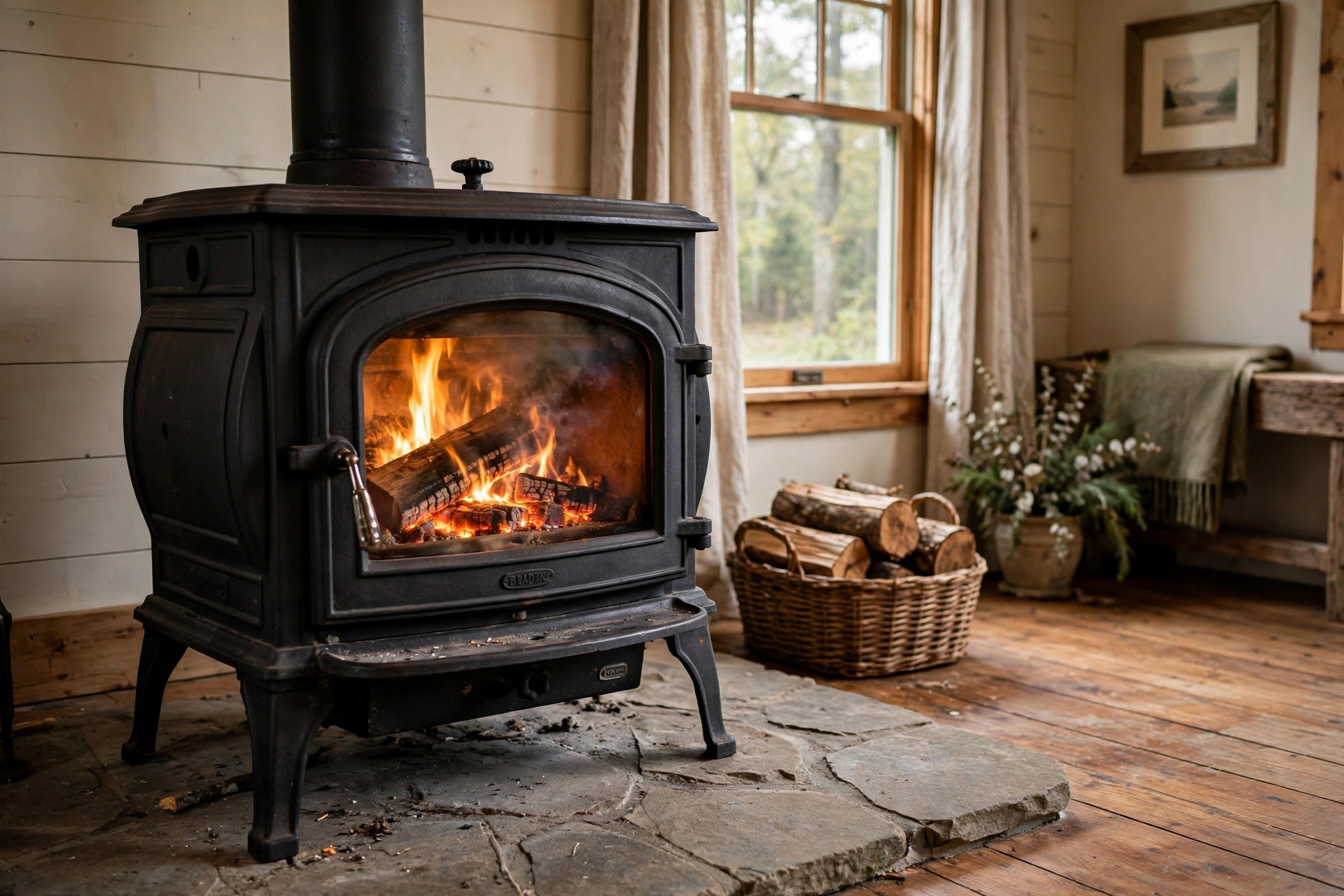

A house of two thousand square feet is not small. It takes real heat to keep every room warm when the wind turns cold. Many homeowners ask the same question each fall. They want the best wood stove for 2000 sq ft reviews can point to, and they want facts they can trust.
This guide answers that question. It explains how to size a stove, what the reviews really measure, which types suit a large home, what the costs look like, and how to stay safe. It also gives straight answers to the questions buyers ask most often. No hype. No jargon. Just plain guidance.
Why a Wood Stove Suits a 2000 Square Foot Home
Wood heat has a long history in America. For many families it is still the main source of warmth. A 2,000 square foot home often sits in a rural area or a suburb where natural gas lines do not reach. In such places a wood stove can be the heart of the heating plan.
A good stove heats the whole main floor. Warm air rises. It moves up stairwells and through open doorways. With fair insulation, one well placed stove can serve most of a 2,000 square foot house. Many owners use it as the primary heat source. Others use it as a backup when power fails. Both uses are common and both are sound.
Wood is also a fuel you can see and touch. Prices for cordwood are known in advance. Many owners cut their own wood or buy from a local supplier. That makes yearly heating costs easier to plan than oil or electric bills, which swing with the market. Federal energy guidance from energy.gov notes that wood can be an economical heat source where it is plentiful and dry.
How to Choose: What the Reviews Measure: Best Wood Stove for 2000 Sq Ft Reviews
Reviews of the best wood stove for 2000 sq ft use all measure the same few things. Learn those measures and you can read any review with a clear eye.
Heating Capacity and BTU Rating
The key number is the heating capacity. It tells you how many square feet the stove can warm. For a 2,000 square foot home, look for stoves rated from 1,800 to 2,400 square feet. Buyers who undersize the stove end up cold. Buyers who oversize it run the stove too cool, which builds up creosote.
BTU ratings go with the capacity rating. A home of this size in a cold climate often needs 60,000 to 90,000 BTUs at peak. In a mild climate the need is lower. Good efficiency ratings from ENERGY STAR help buyers compare how much of the fuel turns into usable heat instead of smoke.
Firebox Size and Burn Time
The firebox is the chamber where the wood burns. A larger firebox holds longer logs and more wood. That means longer burn times between loads. For a 2,000 square foot home, a firebox of at least three cubic feet is wise. The best units give eight to twelve hours of burn time on one load.
Long burn time matters at night. Nobody wants to rise at 3 a.m. to feed the stove. Reviews that praise overnight burns are worth their weight. Look for that phrase when you read them.
Efficiency and EPA Certification
Since 2020 the Environmental Protection Agency has required strict limits on wood stove emissions. A stove that is EPA certified burns cleaner and hotter than the old models. It puts more heat into the room and less smoke into the air.
Our related guide on EPA certified wood stove reviews explains the current rules in detail. The short version is simple. Buy a stove with the EPA hangtag. Efficiency ratings of 75 percent or higher are common now. They save wood and keep neighbors happy.
Types of Wood Stoves for Larger Homes
Not all stoves work the same way. Three main designs serve homes of this size.
Catalytic Wood Stoves
Catalytic stoves use a coated ceramic device to burn the smoke a second time. They run at lower temperatures. They give very long, even burn times. A catalytic stove can hold a steady low fire for ten hours or more. That is ideal for keeping a large house at a stable temperature all day.
The trade is maintenance. The catalyst must be replaced every five to seven years. Some owners also find the controls more fussy. But for steady whole-house heat, catalytic models earn their praise in review after review.
Non-Catalytic Wood Stoves
Non-catalytic stoves use firebox design and air tubes instead of a catalyst. They burn hotter and faster. They are simpler to run. There is no catalyst to replace. Most new stoves on the market today use this design.
For a 2,000 square foot home, a large non-catalytic stove works well if you do not mind loading wood more often. The fire is lively and easy to watch through the glass door. Many buyers prefer this simple, honest design.
Wood Stove Inserts and Pellet Stoves
If your home already has a masonry fireplace, an insert may be the answer. An insert fits into the fireplace opening and turns an open hearth into a closed, efficient heater. Some inserts heat 2,000 square feet with ease.
Pellet stoves are a different branch of the family. They burn compressed wood pellets from a hopper. They light themselves and feed themselves. They need electricity to run. A comparison of wood stove vs pellet stove costs helps buyers weigh the two fuels. For whole-house heat with cordwood, the classic wood stove still leads.
Cost and Price: What to Expect
Prices for stoves that heat 2,000 square feet run wide. A plain steel model may cost between 1,000 and 1,800 dollars. A large cast iron model with enamel finish may cost between 2,500 and 4,500 dollars. Premium soapstone models can pass 5,000 dollars.
The stove is only part of the bill. Installation adds more. A full chimney system, hearth pad, and labor often cost 2,000 to 4,000 dollars. Our guide to wood stove installation costs near you breaks down those figures by region. All told, most buyers spend between 4,000 and 8,000 dollars for a complete job.
Yearly costs are modest. A 2,000 square foot home may burn three to five cords of wood per winter. At typical prices of 200 to 300 dollars per cord, the fuel bill runs 600 to 1,500 dollars. Dry, seasoned wood is the cheapest fuel. Green wood wastes half its heat boiling off water. Buy early and stack it under cover.
Maintenance costs are small. A chimney sweep each year costs 150 to 300 dollars. Replacement gaskets and firebricks cost little. Against the price of oil or electric heat, the savings add up year after year.
Care and Upkeep
A wood stove asks little but it asks it every year. The chimney is first. Creosote builds up inside the flue with every fire. It is flammable. Have the chimney swept once a year by a certified sweep. If you burn softwood or run cool fires, sweep twice.
Check the door gasket each fall. Close the door on a dollar bill. If the bill pulls out with no drag, the gasket is worn. A leaking door lets air in and control out. New gaskets are cheap and easy to fit.
Empty the ash pan often. A thin bed of ash is fine. A deep bed chokes the fire. The Family Handyman offers plain step-by-step guides for seasonal stove maintenance that any owner can follow.
Store wood off the ground and under a roof. Stack it in rows with space for air. Wood needs six to twelve months to season. A moisture meter should read under 20 percent before the wood goes in the stove. Dry wood burns hotter, smokes less, and leaves less creosote.
Safety First
Heat deserves respect. Most stove problems come from poor installation or poor habits, not from the stove itself.
Keep clearances. The manual lists minimum distances from walls and furniture. Do not shrink them. A heat shield can reduce clearances but only the one approved for your model.
Use a proper hearth pad. It must extend past the stove on all sides as the manual states. Embers do escape when the door opens. The pad catches them.
Install smoke alarms and a carbon monoxide alarm on every floor. Test them monthly. A stove that backdrafts can fill a room with odorless gas. The alarm is your guard while you sleep. Guidance from energy.gov and the major makers like Carrier and Trane all stress working alarms as the first line of defense.
Never burn trash, painted wood, or treated lumber. They release poisons and coat the flue with chemicals. Burn only clean, dry, untreated wood. Keep a metal ash can with a tight lid outside the house. Ashes can hold heat for days.
Teach every member of the household the rules. Children and pets need a safe zone around the stove. A simple fire screen or gate does the job. This Old House has covered safe stove placement in many home features, and its advice is worth reading before the first fire.
Frequently Asked Questions
How many BTUs do I need to heat 2000 sq ft with a wood stove? Most 2,000 square foot homes need 60,000 to 90,000 BTUs at peak cold. Poor insulation or a very cold climate pushes the need higher. A tight, well insulated home may need less. Size the stove for the worst week of winter, not the average day.
Can one wood stove really heat a whole 2000 sq ft house? Yes, in most floor plans. Place the stove centrally on the main floor. Leave interior doors open. A ceiling fan on low speed pushes warm air down and spreads it. Very long ranch houses or homes with closed-off wings may need a second small source of heat.
Is a catalytic or non-catalytic stove better for 2000 sq ft? Catalytic stoves give longer, steadier burns and suit owners who want to load wood twice a day. Non-catalytic stoves are simpler and need less upkeep. Both heat 2,000 square feet well when sized right. Read reviews of burn time for the models on your short list.
What does an EPA certified stove mean? It means the stove meets federal limits on smoke and particles. Certified stoves burn cleaner and use less wood for the same heat. All new stoves sold in the United States must carry this certification. Older used stoves may not, and many insurance companies now require certified units.
How often should I have my chimney cleaned? Once a year at minimum, before the heating season. Burn only dry wood and run the stove hot enough to keep the flue clean. If you see thick, shiny creosote when you look up the flue, call a sweep at once. Makers such as Lennox, Rheem, and Goodman all publish the same yearly-service advice for their heating equipment.
Final Word
The best wood stove for 2000 sq ft reviews agree on is not one magic model. It is the right size, EPA certified, and installed with care. Match the heating capacity to your home. Choose dry wood. Keep the chimney clean. Do those things and a wood stove will warm your house for decades.
Take your time with the decision. Read several reviews. Measure your rooms. Talk to a local installer. A stove is a long purchase, and a careful buyer is a warm buyer.
References
Carrier. (n.d.). Heating and cooling systems. https://www.carrier.com ENERGY STAR. (n.d.). Energy efficient products. https://www.energystar.gov Family Handyman. (n.d.). DIY home repair and maintenance. https://www.familyhandyman.com Goodman. (n.d.). Heating and cooling equipment. https://www.goodmanmfg.com Lennox. (n.d.). Heating and cooling systems. https://www.lennox.com Rheem. (n.d.). Heating, cooling, and water heating. https://www.rheem.com This Old House. (n.d.). Home renovation guidance. https://www.thisoldhouse.com Trane. (n.d.). Heating and air conditioning. https://www.trane.com U.S. Department of Energy. (n.d.). Energy efficiency and renewable energy. https://www.energy.gov
Was this guide helpful?

About Lisa Anderson
The My Garden US editorial team writes practical, in-depth home and garden guides for American homeowners — tested advice, no fluff.
You May Also Like
Water Vapor Fireplace Pros, Cons and Reviews: An Honest USA Guide
March 12, 2026 0 views
Geothermal Heat Pump Cost Per Ton USA: A Plain Guide for Homeowners
May 6, 2026 0 views
Best Tower Fan for Bedroom Reviews USA: A Practical Buying Guide
June 18, 2026 0 views