
Why It Pays to Learn Space Heater Safety Tips for USA Homes
Winter cold reaches every corner of the nation. From the upper plains to the coastal towns of New England, families pull out portable heaters when the main furnace cannot reach a chilly room. A space heater gives quick warmth. It also carries real risk. Each winter, fire departments across the country answer calls to homes where a portable heater played a part in the fire. Most of these fires did not have to happen. They started with simple mistakes. A heater placed too close to a curtain. A cord tucked under a rug. A unit left running all night with no one awake to watch it.
That is why space heater safety tips for USA homes matter in every household. The rules are not hard. They take only a few minutes to learn. They protect your family, your pets, and your house. This guide walks through each rule in plain language. You will learn how to choose a safer unit, where to place it, how to plug it in, and how to keep it in good shape year after year.
Why Space Heater Safety Matters More Than Ever: Space Heater Safety Tips for Usa Homes
American homes change with the times. Many people now work from home in one cold room. Others rent older houses with drafty windows. Electric rates climb, and a small heater feels cheaper than warming the whole house. All of this means more portable heaters in daily use. More use means more chances for trouble.
A space heater is a high-power device. It draws a large amount of current and turns it into intense heat. That is its job. The danger comes when the heat meets something that should not be hot. Bedding, paper, drapes, and upholstered chairs can catch fire if they sit near a hot surface for too long. The heating element can also ignite dust that has built up inside the unit over the summer.
Children and pets add another layer of worry. A curious toddler can knock a light heater over. A dog can push a blanket against it. Older units have no guard against these events. Newer ones do. That is one reason the model you own matters almost as much as how you use it.
Take these risks seriously, but do not fear the heater itself. Used with care, a modern portable heater is a safe and handy tool. The pages below show you how.
How to Choose a Safer Space Heater
Start with the label. Look for a mark from a recognized testing lab, such as UL, ETL, or CSA. These marks mean the unit passed safety tests for heat, wiring, and tip resistance. A heater with no such mark may be cheap, but it has not earned your trust. Guidance from Carrier and other heating makers also points buyers toward certified models first.
Next, check for built-in safety switches. The best units have two of them. A tip-over switch cuts power if the heater falls on its side. An overheat sensor shuts the unit down if internal parts grow too hot. Both features cost little and save lives. When you shop, ask the seller or read the box to confirm these switches are present.
A thermostat is another mark of a good heater. It lets the unit cycle off when the room reaches your set point. This saves power and keeps the heater from running hot for hours on end. A timer or auto-shutoff feature adds still more protection for nights and busy mornings.
Think about your room size, too. A small unit in a large room will run at full power all day and still leave you cold. If you need steady heat for a big space, read up on the best space heater for large room usa before you buy. The right size works less hard and stays safer.
Finally, buy from a known source and keep the receipt. If the maker later recalls the model, you will need proof of purchase. The U.S. Department of Energy offers general heating guidance that can help you compare choices before you spend.
Types of Space Heaters and Their Risks
Not all portable heaters work the same way. Each type has its own strengths and its own hazards. A comparison of the most energy efficient space heater 2026 usa models shows how far the designs have come, but the basics still hold.
Electric Fan and Ceramic Heaters
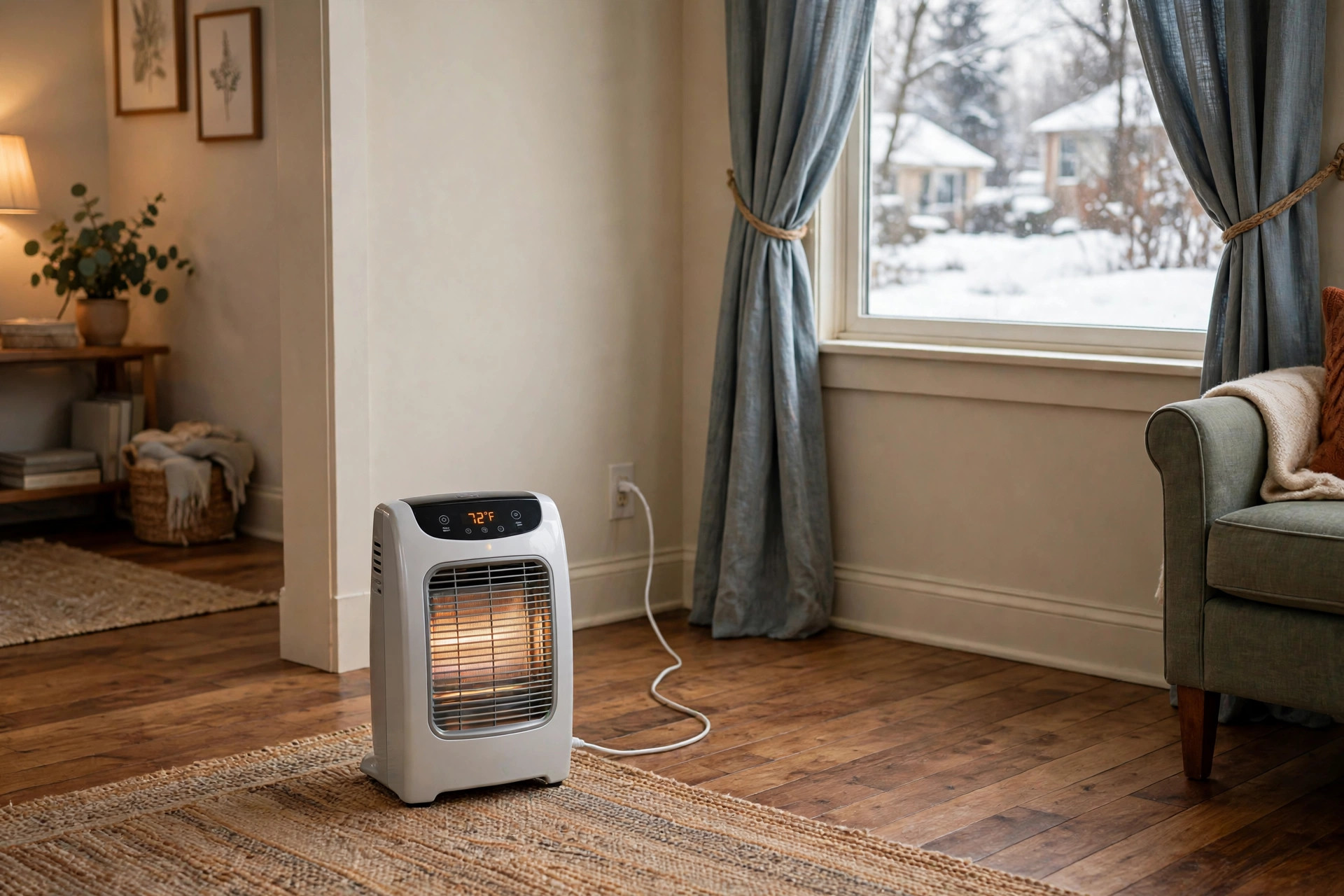
These are the most common models in American homes. A fan blows air across a hot ceramic plate or wire coil. They warm a room fast. The outer case stays cooler than older coil designs, but the air outlet can still burn skin. Keep them clear of fabric and never cover the outlet.
Oil-Filled Radiators
An oil-filled radiator looks like an old steam radiator on wheels. Electric current heats oil sealed inside the metal fins. There is no exposed element and no fan. The surface grows warm, not scorching. Many families with small children prefer this type. To weigh the trade-offs, see this look at oil filled radiator vs ceramic heater usa. The main caution is weight. These units are heavy, and they can tip if pulled by the cord.
Infrared and Radiant Heaters
Infrared models heat objects and people directly, not the air. They feel warm at once, which makes them popular for workshops and patios. The glowing element runs very hot. Keep all flammable material well away, and never leave one running in a room with loose paper or sawdust.
Fuel-Burning Heaters
Kerosene and propane heaters have a place in cabins and work sites, but they do not belong in most homes. They give off carbon monoxide, a gas you cannot see or smell. If you must use one, the room needs fresh air flow and a working carbon monoxide alarm. Electric models are the safer choice for daily home use.
Placement Rules: The Three-Foot Law
Where you put the heater matters more than any feature. Fire safety experts teach a simple rule. Keep at least three feet of clear space on all sides of the unit. That means three feet from beds, chairs, curtains, papers, and clothing. Measure it once and you will remember it.
Set the heater on a flat, hard floor. A level surface keeps the unit steady and lets the tip-over switch work as designed. Do not place it on a table, a shelf, or a thick rug. Rugs can block air vents on the bottom of the unit and trap heat where it does not belong.
Keep heaters out of walkways and doorways. A cord stretched across a path invites trips. A kicked heater can slide into a wall or a drape. Put the unit where people will not bump it, and route the cord along the wall.
Never place a portable heater in a bathroom unless the maker states it is rated for damp locations. Water and electricity are a deadly mix. Most standard models are not built for wet rooms. The same rule holds for laundry rooms with standing dampness.
At night, placement matters most. If you run a heater in a bedroom, keep it far from the bed and never drape clothing over it to dry. Many experts advise turning the unit off when you sleep. If you need night warmth, a model with a timer that shuts off after an hour or two is the wiser pick. Advice columns at This Old House often remind readers that most heater fires start when no one is awake to notice them.
Electrical Safety: The Cord Is the Weak Link
A space heater pulls as much power as a dozen light bulbs. That heavy load makes the plug, the cord, and the outlet the most likely failure points. Treat them with respect.
Plug the heater straight into a wall outlet. Do not use an extension cord. Do not use a power strip or a multi-outlet adapter. These add-ons are not rated for the steady high current a heater draws. They can overheat inside their plastic shells long before you smell trouble. If the only outlet is too far away, move the heater or have an electrician add an outlet. The cost is small next to the risk.
Check that the outlet feels firm. A loose outlet lets the plug wobble, and a wobbling plug arcs. Arcing builds heat in the wall box. If the outlet face feels warm while the heater runs, stop using it and call an electrician. A warm outlet is a warning sign.
Use one heater per circuit when you can. Two heaters on the same circuit can trip the breaker. A tripped breaker is doing its job, but repeated trips wear the breaker out. Spread heaters across different rooms and different circuits.
Inspect the cord before each heating season. Look for cracks, fraying, or stiff spots. Feel for lumps under the jacket. If the cord is damaged, replace the heater. Do not tape a damaged cord and keep using it. Also look at the plug blades. Bent or blackened blades mean poor contact and high heat. Family Handyman offers step-by-step help for home electrical checks, and makers like Trane remind owners to have aging home wiring checked by a pro.
Unplug the heater when it is not in use. This simple habit removes the last chance of trouble. It also saves a small amount of standby power.
Care and Upkeep Through the Year
A heater that sits in a closet all summer gathers dust. Dust on a heating element can smoke or flame when the unit starts in fall. Before the first cold snap, take the heater outside or to the garage. Blow out the dust with a soft brush or a can of compressed air. Wipe the case with a damp cloth. Let it dry fully before you plug it in.
Store the heater with care. Wrap the cord loosely around the unit or use the built-in cord holder. Do not crush the cord under boxes. Keep the unit upright in a dry spot. A damp basement can rust internal parts over the months.
Read the manual once. It sounds dull, but the manual lists the exact clearances and limits for your model. Some units must not run on high for more than a set time. Some must not sit within a certain distance of a wall. The maker knows the design best. Brands such as Lennox, Rheem, and Goodman all publish owner guides that stress regular inspection of heating equipment, portable or fixed.
Watch for warning signs during use. A heater that smells hot, makes new rattling sounds, or needs frequent restarts is telling you something is wrong. Stop using it. A new heater costs far less than a fire claim.
Cost and Price: What Safe Heating Costs
Safety does not have to be costly. A good certified heater with tip-over and overheat protection often sells for less than a family dinner out. The running cost is the larger question. A standard 1,500-watt heater at full power uses 1.5 kilowatt-hours per hour. Your electric rate sets the final bill.
You can hold costs down without cutting safety corners. Use the thermostat instead of the high setting. Heat only the room you are in and close the door. Seal drafty windows with simple weatherstripping. A model with an ENERGY STAR mark may use power more wisely, though few portable heaters carry the label. Compare the yearly cost of a heater against a service call for your main furnace. Sometimes the real fix is a tune-up of the central system, not another portable unit.
Frequently Asked Questions
Can I leave a space heater on overnight?
It is not wise. Most heater fires happen when people sleep and cannot react to smoke or heat. If your room needs night warmth, choose a model with a timer and set it to shut off after you fall asleep. Keep the three-foot clear zone in place even at night.
Is it safe to plug a space heater into an extension cord?
No. Heaters draw heavy current, and most extension cords and power strips cannot carry it safely. The cord can overheat inside its jacket where you cannot see it. Always plug directly into a wall outlet.
How far should a space heater sit from furniture?
Keep at least three feet of clear space on every side. That includes beds, chairs, drapes, papers, and pet bedding. Measure from the hot air outlet and the sides of the case.
Are oil-filled radiators safer than fan heaters?
They have fewer exposed hot parts, which helps around children and pets. The surface still grows warm enough to scorch fabric over time. The three-foot rule applies to every type.
Do I need a carbon monoxide alarm with an electric heater?
Electric heaters make no carbon monoxide. But if your home has any fuel-burning heat, a gas stove, or an attached garage, you need working alarms anyway. Test them each fall.
When should I replace an old space heater?
Replace it if the cord is cracked, the plug blades are bent or blackened, the case is warped, or the safety switches no longer click when tested. If the unit is more than ten years old and lacks a tip-over switch, a new model is a smart buy.
A Final Word
Space heater safety tips for USA homes come down to a few steady habits. Buy a certified unit with tip-over and overheat protection. Give it three feet of clear space. Plug it straight into the wall. Turn it off when you leave or sleep. Check the cord each fall and dust the unit before first use. These steps take minutes. They let you enjoy the warmth all winter with a clear mind. Stay warm, and stay safe.
References
Carrier. (n.d.). Heating and cooling systems. https://www.carrier.com ENERGY STAR. (n.d.). Energy efficient products. https://www.energystar.gov Family Handyman. (n.d.). DIY home repair and maintenance. https://www.familyhandyman.com Goodman. (n.d.). Heating and cooling equipment. https://www.goodmanmfg.com Lennox. (n.d.). Heating and cooling systems. https://www.lennox.com Rheem. (n.d.). Heating, cooling, and water heating. https://www.rheem.com This Old House. (n.d.). Home renovation guidance. https://www.thisoldhouse.com Trane. (n.d.). Heating and air conditioning. https://www.trane.com U.S. Department of Energy. (n.d.). Energy efficiency and renewable energy. https://www.energy.gov
Was this guide helpful?

About Emily Rodriguez
The My Garden US editorial team writes practical, in-depth home and garden guides for American homeowners — tested advice, no fluff.
You May Also Like
Ceiling Fan Installation Cost Near Me: What You Should Expect to Pay
July 25, 2026 0 views
What Is the AC Tune Up Cost Near Me for Spring 2026?
April 19, 2026 0 views
Heat Pump Water Heater vs Gas Cost USA: The Full Comparison
January 30, 2026 0 views