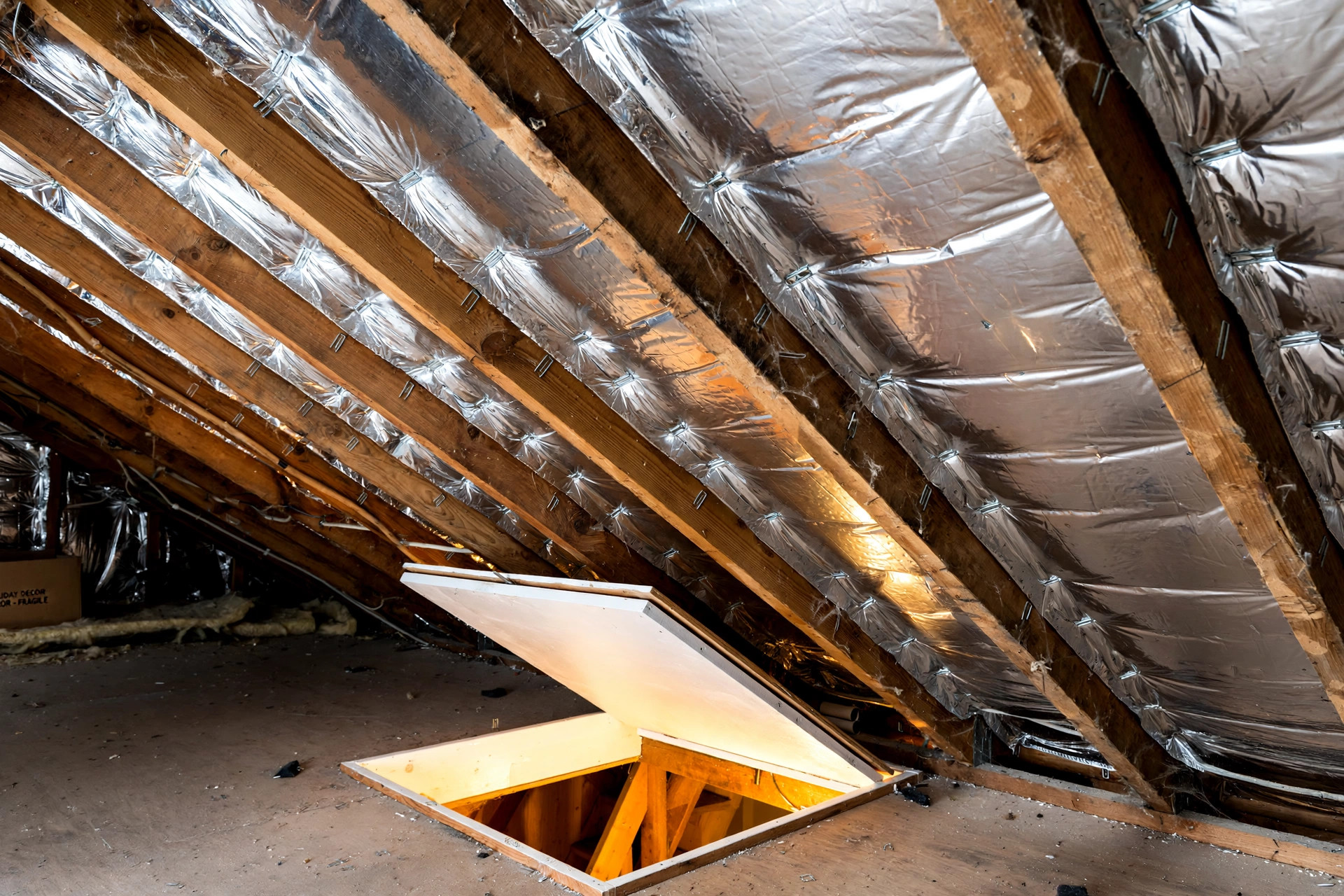

When the summer sun beats on a dark roof, the heat does not stop at the shingles. It moves into the attic and then into the rooms below. Many homeowners search for radiant barrier installation cost near me because they want a fair price for a product that blocks that heat. A radiant barrier is a sheet of aluminum foil or a foil coating that reflects radiant heat away from the home. It is fixed to the underside of the roof or laid over the attic floor. The price of a professional job in the United States usually falls between $1,200 and $3,500 for a typical single family home, though small or large jobs can fall outside that range. This guide explains what a radiant barrier is, what drives the cost, how to pick a local contractor, and how to care for the product once it is in place.
Why a Radiant Barrier Matters in an American Home
An attic can reach 130 to 150 degrees on a hot afternoon. Most of that heat moves downward as radiant energy, much like the heat felt from a campfire. Standard insulation slows conducted heat, but it does little to stop radiant heat. A radiant barrier works on that gap. Its shiny surface reflects up to 97 percent of radiant heat back toward the roof, so less heat reaches the attic floor and the rooms below. The U.S. Department of Energy notes that radiant barriers are most helpful in warm and hot climates, where the main problem is heat from the sun.
Homeowners report that rooms under the roof feel less stuffy and the air conditioner runs less often. The savings are real but modest. A radiant barrier can cut cooling bills by 5 to 10 percent in a hot climate. It is not a magic fix. Homes with old ducts, weak insulation, or large air leaks will gain more from fixing those problems first. Still, as part of a full attic plan, a radiant barrier earns its place. For a clear look at the trade offs, read our piece on the pros and cons of radiant barriers for attics.
How a Radiant Barrier Works: Radiant Barrier Installation Cost near Me
A radiant barrier needs an air space to work. The foil reflects heat across a gap of air, usually the space between the rafters and the foil. If the foil is pressed flat against the roof deck with no air space, its power drops. That is why installers staple the sheets to the underside of the rafters and leave a small gap. Dust also matters. A layer of dust on the foil cuts its power over time, so keeping the attic dry and clean helps the product last. This Old House explains that attic heat moves in three ways: conduction, convection, and radiation, and a foil barrier targets the radiation path that regular insulation misses.
What to Look For When You Hire a Local Installer
A good installer matters more than the brand of foil. Poor stapling, loose sheets, or covered soffit vents can spoil the job. Use the points below to judge any contractor who quotes your job.
Ask About the Foil Type
Ask whether the product is perforated foil. Perforated foil lets moisture pass through, which stops condensation from building up against the wood. In a cold region, trapped moisture can rot the roof deck. Perforated foil costs a little more, but it is the safer choice in most homes. Ask for the emissivity rating in writing. A lower number means a better reflective surface.
Check the Crew’s Experience
Radiant barrier work takes a full day or two in a hot, dark attic. Ask how many installs the crew has done in the past year. Ask for two local references and call them. A crew that also does insulation work will spot air leaks and weak duct work while they are up there, which adds value to the visit.
Get Three Written Quotes
Prices vary more than most homeowners expect. Ask each bidder to list the square footage, the foil type, the staple pattern, and whether old insulation or debris removal is included. A written quote lets you compare like with like. Never accept a price given only by phone with no attic visit. Consumer advice from Family Handyman often reminds readers that the cheapest bid in attic work usually skips a step that matters later.
Types of Radiant Barriers
Shoppers meet three main types. Each has a place, and each costs a different amount.
Foil Sheet Barriers
These are rolls of aluminum foil, often backed with kraft paper or plastic for strength. They are the most common choice and the type most contractors install. Foil sheets are light, flexible, and easy to staple to rafters. They last 15 to 25 years when kept clean and dry.
Spray-On Barrier Coatings
A contractor sprays a thin aluminum coating onto the underside of the roof deck. Spray coatings cover every corner and work well on odd roof shapes. They cost more than foil sheets because the material and the spray rig are costly. Their reflectivity is slightly lower than that of a foil sheet.
Foil Faced Roof Decking
Some new roofs use decking that already carries a foil face. This is an option only when the roof is being replaced. The foil face adds about $300 to $600 to a new roof job, which is cheaper than adding a barrier later. It cannot be added to an existing roof without a full re-roof.
Radiant Barrier Installation Cost: What You Will Pay
The short answer to the question behind radiant barrier installation cost near me is this: most American homeowners pay between $0.75 and $1.50 per square foot of attic space for a professional install. A 1,500 square foot attic therefore costs about $1,200 to $2,250 in materials and labor. A 2,500 square foot attic runs about $1,900 to $3,750. Very small attics may carry a minimum charge of $800 to $1,000, because the crew still spends a full day on the job.
Material costs alone run about $0.10 to $0.30 per square foot for perforated foil. Labor is the larger share. In the South and Southwest, where radiant barriers are common, competition keeps prices near the low end of the range. In the North, where fewer crews offer the service, prices can sit near the high end. These figures reflect 2026 prices reported by contractors across the country. To compare with a related attic project, see our guide on attic fan installation cost near me.
Factors That Raise or Lower the Price
No two attics are the same. The items below explain why one quote comes in at $1,200 and another at $3,000.
Attic Size
Size is the main driver. More square feet means more foil, more staples, and more hours. A simple ranch home with a low roof costs less per foot than a tall colonial with many gables, because the crew moves faster on a plain roof line.
Roof Shape and Access
Steep roofs with many valleys and dormers take longer to cover. A tight attic hatch or a lack of walkway boards slows the crew. If the roof pitch is very low, workers may crawl the whole job, and labor hours rise.
Old Foil or Debris Removal
If the attic holds old torn foil, boxes of stored junk, or dead pests, the crew must clear the space before they start. Most contractors charge $200 to $500 for a full cleanout. An attic already cleared and free of stored items keeps the price down.
Region and Season
Labor rates differ by state. Cities with high labor costs, like those on the West Coast and in the Northeast, price above the national average. Booking in the mild months of spring or fall can save money, because attic crews are less busy than in peak summer.
DIY Versus Professional Installation
A handy homeowner can staple foil sheets to rafters for the cost of materials alone, roughly $150 to $450 for a mid size attic. The work is slow and hard. Summer attics are dangerous places. Heat, poor light, and the risk of stepping through the ceiling are real. Most safety guides urge extreme care, and homeowners with health issues should not attempt it.
A professional crew brings a respirator, bright work lights, walk boards, and two or three people who know how to move in a hot attic. They also know local code rules, such as the need to keep soffit vents open and to leave clearance around recessed lights. Carrier, a major HVAC maker, reminds homeowners that attic changes affect the whole heating and cooling system, so work in the attic should be done with care. For most owners, the labor cost is worth the safety and the warranty.
Care and Upkeep
A radiant barrier needs little care, but it is not maintenance free. Dust is the main enemy. A thick layer of dust on the foil lowers its reflective power. Check the attic once a year. Look for torn sheets, sagging staples, and dust build up. Small tears can be patched with foil tape. A gentle brush or a soft broom removes light dust from foil laid on the attic floor.
Keep the attic dry. Fix any roof leak at once, because water stains on foil cut its power and can lead to mold. Keep stored boxes off foil that lies on the attic floor, since weight presses the foil into the insulation and kills the air space it needs. Before adding any new attic product, check how much attic insulation you need so the barrier and the insulation work as a team rather than fighting each other. Trane notes that attic conditions set the load on the cooling system, so a clean, dry attic helps the air conditioner last longer.
Safety in the Attic
Attic work carries real hazards. Take these steps before you or a contractor enter the space.
First, step only on joists or walk boards, never on drywall between the joists. A foot through the ceiling is a costly and painful mistake. Second, watch for heat. On a summer day the attic can be 40 degrees hotter than the air outside. Drink water, take breaks, and stop if you feel dizzy. Third, leave the vents open. Do not block soffit or ridge vents with foil, because the attic must breathe to shed moisture. Fourth, keep foil away from hot surfaces. Leave the clearance the maker requires around recessed lights, flues, and furnace vents. Lennox and other HVAC makers warn that blocked vents or covered heat sources raise fire risk. Fifth, wear a mask and gloves. Old insulation dust irritates the lungs and skin. If the attic shows signs of mold, hire a pro rather than going up yourself.
Frequently Asked Questions
How long does a radiant barrier install take?
A typical crew finishes a mid size attic in one day. Large or complex attics can take two days. DIY installs often stretch over two or three weekends.
Will a radiant barrier help in a cold climate?
The benefit is smaller in the north, where heating matters more than cooling. A radiant barrier still helps in summer, but the payback period is longer. In warm states like Texas, Arizona, and Florida, the payback can be three to six years.
Does a radiant barrier replace insulation?
No. Insulation slows heat that moves by conduction. A radiant barrier blocks heat that moves by radiation. They do different jobs, and they work best together. The ENERGY STAR program stresses that air sealing and insulation come first in any attic upgrade.
Can a radiant barrier interfere with my cell phone or Wi-Fi?
The foil can weaken wireless signals that pass through the attic. In most homes the effect is small, because routers and phones sit below the barrier. If the router is in the attic, move it below the foil line or keep the barrier off the attic floor beneath it.
How long does a radiant barrier last?
A quality foil barrier lasts 15 to 25 years. Spray coatings last about 10 to 15 years before the reflective layer fades. Keep the attic dry and the foil dust free to reach the long end of that range. Goodman points out that long lived attic products pay back best when the rest of the system is in good shape.
Does adding a radiant barrier void my roof warranty?
It should not, as long as the product allows moisture to escape and the installer follows the roof maker’s rules. Perforated foil is made for this reason. Ask your installer and, if you are unsure, check with the shingle maker before work begins. Rheem advises homeowners to keep warranty papers for every attic change, since proof of proper install settles most disputes.
A Final Word
A radiant barrier is a modest, sensible upgrade for a hot attic. It costs less than a new air conditioner, it lasts for decades, and it trims cooling bills each summer. The key is a fair local price and a careful install. Get three quotes, ask about perforated foil, and keep the attic dry and clean. Do that, and the foil up in the dark will pay you back in cooler rooms and lower bills for years to come.
References
Carrier. (n.d.). Heating and cooling systems. https://www.carrier.com ENERGY STAR. (n.d.). Energy efficient products. https://www.energystar.gov Family Handyman. (n.d.). DIY home repair and maintenance. https://www.familyhandyman.com Goodman. (n.d.). Heating and cooling equipment. https://www.goodmanmfg.com Lennox. (n.d.). Heating and cooling systems. https://www.lennox.com Rheem. (n.d.). Heating, cooling, and water heating. https://www.rheem.com This Old House. (n.d.). Home renovation guidance. https://www.thisoldhouse.com Trane. (n.d.). Heating and air conditioning. https://www.trane.com U.S. Department of Energy. (n.d.). Energy efficiency and renewable energy. https://www.energy.gov
Was this guide helpful?

About David Wilson
The My Garden US editorial team writes practical, in-depth home and garden guides for American homeowners — tested advice, no fluff.
You May Also Like

QuietCool Whole House Fan Reviews USA: Honest Look at Top Models
July 9, 2026 0 views
Best Central Air Conditioner Brands 2026 USA
August 9, 2026 0 views
Daikin vs Mitsubishi Mini Split Reviews USA: Which Ductless System Should You Buy
August 22, 2026 0 views