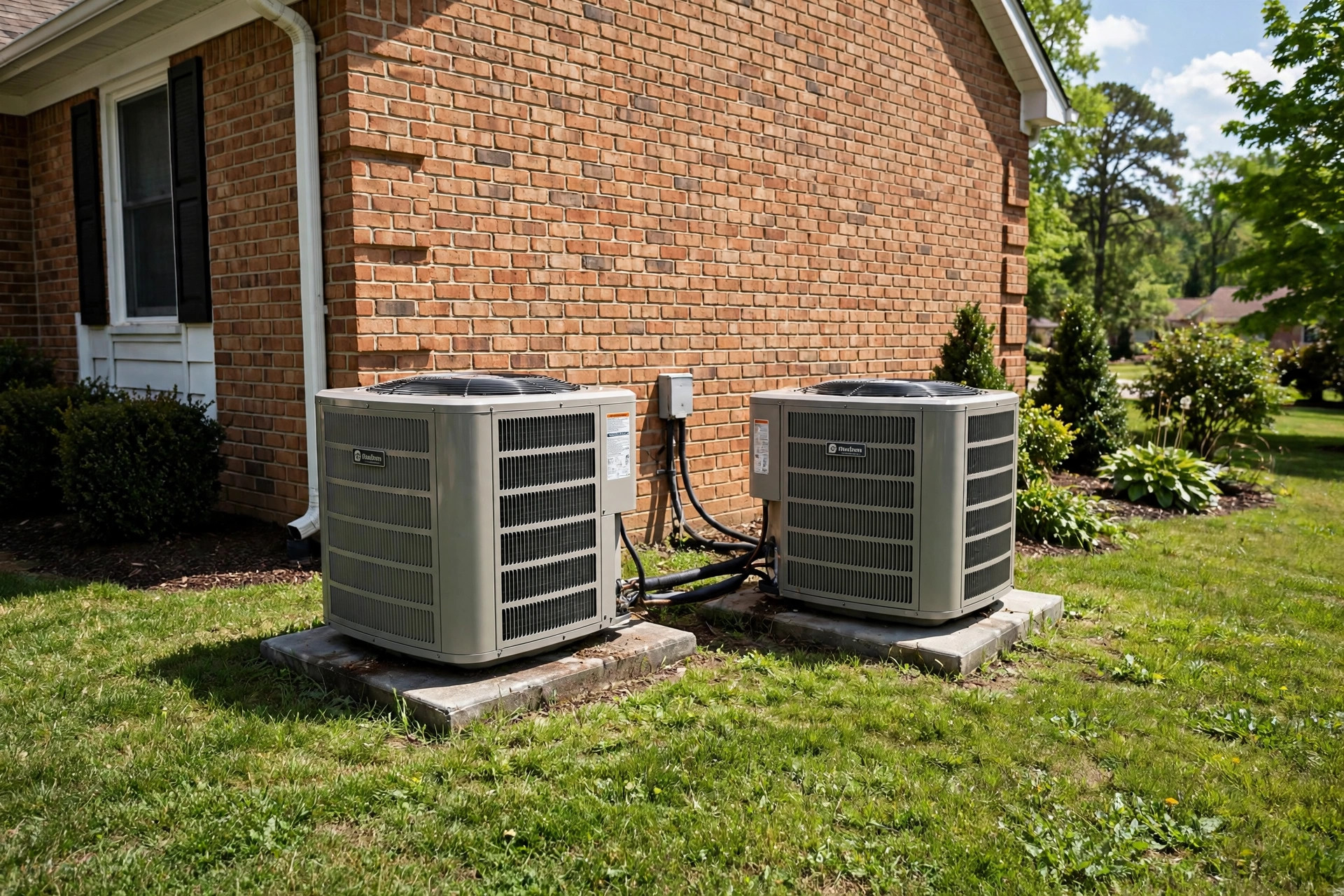

Buying a new air conditioner is a big decision for any family. A central AC system can cost as much as a used car, and it will sit outside your home for 15 years or more. So when shoppers read lennox vs rheem ac reviews for homeowners, they want clear facts, not sales talk. This guide compares the two brands on price, efficiency, warranty, and owner satisfaction. The goal is simple: help you pick the right unit for your home and your budget.
Why the Brand Choice Matters
An air conditioner is not like a toaster. You cannot return it to the store if you dislike it. A central AC system has three main parts: the condenser outside, the coil and furnace or air handler inside, and the ductwork that carries cool air to each room. Once a crew installs the system, you live with it for a long time. The brand matters because it sets the ceiling for quality. A good brand builds units with strong parts, clear warranty terms, and wide dealer networks. A weak brand may save you money up front but cost you in repairs.
The brand also matters because efficiency ratings are not the whole story. Two units with the same SEER rating can feel very different in a real home. Build quality, compressor design, and coil coating all shape how long the unit lasts and how quiet it runs. Reviews from real owners fill in the gaps that brochures leave out. When you read lennox vs rheem ac reviews for homeowners, you learn how each brand holds up after five or ten summers, not just on the day it was installed.
How to Read AC Reviews Like a Pro: Lennox vs Rheem Ac Reviews for Homeowners
Before we compare the two brands, it helps to know what to look for in a review. Not all reviews carry the same weight. A one-line review that says “works great” tells you little. Look for reviews that name the model number, the size of the home, the climate, and the age of the unit. These details let you judge whether the owner’s story fits your case.
Watch for patterns across many reviews rather than single stories. One homeowner may have a bad install and blame the brand. But if fifty owners mention the same failed part, that is a real signal. The most trusted review sites include Consumer Reports, which tests products in labs and surveys owners, and Bob Vila, which publishes long-form buying guides for home systems. Use these sources as a check against dealer claims.
Also note the role of the installer. Many pros say the crew that installs the system matters more than the badge on the box. A perfect unit installed badly will fail early. A mid-range unit installed with care can run for 20 years. Ask every contractor about their training, their license, and their past work before you sign.
Lennox Air Conditioners: Strengths and Weaknesses
Lennox has built air conditioners since the early 1900s, and it sells itself as a premium brand. Its top models reach very high SEER ratings, some above 24, which is among the best in the industry. High SEER means lower power bills in hot climates. Lennox also wins praise for quiet operation. Many of its condensers run at sound levels near 62 decibels, about as loud as a normal conversation. Homeowners who place units near a bedroom window notice this difference.
Another strength is innovation. Lennox was early with two-stage and variable-speed compressors. These parts let the unit cool at low speed most of the day, which cuts wear and keeps humidity down. Reviewers often say Lennox units feel more even from room to room than single-stage systems.
The main weakness is price. Lennox units usually cost more than similar Rheem units, both for the equipment and for parts. Some owners also report that replacement parts are harder to find because Lennox sells only through its own dealers. If your dealer closes, service can get tricky. Warranty terms are fair but not the best in the field. Many models carry a 10-year limited parts warranty when you register the unit, which matches the industry norm.
Rheem Air Conditioners: Strengths and Weaknesses
Rheem is one of the largest HVAC makers in America, and it prices its units for the mainstream market. For many homeowners, the biggest draw is value. A Rheem unit with a solid SEER rating often costs hundreds of dollars less than a comparable Lennox. Reviewers who compare bids tend to call Rheem “the smart buy” when budgets are tight.
Rheem also earns good marks for parts availability. Because the company sells through many distributors, contractors can find parts fast. Its warranty terms are strong. Many Rheem models include a 10-year conditional parts warranty, and some premium lines add labor coverage or unit replacement if the compressor fails early. Owner reviews often praise Rheem for steady, trouble-free cooling in the first five to eight years.
The weak points are efficiency and noise at the top end. Rheem’s most efficient models top out below Lennox’s best, so in very hot regions the power savings gap can add up. Some budget Rheem models also run louder than Lennox equivalents. A few reviewers note that cheaper Rheem lines use thinner cabinet metal, which can rattle in windy yards. None of these are deal breakers, but they are worth knowing.
Head to Head: Lennox vs Rheem
When lennox vs rheem ac reviews for homeowners are placed side by side, a clear picture forms. Lennox wins on peak efficiency and quiet sound. Rheem wins on price and parts access. Reliability scores from owner surveys put both brands near the middle of the pack, which is normal for mass-market HVAC. Neither brand dominates.
Compressor technology is a key split. Lennox leans hard into variable-speed designs that run long and slow. Rheem offers two-stage models too, but its bread and butter is the single-stage and two-stage value line. In humid climates like Florida or the Gulf Coast, the Lennox edge in dehumidification can matter. In dry heat like Arizona, the gap shrinks.
Dealer networks differ as well. Lennox uses a closed dealer system, so you must buy through an approved dealer. Rheem works with many independent contractors, which gives you more bids to compare. More bids usually mean a better price. But it also means you must vet each contractor yourself.
For readers weighing other brand rivalries, our mrcool vs pioneer mini split comparison and daikin vs mitsubishi mini split reviews cover ductless systems in the same plain style.
Which Home Suits Which Brand
Choose Lennox if you live in a hot, humid region, if the condenser sits near a bedroom or patio, and if your budget allows a premium price. Choose Rheem if you want strong value, if you plan to stay in the home for five to ten years rather than twenty, and if you like having many local contractors to pick from. Either brand can serve a family well when the unit is sized right and installed with care.
Cost and Price
Price is where most homeowners start, and the gap between these brands is real. A typical 3-ton Lennox central AC, installed, often lands between $6,500 and $11,000 depending on the model and region. A comparable Rheem system often lands between $5,000 and $9,000. The spread grows at the top of the line, where a premium Lennox variable-speed system can pass $14,000 installed.
SEER rating drives much of the price. A 14 SEER base unit is the cheapest legal option in many states, while a 20+ SEER model can cost 60 percent more. The ENERGY STAR program lists certified models and their ratings, which is a good way to check claims. The U.S. Department of Energy also publishes plain guides on right-sizing equipment, which matters more than many buyers think. An oversized unit costs more and cools badly.
Do not forget the hidden costs. A new line set, a new pad, permits, and electrical work can add $800 to $2,000 to any bid. Ask each contractor for an itemized quote so you can compare like with like. If you are still deciding between system types, our mini split vs central ac cost comparison breaks down the ductless option, which can cost less in homes without ducts.
Care and Upkeep
Both Lennox and Rheem units need the same basic care. Change or clean the air filter every one to three months during cooling season. A clogged filter chokes airflow, freezes the coil, and can burn out the blower motor. Keep the outdoor condenser clear of leaves, grass clippings, and mulch. Give it two feet of open space on all sides so air can flow.
Once a year, book a tune-up with a licensed tech. The visit usually covers coil cleaning, refrigerant checks, capacitor testing, and drain line flushing. The Family Handyman site has clear step-by-step guides for the simple tasks you can do yourself, like straightening bent fins and rinsing the coil with a hose. This Old House also runs useful explainers on seasonal HVAC checklists.
For owners who want deeper brand detail, the Lennox and Rheem sites both post owner manuals and maintenance schedules by model number. Download your manual and follow its service intervals. Registering the unit within 60 to 90 days of install is vital for both brands, since the full 10-year warranty usually depends on registration.
Safety Notes for Homeowners
Air conditioners are safe machines, but they mix electricity, moving fans, and chemicals. Never open the electrical panel of the condenser unless you are trained. Capacitors can hold a charge even with the power off. Keep children and pets away from the unit, and never set a grill, fire pit, or storage box against it.
Refrigerant deserves respect. If you smell something odd or see ice on the lines, call a tech. Federal rules require certified pros to handle refrigerant, and venting it harms the air we all breathe. Old units may still use R-22, which is phased out and costly to refill. If your tech says the coil leaks on a 15-year-old unit, replacement is usually wiser than a costly recharge.
Electrical safety matters too. A dedicated circuit and a proper disconnect box near the condenser are code in most areas. If your home still has a fuse box or an undersized panel, have an electrician check the load before the AC crew arrives.
Frequently Asked Questions
Which lasts longer, Lennox or Rheem? Both brands average 12 to 15 years with normal care, and either can reach 18 to 20 years in mild climates. Maintenance and install quality matter more than the brand badge. Owners who book yearly tune-ups and change filters on time get the longest life from both.
Is Lennox really worth the extra money? It can be, in the right case. In hot, humid regions where the AC runs six months a year, a high-SEER Lennox can pay back its price gap in power savings. In mild regions where cooling runs only three months, the payback is slow, and a Rheem may be the better value. Run the numbers with your local power rate before you decide.
Which brand is quieter? Lennox wins this round. Its premium condensers are among the quietest in the industry, often rated near 62 decibels. Rheem units are not loud, but most models sit a few decibels higher. If the unit sits under a bedroom window, the difference is worth hearing in person at a dealer showroom.
Do both brands offer good warranties? Yes. Both offer 10-year limited parts warranties on most models when registered. Rheem’s premium lines sometimes add stronger terms, such as unit replacement on early compressor failure. Read the fine print for your exact model, since base models may carry shorter terms.
Should I replace my old R-22 unit with Lennox or Rheem? If your R-22 system is over 12 years old and needs a major repair, replacement beats repair in most cases. New units use R-410A or newer refrigerants, cool more efficiently, and qualify for better warranties. Get three bids, and ask each contractor to do a load calculation rather than just matching the old unit’s size.
Can any contractor install either brand? Not quite. Lennox requires its dealers to be factory authorized, while Rheem works with a wider range of independent contractors. Either way, check the license, insurance, and reviews of the crew. Ask for references from jobs done at least two years ago, and check that the crew pulls a permit.
Final Word
The lennox vs rheem ac reviews for homeowners tell a steady story. Lennox is the premium pick: quieter, more efficient at the top end, and costlier. Rheem is the value pick: fairly priced, easy to service, and strong on warranty. There is no wrong answer between the two. The right answer is the unit that fits your home, your climate, and your budget, installed by a crew you trust. Compare three bids, check the SEER rating and the warranty terms, and you will make a choice you can live with for many summers. Shoppers comparing other big names may also want to read owner takes on Carrier, Trane, and Goodman models before they sign.
References
Bob Vila. (n.d.). Home improvement advice. https://www.bobvila.com Carrier. (n.d.). Heating and cooling systems. https://www.carrier.com Consumer Reports. (n.d.). Product reviews and ratings. https://www.consumerreports.org ENERGY STAR. (n.d.). Energy efficient products. https://www.energystar.gov Family Handyman. (n.d.). DIY home repair and maintenance. https://www.familyhandyman.com Goodman. (n.d.). Heating and cooling equipment. https://www.goodmanmfg.com Lennox. (n.d.). Heating and cooling systems. https://www.lennox.com Rheem. (n.d.). Heating, cooling, and water heating. https://www.rheem.com This Old House. (n.d.). Home renovation guidance. https://www.thisoldhouse.com Trane. (n.d.). Heating and air conditioning. https://www.trane.com U.S. Department of Energy. (n.d.). Energy efficiency and renewable energy. https://www.energy.gov
Was this guide helpful?

About James Carter
The My Garden US editorial team writes practical, in-depth home and garden guides for American homeowners — tested advice, no fluff.
You May Also Like

Oil Filled Radiator vs Ceramic Heater: A Plain Guide for American Homes
April 29, 2026 0 views
The Best Heat Pump for Northeast Winters USA: A Practical Homeowner’s Guide
June 11, 2026 0 views
Home Energy Audit Cost Near Me 2026: What You Pay and What You Get
March 28, 2026 0 views