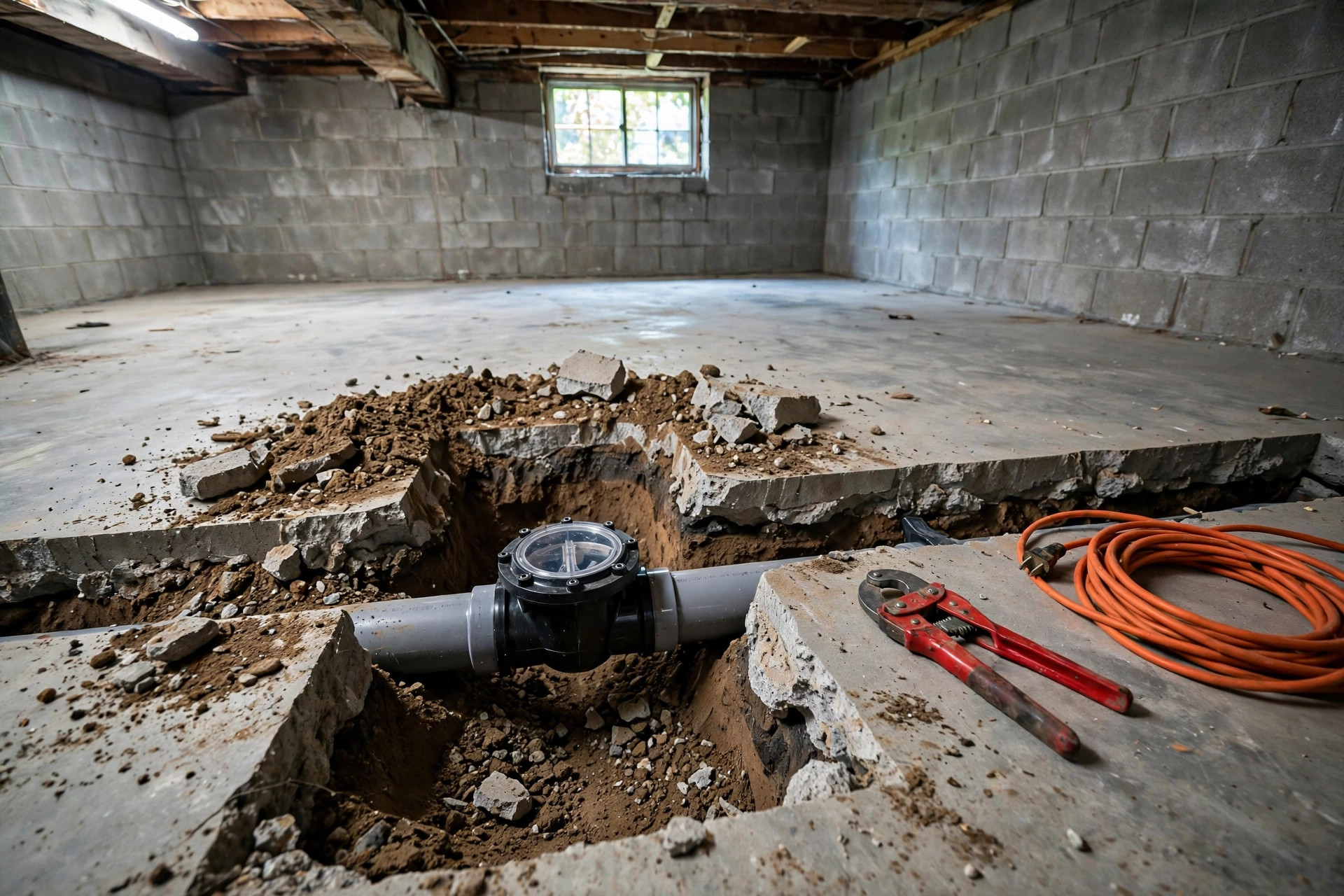

Few home repairs cause more dread than a sewer backup. Waste water rises through a basement drain, and in minutes a finished room can be ruined. A backwater valve stops this from happening. The backwater valve installation cost for basement drains usually falls between $1,500 and $5,000, with most homeowners paying near $2,500 to $3,000. The final price depends on where the valve goes, how the floor is opened, and what permits your city requires.
Why a Backwater Valve Matters
A backwater valve is a one-way gate on your home’s main sewer line. Waste flows out freely. When city sewers surge during heavy rain, the gate swings shut and blocks the surge from coming back into your basement. Without one, a backed-up municipal line can push raw sewage up through floor drains, toilets, and shower stalls.
Insurance companies pay for thousands of basement backups every year. Many policies limit coverage for this damage or drop it from the policy unless you add a rider. Some insurers lower premiums when a licensed plumber installs a backwater valve. The device pays for itself the first time a storm overloads the street sewer.
Homes at the bottom of a hill or near a combined storm sewer face the highest risk. Older homes in low-lying streets are common victims. If your neighbors have suffered backups, your house likely shares the same risk.
How a Backwater Valve Works: Backwater Valve Installation Cost for Basement
The valve sits in the main drain line, usually under the basement floor. It has a flapper or gate inside a sealed chamber. Normal flow pushes the flapper open and passes through. Reverse flow pushes it closed against a seat, and a tight seal forms.
Most units have a clear or openable cover so a plumber can check the flapper each year. Some models use a normally open design that closes only during backflow. Others use a gate that drops shut under pressure. Both designs need the line to slope correctly so waste does not pool against the valve. A proper install leaves the flapper just above the normal flow line so it never drags in waste. When sized right, the device sits silent for years and acts only during the rare moments a surge arrives.
Sizing and Placement
The valve must sit on the main drain before any fixture connections branch off, or those fixtures stay unprotected. A plumber checks the pipe layout first and places the valve where it guards every basement drain. Putting it too far downstream can leave a laundry sink outside the protected zone.
Types of Backwater Valves
Inline Backwater Valves
The inline type fits directly into a straight run of sewer pipe. It is the most common choice for homes. The body is compact, the cover lifts off for cleaning, and the price is moderate. Most basement retrofits use this type.
Double Flapper Valves
These have two flappers in one body for extra protection. If debris holds one flapper open, the second still seals. They cost more and need a slightly longer pipe run. Homes with large trees near the sewer line often choose them.
Normally Closed Gate Valves
A normally closed valve stays shut until waste pushes it open. It seals faster than a flapper type during a sudden surge. It needs more maintenance because the gate track can collect grime. These are less common in single-family homes.
What to Look for When Choosing
Material comes first. Cast iron or heavy-duty PVC bodies last decades under a slab. Cheap plastic models can warp and leak. Check the diameter of your main drain, usually 3 or 4 inches, and match the valve to it. Product catalogs from established plumbing brands like Moen, Kohler, and Delta Faucet help you see what drainage fittings and cleanout parts look like before the plumber arrives.
Look for a valve with an easy-open cover. Annual inspection is the key to long life, and a cover that needs special tools will tempt you to skip it. Choose a model with a visible flapper so a quick glance tells you it moves freely.
Ask your plumber about local code. Some cities approve only certain models. A valve that fails inspection will have to be replaced, and that doubles the cost of the job.
The Installation Process
A typical basement installation follows a clear order. First the plumber locates the main sewer line, often with a camera. Then the crew marks the spot and cuts the concrete floor. They dig down to the pipe, cut a section out, and set the valve in place with proper slope. Finally they backfill, pour new concrete, and test the drain.
The job usually takes one day for a standard inline valve. Concrete cutting adds time and mess. In many homes the work can be done without moving the whole basement layout. Most plumbers cut the floor in the morning, set the valve by midday, and pour fresh concrete the same afternoon. A sump pump installed nearby can also help keep the floor dry during the work, which is why many owners look up best sump pump for basement reviews usa before scheduling the valve job.
Before the trench is opened, a camera run helps the plumber see roots, breaks, or bad slope. Knowing the sewer camera inspection cost near me helps you budget this step.
Cost and Price Breakdown
The backwater valve installation cost for basement floors is made of several parts. Here is how the typical bill breaks down:
| Item | Typical cost | |—|—| | The valve itself | $150 to $600 | | Labor (plumber and helper) | $800 to $2,000 | | Concrete cutting and replacement | $300 to $800 | | Permit fees | $50 to $300 | | Camera inspection of the line | $150 to $400 | | Total | $1,500 to $5,000 |
Retrofit jobs in finished basements run higher because the crew must cut through flooring and patch it later. New construction is cheapest because the valve goes in before the slab is poured. Jobs that need deep trenches or rock removal can pass $5,000.
If the camera finds a broken line, the job grows. A cracked or collapsed pipe must be fixed first. Reviewing the sewer line replacement cost per foot usa gives a sense of what that repair could add.
Regional prices vary. Large cities with strict permit rules often cost more than small towns. Get at least two written quotes. Both should list the valve model, the permit fee, and the concrete repair separately so you can compare them line by line.
What Drives the Price Up or Down
Access is the biggest factor. A valve installed in an unfinished utility area costs less than one buried under finished tile or carpet. The farther the main line sits from an easy entry point, the more digging and cutting the job needs.
Depth matters too. Most basement lines sit 3 to 6 feet down. Deeper lines need more excavation and more soil hauled away. Rocky soil adds hours of work.
The valve type affects the parts cost. A simple inline PVC valve costs little. A double-flapper cast iron unit costs several times more. Permits add a fixed fee in most cities, plus the cost of the inspector’s visit.
Old pipes can surprise you. Clay or Orangeburg lines may crumble when the crew cuts them, and then the repair grows into a section replacement. This is why the camera step is worth its fee. Homeowners planning the project can find step-by-step context in the This Old House project library and the Family Handyman repair guides.
Care and Upkeep
A backwater valve needs little care, but it needs regular care. Inspect the flapper once a year. Lift the cover, look for debris, and make sure the flapper swings free. Paper, grease, and roots can hold it open.
Flush the line with water after heavy grease use. Do not pour paint, solvents, or large amounts of food waste down drains. These leave deposits that keep the flapper from sealing.
Have a plumber run a camera through the line every few years. Roots seek out joints near the valve. Catching them early prevents a failure during the storm when you need the valve most.
After any backup event in the street, check the valve. The surge may have left debris against the flapper. A quick cleaning restores full protection.
Safety
Sewer work carries real risks. Trench walls can cave in, and sewer gas can build up in a dug pit. A licensed plumber knows how to shore a trench and vent it safely. Do not enter a deep trench yourself.
Local code governs the whole job. Most cities require a permit, a licensed plumber, and an inspection before the floor is closed. Skipping the permit can cause problems when you sell the house. An unpermitted valve may also void insurance coverage for a backup claim.
Backwater valves are not a substitute for good drainage outside the house. Keep gutters clean, grade soil away from the foundation, and disconnect any downspouts that feed the sewer line. These steps reduce the load the valve must face. A broader view of whole-home water protection, including filtration, appears on Aquasana’s water resources page.
The U.S. Environmental Protection Agency publishes guidance on home drainage and water systems that homeowners can review. For flood-related safety information, the Home Depot guides and Lowe’s project guides both cover basement waterproofing basics.
FAQ
How much does a backwater valve cost by itself?
The valve alone costs $150 to $600. Simple inline PVC models sit at the low end. Double-flapper cast iron models sit at the high end. The valve is only a small part of the installed price.
Can I install a backwater valve myself?
This is not a good do-it-yourself job. It requires cutting the main sewer line, concrete work, and a permit in most places. A mistake can send sewage into your home or fail inspection. Hire a licensed plumber.
Does a backwater valve need maintenance?
Yes. Inspect the flapper once a year and clean off any debris. A flapper held open by trash cannot seal, and the valve gives no warning when it fails. Annual checks take only a few minutes.
Will the valve affect normal drainage?
No. Waste flows out freely through the open flapper. You should notice no change in how sinks, toilets, and showers drain. If drains slow down after the install, call the plumber back to check the slope.
How long does a backwater valve last?
A good valve lasts 20 to 50 years. Cast iron bodies outlast plastic ones. Regular inspection and cleaning keep the flapper sealing well for decades.
Does homeowner’s insurance cover sewer backup?
Standard policies often exclude sewer backup or cap it at a low amount. You usually need a separate rider. Many insurers ask for or reward a backwater valve, so ask your agent after the install.
A Short Final Word
The backwater valve installation cost for basement owners face is real money, but it is small next to the cost of one bad backup. A single flood can destroy flooring, drywall, and furniture, and it can leave a smell that lingers for months. A valve bought and installed once guards the home for decades. A backwater valve is the strongest single defense, but it works best with other measures. A sump pump keeps ground water out, and good grading keeps rain away from the walls. Together these three steps give a basement layered protection that holds through the worst storms.
References
Aquasana. (n.d.). Water filtration systems. https://www.aquasana.com Delta Faucet. (n.d.). Kitchen and bathroom faucets. https://www.deltafaucet.com Family Handyman. (n.d.). DIY home repair and maintenance. https://www.familyhandyman.com Kohler. (n.d.). Bathroom and kitchen fixtures. https://www.kohler.com Lowe’s. (n.d.). Home improvement products. https://www.lowes.com Moen. (n.d.). Faucets and plumbing fixtures. https://www.moen.com The Home Depot. (n.d.). Home improvement products. https://www.homedepot.com This Old House. (n.d.). Home renovation guidance. https://www.thisoldhouse.com U.S. Environmental Protection Agency. (n.d.). Protecting human health and the environment. https://www.epa.gov
Was this guide helpful?

About David Wilson
The My Garden US editorial team writes practical, in-depth home and garden guides for American homeowners — tested advice, no fluff.
You May Also Like
Best Instant Hot Water Dispenser Reviews USA: What to Know Before You Buy
June 6, 2026 0 views
The Best Shower System with Body Sprays: A Buyer’s Guide
May 26, 2026 0 views
Upflush Toilet System Reviews for Basement Bathrooms
July 17, 2026 0 views