
When a buried sewer line fails, a homeowner faces a hard choice. Two modern methods can fix the pipe without digging a long trench across the yard. One is pipe bursting. The other is pipe lining. This pipe bursting vs pipe lining cost comparison explains both methods in plain words, shows what each one costs, and helps a homeowner decide which repair fits the problem. The goal is simple. Spend money once. Fix the line right. Protect the home.
Why This Choice Matters
A sewer line is the most costly pipe in a home. It runs underground from the house to the city main or a septic tank. When it cracks, sags, or fills with roots, waste backs up into sinks, tubs, and floor drains. The smell is awful. The cleanup is costly. The health risk is real.
For many years the only fix was a long open trench. A crew dug up the lawn, the driveway, or the patio. The pipe went in. Then came backfill, sod, and new concrete. The bill often included thousands of dollars in landscape repair on top of the pipe work.
Trenchless methods changed that. Both pipe bursting and pipe lining need only one or two small holes. The lawn stays mostly whole. The driveway stays whole. But the two methods work in very different ways, and their costs are not the same. A homeowner who knows the trenchless sewer line repair pros cons usa before hiring a contractor will get a fair price and a repair that lasts.
How Each Method Works: Pipe Bursting vs Pipe Lining Cost Comparison
Pipe Lining
Pipe lining is also called cured in place pipe lining. A soft liner soaked in resin goes inside the old pipe. The liner is blown up like a balloon and pressed against the walls of the old pipe. Hot water or steam cures the resin. It hardens into a smooth new pipe inside the old one.
The old pipe stays in the ground. It acts as a shell. The new liner is seamless, so roots cannot push through joints. The inside is smooth, so waste flows well. The line loses a small amount of inner width, but for most home sewers that loss does not matter.
A lining job needs only small access points. Many jobs finish in one day. There is no pile of old pipe to haul away. The method is gentle on old pipes that are cracked or leaky but still hold their shape.
Pipe Bursting
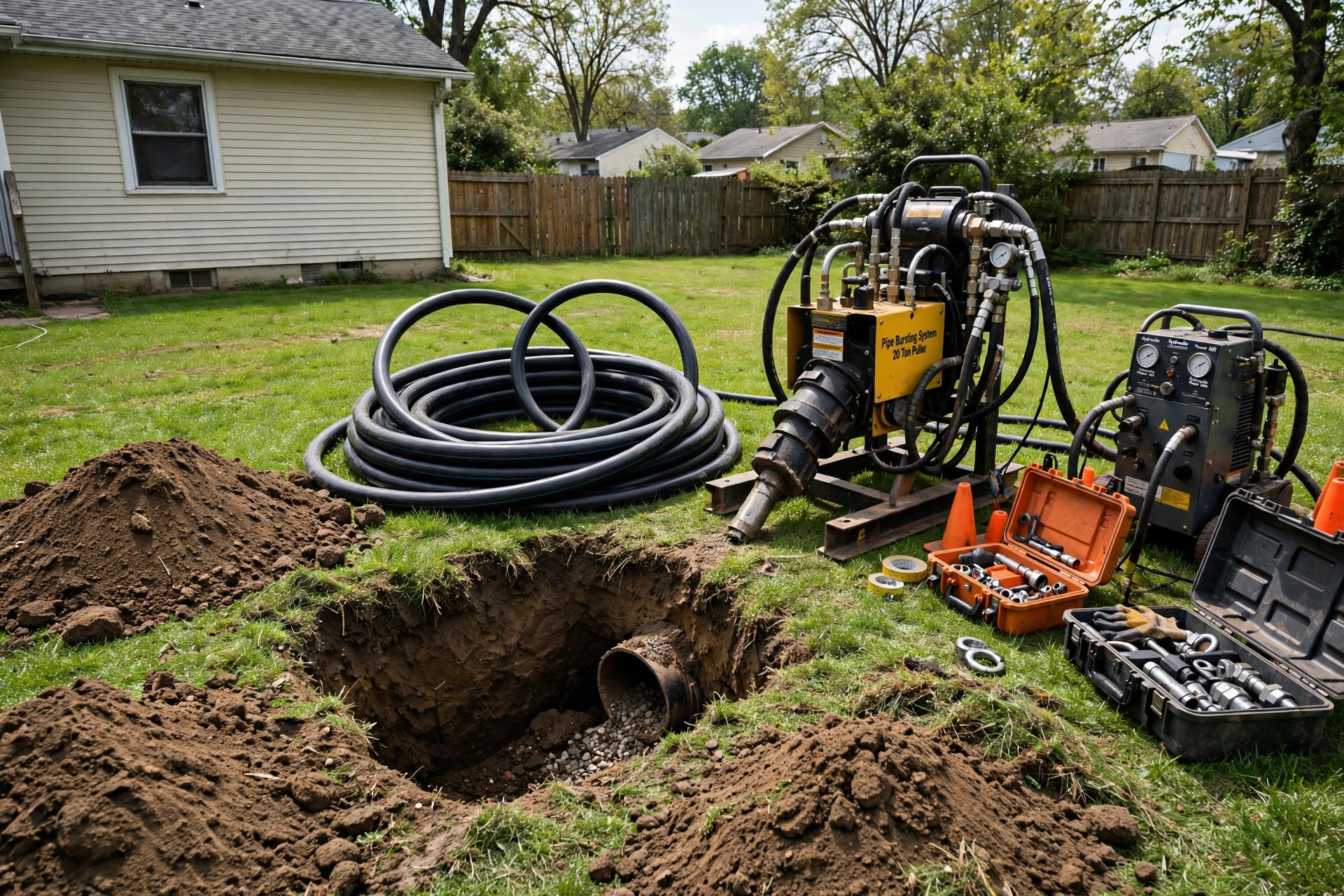
Pipe bursting is a replacement, not a repair. A cone shaped bursting head pulls a brand new pipe through the path of the old pipe. The head breaks the old pipe apart and pushes the pieces into the soil. The new pipe follows right behind it.
The new pipe is full size. There is no loss of width. Many burst jobs use a tough plastic pipe that will not rust or crack. Because the old pipe is destroyed, this method can fix lines that are crushed, badly misaligned, or fully collapsed. Lining cannot do that. A liner needs a pipe that still has its shape.
Bursting needs entry and exit pits. These are larger than lining access points but still far smaller than a full trench. The new pipe goes in one piece, with no joints for roots to attack.
What to Look For When Choosing
The right method depends on the state of the old pipe. A camera inspection comes first. A small camera runs through the line and shows the problem on a screen. Homeowners should watch for the clogged main sewer line signs for homeowners page for warning signs that mean a camera check is due.
Choose pipe lining when:
– The old pipe is cracked, leaking at joints, or root infested but still round in shape. – The line runs under a prized lawn, garden, pool deck, or concrete that must stay undisturbed. – The pipe is the right size and does not need to be made larger. – The job should finish in one day with the least digging.
Choose pipe bursting when:
– The old pipe is crushed, sagging in long sections, or fully collapsed. – The homeowner wants to upgrade to a larger pipe for better flow. – The old line is clay, cast iron, or thin wall pipe that is beyond repair. – The soil and nearby utilities allow safe bursting without damage.
A few cases rule out both methods. A line with sharp offsets at many points may need some open digging. A line that is packed full of dirt or grease must be cleaned first. The camera inspection tells the story. Never hire a trenchless crew that skips it.
Cost and Price
Now the heart of this pipe bursting vs pipe lining cost comparison. Prices vary by region, pipe length, depth, and soil. The ranges below reflect typical United States prices in recent years for a standard home sewer lateral.
Pipe lining often costs between 80 and 250 dollars per foot. A 50 foot line can run from 4,000 to 12,500 dollars. Most lining jobs fall near the middle of that range.
Pipe bursting often costs between 60 and 200 dollars per foot. A 50 foot line can run from 3,000 to 10,000 dollars. The new pipe itself is cheap, but the equipment and labor are not.
Why does bursting sometimes cost less per foot? The process is direct. Break the old pipe. Pull the new one. There is no costly resin and no curing time. Lining resin and the liner material add cost, and the curing step adds hours.
Why does bursting sometimes cost more overall? The entry and exit pits add digging and backfill. In hard soil or deep lines, the bursting head needs more power and more labor. If nearby gas, water, or electric lines run close to the sewer, the crew must locate them all and burst with care. That adds time and money.
Other cost factors apply to both methods:
– Length of the line. Longer runs cost more, but the per foot price often drops on long jobs. – Depth of the pipe. Deep pipes need more labor and larger pits. – Access. A clear yard is cheap. A pipe under a garage or pool is costly. – Permits. Most cities require a permit and an inspection. Permit fees run from 100 to 500 dollars. – Cleaning first. A line full of roots or scale must be jetted clean before either method. Hydro jetting can add 300 to 600 dollars.
Homeowners should also read the sewer line replacement cost per foot usa guide to compare these trenchless prices with full open trench replacement. An open trench job often runs 50 to 250 dollars per foot for the pipe work alone, plus thousands more to fix the yard and pavement. That is why trenchless work often wins on total cost.
One more cost note. Some plumbers charge a flat project price. Others charge per foot with add on fees. Always get three written bids. Each bid should list the method, the pipe length, the pipe size, the liner or pipe material, the warranty, and the permit cost. A bid that hides the method name is a warning sign.
Which Lasts Longer
Both methods can last a very long time. A cured liner often carries a 50 year warranty. A new burst pipe made of high density polyethylene can last 50 to 100 years. In real life, both outlast most homeowners who will live in the house.
Lining wins when the old pipe still has good shape. The liner is seamless and root proof. Bursting wins when the old pipe is gone beyond repair. A brand new full size pipe is hard to beat.
One weak point to know. A liner reduces the inner width of the pipe by a small amount. In most homes this causes no trouble. In a home with many people and heavy water use, a plumber may suggest bursting instead so the new pipe keeps its full size.
Care and Upkeep After the Repair
A trenchless repair needs care to last its full life. These steps keep the new line clear:
– Keep grease out of drains. Grease hardens and narrows pipes. Pour it into a can, not the sink. – Flush only waste and toilet paper. Wipes marked flushable still cause clogs. – Plant trees far from the sewer line. Roots seek water and will find any weak joint. – Run hot water after dishwashing to move soap and fat along. – Have the line camera checked every three to five years. Early sight of a problem is cheap to fix.
General plumbing care guides from This Old House explain how small habits protect pipes for years. Home supply stores such as Lowe’s and The Home Depot stock root killers and drain care products, but read labels with care and follow local rules.
Safety
Trenchless work is safe when done right, but it is not a do it yourself job. Bursting machines pull with great force. Lining resin gives off heat and fumes during curing. Both methods need trained crews.
Safety points for homeowners:
– Keep children and pets away from pits and equipment. – Ask the contractor how they locate buried gas and electric lines before bursting. – Make sure the crew vents the home during lining, since curing fumes can enter through dry drains. – Check that the contractor holds a license and insurance, and that permits are pulled. – Never enter an open pit. Call the crew if you see a problem.
The United States Environmental Protection Agency offers plain facts on how sewer overflows harm local water. A failed line is more than a home problem. It can pollute streams and wells. Fixing it fast protects the whole street.
Buying Parts and Finding Help
Most trenchless jobs are hired out, not done by hand. Still, a smart homeowner learns the parts. Liner materials, resin kits, and new plastic pipe come in many grades. Fixture makers such as Moen, Delta Faucet, and Kohler are best known for indoor fixtures, yet their sites show the quality marks to look for in any plumbing product. Water treatment brands such as Aquasana remind homeowners that clean water in means clean waste out.
For repair know how, Family Handyman publishes step by step guides written for regular people. These guides help a homeowner ask smart questions and spot a poor bid.
FAQ
How long does each method take?
Most lining jobs finish in one day. Most bursting jobs finish in one to two days. Open trench replacement can take three to five days plus weeks of yard repair.
Can I stay in the house during the work?
Often yes. With lining, water use must stop for a few hours during curing. With bursting, the sewer is out of use until the new pipe is tied in, often one day. Ask the crew for the exact schedule.
Which method is cheaper in the end?
Bursting often has a lower per foot price, but pits and hard soil can raise its total. Lining costs more per foot but needs almost no digging. The written bids decide. Compare full project totals, not just per foot numbers.
Do trenchless repairs come with warranties?
Good contractors offer 10 to 50 year warranties on materials and work. Get the warranty in writing. Ask what voids it, such as flushing wipes or pouring grease.
Will my homeowners insurance pay for this?
Some policies cover sudden pipe damage but not wear and age. Read the policy or call the agent before work starts. Keep all bids, photos, and the camera video.
What if my pipe is fully collapsed?
A fully collapsed pipe cannot be lined. A liner needs an open path. Bursting can work if a cable can still pass through, or the crew can dig a short section and then burst the rest.
Final Word
This pipe bursting vs pipe lining cost comparison comes down to one fact. The state of the old pipe picks the method. A pipe that still holds its shape can be lined for less digging and a fair price. A pipe that is crushed or collapsed must be burst out and replaced with a new full size line. Both beat an open trench on cost, speed, and yard damage.
Get a camera inspection. Get three written bids that name the method. Check licenses and warranties. Then pick the repair that fits the pipe you have, not the sales pitch you hear. A well chosen trenchless repair will serve the home for decades, and the lawn will look as if nothing ever happened.
References
Aquasana. (n.d.). Water filtration systems. https://www.aquasana.com Delta Faucet. (n.d.). Kitchen and bathroom faucets. https://www.deltafaucet.com Family Handyman. (n.d.). DIY home repair and maintenance. https://www.familyhandyman.com Kohler. (n.d.). Bathroom and kitchen fixtures. https://www.kohler.com Lowe’s. (n.d.). Home improvement products. https://www.lowes.com Moen. (n.d.). Faucets and plumbing fixtures. https://www.moen.com The Home Depot. (n.d.). Home improvement products. https://www.homedepot.com This Old House. (n.d.). Home renovation guidance. https://www.thisoldhouse.com U.S. Environmental Protection Agency. (n.d.). Protecting human health and the environment. https://www.epa.gov
Was this guide helpful?

About Sarah Mitchell
The My Garden US editorial team writes practical, in-depth home and garden guides for American homeowners — tested advice, no fluff.
You May Also Like
Septic System Installation Cost for 3 Bedroom Homes
September 18, 2026 0 views
The Best Whole House Water Filter System USA Homeowners Can Buy
September 20, 2026 0 views
Best Walk In Tub for Seniors Reviews USA: A Simple Guide
May 29, 2026 0 views