
The search for the best drain cleaner for kitchen sink usa households begins with a simple fact. Kitchen drains clog. Grease, soap scum, and food bits build up over months. Water slows. Smells rise. A good drain cleaner can fix this fast, but the wrong one can hurt pipes or waste money. This guide looks at the options in plain terms. It explains how each type of cleaner works, what it costs, and when to call a pro. Every home is a little different, so the best choice depends on your pipes, your clog, and your comfort with simple tools. By the end, you will know exactly what to buy and how to use it well.
Why a Slow Kitchen Drain Matters
A slow drain is more than a small annoyance. Standing water in the sink makes washing dishes harder. It gives grease more time to harden in the pipe. It can also bring up odors from food trapped in the trap below the sink. Over time, a partial clog can turn into a full block. Then the sink will not drain at all, and the fix becomes urgent and costly.
Kitchen clogs differ from bathroom clogs. Bathrooms deal with hair and soap. Kitchens deal with grease, starch from pasta and rice, coffee grounds, and bits of food. Grease is the main enemy. It coats the inside of pipes like wax. Hot water alone melts some of it, but much of it stays and catches other debris. This is why a cleaner made for kitchen use works better than a generic one.
Fast action saves money. A bottle of cleaner costs a few dollars. A plumber visit costs far more. Check local drain cleaning cost per line before you decide. For most homes, a good routine and the right product keep the pipes clear for years.
How to Choose the Best Drain Cleaner for a Kitchen Sink: Best Drain Cleaner for Kitchen Sink Usa
The best drain cleaner for kitchen sink usa shoppers will match three things: the type of clog, the pipe material, and the home setup. Get these right and the product has a strong chance of working.
Know Your Clog
Grease clogs feel slow and sticky. Water drains but takes long. The pipe smells faintly sour. Chemical cleaners with heat work well here. Enzyme cleaners also work, but they need more time.
Food and starch clogs act fast. Pasta, rice, and potato peels swell in water and block the pipe. These respond best to a plunger or a snake first, then a cleaner.
A full block needs care. If water will not drain at all, pour-in cleaners may sit in the sink and splash. Many pros say to use a mechanical method first in this case.
Know Your Pipes
Most American homes built after 1970 use PVC or ABS plastic drain pipes. These handle most cleaners fine. Older homes may have metal or galvanized pipes, which can corrode with strong acid cleaners. If you are unsure, use a gentler option. Enzyme cleaners and plungers are safe for all pipe types.
Know Your Home Setup
Homes with septic tanks need septic safe products. Many chemical cleaners say they are septic safe on the label. Read it before you buy. Our page on enzyme drain cleaner reviews covers gentle options made for septic systems. Homes on city sewer have more freedom, but gentler products still last longer on pipes.
Types of Drain Cleaners
Stores in the USA sell four broad types of drain cleaners. Each has a place.
Chemical Cleaners
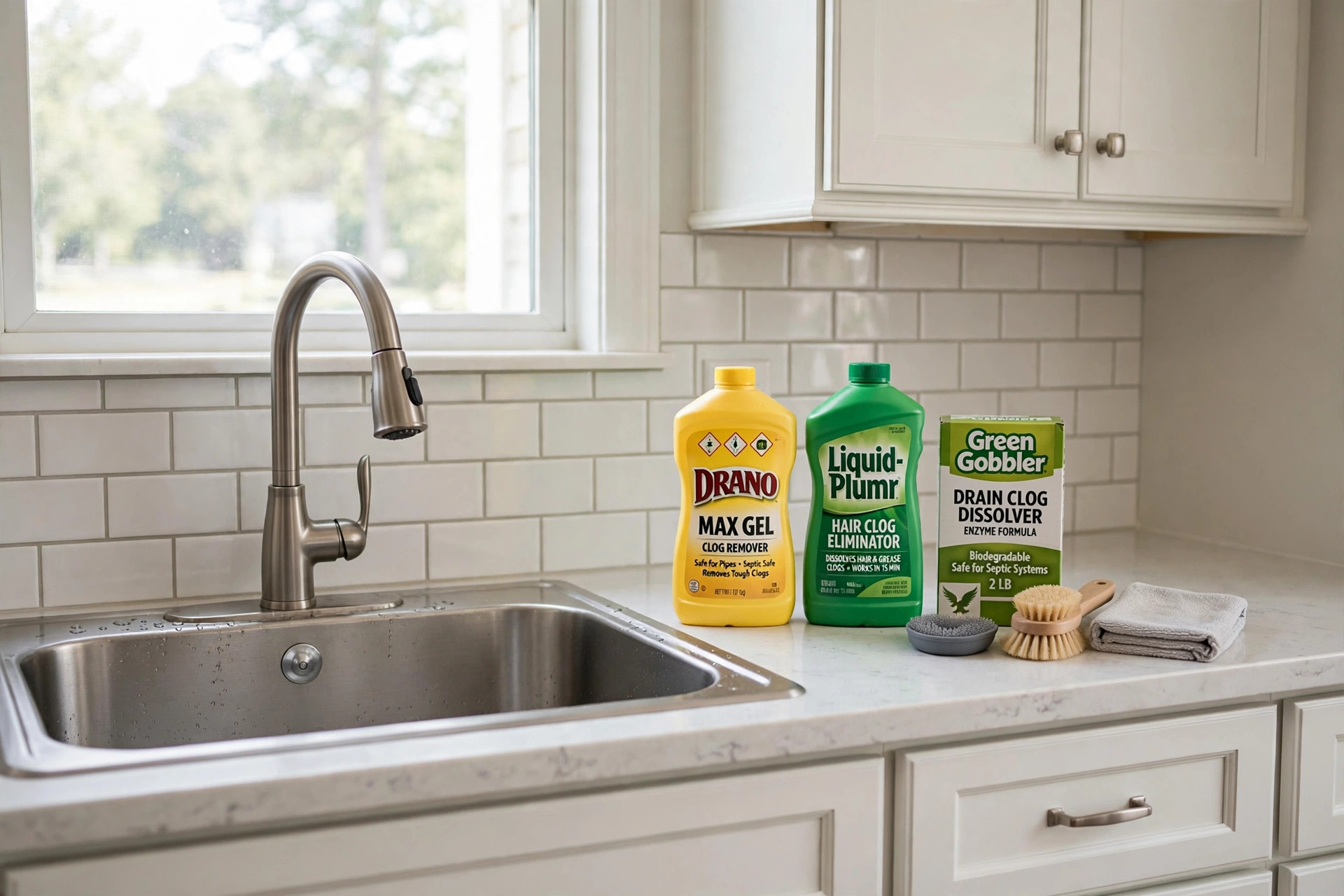
Chemical cleaners use strong ingredients like lye or sulfuric acid to burn through clogs. They work fast, often in 15 to 30 minutes. They are best for grease. They come as liquids, gels, and powders. Gels cling to pipe walls, which helps with grease. These are the most common picks on shelves at Home Depot and Lowe’s.
The downside is harshness. Strong acids can harm older metal pipes and finishes. Fumes can sting the eyes. Gloves are a must. Never mix two chemical cleaners, and never use one right after a plunger splash. Used as directed, they are safe for most modern drains.
Enzyme and Bio Cleaners
Enzyme cleaners use bacteria or enzymes to eat grease and food. They work slowly, often overnight. They do not burn or fume. They are safe for pipes, septic tanks, and finishes. Many guides at This Old House praise them for upkeep more than for deep clogs.
These are the best choice for monthly care. They are not the best choice for a sink that is fully blocked today. Keep one on the shelf for regular use.
Mechanical Cleaners
Plungers, drain snakes, and zip tools use force instead of chemistry. A flat-bottomed sink plunger costs little and clears many clogs in minutes. A hand snake reaches deeper into the pipe. These work on all clog types and never harm pipes when used with care. Consumer Reports often notes that simple tools beat chemicals for tough clogs.
For many homes, a plunger plus a snake handles 90 percent of kitchen clogs. Keep both under the sink.
Hot Water and Simple Home Methods
Boiling water can melt fresh grease. A half cup of baking soda followed by hot water can freshen a slow drain. These methods cost nothing. They work best as upkeep, not as rescue. Do not pour boiling water into a porcelain sink, as the shock can crack it. Also skip boiling water if you have PVC pipes that are already hot from a dishwasher cycle.
Cost and Price
Drain cleaner prices in the USA are modest. A bottle of liquid chemical cleaner runs about 4 to 12 dollars. Gel formulas cost a bit more, often 6 to 15 dollars. Enzyme cleaners range from 8 to 18 dollars per bottle, and they last for several uses. A good plunger costs 5 to 10 dollars. A basic hand snake costs 15 to 30 dollars and lasts for years.
Compare this with a plumber. A simple service call often starts near 100 dollars and climbs fast for tough jobs. Check typical drain cleaning cost per line in your area to see the gap. The math is clear. A small shelf of products and tools pays for itself after one avoided visit.
One caution. Cheap is not always best. A three dollar cleaner that fails is worse than a ten dollar one that works. Read the label for your clog type. Grease formulas beat all-purpose formulas on kitchen sinks.
Care and Upkeep for a Clear Kitchen Drain
The best drain cleaner is the one you rarely need. Good habits keep kitchen pipes open.
Run hot water for 30 seconds after each dishwashing session. This moves grease along before it cools and sticks. Wipe greasy pans with a paper towel before washing. Never pour cooking oil down the sink. Keep a jar or can for used oil and toss it in the trash.
Use a kitchen sink basket strainer to catch food bits. This simple screen costs little and stops most debris. Empty it into the trash, not the disposal. Read our guide to kitchen sink basket strainer reviews to pick a good one.
Once a month, treat the drain. An enzyme cleaner overnight is ideal. Follow with very hot tap water in the morning. This routine takes two minutes of effort and keeps grease from building up.
Keep the garbage disposal in good shape too. Run cold water while it works. Feed food slowly. Grind a few ice cubes now and then to clean the blades. A cared for disposal sends less debris into the pipes.
Watch for early warning signs. Water that drains a little slower than last month. A faint smell when the dishwasher runs. A gurgle from the drain. These are the first signs of buildup. Treat them now with an enzyme cleaner or a plunger. Waiting turns a small job into a big one.
Safety Notes
Drain cleaners deserve respect. Read every label before use.
Wear gloves and eye protection with chemical cleaners. Open a window for air flow. Keep the room clear of children and pets. Store bottles up high or locked away. Never mix products. Mixing can make toxic gas.
Do not use a chemical cleaner in a sink with a garbage disposal unless the label says it is safe. Some cleaners can harm the disposal seals. When in doubt, use the disposal first to grind soft bits, then run water, then use the cleaner.
If a cleaner does not work after one try, do not add more of a different brand. You may need a snake or a plumber. Tell the plumber what you used. This keeps them safe when they open the pipe.
The EPA offers broad guidance on household chemical safety. Simple steps like good air flow and safe storage prevent most problems. Fixture makers like Moen, Delta Faucet, and Kohler also note that harsh chemicals can void finish warranties, so gentler care protects your sink too. For homes focused on water quality, Aquasana has useful reading on what goes down household drains.
Frequently Asked Questions
What is the best drain cleaner for kitchen sink grease? For fresh grease, a gel chemical cleaner made for kitchens works fastest. Pour it in, wait the label time, and flush with hot water. For monthly upkeep, switch to an enzyme cleaner. It eats grease slowly and safely.
Are chemical drain cleaners safe for PVC pipes? Most are, when used as directed. PVC handles standard lye based cleaners well. Avoid strong acid formulas in any pipe you cannot identify. When in doubt, use an enzyme cleaner or a plunger.
How long should I wait before flushing a drain cleaner? Follow the label. Most say 15 to 30 minutes. Do not leave a chemical cleaner in overnight unless the label allows it. Long soaks can harm pipes and finishes.
Can I use a drain cleaner if I have a septic tank? Yes, if the label says septic safe. Enzyme cleaners are the safest bet for septic homes. They add helpful bacteria instead of harsh chemistry. See our enzyme drain cleaner reviews for septic friendly picks.
Why does my kitchen sink still smell after cleaning? Smell often comes from the garbage disposal or the sink strainer, not the deep pipe. Clean the disposal with ice and citrus. Scrub the strainer and the sink rim. Then run an enzyme treatment overnight to clear deep buildup.
When should I call a plumber instead? Call one if two tries with products fail, if water backs up into other fixtures, or if you smell sewage. These signs point to a deep or main line block. Compare local drain cleaning cost per line and get one or two quotes before you book.
A Final Word
The best drain cleaner for kitchen sink usa homes is not one magic bottle. It is a small kit used well. Keep a plunger, a hand snake, a gel cleaner for grease, and an enzyme cleaner for monthly care. Add a sink strainer and good grease habits. This simple setup handles most clogs in minutes and keeps pipes healthy for years. When a clog beats your kit, call a pro early. A fast service call costs less than a damaged pipe.
References
Aquasana. (n.d.). Water filtration systems. https://www.aquasana.com Consumer Reports. (n.d.). Product reviews and ratings. https://www.consumerreports.org Delta Faucet. (n.d.). Kitchen and bathroom faucets. https://www.deltafaucet.com Family Handyman. (n.d.). DIY home repair and maintenance. https://www.familyhandyman.com Kohler. (n.d.). Bathroom and kitchen fixtures. https://www.kohler.com Lowe’s. (n.d.). Home improvement products. https://www.lowes.com Moen. (n.d.). Faucets and plumbing fixtures. https://www.moen.com The Home Depot. (n.d.). Home improvement products. https://www.homedepot.com This Old House. (n.d.). Home renovation guidance. https://www.thisoldhouse.com U.S. Environmental Protection Agency. (n.d.). Protecting human health and the environment. https://www.epa.gov
Was this guide helpful?

About Lisa Anderson
The My Garden US editorial team writes practical, in-depth home and garden guides for American homeowners — tested advice, no fluff.
You May Also Like
Best Countertop Water Filter Reviews 2026
September 14, 2026 0 views
Submersible Well Pump Reviews for Deep Wells
September 27, 2026 0 views
Chloramine Filter for City Water Reviews USA: What to Know Before You Buy
September 22, 2026 0 views