
The garage door is the largest moving part of most houses. It is also the most visible. When the time comes to replace it, many owners ask the same question. What is the best garage door replacement for homeowners? The answer depends on the house, the climate, and the budget. This guide walks through the whole process in plain terms. It covers why replacement matters, what to look for, the main types, real costs, care, and safety.
Why It Matters
A garage door does more than open and close. It sets the look of the front of the house. Real estate agents say that curb appeal starts at the street, and the garage door often takes up a third of that view. A worn door with dents, rust, or peeling paint drags the whole house down. A new door lifts it up.
Function matters just as much. Old doors get noisy. Springs wear out. Panels crack. Seals fail and let in wind, rain, dust, and small animals. A door that sticks or moves slowly can damage the opener or injure a hand caught in the wrong place. Replacing the door solves these problems at once.
There is also the matter of energy. Many garages connect to the house. In some homes, a bedroom or a workroom sits above the garage. A thin, uninsulated door lets heat escape in winter and lets heat pour in during summer. An insulated replacement keeps the garage closer to a steady temperature. That helps the rooms around it stay comfortable. It can also lower heating and cooling bills over time.
Finally, a new door is a smart buy compared with other home projects. Cost-versus-value studies in the home press rank garage door replacement among the top projects for return at resale. The This Old House editors have long noted that exterior updates like doors and siding give owners a strong return for a moderate spend.
How to Choose the Best Garage Door Replacement for Homeowners
Start with the basics. Measure the opening. Most homes in the United States have a door that is sixteen feet wide and seven feet high for a two-car garage, or eight or nine feet wide for a single car. Taller eight-foot doors are common in newer builds. Measure the width, the height, and the headroom above the opening. Headroom is the space between the top of the opening and the ceiling. Standard tracks need about twelve inches. Low-headroom hardware exists for tight garages.
Next, think about the climate. Cold northern states call for insulated doors with a high R-value. Hot southern states need doors that resist sun damage and heat warping. Coastal areas need hardware that resists salt air. Wind-prone regions may need a door rated for high winds. Check local building codes before you buy. Some areas require wind-rated doors by law.
Then consider daily use. A door that opens four or five times a day needs heavier hardware than one that opens twice a week. Families with children and pets need safety features like pinch-resistant panels and auto-reverse openers. If the garage doubles as a workshop, insulation and quiet operation matter more.
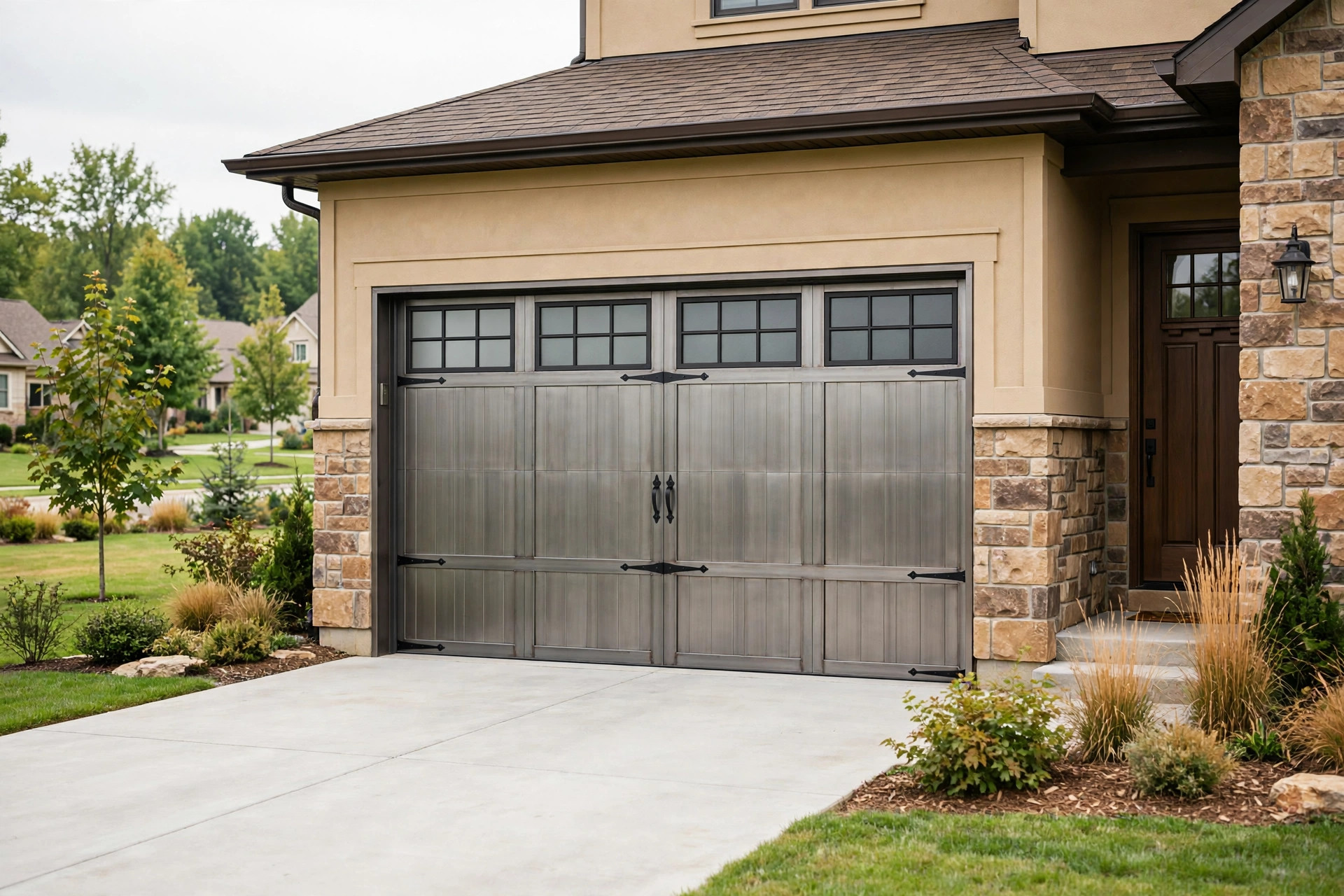
Style should match the house. A carriage-house door with crossbuck framing suits a craftsman or colonial home. A clean flush-panel door suits a modern or ranch house. Many makers offer windows at the top row, which let in daylight without giving up privacy. The Clopay design tools let owners preview styles on a photo of their own home. Amarr offers a similar range of classic and modern designs for American houses.
Finally, set a budget and get several quotes. Prices vary widely by material, size, insulation, and installer. A written quote should list the door, the hardware, the opener work if any, labor, haul-away of the old door, and warranty terms. Do not choose on price alone. A cheap door with thin hardware costs more in repairs later.
Types of Garage Doors
Steel Doors
Steel is the most common choice for the best garage door replacement for homeowners. Steel doors come in single, double, and triple layers. Single-layer doors are light and cheap but offer little insulation. Double-layer doors add a back panel and some foam. Triple-layer doors sandwich foam insulation between two steel skins. They are strong, quiet, and energy efficient.
Steel doors need little care. A yearly wash and a touch-up on scratches are usually enough. They can dent if struck hard, but replacement panels are easy to order.
Wood Doors
Wood doors are the classic pick for high-end homes. Cedar, redwood, and mahogany are common. Wood gives a warm, rich look that no other material matches.
Wood needs more care. It must be sealed or painted and kept that way. In wet climates, wood can warp or rot without regular upkeep. Wood doors are also heavy, so the opener and springs must be sized to match. They cost more than steel but add real character.
Aluminum and Glass Doors
Aluminum-frame doors with glass panels suit modern homes. They are light, rust-proof, and full of daylight. Frosted or tinted glass keeps the inside private. These doors work well for converted garages used as offices or gyms. They offer less insulation than triple-layer steel, so they fit milder climates best.
Composite and Fiberglass Doors
Composite doors mix wood fibers with resins. They look like wood but resist rot and insects. Fiberglass doors are light and resist salt air, which makes them popular near the coast. Both cost more than basic steel. Fiberglass can crack in hard impacts, and color choices may be limited.
Vinyl Doors
Vinyl doors are newer to the market. They resist dents and never need paint. They handle kids, sports balls, and rough weather well. Style choices are narrower than steel, and very hot sun can soften cheap vinyl, so buy from a known maker.
When comparing types, think about the whole exterior. A new door should work with the siding, roof, and trim. Owners planning a larger update often pair the door with new siding. A James Hardie fiber-cement siding project or a CertainTeed exterior refresh can turn a plain front into a showpiece. For related projects, see our guides on vinyl siding installation cost and metal roofing installation. If the entry door is also due, read about exterior door replacement as well.
Cost and Price
Cost is the first question most owners ask. A basic single-layer steel door, installed, often runs from about seven hundred to fifteen hundred dollars. A mid-range insulated double-layer door usually lands between twelve hundred and twenty-five hundred dollars. A premium triple-layer insulated door with windows and a decorative design can run from two thousand to four thousand dollars or more. Custom wood doors start around twenty-five hundred and can pass six thousand for large or ornate designs.
Labor is a big part of the total. Installation usually costs three hundred to six hundred dollars for a standard door. Haul-away of the old door may add fifty to one hundred fifty dollars.
Several factors move the price up or down:
– Size. Double doors cost more than single doors. Oversize or custom widths cost more still. – Insulation. Higher R-values cost more but pay back in comfort. – Windows. Decorative glass adds to the price. – Hardware. Heavy-duty rollers, quiet belts, and reinforced struts add cost and life. – Finish. Premium colors and wood-grain finishes cost more than plain white. – Location. Labor rates differ by region, and permits add fees in some towns.
To keep costs in check, buy during the off-season. Late fall and winter are slower for installers, and some dealers offer discounts. Ask about package deals if you need more than one door. Check the big home stores for seasonal sales. Both Lowe’s and similar retailers run regular promotions on installed doors, and comparing their installed price against a local dealer keeps quotes honest.
Insulation is worth a closer look because it affects both price and comfort. An R-value measures resistance to heat flow. Higher is better. A basic door may rate R-3. A good insulated door rates R-9 to R-12. The best rate R-16 or more. In cold climates, R-12 and above is a sound target. In mild climates, R-6 to R-9 is often enough. Energy Star guidance on sealing the home shell backs the same idea: tighten the weak spots, and the garage door is often one of the weakest.
Warranties matter at every price point. Read the fine print. Many makers offer limited lifetime warranties on the door sections but shorter terms on hardware, springs, and paint. A strong warranty from an established maker is part of the value. Consumer Reports testing and buying advice can help owners compare brands on durability before they sign.
Care and Upkeep
A new door needs little work, but small habits keep it running for fifteen to thirty years. Inspect the door twice a year, in spring and fall. Look at the panels, the weather seal at the bottom, and the seals around the frame. Check cables and rollers for wear. Listen for grinding or scraping sounds, which signal trouble.
Lubricate moving parts once a year. Use a silicone or lithium-based garage door lubricant on rollers, hinges, and the opener chain or screw. Do not use heavy grease, which attracts dirt. Wipe the tracks clean but do not oil them; oil in the tracks collects grit.
Wash the door once or twice a year with mild soap and water. Rinse well. Touch up scratches and chips in the paint before rust can start.
The Family Handyman site keeps a useful library of garage door maintenance walkthroughs with clear photos. The Spruce home care guides cover seasonal checklists that include the garage along with the rest of the house exterior. The Bob Vila site also keeps garage door buying advice that buyers notice, and a fresh door can help a house sell faster.
The bottom weather seal keeps out water, leaves, and drafts, so replace it when it cracks or flattens.
Safety
Garage doors are heavy. A standard double door can weigh two hundred pounds or more. Respect that weight. Never stand under a moving door. Keep children away from the controls and teach them that the door is not a toy.
Springs are the most dangerous part. Torsion springs above the door store enormous energy. A broken or wrongly adjusted spring can cause serious injury. Homeowners should never adjust, remove, or replace torsion springs themselves. Extension springs are less dangerous but still best left to a trained installer.
Modern openers include safety features. Photo-eye sensors near the floor should stop and reverse the door if the beam breaks. Test them often. Keep the sensors clean and aligned. If the house was built before 1993, the opener may lack these features. Upgrading the opener is a wise move when replacing the door.
Wind safety matters in storm regions. A wind-rated door has reinforced struts and stronger track brackets. Some local codes require them. Ask the dealer for the door’s wind-load rating and make sure it meets local rules. A door that fails in a storm can let wind pressurize the house and lift the roof.
Fire safety counts too. Doors between the garage and the house should be fire-rated, and the garage door itself should close fully and seal well.
FAQ
How long does a garage door last? Most steel doors last fifteen to thirty years with basic care. Wood doors last as long if they are kept sealed and painted. Springs usually wear out sooner, often after ten thousand cycles, which is about seven to ten years of normal family use. Openers last ten to fifteen years.
Can I replace just one panel instead of the whole door? Sometimes. If the maker still sells matching panels, a single damaged section can be swapped. This works best for newer doors. For older doors, matching panels may be gone, and a full replacement is the better choice. A dealer can check panel availability by model number.
Should I buy an insulated door if my garage is not heated? In most cases, yes. Insulation quiets the door, stiffens the panels, and moderates temperature swings. It helps any room above or beside the garage. The extra cost is modest compared with the total project.
How long does installation take? A standard replacement takes a professional crew about three to five hours. That includes removing the old door, setting the new tracks and sections, adjusting springs, and testing the opener. Custom sizes and difficult access can add time.
Is it worth replacing the opener at the same time? If the opener is more than ten years old, lacks safety sensors, or struggles with the new door’s weight, replace it. A new belt-drive opener is quiet and smooth. Bundling the work saves on labor since the crew is already there.
Do I need a permit to replace a garage door? It depends on the town. Many places allow a like-for-like swap without a permit. Wind-rated doors, size changes, and structural work often need one. Call the local building office before work starts to be sure.
A Final Word
The best garage door replacement for homeowners is the one that fits the house, the climate, and the way the family lives. Steel with good insulation serves most owners well. Wood suits fine homes and owners who enjoy upkeep. Aluminum and glass fit modern designs. Whatever the choice, buy from a known maker, hire a trained installer, and keep up with simple maintenance. A garage door that works smoothly, seals tight, and looks sharp pays its owner back every single day.
References
Amarr. (n.d.). Garage doors. https://www.amarr.com Bob Vila. (n.d.). Home improvement advice. https://www.bobvila.com CertainTeed. (n.d.). Building materials and exterior products. https://www.certainteed.com Clopay. (n.d.). Garage doors. https://www.clopaydoor.com Consumer Reports. (n.d.). Product reviews and ratings. https://www.consumerreports.org ENERGY STAR. (n.d.). Energy efficient products. https://www.energystar.gov Family Handyman. (n.d.). DIY home repair and maintenance. https://www.familyhandyman.com James Hardie. (n.d.). Fiber cement siding and exterior products. https://www.jameshardie.com Lowe’s. (n.d.). Home improvement products. https://www.lowes.com The Spruce. (n.d.). Home and garden advice. https://www.thespruce.com This Old House. (n.d.). Home renovation guidance. https://www.thisoldhouse.com
Was this guide helpful?

About Sarah Mitchell
The My Garden US editorial team writes practical, in-depth home and garden guides for American homeowners — tested advice, no fluff.
You May Also Like

Where to Buy Mailbox Posts in Arizona: A Homeowner Guide
March 18, 2026 0 views
Best Gutter Installation Services Near Me: A Complete Guide
September 4, 2026 0 views
Top Rated Retaining Wall Builders Reviews: A Homeowner Guide
March 6, 2026 0 views