
A hot shower should not end in a cold one. Yet many homes in the United States still depend on a large tank that holds hot water until someone uses it. When the tank runs dry, everyone waits. The electric tankless water heater reviews usa shoppers read each year point to a different answer: a small box on the wall that heats water only when the tap turns on. No tank. No waiting. This guide walks through what these units do, how to choose one, what they cost, and how to keep one safe and sound. It is written in plain terms so any homeowner can follow it.
Why a Tankless Unit Matters
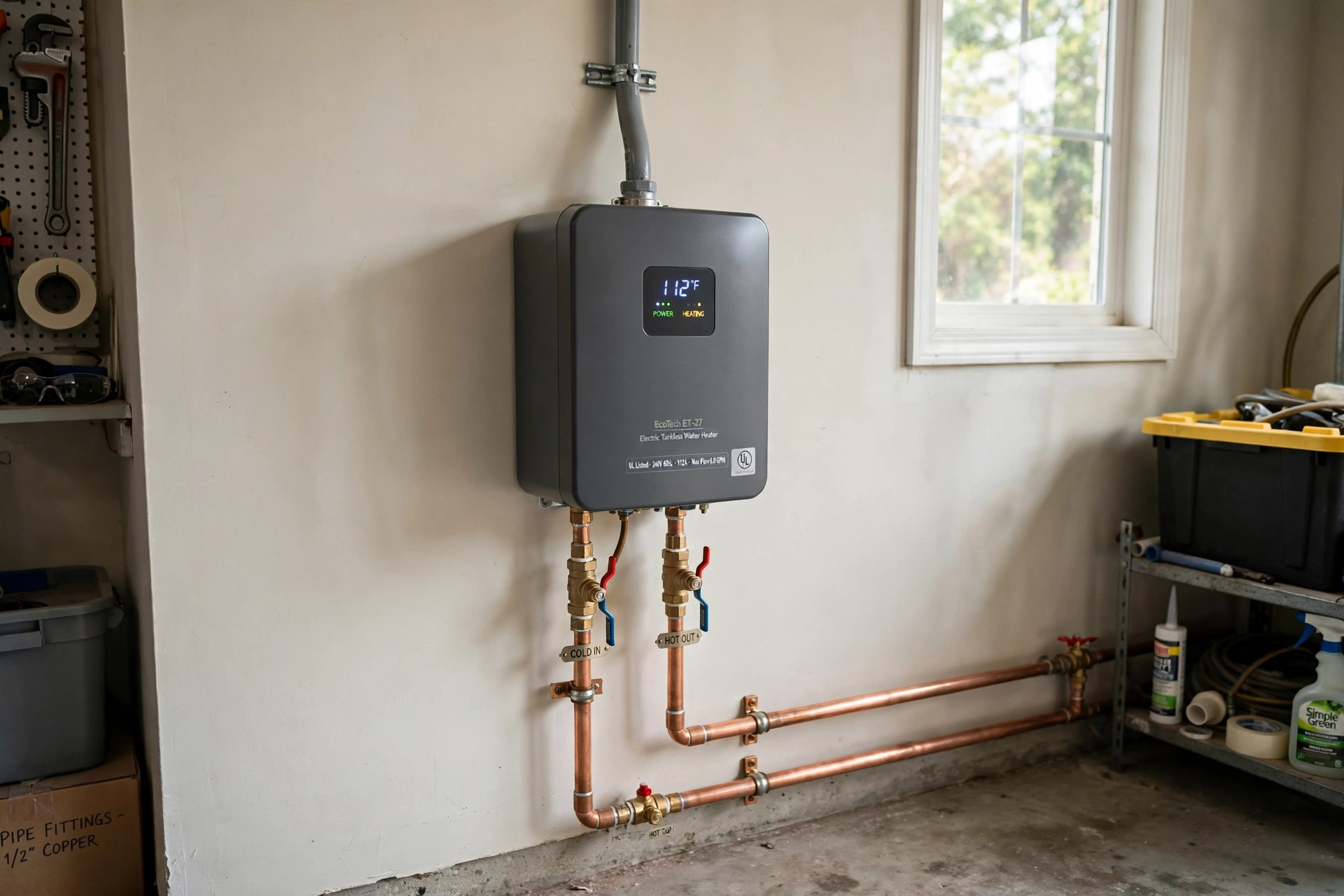
A standard tank heater works all day and all night. It keeps 40 or 50 gallons of water hot even when nobody is home. That is steady comfort, but it burns energy around the clock. A tankless model has no stored water. When a faucet opens, an electric element fires and heats the water as it passes through. Close the faucet and the unit shuts off. Reviews from buyers across the country note the same two benefits again and again: hot water that never runs out, and a unit that takes up far less space.
A tank heater sits like a drum in the corner of the garage. A tankless box is about the size of a small suitcase and mounts flat on the wall. For families in condos, apartments, and small homes, that freed floor space has real value. Many of the electric tankless water heater reviews usa publications print each season also point out lower standby loss. Because nothing sits idle getting cold and then warm again, the unit wastes less energy between uses.
How to Choose the Right Model: Electric Tankless Water Heater Reviews Usa
Choosing a tankless heater is not like picking a kettle. Size matters, and size is measured in kilowatts and flow rate, not gallons. The first question is how many hot water taps the unit must feed at once. A small point-of-use model may serve one sink. A whole-house model must feed two showers, a dishwasher, and a washing machine at the same time on a cold morning.
Flow rate is stated in gallons per minute, or GPM. In warm states like Florida or Texas, ground water arrives near 70 degrees, so raising it to 120 degrees takes less work. In Maine or Minnesota, winter water can arrive near 40 degrees, and the same unit will deliver a lower GPM. Always check the rated GPM at your local winter ground temperature. A unit that gives 3.5 GPM in Miami may give only 1.8 GPM in Chicago. That difference decides whether two showers can run at once.
Electrical service is the second question. Large whole-house electric tankless units draw a great deal of power. Many need two or three 40-amp breakers and heavy wire. Some older homes have only a 100-amp panel. Before any purchase, have an electrician confirm that the panel and the service line can carry the load. This step costs a little. Skipping it costs far more.
A third point is warranty and support. Reviews favor brands that stand behind their product for five years or more on parts and that answer the phone when a homeowner calls. The Home Depot listings, the Lowe’s buyer guides, and the This Old House project pages all stress the same advice: read the warranty sheet before the box leaves the store.
Types of Electric Tankless Heaters
Not all tankless units serve the same purpose. The market breaks into three broad types.
Point-of-use models. These small units sit under a sink or beside a bathroom. They feed one fixture. They are the least costly to buy and the easiest to wire. They suit a far bathroom or a kitchen sink that sits far from the main heater. Buyers in many electric tankless water heater reviews usa threads use them to boost a weak spot rather than replace the whole system.
Whole-house models. These are the big units, often rated from 18 to 36 kilowatts. One unit replaces the tank for the entire home. They need serious electrical work, but they deliver endless hot water to every tap. This is the type most review guides focus on.
Thermostatic versus non-thermostatic. Better units carry a digital thermostat that holds the outlet temperature steady when a second tap opens. Cheaper units swing hotter and colder. Reviews strongly favor thermostatic control for homes with children or elderly residents, because it lowers the scald risk.
What Reviews Say About Popular Models
Reviewers test the same core traits in every model: temperature rise, steady output, noise, build quality, and ease of install. Units with copper or stainless heating chambers earn praise for durability. Units with self-modulating power, which adjust the wattage to the exact flow, earn praise for efficiency. Several review summaries at Consumer Reports-style buying labs and at Family Handyman note that installation quality matters as much as the brand on the box. A fine unit wired with thin cable or weak breakers will trip, sputter, and disappoint.
Buyers also review the little things. A clear digital display earns marks. A unit that needs frequent descaling in hard-water regions loses marks. The Moen and Delta faucet and fixture sites remind readers that fixture flow rates shape real-world results: low-flow showerheads let a smaller tankless unit serve more taps at once.
Cost and Price in the United States
A point-of-use electric tankless unit may cost between $150 and $400. A mid-size whole-house unit often runs $400 to $800. Large premium models reach $900 to $1,200. These are equipment prices only. Installation is a separate line, and it can equal or exceed the price of the unit itself. A straight swap where the panel already has room may cost $500 to $1,000 in labor. A job that needs a new panel, new breakers, or a service upgrade can run $2,000 to $4,500.
Running costs deserve honest math. Electric tankless units are efficient at the point of use, but electricity rates vary widely by state. In regions with cheap power, the monthly bill may drop compared with an old tank. In regions with costly power, the savings shrink. Many electric tankless water heater reviews usa homeowners write after a full winter note that their bills fell by $10 to $30 a month, while a few in high-rate states saw almost no change. The U.S. Environmental Protection Agency water and energy pages offer worksheets that help a buyer compare before spending a dollar.
Tax credits and rebates change the math too. Some utilities and some states offer rebates for high-efficiency water heating. Check with the local utility before buying. A rebate of $100 or $200 is common, and it shortens the payback period.
Installation Basics
A licensed plumber and a licensed electrician should share this job. The plumber mounts the unit, ties in the hot and cold lines, and adds shutoff valves on both sides. The electrician runs the correct gauge wire, sets the breakers, and confirms the ground. Many makers require professional installation to keep the warranty valid.
Placement counts. Mount the unit as close as practical to the points of use. Short pipe runs mean less heat loss and faster hot water at the tap. Keep the unit where a service tech can reach it. Leave clear space in front for descaling and part swaps. In freezing climates, never mount the unit on an outside wall of an unheated garage without freeze protection, because the small amount of water inside can burst the chamber.
Some buyers pair a tankless heater with home water treatment. A best whole house water filter system usa reduces sediment before it reaches the heating chamber, which extends the life of the element. Readers comparing options also check whole house water filtration cost installed and reverse osmosis system under sink reviews usa when they plan a full water upgrade.
Care and Upkeep
A tankless heater asks for little, but it asks on schedule. The main chore is descaling. In hard-water areas, mineral scale coats the heating element and narrows the passages. Most makers advise a vinegar flush once a year, twice a year in very hard water. The job takes about an hour with a small pump and two hoses, and many homeowners learn to do it themselves after watching the tech once.
Keep the inlet filter clean. Most units have a small screen where the cold water enters. A clogged screen starves the flow and triggers error codes. Check it each time the unit is flushed. Wipe the cabinet with a dry cloth. Do not store paint, solvents, or pool chemicals near the unit, because fumes can corrode the electronics.
Watch the error codes. Modern units display a code when something is wrong: low flow, overheating, or a failed sensor. The manual lists each code and the fix. Keep the manual in a folder near the panel so the next homeowner finds it. The Kohler support library and the Aquasana water-care guides both carry plain-English maintenance checklists that apply to any brand of heater.
Safety Points
Hot water scalds. Set the outlet temperature to 120 degrees. That is hot enough for showers and dishwashing, and it matches the guidance of safety agencies. Homes with small children or frail elders may choose 115 degrees.
Electricity and water are a dangerous pair. Never open the electrical cover with the power on. The unit must be grounded to code, and a ground-fault path must be intact. If a breaker trips twice, stop resetting it and call an electrician. A repeated trip is a warning, not a nuisance.
Install a pressure relief valve where the maker requires it, and pipe its discharge to a safe drain. Test the valve once a year by lifting its lever briefly. If it drips afterward, replace it. The U.S. Consumer Product Safety Commission recall pages let owners check whether their model or a part has been recalled, and every owner should run that check once a year.
Energy Efficiency
An electric tankless unit converts nearly all the power it draws into heat. There is no flue and no pilot light, so almost nothing escapes. That is the good news. The honest news is that the unit draws power in large bursts. A 27-kilowatt unit at full fire pulls more than 110 amps. During those minutes, the home’s meter spins fast. The net result is still less waste than a tank that reheats all night, but buyers should size the unit to their real needs rather than buying the largest box on the shelf.
Pairing the heater with low-flow fixtures multiplies the savings. A showerhead rated at 1.75 GPM instead of 2.5 GPM lets a smaller unit do the work of a bigger one. Many of the electric tankless water heater reviews usa test labs publish note that fixture choice is the cheapest upgrade a homeowner can make.
Common Problems and Fixes
Water runs lukewarm when two taps open. The unit is undersized for the demand, or winter ground water has dropped the GPM. Fixes: lower the set temperature a few degrees, stagger showers, or step up to a larger unit.
Unit clicks but gives no hot water. Check the inlet filter and the flow rate. Tankless units need a minimum flow to fire. A clogged aerator on the faucet can drop flow below that trigger point.
Breaker trips under load. The wiring or breaker is undersized, or another large load shares the circuit. This needs an electrician. Do not install a larger breaker on thin wire.
Error code for overheating. Scale buildup is the usual cause. Flush the unit. If the code returns, call service.
Rumbling or vibration. Air in the lines or a loose mount. Bleed the lines and tighten the bracket.
Frequently Asked Questions
How long does an electric tankless water heater last? Most makers rate their units for 15 to 20 years, roughly twice the life of a standard tank. Hard water shortens that span unless the owner flushes on schedule.
Can one unit serve a large family? Yes, if it is sized for the peak load. Count the fixtures that run at the same time on a winter morning, add their flow rates, and buy a unit whose rated GPM at your winter ground temperature meets that sum.
Does it work during a power outage? No. Electric tankless units need power to heat and to run their controls. A generator can carry a small unit, but most whole-house models exceed what a portable generator can supply.
Is gas cheaper than electric for tankless? It depends on local rates. Where natural gas is cheap, a gas tankless unit often costs less to run. Where gas is costly or unavailable, electric wins. Compare the local per-unit prices before choosing.
Can I install it myself? A skilled homeowner can mount the box and plumb the lines, but the electrical work should go to a licensed electrician in almost every state. Many warranties demand professional installation.
Does it need venting? No. Electric units produce no combustion gas, so they need no flue. They still need clear space for air circulation and service access.
A Short Final Word
The electric tankless water heater suits the homeowner who wants endless hot water, a small footprint, and no idle tank burning power all night. It asks for careful sizing, honest electrical work, and a yearly flush. Read the electric tankless water heater reviews usa buyers post after a full season of use, size the unit to winter water, and hire licensed hands for the install. Done right, the little box on the wall will serve the home quietly for many years.
References
Aquasana. (n.d.). Water filtration systems. https://www.aquasana.com Consumer Reports. (n.d.). Product reviews and ratings. https://www.consumerreports.org Delta Faucet. (n.d.). Kitchen and bathroom faucets. https://www.deltafaucet.com Family Handyman. (n.d.). DIY home repair and maintenance. https://www.familyhandyman.com Kohler. (n.d.). Bathroom and kitchen fixtures. https://www.kohler.com Lowe’s. (n.d.). Home improvement products. https://www.lowes.com Moen. (n.d.). Faucets and plumbing fixtures. https://www.moen.com The Home Depot. (n.d.). Home improvement products. https://www.homedepot.com This Old House. (n.d.). Home renovation guidance. https://www.thisoldhouse.com U.S. Consumer Product Safety Commission. (n.d.). Product safety information. https://www.cpsc.gov U.S. Environmental Protection Agency. (n.d.). Protecting human health and the environment. https://www.epa.gov
Was this guide helpful?

About Jennifer Lee
The My Garden US editorial team writes practical, in-depth home and garden guides for American homeowners — tested advice, no fluff.
You May Also Like
Running Toilet Fix Step by Step: A Practical USA Guide
April 11, 2026 0 views
High Pressure Shower Head Reviews 2026 USA: Strong Shower Flow Without the Plumber
August 28, 2026 0 views
Best Water Leak Sensors for Basement USA
September 12, 2026 0 views