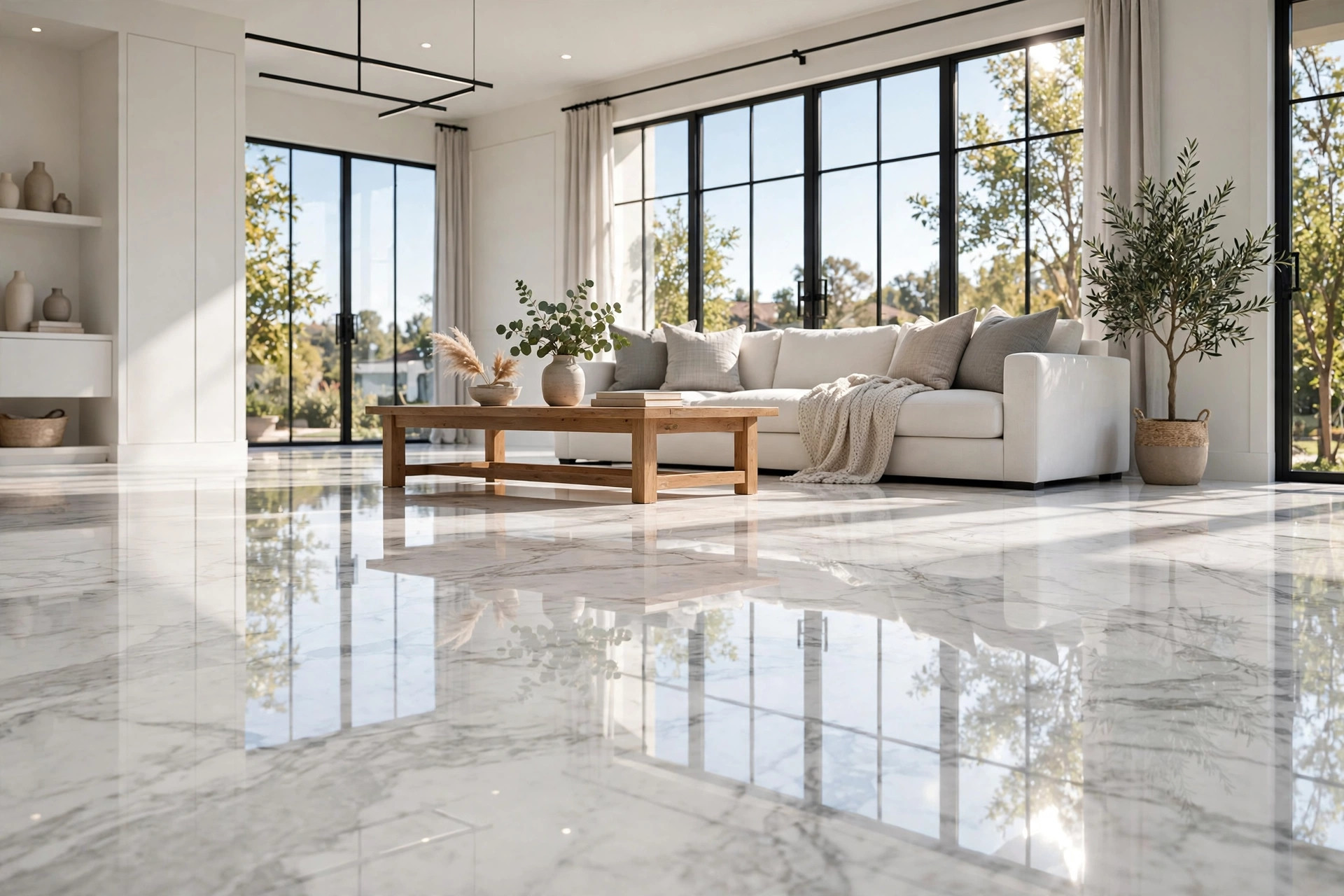

When you type “marble floor polishing service near me cost” into a search box, you want a straight answer. You have a marble floor that has gone dull, and you want to know what a good local polisher will charge. This guide gives you the price ranges, explains what the work includes, and shows you how to pick a service you can trust.
Why Marble Floors Lose Their Shine
Marble is a soft natural stone. It is softer than granite and much softer than porcelain tile. Every day, shoes, dirt, and grit scratch the surface in tiny lines. Mops spread water that dries and leaves a film. Acid cleaners eat the shine. Over the months, the bright finish turns flat and cloudy.
Spills make the problem worse. Lemon juice, wine, coffee, and vinegar stain marble and dull it. In a kitchen or a hall with heavy foot traffic, the floor can look tired after just a few years. Regular mopping keeps the floor clean, but it cannot bring back the polish. That is the point where most owners start to look up the marble floor polishing service near me cost.
A polished marble floor does more than look good. The smooth finish makes cleaning easier, because dirt has less grip. It also protects the stone. A well polished floor, finished with a good sealer, resists stains better and lasts longer before it needs help again. Many homeowners find that a single professional polish every three to five years is cheaper than the endless cycle of home products that promise a shine and fail to deliver it.
What a Polishing Service Actually Does: Marble Floor Polishing Service near Me Cost
A marble floor polishing service is not just a man with a buffer. A real pro follows a set process. The steps change with the state of your floor, but the work usually runs in this order.
First comes a deep clean. The crew sweeps, then scrubs the floor with a stone-safe cleaner. This removes wax, grime, and old coatings that would block the polishing pads. Next comes any repair work. Chips get filled with a color-matched resin. Loose or uneven tiles, called lippage, get ground flat.
Then the main work begins: honing and polishing. Honing uses diamond pads of increasing fineness to remove scratches and the dull layer. Polishing uses finer pads or powders to bring back the glossy finish. The final step is sealing. A penetrating sealer soaks into the stone and blocks stains without changing the look of the floor.
Honing, Polishing, and Sealing Explained
Honing is the repair step. If your floor has deep scratches, etch marks from acid, or a rough finish, honing grinds the top layer down to a smooth, even surface. The finish after honing alone is matte. Polishing is the shine step. It works the surface finer and finer until the gloss returns. Most owners of living-room or hallway marble ask for a high polish, while kitchens and baths often do better with a lower sheen that hides wear.
Sealing is the protection step. Marble is porous. A good sealer slows down staining from water, oil, and drinks. It does not make the stone stain-proof, so you still wipe spills fast, but it buys you time. Most sealers need a fresh coat every one to three years, based on traffic and how you clean. Ask your polisher which sealer they use and how often you should reseal.
How to Choose the Right Service
The price matters, but the cheapest bid often brings the most trouble. Marble work takes skill. A worker who runs the machine too fast or uses the wrong pads can burn the surface, leave swirl marks, or cut the tile edges. Look for these signs of a good service.
First, check experience. Ask how many years the company has worked with natural stone, and ask to see photos of past marble jobs. A good shop will show you before-and-after pictures without any trouble. Second, ask about insurance. The crew should carry liability insurance. If a machine cracks a tile or floods a room, you want that covered.
Third, get the process in writing. The bid should list cleaning, repairs, honing grits, polishing method, and the sealer. A one-line quote that says “polish marble floor” tells you nothing. Fourth, ask for a test spot. Many honest companies will polish a small hidden area, like a closet floor, so you can see the finish before you agree to the whole job.
Fifth, read reviews. Look for reviews that mention marble by name, not just tile. Marble is its own trade. A crew that is great at ceramic tile may have no skill with stone. Check the HGTV and The Spruce guides on stone care if you want a plain-language baseline for what correct work looks like before you talk to any contractor.
Cost and Price: What You Will Pay
Now the main question: what does a marble floor polishing service near me cost? In 2026, most American homeowners pay between $1 and $5 per square foot for a standard honing and polishing job. A small entry hall of 200 square feet might run $250 to $800. A large open living area of 1,000 square feet might run $1,500 to $4,000.
Why the wide range? Several things move the price.
Condition of the floor. A floor with light dullness and no damage is fast to polish. A floor with deep scratches, stains, or etch marks needs extra honing passes, and each pass adds time and cost. Repairs to chips and cracks add more.
Finish level. A satin finish costs less than a mirror finish, because the mirror finish takes more passes with finer pads.
Tile size and layout. Small tiles mean many grout lines, which slow the machine down. Wide-open floors polish faster.
Access and prep. Furniture must move. If the crew moves it, you pay. Tight stairs, upper floors, and far travel add cost too.
Sealer and extras. Some bids include sealing in the price. Others list it as an add-on. Always ask.
Most companies charge a minimum fee, often $300 to $500, because bringing the crew and machines has a fixed cost. That is why very small jobs can look pricey per square foot. If you want to compare bids, price-comparison data from retailers such as Home Depot and Lowe’s can help you sanity-check what local contractors quote for stone work in your area.
Get at least three written bids. Ask each bidder the same questions, and make sure each bid covers the same steps. A bid that skips sealing is not cheaper than a bid that includes it; it is just missing work. When you search for the marble floor polishing service near me cost, add your city or county to the search so the prices you see match your local market. Costs in a big city run higher than in a small town.
Types of Marble and How They Change the Job
Not all marble acts the same under the pads. Carrara, the classic white-gray stone from Italy, polishes to a bright shine but shows etch marks easily. Calacatta, with its bold gold veins, is softer and needs a gentler hand. Dark marbles like Nero Marquina show every scratch, so they need a finer finish and more care.
Imported stone and rare colors can cost more to work on, because the filler colors must match and the polisher must be careful not to alter the look. If your marble is a special import, say so when you call for bids. The Shaw Floors and Mohawk Flooring stone care resources explain how different natural stones respond to honing and polishing, which can help you ask smarter questions.
The age of the install matters too. Older floors may have worn grout, and the crew may need to re-grout or color-seal it. Grout work is often priced by the line foot. If your bath floor has mold in the grout, you may also want to read up on the best grout cleaner for mold reviews usa before the crew arrives, so the surface is ready for them.
Care and Upkeep After Polishing
A fresh polish is an investment. Protect it with simple habits. Sweep or dust-mop often. Grit is the enemy. Place mats at doors and soft pads under furniture legs. Clean with a stone-safe, pH-neutral cleaner only. Never use vinegar, lemon, bleach, or bathroom cleaners that list acid. These eat the polish you just paid for.
Wipe spills right away, especially juice, wine, and tomato sauce. Use coasters under drinks and trays under plants. If you must move heavy furniture, lift it; do not drag it. In a busy home, expect to call for a light re-polish every three to five years, with a sealer refresh in between.
Bathrooms need extra care. Steam and soap film dull marble fast. Squeegee the floor after showers if you can, and keep the room aired. A yearly check on the grout is wise. The best grout sealer for bathroom tile usa guide is a good read if you want to keep the grout lines as clean as the stone. For entryways and mudrooms, where grit and wet shoes are a daily fact, pair your polished marble with a tough welcome mat and see the best tile for mudroom floor reviews usa for ideas on the hardest-wearing spots.
Safety
Marble polishing is wet work. The crew will use water and slurry, and floors get slick. Keep children and pets out of the work zone. Ask the crew to tape off the area and post signs. If anyone in the home has a dust allergy, ask whether the crew uses dust-controlled grinding for any repair work.
The machines are heavy. A floor grinder can weigh over a hundred pounds. A good crew keeps cords tidy and doors blocked so no one trips. Check that the company carries workers’ compensation insurance as well as liability. If a worker is hurt on your property and the company has no cover, the problem can land on you.
Sealers and cleaners have fumes. Ask for low-VOC products if you have small children, older family members, or pets with breathing trouble. Open windows and run fans during the job and for a few hours after. Reliable safety guidance for stone and tile work is easy to find; This Old House and LL Flooring both publish plain guides on what to expect during a floor refinishing project.
Frequently Asked Questions
How long does marble polishing take? A crew of two can hone and polish about 300 to 500 square feet in a day, based on the floor’s state. Add a day for repairs and a few hours for the sealer to cure. Most homes are done in one to three days.
Can I polish marble myself with a rental machine? You can, but it is risky. Rental buffers are hard to control, and marble is easy to damage. Home polishing pads work for a light shine-up on a floor that is only a little dull. For scratches, stains, or a full re-hone, hire a pro. The Daltile care pages note that natural stone needs the right pads and speed, which is where most DIY jobs go wrong.
How often should I have my marble floor polished? Most homes need a full polish every three to five years. Busy kitchens and entries may need it sooner. If the floor still looks good but water no longer beads, a sealer refresh may be all you need.
Does polishing remove stains? Light surface stains often lift during honing. Deep stains that have soaked far into the stone may lighten but not vanish. Your polisher can test a spot and tell you what to expect before you pay for the whole floor.
Will the floor be slippery after polishing? A high-gloss polish is smoother than a honed finish, so it can be slick when wet. Many owners choose a satin or honed finish in baths and entries for grip. Ask for a non-slip sealer additive in wet zones.
What should a written bid include? Square footage, the full step list (clean, repair, honing grits, polishing method, sealer brand), the finish level, prep and furniture terms, the total price, and the warranty. If any of these are missing, ask before you sign.
A Final Word
Searching for the marble floor polishing service near me cost is the right first move. Now you know the numbers: roughly $1 to $5 per square foot, a $300 to $500 minimum, and extra for repairs and sealing. Get three bids, check the process in writing, ask for a test spot, and pick the crew with real stone experience. A good polish every few years keeps marble looking rich and makes daily care easy. Treat the new finish well, and it will pay you back every time you walk across the room.
References
Daltile. (n.d.). Ceramic and porcelain tile. https://www.daltile.com HGTV. (n.d.). Home and garden ideas. https://www.hgtv.com LL Flooring. (n.d.). Hardwood, vinyl, and tile flooring. https://www.llflooring.com Lowe’s. (n.d.). Home improvement products. https://www.lowes.com Mohawk Flooring. (n.d.). Flooring products. https://www.mohawkflooring.com Shaw Floors. (n.d.). Flooring products. https://www.shawfloors.com The Home Depot. (n.d.). Home improvement products. https://www.homedepot.com The Spruce. (n.d.). Home and garden advice. https://www.thespruce.com This Old House. (n.d.). Home renovation guidance. https://www.thisoldhouse.com
Was this guide helpful?

About Jennifer Lee
The My Garden US editorial team writes practical, in-depth home and garden guides for American homeowners — tested advice, no fluff.
You May Also Like
How to Measure for Flooring Calculator USA
February 8, 2026 0 views
Exposed Aggregate Concrete Cost Near Me: A Plain Guide
September 20, 2026 0 views
Best Adhesive Tile for Laundry Room USA: How to Pick a Floor That Stands Up to Water
June 18, 2026 0 views