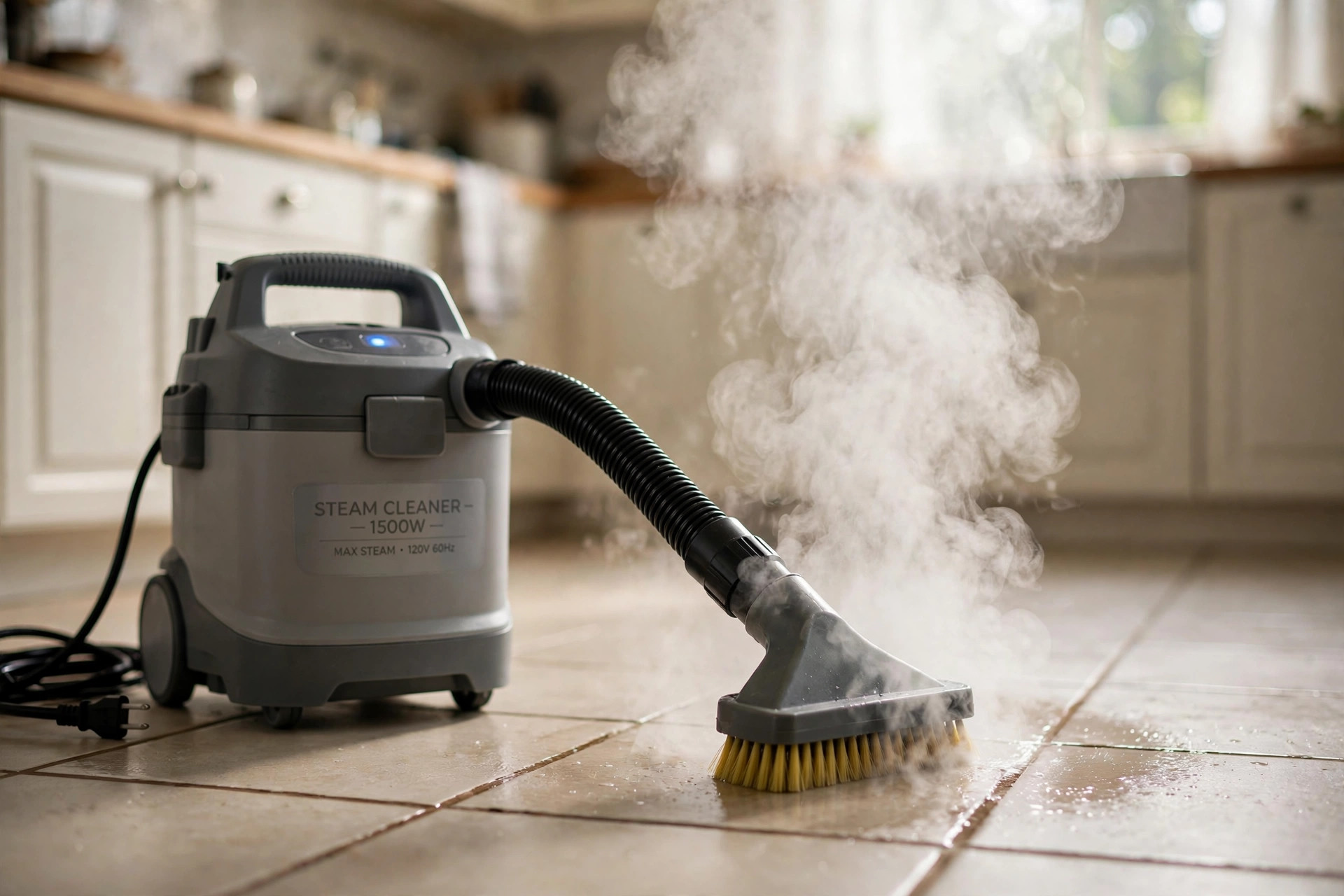

Grout looks good on the day the tile goes down. The lines are crisp and clean, and the floor seems new. Then time does its work. Dust settles in. Spills soak in. Mop water leaves a thin film behind. After a year or two, the grout lines of many American tile floors turn gray, yellow, or dark brown. Reading a steam cleaner for tile grout reviews usa can help you decide whether a steam machine is the right answer for your home. Buyers across the country report that steam lifts grime without the heavy scrubbing that old methods require. This guide pulls together what those buyers say, what the machines can and cannot do, and how to pick one with care.
Why Grout Gets Dirty and Why Steam Helps
Grout is a cement-like mix. It fills the gaps between tiles. It is also porous. That means it has tiny holes that drink in water, grease, and dirt. Regular mopping washes the tile face. It rarely cleans deep into the grout line. A steam cleaner sends hot vapor into those tiny holes. The heat loosens dirt. The moisture softens grease. A brush attachment then lifts the grime away. Many users say the grout lines brighten by several shades on the first pass.
Steam also avoids harsh chemicals. Families with small children or pets like this. There is no strong smell. There is no residue left behind. The floor dries fast because steam uses little water. Reviews often praise this point. People with light grout in kitchens and entryways report the best results.
Still, steam is not magic. Very old stains may not lift fully. Loose or cracked grout can break apart under hot steam. Old tile set decades ago may need repair first. Honest reviews say this plainly. A machine helps clean grout. It does not fix broken grout.
How to Choose a Steam Cleaner for Tile Grout: Steam Cleaner for Tile Grout Reviews Usa
Shoppers face many models. Prices run from under fifty dollars to several hundred. Reviews point to the same features again and again. Here is what matters most.
Water Tank Size and Heat-Up Time
A small tank holds about twelve ounces. It heats in three to five minutes. It runs for ten to fifteen minutes of steam. That suits one bathroom. A large tank holds forty ounces or more. It may take ten minutes to heat. It can run for forty minutes or longer. That suits a whole kitchen floor. Reviews warn against the stop-and-wait cycle. If you must refill every ten minutes, a big job feels slow.
Steam Pressure and Temperature
Most home machines reach about 200 to 230 degrees Fahrenheit. Pressure is measured in bars or PSI. Higher pressure pushes steam deeper into the grout line. For tile grout, look for at least 3 bars of pressure. Handheld units often have less. Canister units often have more. Many buyers say the brush head matters more than the raw numbers. A stiff nylon brush on the nozzle does the real work.
Attachments and Brush Heads
The best models ship with a grout brush. It is a small, stiff brush that fits the nozzle. Some ship with three or four brushes of different sizes. A squeegee head helps on shower walls. A mop pad head suits the tile face. Reviews say to check the box contents before buying. A machine without a grout brush is a poor pick for this job.
Cord Length and Weight
A cord of twenty feet or more lets you clean a kitchen without moving plugs. A full canister unit can weigh ten to fifteen pounds. That is fine if it rolls on wheels. Handheld units are light but tire the wrist fast. Buyers with large homes tend to favor rolling canisters. The home improvement guides at This Old House often stress matching the tool to the size of the job, and that advice fits here.
Sealed Versus Unsealed Tile
Steam is safest on sealed, glazed tile and sealed grout. Unglazed natural stone, such as marble or slate, needs more care. Hot steam can dull some stone finishes. It can push into the stone itself. Tile makers publish care sheets for this reason. If you own natural stone, read the tile care guidance from Daltile or your own tile maker before you steam. When in doubt, test a small hidden spot first.
Review Red Flags and Green Flags
When reading reviews, watch for patterns. Green flags include repeat praise for steady steam, tight lids, and brushes that last. Red flags include many reports of the same leak, tanks that crack, or steam that fades after five minutes. Ignore the odd angry review with no detail. Trust trends across twenty or more reviews. Also check the date of reviews. A model that scored well in 2023 may have changed parts since. The newest reviews tell the truest story. The product testers at Consumer Reports update their findings on a set cycle for this very reason.
Types of Steam Cleaners Found in USA Reviews
Three styles dominate the reviews. Each has a place.
Handheld Steam Cleaners
These are small and light. You hold them like a spray gun. They cost the least. They work well on spot stains, small backsplash areas, and toilet bases. They struggle on whole floors. The tank runs out fast. Reviewers call them handy helpers, not whole-house tools.
Steam Mops
These look like stick mops with a pad on the foot. They glide over tile faces with ease. They are popular for weekly kitchen cleaning. Most ship with a scrub pad that can rub grout lines. They are less strong on deep stains than canisters. Owners like them for upkeep once the grout is already clean. The cleaning experts at The Spruce often place steam mops in the maintenance category, and owners seem to agree.
Canister Steam Cleaners
These have a separate tank unit on wheels and a hose with attachments. They offer the most power and the longest run time. They cost the most. For old, dark grout, reviewers rate them highest. The stiff brush heads and steady steam do the heavy work. If you plan one deep clean per year, this is the usual pick. Large retailers like Home Depot and Lowe’s stock all three styles, and their review pages let you sort by tile use.
Cost and Price Across the United States
Prices vary by style and brand. Handheld models often sell for forty to ninety dollars. Steam mops often sell for eighty to one hundred eighty dollars. Canister models often sell for one hundred fifty to four hundred dollars. The buying guides at Bob Vila track these price bands and update them each season.
Watch for hidden costs. Some machines need distilled water to avoid mineral buildup. That adds a small yearly cost. Replacement brushes cost five to fifteen dollars a set. Pads for steam mops wear out and need replacing too. None of these costs are large. Still, reviewers say to count them.
Price does not always track quality. Several mid-priced models earn higher review scores than premium ones. Read the one-star and three-star reviews first. They reveal real flaws. Common complaints include short steam time, weak brushes, and leaky tanks. Five-star reviews tell you what owners love. Three-star reviews tell you the truth.
Care and Upkeep of Your Steam Cleaner
A steam cleaner needs little care. Use distilled water if your tap water is hard. Empty the tank after each use. Wipe the outside dry. Clean the brush heads with warm water. Let pads dry fully before storage.
Descale the machine every few months if the manual asks for it. A mix of white vinegar and water works on many models. Check the manual first. Some makers forbid vinegar. Keep the nozzle clear of debris. A blocked nozzle weakens steam flow. Store the unit in a dry place. With these steps, most machines last many years.
Safety When Steaming Grout
Steam is hot. Treat it with respect. Keep the nozzle pointed away from your hands and feet. Wear rubber gloves. Wear closed shoes. Keep children and pets out of the room while you work. Let the floor dry before walking on it. Wet tile is slippery.
Do not steam near electrical outlets or switches. Do not point steam at a single spot for too long. Long blasts on one spot can crack grout or soften caulk. Move the nozzle in slow, steady passes. Ventilate the room if it feels very warm. The flooring maker Shaw Floors and most machine makers print the same basic warnings, and they are worth following.
Frequently Asked Questions
Will a steam cleaner remove all grout stains?
It will remove most surface dirt and many stains. Fresh grime lifts fast. Old grease and deep color changes may need two or three passes. Some stains never fully leave. If the grout was never sealed, stains may be set deep. In that case, cleaning helps, but the line may stay darker than new.
Can steam damage tile grout?
Steam can damage grout that is already loose, cracked, or crumbling. It can also harm unsealed natural stone. For sound, sealed grout on ceramic or porcelain tile, steam is generally safe. Test a hidden area first. If the grout crumbles, stop and repair the grout before steaming. You may also want to read our guide on best grout for shower floor reviews usa before choosing repair products.
Do I need chemicals with a steam cleaner?
No. Steam cleans with heat and water alone. That is one of its main draws. For very tough spots, some owners pre-treat with a mild cleaner first. Always rinse before steaming if you do. Mixing chemicals with steam is not advised by most makers.
How long does a steam cleaning last?
Cleaned grout stays bright for months in low-traffic rooms. Kitchens and entryways soil faster. Many owners steam the kitchen every two to three months. Sealing the grout after cleaning makes the result last longer. Our roundup of best grout sealer for bathroom tile usa covers sealer options for wet rooms.
Which size machine do I need?
For one or two bathrooms, a handheld or small steam mop is enough. For a full kitchen and hallway, choose a canister with a large tank. Larger homes benefit from long cords and wheels. Match the machine to the size of the tile area. Bigger jobs need bigger tanks.
Is steam better than scrubbing by hand?
Steam is faster and easier on the body. Hand scrubbing works on small spots. For a whole floor, steam wins. Many owners who once scrubbed on their knees say steam gave them their time back. If you are still deciding on tile for a wet room, see our notes on best tile for shower walls reviews usa for surfaces that are easy to keep clean.
A Short Final Word
A steam cleaner is a plain, honest tool for tile grout. It uses heat, not harsh soap. It brightens grout lines. It shortens a hard job. Reviews from buyers across the United States back this up, with the usual honest limits. Pick a machine that fits the size of your rooms. Check that it ships with a real grout brush. Use distilled water if your water is hard. Test on a hidden spot. Then work in slow, steady passes. For broader context on how products earn their ratings, the test labs at Consumer Reports publish their methods in the open. For classic house-care wisdom, Good Housekeeping has covered steam cleaning for years. With the right machine and a little patience, tired grout can look close to new again.
References
Bob Vila. (n.d.). Home improvement advice. https://www.bobvila.com Consumer Reports. (n.d.). Product reviews and ratings. https://www.consumerreports.org Daltile. (n.d.). Ceramic and porcelain tile. https://www.daltile.com Good Housekeeping. (n.d.). Product reviews and home advice. https://www.goodhousekeeping.com Lowe’s. (n.d.). Home improvement products. https://www.lowes.com Shaw Floors. (n.d.). Flooring products. https://www.shawfloors.com The Home Depot. (n.d.). Home improvement products. https://www.homedepot.com The Spruce. (n.d.). Home and garden advice. https://www.thespruce.com This Old House. (n.d.). Home renovation guidance. https://www.thisoldhouse.com
Was this guide helpful?

About Jennifer Lee
The My Garden US editorial team writes practical, in-depth home and garden guides for American homeowners — tested advice, no fluff.
You May Also Like
Best Spacers for Large Format Tile USA: A Full Guide
October 2, 2026 0 views
Horse Stall Mats for Home Gym Reviews: A Plain Guide to Tough Rubber Flooring
June 27, 2026 0 views
Linear Drain for Curbless Shower Reviews: A Buyer’s Guide for USA Homes
September 26, 2026 0 views