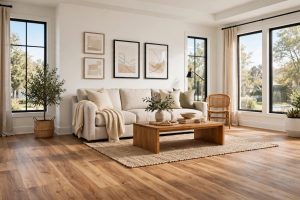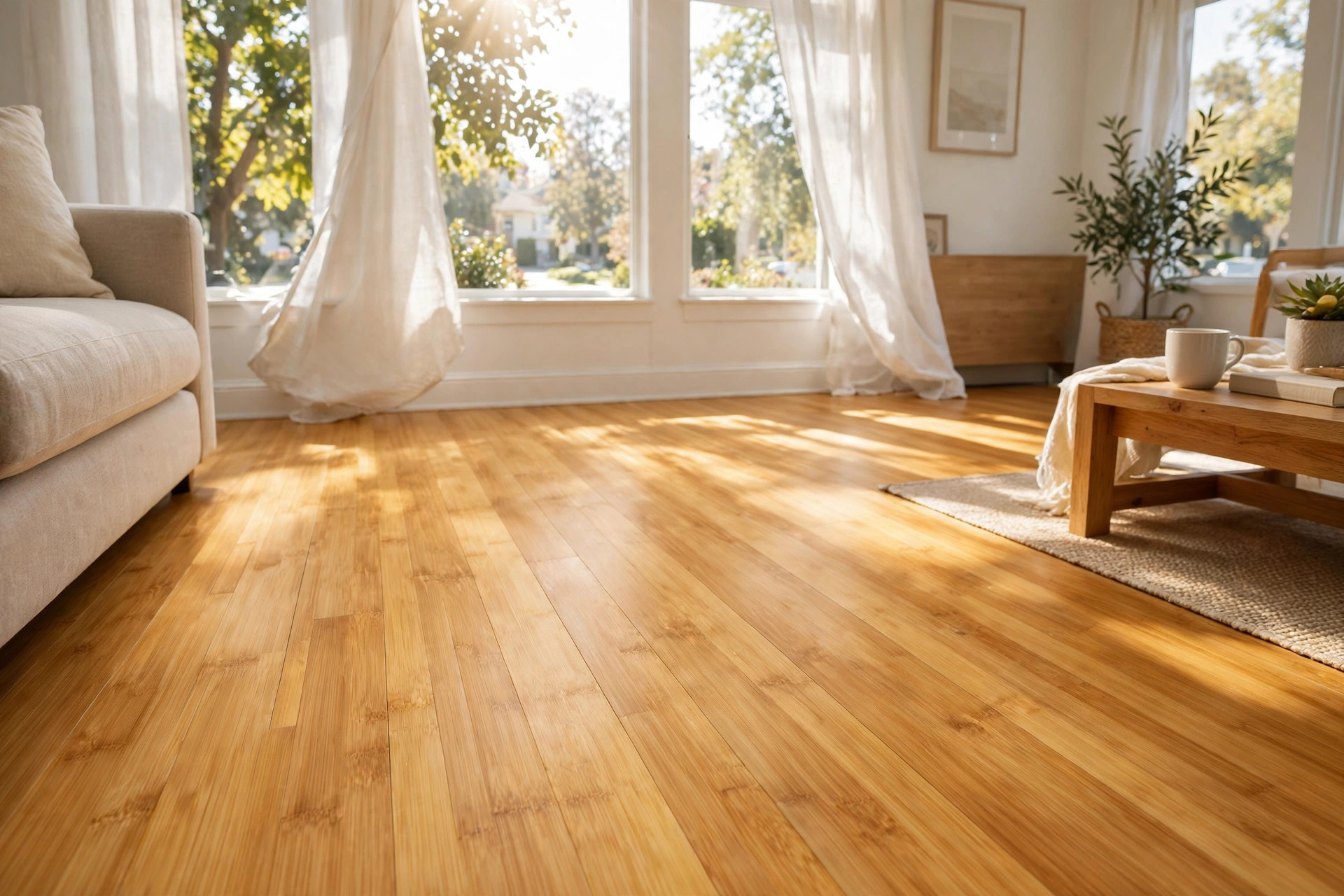

Bamboo flooring reviews for USA homes have grown kinder over the past ten years. Early boards were thin and soft. They dented under chair legs and warped near wet doors. Today’s boards are a different story. The best strand-woven bamboo now rates as hard as red oak. It suits busy family rooms, rental flats, and even busy halls. This guide pulls together what owners, installers, and floor testers say about bamboo floors sold across the United States. It covers the main types, real prices, care, and honest weak points, so you can judge whether bamboo is right for your house.
Why Bamboo Flooring Matters to American Homes
Bamboo is a grass, not a wood. It grows fast. A bamboo stalk can reach full height in five years, while an oak tree needs sixty. That speed makes bamboo one of the most renewable floor materials sold today. Many buyers pick it for that reason alone.
Reviews point to three main strengths. The first is hardness. Strand-woven bamboo boards are pressed from shredded fibers and resin under heat. The result is very dense. Testers at Consumer Reports and home labs rank top strand-woven lines near red oak on the Janka hardness scale. The second strength is looks. Bamboo has a clean, straight grain that fits modern rooms. It comes in honey, amber, and dark coffee tones. The third strength is price. Quality bamboo often costs less per square foot than solid hardwood of the same grade. A fourth quiet strength is its uniform look. Boards vary little from box to box, so large open rooms read as one calm surface.
There are limits, and honest reviews name them. Bamboo reacts to water like any plant fiber. A spilled drink wiped up at once does no harm. Standing water for a day can swell the edges. Boards also fade in strong sun. A floor beside a big south window may lighten over two summers. Installers advise curtains or rugs in sunny spots. Still, for dry rooms on the main floor, owners give bamboo some of the best value ratings in the hard-floor market.
Types of Bamboo Flooring: Bamboo Flooring Reviews for Usa Homes
Not all bamboo floors are built the same. Three main types appear in USA stores. Each has a different price and a different record.
Strand-Woven Bamboo
Strand-woven is the heavyweight. Makers shred bamboo fibers, soak them in resin, and press them into blocks under heat and force. The boards come out dark, dense, and tough. This is the type that earns the best reviews. It resists dents from pet claws, toy trucks, and dropped pans better than most wood floors near its price. Many strand-woven lines carry 25-year or lifetime home warranties. If you want bamboo that stands up to real family life, this is the type owners praise most.
Engineered Bamboo
Engineered bamboo puts a thin bamboo layer over a plywood or fiberboard base. The board is stable. It moves less when the air turns dry in winter or damp in summer. That makes it a fair pick for basements or over concrete slabs, where solid boards might cup. The weak point is the top layer. It is often only two or three millimeters thick. You cannot sand and refinish it more than once, if at all. Buyers who read LL Flooring reviews note that engineered bamboo dents more easily than strand-woven. Choose it for stability, not for toughness.
Solid Horizontal and Vertical Bamboo
The older style stacks bamboo strips side by side. Horizontal shows wide grain. Vertical shows thin stripes. These floors look natural and warm. But they test much softer than strand-woven. Reviews call them fine for low-traffic bedrooms and studies, where shoes come off at the door. For halls, kitchens, or homes with dogs, most owners now advise against them. They dent, and repairs show.
How to Choose the Right Bamboo Floor
Shopping for bamboo takes a little care. Brand names matter less than the specs on the box. Here is what reviewers and installers say to check.
First, look for the hardness rating. Good strand-woven bamboo lists a Janka score above 3,000 pounds. Red oak rates near 1,290 for comparison. A number above 2,800 means a board that will fight off dents. Second, check the warranty. The best lines promise 25 years to lifetime for home use. A short five-year warranty often signals a soft board. Third, ask about the finish. Aluminum oxide finishes are the standard on quality floors. They add scratch resistance that raw bamboo lacks.
Fourth, match the floor to the room. Strand-woven suits living rooms, halls, and home offices. Engineered works better in damp rooms or over concrete. For bathrooms, honest reviews point elsewhere. Neither type likes standing water. Our guide to waterproof laminate flooring for bathrooms usa lists floors built for wet rooms. Fifth, buy from a store with a clear return policy. Big USA retailers such as Home Depot and Lowe’s let you order samples and return extra boxes, which small web shops rarely allow.
Color is the last choice, not the first. Amber and coffee tones hide dust and pet hair. Pale honey shows more dirt but makes small rooms look larger. Order three or four samples. Lay them on your own floor for a week. Watch them in morning light and lamplight before you buy.
Cost and Price in 2026
Bamboo flooring sits in the middle of the USA price ladder. It is not the cheapest hard floor, and it is not the dearest. Materials for good strand-woven bamboo run from about six to eleven dollars per square foot in most states. Engineered bamboo runs a little less, about five to nine dollars. Basic solid horizontal boards start near four dollars, but reviewers warn that the savings buy a soft floor.
Installation adds three to eight dollars per square foot for a pro job. Click-lock floating floors are the simplest for do-it-yourself owners. Glue-down boards need a flat slab and a steady hand. A This Old House guide notes that poor subfloor prep ruins more bamboo jobs than any other cause. The slab must be flat within an eighth of an inch over six feet, and dry to the maker’s spec.
For a 500-square-foot living area, expect a total of five to nine thousand dollars with pro labor. That is less than solid oak in most markets, and near the cost of good luxury vinyl plank flooring reviews 2026 lines. Watch for deals in spring and fall, when big stores clear floor stock. Always buy ten percent extra for cuts and future repairs.
Care and Upkeep
Bamboo care is simple. Sweep or vacuum with a soft brush head once or twice a week. Grit is the real enemy. Tiny stones under shoes grind the finish over time. A good doormat at each entry cuts wear in half. Mop with a damp microfiber pad and a cleaner made for wood floors. Never soak the floor. Never use a steam mop. Steam forces water into the seams, and the edges will swell.
Felt pads under every chair and table leg are cheap insurance. Move heavy furniture on sliders, not by dragging. Pet nails should be trimmed. For homes with large dogs, some owners pair bamboo in living areas with softer pet zones elsewhere. Our roundup of pet friendly flooring options for usa homes covers mixed-floor plans.
Refinishing depends on the type. Solid and strand-woven boards with thick wear layers can be screened and recoated once or twice. Engineered bamboo with a thin top layer usually cannot. When the finish dulls after ten or fifteen years, a pro can often buff and recoat strand-woven boards for a fresh look at a fraction of the cost of new floors. Deep dents can be filled with a color-matched wood filler, then touched up with a stain pen from the same maker.
Humidity control matters more than most owners expect. Bamboo is happiest between 35 and 55 percent relative humidity. In dry northern winters, a whole-house humidifier keeps boards from gapping. In damp Gulf Coast summers, air conditioning keeps them from cupping. A ten-dollar gauge on the wall tells you where you stand.
Safety and Health Points
Bamboo floors are safe for homes when you buy certified products. Two points deserve a buyer’s eye. The first is formaldehyde. Strand-woven boards use resin to bind the fibers. Cheap boards may release more formaldehyde than strict standards allow. Look for floors rated CARB Phase 2 or FloorScore certified. These marks mean the board passed low-emission tests. USA stores such as Shaw Floors and Mohawk Flooring dealers list certified lines, and big-box shelves now carry the marks too.
The second point is slip. Polished bamboo can be slick in socks, much like any smooth hard floor. Rugs in halls and at stair tops help. For a kitchen, where spills are common, think hard about whether a hard plant-fiber floor is the right call. Some families tile or vinyl the kitchen and run bamboo through the rest of the main floor. That split plan gets good reviews.
Fire safety is plain. Bamboo burns like wood. Keep it away from open fireplace fronts, or lay a stone hearth strip. Finish coats are not fireproof, and embers can scar them.
Frequently Asked Questions
Is bamboo flooring harder than hardwood?
Good strand-woven bamboo is harder than red oak and white oak. It dents less under normal family use. Basic horizontal and vertical bamboo is softer than oak. Always check the Janka rating on the box, since the word bamboo alone tells you nothing about hardness.
Can bamboo flooring go in a kitchen?
It can, but it needs care. Wipe spills at once. Use rugs at the sink and stove. Many owners report good results in kitchens with strict spill habits. Others prefer waterproof floors there. The Spruce home guides suggest testing your habits honestly before you decide.
How long does bamboo flooring last?
Quality strand-woven bamboo can last 25 to 50 years in a home with normal care. The finish may need a recoat after 10 to 15 years. Cheap soft boards may look tired after eight. The warranty length is the best clue. A lifetime home warranty signals a maker that trusts its boards.
Does bamboo flooring increase home value?
It helps, though less than solid oak or maple. Appraisers treat quality bamboo as a mid-range hard floor. It beats carpet and laminate in resale appeal. In markets where buyers know bamboo, such as California and Colorado, it can be a selling point. Keep receipts and the brand name for the next buyer.
Is bamboo flooring good for dogs?
Strand-woven bamboo earns fair to good marks from dog owners. It resists claw scratches better than soft pine or cheap laminate. Big heavy dogs can still dent any floor. Trim nails, use rugs on run paths, and clean muddy paws at the door. Dal-Tile tile guides note that no hard floor is fully dog-proof, and bamboo is no exception.
A Final Word
Bamboo flooring reviews for USA homes tell a steady story. The early failures taught makers and buyers a lesson. Today, a well-chosen strand-woven floor gives oak-like toughness at a mid-range price, with a clean modern look and a strong green story. Buy certified boards with a long warranty. Match the type to the room. Keep water off the seams and humidity in range. Do that, and bamboo will serve your home well for decades.
References
Consumer Reports. (n.d.). Product reviews and ratings. https://www.consumerreports.org Daltile. (n.d.). Ceramic and porcelain tile. https://www.daltile.com LL Flooring. (n.d.). Hardwood, vinyl, and tile flooring. https://www.llflooring.com Lowe’s. (n.d.). Home improvement products. https://www.lowes.com Mohawk Flooring. (n.d.). Flooring products. https://www.mohawkflooring.com Shaw Floors. (n.d.). Flooring products. https://www.shawfloors.com The Home Depot. (n.d.). Home improvement products. https://www.homedepot.com The Spruce. (n.d.). Home and garden advice. https://www.thespruce.com This Old House. (n.d.). Home renovation guidance. https://www.thisoldhouse.com
Was this guide helpful?

About James Carter
The My Garden US editorial team writes practical, in-depth home and garden guides for American homeowners — tested advice, no fluff.
You May Also Like
Exposed Aggregate Concrete Cost Near Me: A Plain Guide
September 20, 2026 0 views
The Best Bamboo Flooring Brands USA 2026: A Complete Guide
January 11, 2026 0 views
Best Concrete Floor Stain for Garage USA: A Plain Guide for Homeowners
February 6, 2026 0 views