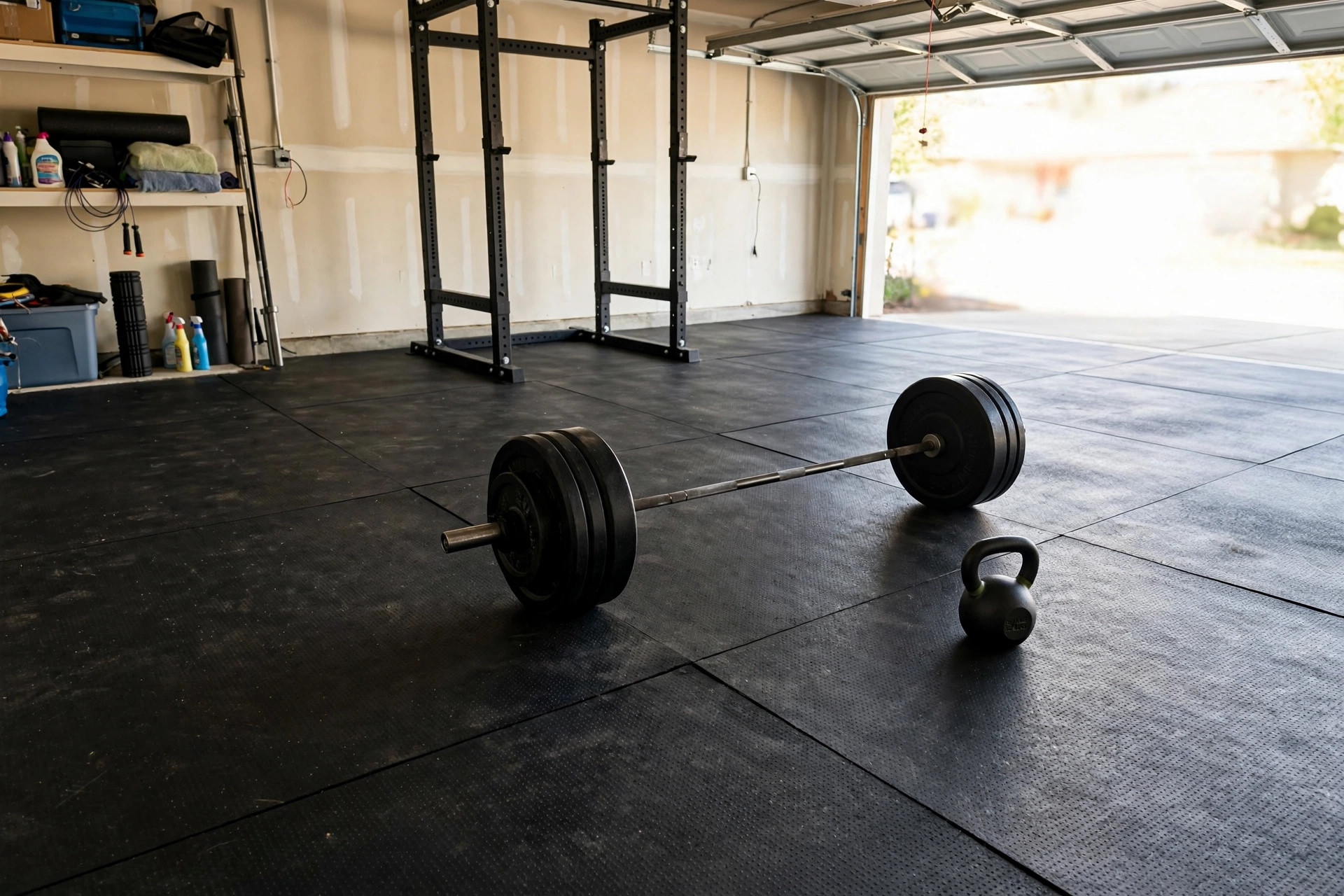

Most people who read horse stall mats for home gym reviews want one thing. They want a floor that can take heavy weights and daily use without costing too much. These mats started life in barns and stables. Farmers use them under horses because they are thick, tough, and kind to tired legs. Home gym owners found them later. They saw that a four by six foot sheet of dense rubber could protect a garage floor from dropped barbells. Word spread. Now these mats are a standard choice for garage gyms, basements, and backyard sheds across the country.
This guide walks through what matters: thickness, smell, weight, cost, and care. By the end you will know which mat suits your room and your budget.
Why Horse Stall Mats Belong in a Home Gym
A home gym floor has a hard job. It must cushion dropped dumbbells. It must grip shoes so feet do not slide. It must lie flat and stay put. Carpet fails at this. Bare concrete is cold and loud. Thin foam tiles tear under heavy plates. Thick rubber solves all of these problems at once.
Horse stall mats are made from vulcanized rubber: strong, heat-cured rubber that comes out dense and heavy. A standard mat measures four feet by six feet and three quarters of an inch thick. It weighs close to one hundred pounds. That weight keeps them in place with no glue or tape. You simply lay the mats side by side.
The density matters for weight training. When you set down a loaded barbell, the mat absorbs the shock. Your concrete floor stays safe. Your downstairs neighbors hear less noise. People who lift in apartments or attached garages notice the difference at once. Reviews of horse stall mats vs gym mats often name noise control as the first benefit owners feel.
Another reason is price. A single four by six mat costs far less than the same area of branded gym flooring. Fitness companies sell interlocking tiles and rolls at a premium, though the rubber is similar. For a two car garage, horse stall mats can save hundreds of dollars.
What to Look for When You Choose: Horse Stall Mats for Home Gym Reviews
Not all stall mats are the same. They differ in thickness, rubber quality, smell, and surface pattern. Read the details before you buy. A careful look saves you a second trip to the store.
Thickness and Density
Thickness is the first thing to check. Most mats come in three quarter inch and one half inch versions. The three quarter inch mat is the better pick for a home gym: it absorbs more shock and resists dents from heavy plates. The half inch mat suits light cardio, but it dents under real weight.
Density matters as much as thickness. Pick up a corner of the mat. A good mat feels firm and heavy. A cheap mat feels light and spongy. Spongy mats compress too much. They let weights sink in and wobble. Dense mats hold their shape. Experienced buyers in many horse stall mats for home gym reviews say density is the trait that separates a ten year mat from a two year mat.
Smell and Rubber Quality
New rubber has a strong smell. This is the most common complaint in every review. Mats made from recycled tires can smell of oil and chemicals for weeks. Mats made from virgin rubber smell less. Ask the store which type they stock. Farm supply stores carry both.
The smell fades with time and air. Leave new mats in the sun for a day or two before you lay them down. Wash them with mild soap and water. Ventilate the room for the first week. Most owners report that the odor drops to a faint background note within a month. People with strong chemical sensitivity should choose low odor virgin rubber mats even if they cost more. Guides at home improvement resources note that ventilation and sun exposure are the two fastest ways to air out new rubber.
Size, Weight, and Surface
The standard size is four feet by six feet. That size fits most rooms with little cutting. A full sheet covers twenty four square feet. Measure your room first. Sketch a layout on paper. You will see how many sheets you need and where cuts fall.
Weight is a real factor. A three quarter inch mat weighs about ninety to one hundred pounds. You will need a truck or trailer to bring home more than a few. Bring a friend. Roll each mat to move it, and unroll it flat in the room. Some stores will load the mats for you. Ask before you pay.
Check the surface pattern. Many mats have a diamond plate or pebble texture on one side for grip; the other side is smooth. Keep your choice consistent across the room so the floor looks even.
Types and Options
Horse stall mats come in a few main types. Knowing the names helps you shop with confidence.
Recycled rubber mats are the most common. They are made from ground tires pressed into sheets. They are the cheapest option. They are also the heaviest and the smelliest. For a garage gym where cost is king, they are the classic pick.
Virgin rubber mats use new rubber stock. They cost more. They smell less. They have a more uniform color, usually deep black. Commercial gyms that want a clean look often choose virgin rubber. If your gym doubles as a home office or a finished basement, the extra cost is worth it.
Interlocking stall mats have puzzle style edges. They lock together and resist drifting apart. They cost more than straight edge mats. They are useful if you plan to move the mats often. For a permanent install, straight edge mats pushed tight together work just as well.
Some buyers compare horse stall mats with rolled rubber flooring from flooring specialists. Rolls give a seamless look with fewer seams. They cost more per square foot and are harder to install alone. Mats win on price and ease. Rolls win on looks. For most home gyms, mats are the practical choice.
You may also see EVA foam tiles marketed as gym flooring. Foam is light and cheap. It is fine for bodyweight work. It is not fine under barbells. Heavy plates crush foam and leave permanent dents. Rubber horse stall mats outlast foam by many years, a durability point echoed in the rubber flooring guides from flooring makers.
Cost and Price
Price is where horse stall mats shine. A four by six foot, three quarter inch mat usually sells for forty to sixty dollars at farm supply stores. That works out to roughly two dollars per square foot. Branded gym flooring tiles often cost four to eight dollars per square foot. For a four hundred square foot garage, the difference can exceed one thousand dollars.
Prices move with oil and transport costs, so check current prices before you plan a budget. Listings from large home improvement chains and farm stores update often, and spring sales can save ten to twenty percent.
Plan for waste. Rooms are rarely exact multiples of four by six. You will cut some mats to fit walls and corners. Buy one extra mat beyond your sketch. The spare covers mistakes and gives you a piece for future patches. Cut mats with a sharp utility knife and a straight edge. Make several light passes instead of one deep cut. The rubber cuts cleanly if you take your time.
Delivery adds cost if you cannot haul the mats yourself. A dozen mats weigh over a thousand pounds, so check your trailer limit. Some stores offer flat bed delivery for a fee, which you can split with a training partner.
Care and Upkeep
Rubber stall mats need little care. That is part of their charm. A simple routine keeps them clean and odor free for years.
Sweep the floor weekly. Chalk dust, dirt, and grit grind into the surface if left alone. A stiff broom works well. Follow with a damp mop and mild dish soap once a month. Avoid harsh chemicals. Bleach and strong solvents can dry out the rubber and dull the finish. Plain soap and water do the job.
Let the mats dry fully after mopping. Standing water seeps into seams and breeds odor. Open the garage door or run a fan for an hour after a deep clean. Good airflow is the best friend of any rubber floor.
Rotate heavy use zones once a year if you can. Swap the mat under your squat rack with one from a quiet corner. This evens out wear, and owners report floors that still look good after eight or ten years.
Check seams twice a year. Mats can creep apart with heavy use, so push them back tight. If a gap keeps opening, a strip of double sided carpet tape under the seam holds it. Do not glue the whole floor down, in case water gets under a mat.
Sunlight fades rubber over time to a dark gray. This is cosmetic only; the strength stays the same.
Safety
A safe floor is a floor you do not think about. Horse stall mats deliver that, but a few points deserve attention.
First, keep the surface dry. Wet rubber is slick. Wipe up sweat and spilled water right away. Wear shoes with good tread. Bare feet on damp rubber can slip during fast movements.
Second, mind the edges. Mats are heavy and stiff. A curled edge is a trip hazard. Make sure every mat lies flat. If a mat will not lie flat, flip it over. Rubber has a memory from how it was stored. A day or two of reverse curling usually fixes it. Trim any edge that still lifts.
Third, think about fire. Rubber burns. Keep mats away from open flames, space heaters, and hot equipment. Never use a cutting torch or heat gun near the floor.
Fourth, consider air quality. New rubber releases volatile compounds. The smell is the sign. Ventilate well during the first weeks. People with asthma or chemical sensitivity should air mats outside for several days before install. Once aired out, cured rubber is stable and safe for daily training. Home guides echo the same advice on ventilation.
Finally, anchor tall equipment. Mats grip well, but a heavy rack on a slick concrete slab under the mats can still shift. Bolt racks to the floor through the mats where the maker allows it, or use a rack with a wide stable base.
Frequently Asked Questions
Do horse stall mats smell bad? Yes, at first. New mats have a strong rubber odor, especially recycled ones. The smell fades with sun, soap, and fresh air. Most owners say it drops to a faint level within two to four weeks. Virgin rubber mats smell less from the start.
Are horse stall mats better than gym mats from fitness stores? For most home gyms, yes. The rubber is similar in quality. The price is much lower. Fitness store mats sometimes have nicer edges and cleaner looks. But under a barbell, a three quarter inch stall mat performs just as well. Read several horse stall mats for home gym reviews and you will see the same verdict again and again.
How many mats do I need for a two car garage? A standard two car garage is about four hundred square feet. Each mat covers twenty four square feet. Divide four hundred by twenty four to get about seventeen mats. Buy eighteen to cover cuts and waste. Measure your exact room first, since garage sizes vary.
Can I put horse stall mats over carpet? You can, but it is not ideal. Carpet compresses under the heavy mats, so the floor feels soft and uneven. For best results, pull up the carpet first.
Will horse stall mats damage my concrete floor? No. They protect it. The rubber sits on top and takes the impact. Concrete stays unmarked. When you move out, lift the mats and the floor looks as it did before. This makes them a favorite for renters who build garage gyms. For renters weighing other floor choices, our Shaw versus Mohawk vinyl plank comparison covers a different low commitment option.
How do I cut a horse stall mat to fit? Mark your line with chalk. Lay a straight metal edge along the line. Score the rubber with a sharp utility knife. Make five or six light passes. Bend the mat along the score and it will snap clean. Wear gloves. The cut edge is sharp enough to nick skin.
A Final Word
Horse stall mats earned their place in home gyms the honest way. They are tough. They are quiet. They cost less than the alternatives. They ask little in return: a good airing, a monthly mop, and an eye on the seams. Choose three quarter inch dense rubber, buy one mat more than your sketch says, and let them breathe before you train. Do that and your floor will outlast your first set of plates.
If you are still comparing surfaces, see our outdoor rug reviews for patio training spaces and the Berber versus frieze carpet comparison for finished rooms. More background is available from tile and stone makers, carpet and flooring makers, and veteran remodelers at This Old House. With the right mat under your feet, the only thing left to build is strength.
References
Daltile. (n.d.). Ceramic and porcelain tile. https://www.daltile.com LL Flooring. (n.d.). Hardwood, vinyl, and tile flooring. https://www.llflooring.com Lowe’s. (n.d.). Home improvement products. https://www.lowes.com Mohawk Flooring. (n.d.). Flooring products. https://www.mohawkflooring.com Shaw Floors. (n.d.). Flooring products. https://www.shawfloors.com The Home Depot. (n.d.). Home improvement products. https://www.homedepot.com The Spruce. (n.d.). Home and garden advice. https://www.thespruce.com This Old House. (n.d.). Home renovation guidance. https://www.thisoldhouse.com
Was this guide helpful?

About Emily Rodriguez
The My Garden US editorial team writes practical, in-depth home and garden guides for American homeowners — tested advice, no fluff.
You May Also Like
Best Carpet Pad for Concrete Slab USA: A Complete Buying Guide
March 19, 2026 0 views
Exposed Aggregate Concrete Cost Near Me: A Plain Guide
September 20, 2026 0 views
Scratch Resistant Flooring for Large Dogs USA: A Homeowner’s Guide
June 4, 2026 0 views