
A mudroom is the room that takes the hardest daily beating in the house. Wet boots, sandy shoes, muddy paws, snow melt, road salt, and dropped groceries all land here. If you are reading the best tile for mudroom floor reviews usa shoppers are writing, you already know that a pretty floor is not enough. The right floor must stand up to water, grit, and constant traffic for many years. This guide looks at the main tile choices, how they compare, what they cost, and how to care for them. The goal is simple: help you pick a floor that still looks good ten years from now.
Why the Mudroom Floor Matters So Much
Most rooms in a house stay dry and clean. The mudroom does not. It is the buffer between the outside world and the rest of the home. In the Northeast and Midwest, melting snow and ice salt attack the floor for months. In the South and Southwest, fine sand and dust work their way into every joint. Homes with dogs face paw prints and water bowls splashing at the back door. Each of these problems punishes the wrong flooring choice.
Carpet fails fast in a mudroom. It holds water, traps salt, and starts to smell. Hardwood scratches and can buckle when water sits on it. Sheet vinyl is tough but thin and can tear under sharp gravel. Tile is the natural answer. It does not absorb water, it shrugs off mud, and it stands up to heavy boots. That is why so many reviews from American homeowners point to tile as the first choice for this room.
Tile also protects the rest of the house. A good mudroom floor catches the mess at the door so the living room rug and the kitchen floor stay clean. A mat helps, but the floor itself is the real line of defense. Spend the money here once, and the whole house stays cleaner for years.
What to Look for When You Choose Mudroom Tile: Best Tile for Mudroom Floor Reviews Usa
Not all tile is fit for a mudroom. The same tile that looks lovely in a dry guest bathroom can be a slip hazard by the back door. Here is what the reviews and the rating systems say to check.
Slip Resistance
The most important number on a tile box is the DCOF rating, which stands for dynamic coefficient of friction. For a wet entry area, look for a DCOF of 0.42 or higher. Tile rated below that can turn slick when wet. Many porcelain and slate tiles carry the needed rating, while some polished tiles do not. Always check the box or the product page before you buy.
Water Absorption
Tile either drinks water or refuses it. Porcelain tile absorbs less than half a percent of water, which is why it is the top pick for wet rooms. Standard ceramic absorbs more, though glazed ceramic still does a fair job. Natural stone varies; slate and quarry tile absorb a bit but stay stable when sealed. The less water a tile takes in, the less it cracks in freezing weather and the less it stains.
Hardness and Wear
Look for the PEI rating, which measures how well tile resists wear. For a mudroom, PEI 4 or 5 is the wise range. This level stands up to sand, gravel, and daily traffic. Cheaper wall tile often carries a PEI of 1 or 2, and it will scratch and dull quickly under boots.
Grout Matters Too
The tile gets the attention, but the grout does a lot of the work. Sanded grout is the common choice for floor joints wider than one eighth of an inch. Epoxy grout costs more but resists stains and does not need sealing. Readers comparing the best grout for shower floor reviews usa reports will find the same lesson applies here: good grout makes a good floor last. Learn more in our guide on epoxy grout vs cement grout comparison.
Size and Finish
Medium tiles, around 12 by 12 inches or 12 by 24 inches, work well in mudrooms. They mean fewer grout lines than small tile and less cutting than large slabs. A matte or textured finish gives grip. Avoid highly polished tile by the door; it is beautiful but dangerous when wet.
Types of Tile That Work in a Mudroom
Porcelain Tile
Porcelain is the leader in nearly every review of the best tile for mudroom floor choices in the usa. It is fired at high heat, so it is dense, hard, and almost waterproof. It comes in every style, including looks that copy wood, slate, and stone. It handles road salt, mud, and freeze-thaw cycles without complaint. Prices run from about three dollars to eight dollars per square foot for the tile itself. Its only real weakness is that it is hard to cut, so installation takes skill and time.
Ceramic Tile
Glazed ceramic is lighter and easier to cut than porcelain, and it often costs less. For a mudroom that does not see heavy snow or sand, it can do a fine job. The glaze gives a stain-proof surface. But the body under the glaze is softer, so a hard chip can show the clay beneath. Buy a PEI 4 or 5 rated ceramic, and keep a few spare tiles for future repairs.
Slate Tile
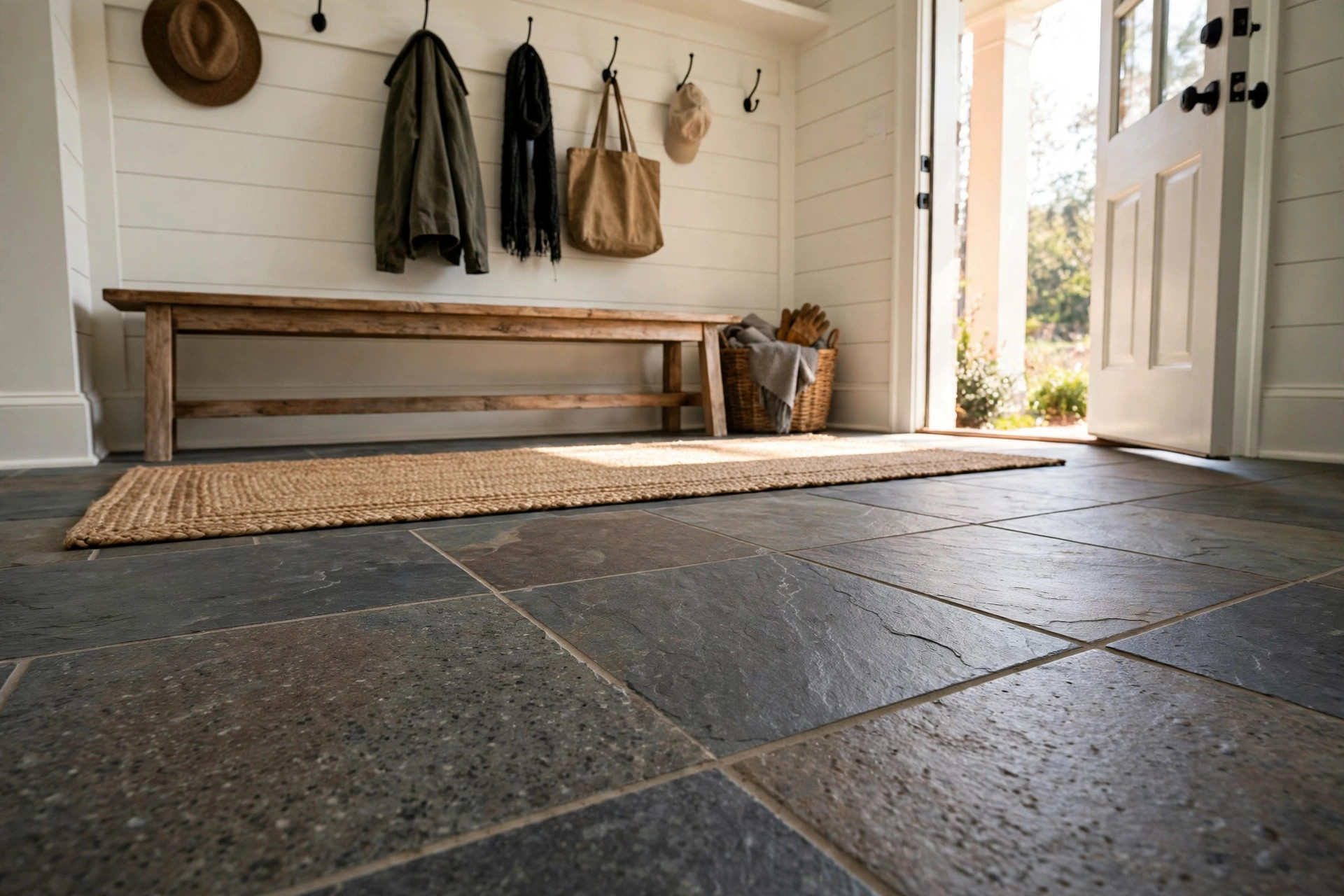
Slate is a natural stone with a rough, rich surface that hides dirt well. It has excellent grip even when wet, which is why many farmhouse mudrooms use it. It needs sealing, usually once a year, to stay stain-resistant. It can flake or shed thin layers in its first years, which is normal for this stone. Prices often land between four and nine dollars per square foot.
Quarry Tile
Quarry tile is the classic workhorse of entryways, restaurants, and older homes. It is thick, unglazed, and almost impossible to damage. It grips well and hides wear. The trade-off is the look: it comes in a short list of earthy colors. If you like its honest, rugged style, it is hard to beat for the price, often two to five dollars per square foot.
Natural Stone Options
Marble and travertine look elegant but are risky in a mudroom. They scratch, etch, and stain more easily than the choices above. If you love the stone look, pick a stone-look porcelain instead. You get the beauty without the worry. Our look at marble bathroom floor tile pros and cons covers the same trade-offs for wet rooms.
Cost and Price
A mudroom is usually small, often fifty to one hundred square feet, so even good tile stays affordable. Here is a rough map of what American homeowners pay.
Tile itself: two to nine dollars per square foot, depending on the type. Quarry tile sits at the low end; porcelain and slate sit higher. Installation adds four to twelve dollars per square foot for labor, depending on your region and the tile size. Large format tile takes more skill to set level, and odd room shapes add cuts and waste.
Materials beyond the tile add up: thin-set mortar, grout, sealer for stone, and possibly a membrane underlayment if the subfloor needs it. Budget another two to four dollars per square foot for these. If you want a warm floor underfoot, electric radiant heat adds cost up front but is a loved luxury in cold climates; see our notes on heated bathroom floor cost per square foot for a sense of the numbers.
Total, a professionally installed mudroom tile floor often lands between eight and twenty-five dollars per square foot. A do-it-yourself job with quarry tile can drop below eight dollars per square foot. Get two or three written quotes before you commit. The tile installation cost per square foot usa guide walks through how installers price the work.
Care and Upkeep
A good mudroom tile needs little care, but a little care goes a long way.
Sweep or vacuum often. Sand and grit are the enemies; they grind at the glaze like sandpaper. A quick daily sweep keeps the finish fresh. Mop weekly with warm water and a mild, pH-neutral cleaner. Skip oil soaps and harsh acids. Oil soaps leave a film that grabs dirt, and strong acids can harm grout and some stone.
Reseal natural stone once a year. Pour a few drops of water on the slate or quarry tile; if it darkens fast, the sealer has worn off and it is time for a new coat. Epoxy grout needs no sealing, but cement grout should be sealed after installation and touched up every year or two in a wet room.
Keep a sturdy mat by the door. It catches the worst of the mud and takes seconds to shake out. Replace worn caulk where the tile meets the walls. And keep a few spare tiles in the garage; if one ever cracks, a single replacement is a small repair instead of a big project.
Safety
A mudroom is a wet room by nature, so safety deserves real thought. Choose tile with a DCOF of 0.42 or more, as noted above. Use a matte finish rather than a polished one. Keep the floor dry where you can; a mat and a quick mop stop puddles from sitting.
Lighting matters too. A bright overhead light lets everyone see wet spots. If older family members use the room, consider a handrail or a bench near the door so shoes can be changed while seated. Small textured tiles give more grip than large smooth ones, because the many grout lines add traction. These simple steps keep the busiest room in the house a safe one.
Frequently Asked Questions
Is porcelain or ceramic better for a mudroom floor?
Porcelain wins for most homes. It is harder, denser, and absorbs almost no water. Ceramic can work in a lighter-use mudroom and costs less, but porcelain stands up better to salt, sand, and freezing weather tracked in from outside.
What is the cheapest good tile for a mudroom?
Quarry tile is the budget champion. It often costs two to five dollars per square foot, lasts for decades, and asks for little more than sealing and sweeping. It comes in a short range of colors, but its rugged look suits the job.
Do I need to seal mudroom tile?
Porcelain and glazed ceramic do not need sealing on the tile face, though cement grout around them should be sealed. Natural stone like slate and quarry tile needs sealing, usually once a year, to resist stains and moisture.
Can I install mudroom tile myself?
A confident do-it-yourselfer can lay quarry or standard ceramic tile in a small, square room. Porcelain and large format tile are harder to cut and level, and many homeowners hire a pro for those. If the subfloor is uneven or damaged, fix it first or hire help.
How do I stop road salt from ruining the floor?
Shake out mats often, mop with clean warm water, and avoid letting salty slush sit for days. Porcelain and sealed stone resist salt well. Cement grout should be sealed so salt water cannot soak in and leave white stains.
Should the mudroom floor match the rest of the house?
It does not have to. Many homes use a tougher, darker tile in the mudroom and a prettier floor elsewhere. A threshold or transition strip makes the change look planned. What matters is that the mudroom floor handles the mess and the rest of the house stays clean. For homes with pets tracking in dirt, the same logic applies to other hard-use rooms; see our guide to best flooring for kitchens with dogs usa.
A Final Word
The mudroom asks more of a floor than any other room. Porcelain leads the reviews for the best tile for mudroom floor options in the usa, with slate and quarry tile close behind for those who like natural materials. Pick tile with strong slip resistance, the right wear rating, and grout that can take stains. Seal what needs sealing, sweep what needs sweeping, and the floor will serve the house for decades. It is a small room, but getting its floor right pays off every single day.
For more background, see Lowe’s, LL Flooring, and Shaw Floors. For more background, see Mohawk Flooring, Daltile, and This Old House. Buying guides are also published by The Spruce and The Home Depot.
References
Daltile. (n.d.). Ceramic and porcelain tile. https://www.daltile.com LL Flooring. (n.d.). Hardwood, vinyl, and tile flooring. https://www.llflooring.com Lowe’s. (n.d.). Home improvement products. https://www.lowes.com Mohawk Flooring. (n.d.). Flooring products. https://www.mohawkflooring.com Shaw Floors. (n.d.). Flooring products. https://www.shawfloors.com The Home Depot. (n.d.). Home improvement products. https://www.homedepot.com The Spruce. (n.d.). Home and garden advice. https://www.thespruce.com This Old House. (n.d.). Home renovation guidance. https://www.thisoldhouse.com
Was this guide helpful?

About Michael Thompson
The My Garden US editorial team writes practical, in-depth home and garden guides for American homeowners — tested advice, no fluff.
You May Also Like
Best Wood Look Tile Brands USA 2026: A Buyer’s Guide to Realistic Wood-Look Tile
February 17, 2026 0 views
Installing Tile Backsplash for Beginners Guide: A Plain Path to a New Kitchen Wall
August 31, 2026 0 views
The Best Bamboo Flooring Brands USA 2026: A Complete Guide
January 11, 2026 0 views