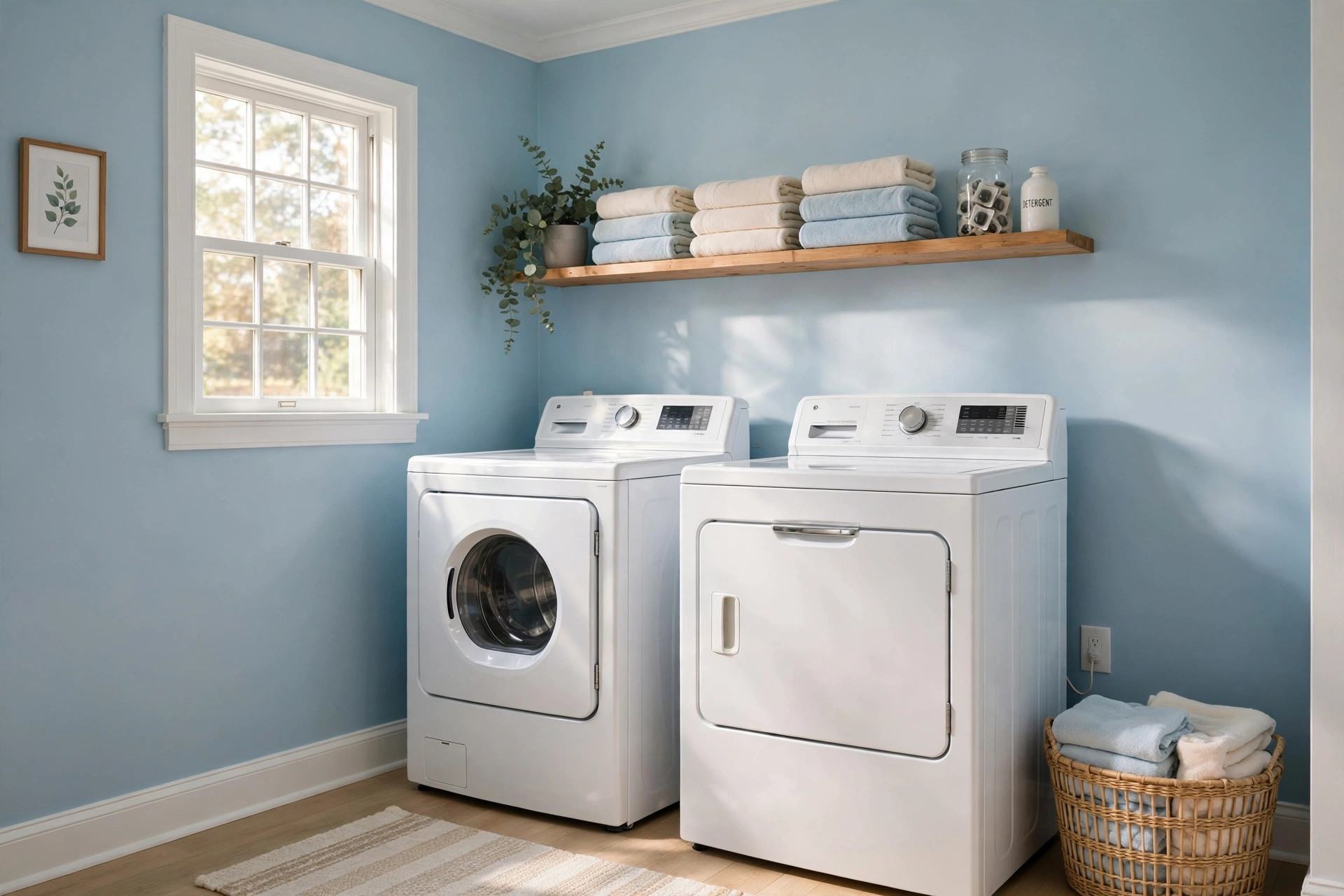

A laundry room works harder than most rooms in the house. Hot steam rises from the washer and dryer. Lint floats in the air. Damp clothes brush against the walls. Spots from detergent and bleach appear without warning. For all these reasons, the best paint for laundry room walls usa homeowners trust is not just any interior paint. It is a paint made to stand up to heat, moisture, and constant use.
A better result starts with the right paint and the right way to put it on. This guide explains what to buy, which finish to use, how much it costs, and how to keep the walls looking fresh for years.
Why the Laundry Room Needs Special Paint
A laundry room is a small space with a hard job. The dryer sends out heat and warm, damp air with every load. The washer splashes water when it fills and drains. Steam from hot cycles clings to the walls and ceiling. In winter, the warm room air meets cold outside walls, and beads of water form. This damp cycle goes on week after week.
Ordinary flat wall paint soaks up moisture like a sponge. It holds stains from lint, detergent, and dye transfer. It can grow dark patches of mold where air flow is poor. The best paint for laundry room walls usa shoppers find in stores is made for these wet, warm conditions. It forms a tight film that blocks moisture. It wipes clean with a damp cloth. It keeps its color and shape through hundreds of wash cycles.
There is one more reason to paint well. A laundry room with clean, bright walls makes the chore feel lighter. Most of these rooms are small and have no window. The right color and finish bounce light around and make the space feel larger and calmer.
How to Choose: What to Look for on the Label: Best Paint for Laundry Room Walls Usa
Paint labels carry a great deal of information. Three things matter most for a laundry room.
Finish
The finish is how shiny the dried paint looks. For laundry rooms, satin and semi-gloss are the two best choices.
Satin has a soft, low shine. It resists moisture well and wipes clean with ease. It hides small wall flaws better than glossier paint. It is the top pick for most laundry rooms.
Semi-gloss has a higher shine. It stands up to water and scrubbing even better than satin. It works well on walls near the sink and behind the machines. Its shine can show off bumps and patches in the wall, so the surface must be smooth.
Avoid flat and matte finishes in the laundry room. They stain fast and cannot be scrubbed. Eggshell is a middle ground, but satin or semi-gloss gives a tougher result. You can read more about how finishes compare in our guide to best white paint for interior walls usa, which explains where each sheen level works best.
Moisture and Mildew Resistance
Look for words like “kitchen and bath,” “moisture resistant,” or “mildew resistant” on the label. These paints are made for rooms that stay damp. They slow the growth of mold and mildew on the paint film itself. In a laundry room with poor air flow, this feature is worth its weight in gold.
Stain Blocking and Scrub Resistance
The label may rate scrubbability. Pick a paint rated for heavy scrubbing. Lint, dye spots, and detergent splashes come off a scrubbable wall with a wet sponge. A weak paint film will rub through when you scrub, leaving a dull patch. Major paint makers such as Sherwin-Williams and Benjamin Moore both sell lines rated for high-traffic, high-moisture rooms.
Types and Options
Several paint lines serve the laundry room well. Knowing the types helps you shop with confidence.
Acrylic Latex Paint
Acrylic latex is the standard interior paint sold across the country. It is easy to apply, cleans up with water, and dries fast. A good grade of acrylic latex in satin or semi-gloss is all most laundry rooms need. Stores like The Home Depot and Lowe’s carry wide ranges of these paints, and staff can point you to moisture-rated lines.
Kitchen and Bath Formulas
Some makers sell paint made just for kitchens and baths. These formulas hold back mold and stand up to steam. They cost a little more than plain wall paint. They are a strong match for a laundry room, which faces the same damp air as a bathroom. Behr offers a well-known kitchen and bath line that many homeowners use in laundry rooms too.
Enamel Paint
Enamel is a hard, smooth paint once used mostly on trim and doors. Water-based enamel now comes in wall colors too. It forms a very tough skin that shrugs off stains and scrubbing. It works well behind a laundry sink where water splashes are constant.
Primer
Do not skip primer. Bare drywall, patched spots, and dark old colors all need a coat of primer first. In a damp room, a stain-blocking primer keeps old marks from bleeding through. It also helps the topcoat grip the wall. One coat of primer plus two coats of finish paint is the standard recipe for a job that lasts.
Color Choices for the Laundry Room
Color matters more in a small room than most people think. Light colors make a laundry room feel open and clean. Soft white, pale gray, and light blue are the most popular picks. White shows lint and dust fast, but it also shows problems early, which helps you keep the room in shape.
Some homeowners add life with a stronger color on one wall. A warm teal, soft green, or dusty blue can make the room pleasant without feeling dark. Dark colors absorb light and make a windowless room feel like a box.
Gloss level affects how color looks. The same color in semi-gloss will look a bit deeper and brighter than in flat. Test a sample on the wall and look at it in the morning and at night before you commit. Lighting guides from HGTV and The Spruce can help you judge how paint colors shift under different bulbs.
If your cabinets need a fresh look too, see our article on best paint for kitchen cabinets usa reviews for paints that stand up to the same kind of wear.
Cost and Price
Paint prices vary by brand, line, and region. For a do-it-yourself job, a small laundry room of about 100 square feet of wall space needs about two gallons of finish paint and one gallon of primer. That puts the paint and primer cost between 90 and 170 dollars for a do-it-yourself job. Add brushes, rollers, tape, and drop cloths, and the total runs 130 to 220 dollars.
Hiring a painter changes the math. A small laundry room paint job by a professional usually costs 300 to 700 dollars, depending on the area and the condition of the walls. If the walls need repair, sanding, or stain blocking, the price goes up. Guides from This Old House and Bob Vila both stress that wall prep is where the real cost sits, whether you pay a pro or spend your own weekend on it.
Spending a little more on a quality line pays off. Cheap paint needs a third coat and fails sooner. One good two-coat job with a moisture-rated paint can last eight to ten years in a laundry room. Two cheap jobs in that span cost more in time and money.
Step-by-Step: Painting the Laundry Room Right
A clean result comes from good prep more than from a steady hand. Follow these steps.
1. Clear the Room
Move out the washer and dryer if you can. If they are too heavy or the lines are fixed, pull them away from the wall as far as the hoses allow. Take down shelves, racks, and wall cabinets. Cover the machines with drop cloths.
2. Clean the Walls
Walls in a laundry room collect lint, soap film, and grease. Wash them with warm water and a mild cleaner. Let them dry fully. Paint will not stick to a greasy film, and damp walls can trap moisture under the new coat.
3. Repair and Sand
Fill holes and cracks with spackle. Sand the patches smooth. Sand any glossy old paint lightly so the new coat grips. Wipe the dust off with a damp cloth.
4. Prime
Roll on one coat of primer. Use a stain-blocking primer if the old walls have marks from mold, smoke, or water. Let the primer dry for the full time on the can.
5. Paint
Cut in the edges with a brush, then roll the walls with a roller. Use two thin coats instead of one thick coat. Thin coats dry harder and last longer. Keep the room aired while you work. Open the door and run a fan.
6. Let It Cure
Paint feels dry in hours but takes about two to four weeks to harden fully. Avoid scrubbing the walls during that time. Push the machines back with care so you do not gouge the fresh finish.
Care and Upkeep
A laundry room wall takes more hits than a bedroom wall. A little care keeps it looking new.
Wipe down splashes of detergent and bleach as soon as you see them. A damp sponge and a drop of mild soap handle most spots. Harsh cleaners and scouring pads can wear through the paint film, so avoid them.
Dust the walls and the tops of the machines every month or two. Lint dust holds moisture and feeds mold. A quick pass with a dry cloth takes a minute.
Check behind the machines once or twice a year. Look for dark spots, peeling paint, or a musty smell. These are early signs of a leak or poor air flow. Catch them early and fix the cause before the paint fails.
Run the dryer vent to the outside and keep it clear of lint. A clogged vent pushes hot, wet air back into the room. That moisture is the main enemy of laundry room paint. Good air flow matters more than any paint label.
Touch up marks with leftover paint stored in a sealed can. Keep the can in a cool, dry place, not next to the furnace. Touch-ups blend best within the first year or two while the wall color has not yet shifted.
Safety
Paint is safe to use when you follow the label, but a few rules matter in a small laundry room.
Keep the room aired while you paint and while it dries. Open the door, open a window if there is one, and run a fan. Fumes build up fast in a small closed space. Low-odor and low-VOC paints release fewer fumes and are a good pick for tight rooms.
Wear a dust mask when you sand old paint. If your home was built before 1978, the old paint may contain lead. Test kits are sold in stores. If lead is present, do not sand or scrape. Call a certified lead-safe worker. State and local rules cover lead work, and breaking them can bring fines.
Keep paint cans, rags, and solvents away from the dryer and the water heater. Heat and fumes are a bad mix. Store leftover paint on a shelf, not on the floor near hot machines.
Let the floor dry where you wash the walls. Wet tile and wet concrete are slick. Work in dry shoes and mop up spills right away.
Frequently Asked Questions
What sheen is best for laundry room walls?
Satin is the best all-around choice. It resists moisture, wipes clean, and hides small wall flaws. Semi-gloss is tougher and works well near the sink and behind the machines, but it shows bumps in the wall more clearly.
Can I use regular interior paint in the laundry room?
You can, but it will not last as long. Regular flat or eggshell paint stains fast and cannot take scrubbing. A satin or semi-gloss paint made for moisture, or a kitchen and bath formula, gives a far better result in a laundry room.
How long does laundry room paint last?
A good two-coat job with quality paint lasts eight to ten years in most laundry rooms. Poor air flow, leaks, or heavy steam from a vented-indoors dryer can shorten that life. Fix moisture problems first, then repaint.
Should I paint the ceiling too?
Yes. Steam rises and settles on the ceiling. Use the same moisture-resistant paint in a flat or satin finish on the ceiling. This stops mold patches and peeling overhead.
What is the best color for a small laundry room?
Light colors work best. Soft white, pale gray, light blue, and warm off-white make a small room feel open and bright. If you want more character, paint one wall a medium tone and keep the rest light.
Do I need a primer in the laundry room?
Yes, primer is worth the time. It seals patched spots, blocks old stains, and helps the topcoat hold on in a damp room. One coat of primer under two coats of finish paint is the standard approach.
A Short Final Word
The best paint for laundry room walls usa buyers choose is not the cheapest can on the shelf. It is a quality acrylic latex in satin or semi-gloss, made to face moisture and made to be scrubbed. Good prep, one coat of primer, and two careful topcoats turn a hard-working room into a space that stays clean and bright for years. If a full repaint feels like too much right now, even a fresh coat on the wall behind the machines makes a clear difference. For quick wall updates elsewhere in the home, our piece on peel and stick wallpaper for bedrooms reviews shows another low-effort option worth a look.
References
Behr. (n.d.). Paints, primers, and stains. https://www.behr.com Benjamin Moore. (n.d.). Paints and stains. https://www.benjaminmoore.com Bob Vila. (n.d.). Home improvement advice. https://www.bobvila.com HGTV. (n.d.). Home and garden ideas. https://www.hgtv.com Lowe’s. (n.d.). Home improvement products. https://www.lowes.com Sherwin-Williams. (n.d.). Paints and coatings. https://www.sherwin-williams.com The Home Depot. (n.d.). Home improvement products. https://www.homedepot.com The Spruce. (n.d.). Home and garden advice. https://www.thespruce.com This Old House. (n.d.). Home renovation guidance. https://www.thisoldhouse.com
Was this guide helpful?

About James Carter
The My Garden US editorial team writes practical, in-depth home and garden guides for American homeowners — tested advice, no fluff.
You May Also Like

Low VOC Interior Paint Brands USA: Reviews of Healthier Paints for Your Home
September 1, 2026 0 views
Deck Staining Cost Calculator Near Me: A Plain Guide to Pricing and Planning
May 22, 2026 0 views
German Schmear Brick Cost Near Me: Prices, Methods, and Tips
March 31, 2026 0 views