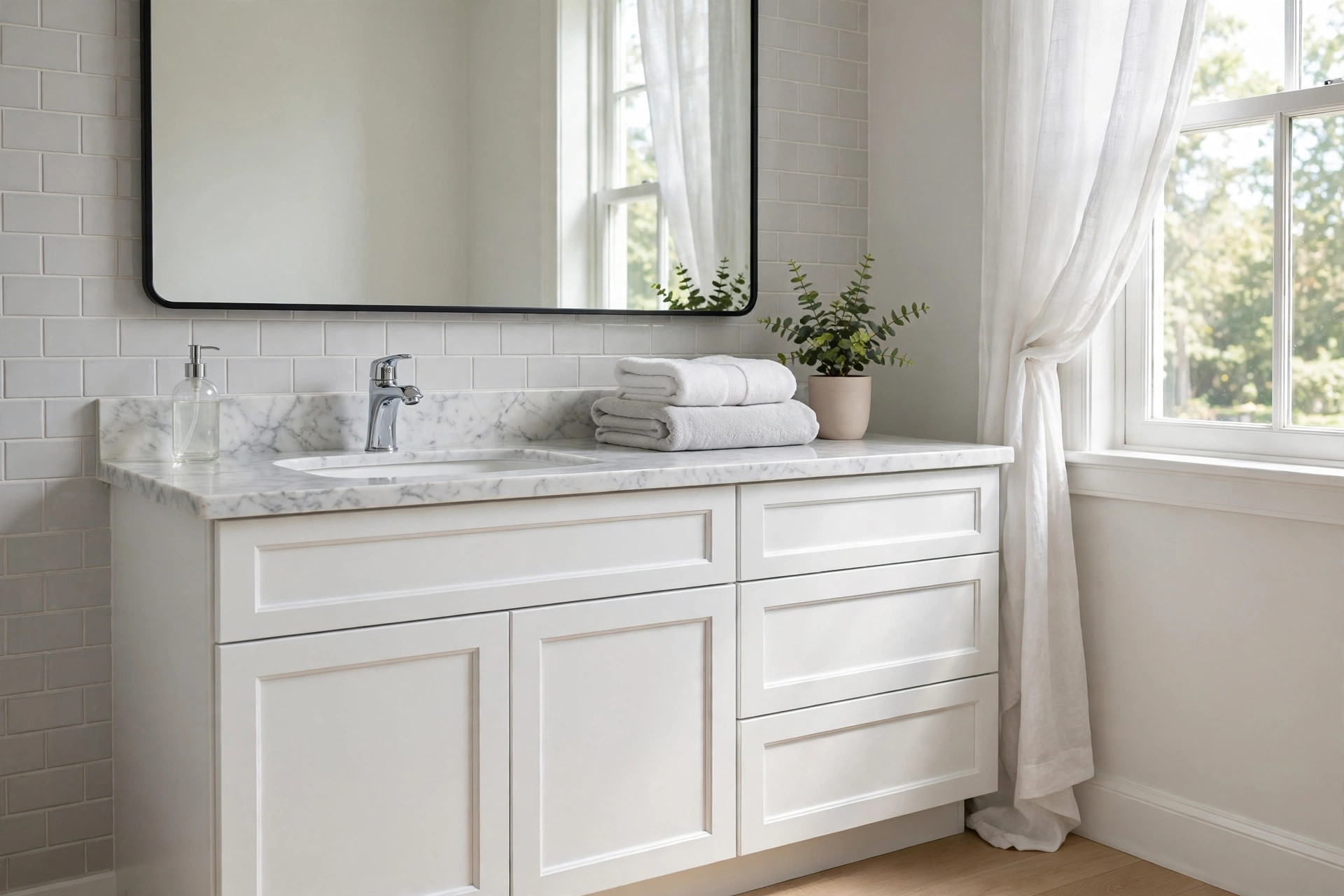

The bathroom vanity is often the first thing the eye meets when the door opens. It takes hard use every day. Steam from the shower settles on it. Water splashes from the sink. Cosmetics and cleaners leave marks. A plain coat of paint can fail here in a year, yet the right product can look new for a decade. That is why the best paint for bathroom vanity usa reviews matter to so many homeowners. They gather the experience of thousands of people who have tried, tested, and reported back.
This guide reads those reviews with care. It explains what makes a paint suit a bathroom vanity, how to choose among the main types, what each costs, and how to prepare and maintain the surface. The advice is plain and practical. By the end, you should be able to walk into a store or order online with confidence.
Why It Matters
A bathroom is the wettest room in the house. Hot showers fill the air with moisture many times a day. Cheap wall paint softens in this setting. It can blister, peel, and grow mildew in the damp corners behind the taps. Vanity paint suffers even more, because hands, rings, and wet towels touch it constantly.
The right paint does three things at once. It seals the wood or laminate against moisture. It dries into a hard shell that resists chips and scratches. And it stands up to repeated cleaning without losing its sheen. Reviews from American homeowners return to these three points again and again. A product may look fine on the shelf, but only daily life shows whether it holds up.
There is also a question of cost. A full vanity replacement can run into the thousands of dollars. A new finish with paint and primer often costs less than one hundred dollars in materials. For renters and first-time buyers, this difference matters a great deal. Painting is the most affordable way to change the look of a bathroom.
What to Look For: How to Choose the Right Paint: Best Paint for Bathroom Vanity Usa Reviews
The Finish: Satin, Semi-Gloss, or Gloss
Finish matters more than brand for many buyers. Flat and eggshell paints look soft, but they show water marks and clean poorly. Reviewers nearly always recommend satin, semi-gloss, or gloss for a vanity.
Satin gives a low, warm glow. It hides small surface flaws better than shinier finishes. Semi-gloss is the middle choice and the most popular in American reviews. It wipes clean with ease and stands up to steam. Gloss is the hardest and brightest, but it shows every bump in the surface below. For most vanities, semi-gloss is the safe choice.
Moisture and Mildew Resistance
Look for paint labeled for kitchens and baths, or for cabinets and trim. These formulas include agents that resist mildew growth. In a bathroom without a strong exhaust fan, this quality is not a luxury. It is a need. Product guides from Benjamin Moore explain how such paints are tested against humidity, and the advice is worth reading before you buy.
Adhesion on Wood, Laminate, and MDF
Older vanities are often solid wood or plywood. Newer ones may be laminate or medium-density fiberboard. Paint grips bare wood well after sanding. Laminate and MDF are smoother and trickier. Reviews stress that the primer matters as much as the paint on these surfaces. A bonding primer made for slick surfaces saves many repainting jobs. If your vanity is laminate, choose products that name laminate on the label.
Types and Options: Top Paints Reviewed
American reviewers mention the same names again and again. The sections below describe the main types and how they perform.
Alkyd and Alkyd-Modified Enamels
Traditional alkyd paint dries into the hardest shell of all. Old houses owe their glossy trim to it. But it has strong fumes, long drying times, and cleanup needs mineral spirits. Few reviewers use true alkyd paint in a bathroom today.
Alkyd-modified latex paints are the modern answer. They thin with water and clean with soap, yet they level smooth and harden like an enamel. Brand lines from Sherwin-Williams and Behr in this class earn some of the highest marks in cabinet reviews. Homeowners praise the smooth brush marks and the hard finish that stands up to daily wiping.
Acrylic Cabinet and Trim Enamels
These are water-based paints made for doors, trim, and cabinets. They dry faster than alkyd blends and have little odor. Reviews note that they work well in bathrooms where the room must be used again the next morning. Two coats over a good primer give a durable surface.
The trade-off is hardness. Acrylic enamels take longer to cure fully, sometimes two to three weeks. During that time, the finish can mark if objects sit on it. Patience pays. Reviewers who waited report results nearly equal to harder paints.
Chalk and Mineral Paints
Chalk-style paints stick to almost any surface with little sanding. They give a soft, matte look that suits farmhouse and vintage styles. Reviews like them for ease of use. A beginner can get good results on a first try.
The weakness is durability in wet rooms. Chalk paint is porous. It needs a clear topcoat, usually wax or polyurethane, to survive a bathroom. Even then, many reviewers say it is better suited to low-use pieces. If you love the look, seal it well and keep the wax refreshed.
Cost and Price
A gallon of quality cabinet paint in the United States runs from about thirty to seventy dollars in 2026. A small vanity needs only a quart in most cases, which costs roughly fifteen to thirty-five dollars. Add primer at ten to twenty-five dollars a quart, sandpaper, brushes, and cleaning supplies. The full material cost for one vanity usually falls between forty and ninety dollars.
Retailers such as Home Depot and Lowe’s carry all the leading brands, and their online reviews are a rich source of real experience. Sale prices during holiday weekends can cut costs by a quarter or more. Buying paint in store also lets you see color cards in real light.
Professional painters charge far more. If you are thinking of hiring out the whole job, our guide to kitchen cabinet refinishing service cost usa breaks down what pros charge for similar cabinet work. Many readers find that a vanity is a good first do-it-yourself project because it is small and forgiving.
Preparation: The Step Reviews Say Matters Most
No review topic comes up more often than preparation. Even the best paint fails on a dirty, glossy surface. The steps are simple but not to be skipped.
First, remove the doors, drawers, and hardware. Label each piece with tape so it goes back in the right place. Clean every surface with a degreasing cleaner. Bathrooms collect soap film and hair products that paint will not stick to.
Second, sand lightly. You do not need to strip to bare wood. A light scuff with 120-grit sandpaper gives the primer something to grip. Wipe the dust away with a damp cloth and let the surface dry fully.
Third, apply a bonding primer. One thin, even coat is enough. Let it dry as the label directs. Many one-coat promises in advertising fall short in real bathrooms, so plan on two coats of paint over the primer.
Fourth, paint with thin coats. Thick coats sag and take too long to dry. A good brush or a small foam roller leaves a smooth finish. Sand very lightly between coats with fine paper for the smoothest result.
Guidance from This Old House and Bob Vila walks through these steps with photos, and both are trusted by American do-it-yourself readers.
Care and Upkeep
A painted vanity lasts longer with gentle habits. Wipe splashes dry rather than letting water sit on the surface. Use a soft cloth with mild soap for cleaning. Harsh scouring powders dull the finish and scratch through to the primer.
Check the caulk line where the vanity meets the wall once a year. If it cracks, water can seep behind the paint and lift it. A fresh bead of bathroom caulk takes minutes and prevents costly repair.
Touch up chips promptly. Keep a small jar of the leftover paint, labeled with the brand, color, and date. A tiny brush stroke on a chip now prevents a large peel later. Reviewers who do this report finishes that still look fresh after five to eight years.
Safety
Bathroom painting calls for care with fumes and dust. Open a window and run the exhaust fan while you work. If the fan is weak, place a box fan in the doorway blowing out. Wear a dust mask when sanding, and wash your hands before eating.
Homes built before 1978 may have lead paint under the old finish. The Consumer Product Safety Commission warns that sanding lead paint is dangerous, especially around children and pregnant women. If you suspect lead, use a test kit before you sand. If the test is positive, follow federal guidance for safe handling or hire a certified professional.
Keep paint and solvents away from small children and pets. Store leftovers in a locked cabinet or high shelf. Never pour paint down the drain. Most American towns run household hazardous waste days for leftover paint.
Frequently Asked Questions
What is the best paint for a bathroom vanity? Most USA reviews point to alkyd-modified latex enamels or acrylic cabinet enamels in a semi-gloss finish. They harden well, resist moisture, and clean easily. Match the product to your surface: wood, laminate, or MDF.
Do I need to sand a bathroom vanity before painting? Yes, a light sanding is wise. You do not need to remove all the old finish. A quick scuff with 120-grit sandpaper, followed by a bonding primer, gives the new paint a firm grip. Skipping this step is the most common cause of peeling.
Can I use regular wall paint on a vanity? It is not advised. Wall paint stays soft and marks easily. It also lacks the mildew resistance that bathrooms demand. Cabinet and trim enamels cost a little more but last far longer.
How long does painted vanity paint take to cure? It dries to the touch in hours, but full cure takes one to three weeks depending on the product. Treat the surface gently during that time. Avoid setting heavy objects on it and wipe spills at once.
What colors work best for bathroom vanities? White, soft gray, and navy are the most popular in American reviews. White brightens small bathrooms. Dark colors add drama but show dust and water spots more. Color galleries at The Spruce and HGTV show these shades in real homes.
Is painting a vanity cheaper than replacing it? Yes, by a wide margin. Materials for painting usually cost under one hundred dollars. A new vanity, with plumbing work, often costs many hundreds or more. Readers comparing the two jobs may also like our guide to best paint for kitchen cabinets usa reviews, since the products overlap.
A Final Word
The reviews agree on a simple truth. Success comes less from the brand on the can than from the work before the brush touches the surface. Clean well, sand lightly, prime with a bonding primer, and lay down two thin coats. Choose a semi-gloss cabinet enamel with mildew resistance. Do that, and even a modest paint will serve your bathroom well for years.
For a bolder change of style, some readers pair a painted vanity with a limewashed wall. If that idea appeals, see where to buy limewash paint in the usa for sources and tips. A painted vanity is a small project with a large reward, and it is well within the reach of a careful beginner.
References
Behr. (n.d.). Paints, primers, and stains. https://www.behr.com Benjamin Moore. (n.d.). Paints and stains. https://www.benjaminmoore.com Bob Vila. (n.d.). Home improvement advice. https://www.bobvila.com HGTV. (n.d.). Home and garden ideas. https://www.hgtv.com Lowe’s. (n.d.). Home improvement products. https://www.lowes.com Sherwin-Williams. (n.d.). Paints and coatings. https://www.sherwin-williams.com The Home Depot. (n.d.). Home improvement products. https://www.homedepot.com The Spruce. (n.d.). Home and garden advice. https://www.thespruce.com This Old House. (n.d.). Home renovation guidance. https://www.thisoldhouse.com U.S. Consumer Product Safety Commission. (n.d.). Product safety information. https://www.cpsc.gov
Was this guide helpful?

About Michael Thompson
The My Garden US editorial team writes practical, in-depth home and garden guides for American homeowners — tested advice, no fluff.
You May Also Like
Grasscloth Wallpaper Installation Near Me: A Plain Guide
January 4, 2026 0 views
Best Paint for Closet Doors USA Reviews: What Homeowners Say Works
September 14, 2026 0 views
Vinyl Siding Painting Cost per Square Foot: A Homeowner’s Guide
September 18, 2026 0 views