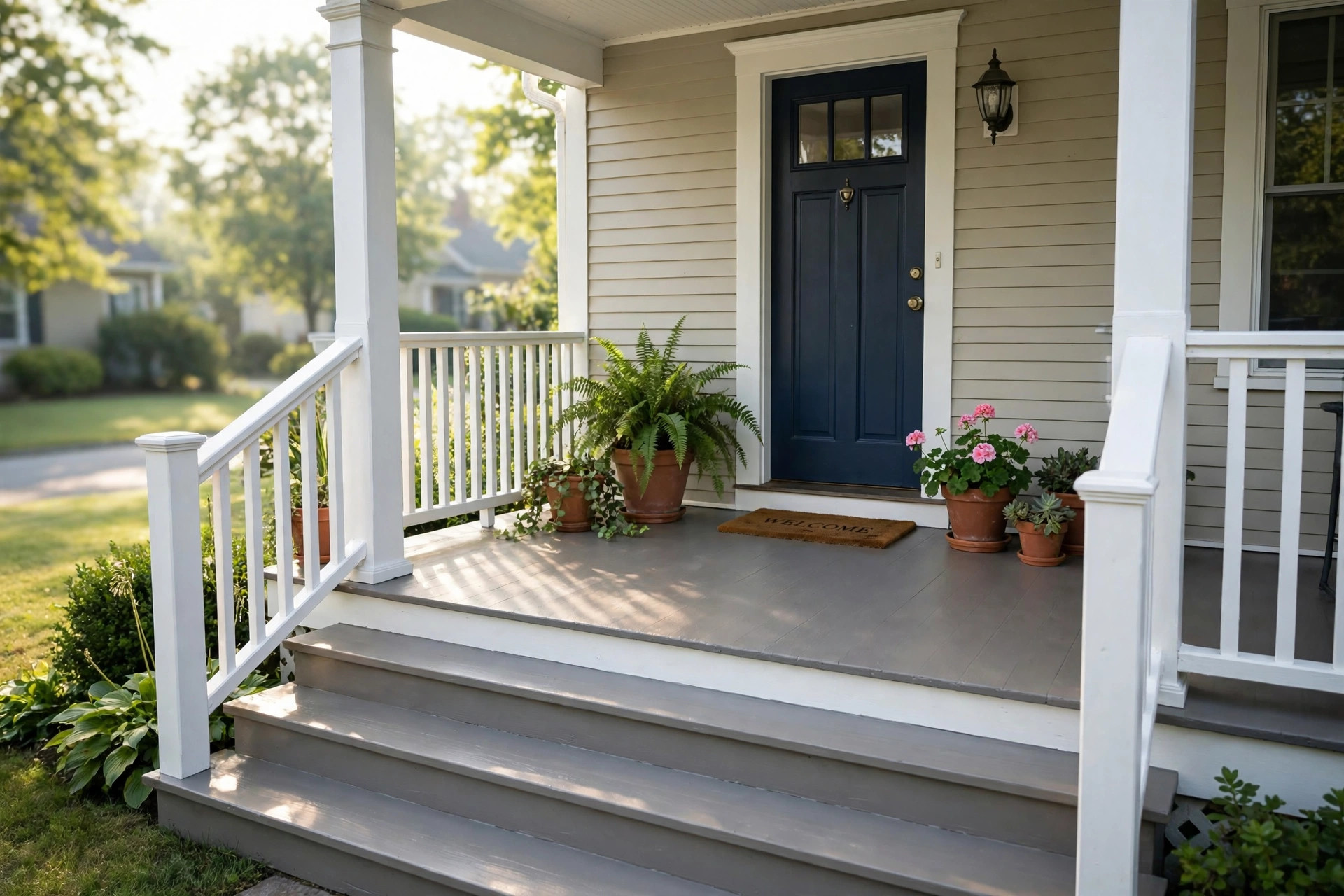

Introduction
This porch and patio paint buying guide USA walks you through every step of the purchase. A porch or patio floor takes a beating. Rain falls on it. Sun bakes it. Feet cross it day after day. Regular paint cannot survive that kind of work. Porch and patio paint is made for it. It is thicker. It is tougher. It stands up to foot traffic, weather, and water far better than ordinary wall paint. Yet many shoppers still grab the wrong can. They buy paint meant for a bedroom wall and wonder why it peels in six months. This guide helps you avoid that mistake. You will learn what these paints are, how to tell a good one from a poor one, which type fits your surface, how much to pay, and how to keep the finish looking good for years. Whether you own a small wooden stoop in Ohio or a wide concrete patio in Arizona, the advice below will help you buy with confidence.
Why the Right Paint Matters: Porch and Patio Paint Buying Guide Usa
A porch is the first thing guests see. A patio is where you spend summer evenings. When the paint peels or fades, the whole house looks tired. Worse, bad paint can cause real damage. Water seeps under cracked paint on wood. The boards rot from the inside. On concrete, a poor coating lets moisture freeze and thaw inside the slab. That freeze-thaw cycle causes spalling, which is when the surface flakes apart. A good porch and patio paint seals the surface. It keeps water out. It resists mold and mildew. It also adds grip so the floor is less slippery when wet.
Safety is part of it too. Smooth concrete can be slick after rain. Many porch paints have a slight texture, or you can add a non-slip additive. That one small choice can prevent a fall. Durability matters for your wallet as well. A quality paint job lasts five to ten years. A cheap job may need redoing every two. Paying a little more at the store saves you money over time, because you buy fewer cans and spend fewer weekends repainting.
What to Look for When You Buy
Read the label before you reach for your wallet. Look for these key points.
Surface fit. Some paints are made for wood. Others are made for concrete, brick, or stone. A few work on several surfaces. Match the paint to your porch or patio floor. The label will say “for wood and concrete” or “for concrete and masonry.” If it does not name your surface, do not buy it.
Traffic rating. Look for words like “porch and floor enamel,” “floor paint,” or “high-traffic.” These paints form a hard film that resists scuffs from shoes and furniture. A guide from This Old House on exterior painting stresses that floor areas need the hardest-wearing finish you can find.
Weather resistance. The can should mention UV protection and resistance to rain, snow, and temperature swings. In the South, heat and sun are the main enemy. In the North, ice and salt from de-iced walkways wear paint down fast. Bob Vila has useful advice on matching exterior finishes to your local climate.
Mildew and mold resistance. Porches stay damp after rain. Shade makes it worse. A paint with a mildew-resistant formula slows the growth of green and black stains. This matters a lot in humid states like Florida and Louisiana.
VOC level. VOC stands for volatile organic compounds. These are chemicals that give paint its strong smell. Low-VOC and zero-VOC paints are easier on your lungs and better for the air around your home. Most major brands now offer low-VOC options.
Coverage. Coverage is stated in square feet per gallon. A typical porch paint covers 250 to 400 square feet per gallon. Measure your floor first. Multiply length by width to get the square footage. Buy enough for two coats. Running out halfway through a job is a common and costly mistake.
Dry time and recoat time. Dry time is when the paint feels dry to the touch. Recoat time is when you can add the second coat. In humid weather, drying takes longer. Plan your work so the paint has a full dry day with no rain in the forecast.
Types of Porch and Patio Paint
Several types of paint work on outdoor floors. Each has strengths and weak points.
Latex (Water-Based) Porch and Floor Enamel
This is the most popular choice today. Latex paint cleans up with water. It dries fast. It has low odor. Modern latex floor enamels are far tougher than the wall paints of years past. They flex with the wood as it swells and shrinks, so they crack less. For most American homes, a quality latex porch and floor enamel is the best starting point. Sherwin-Williams and Behr both carry well-reviewed lines in this group.
Oil-Based (Alkyd) Porch and Floor Paint
Oil-based paint forms a very hard, glossy shell. It levels out well, so brush marks fade away. It is excellent at blocking stains. The downsides are strong fumes, long dry times, and cleanup with mineral spirits. Some states now limit the sale of oil-based products because of VOC rules. Check your local store before you plan around oil-based paint.
Concrete and Masonry Paint
If your patio is concrete, brick, or stone, look for paint made for masonry. These products grip rough surfaces and handle the alkaline nature of concrete. Some are acrylic-based. Others are epoxy-fortified for extra hardness. For paint for concrete patio floors, an epoxy-fortified acrylic is often the best value. The Spruce offers side-by-side comparisons of masonry paint types that are worth a look before you buy.
Epoxy Coatings
Epoxy is not really paint. It is a two-part system that you mix and roll on. Once cured, it is extremely hard and chemical-resistant. Epoxy works well on garage floors and covered patios. It is slippery when wet unless you add a grit additive. It also tends to yellow in direct sun, so it suits shaded or covered areas best. If you are weighing an epoxy project in another part of your home, see our notes on garage floor epoxy coating kit reviews usa.
Solid-Color Stains
A solid-color stain sits between a stain and a paint. It covers the surface like paint but lets a little texture show through. It is a good choice for weathered wood that you do not want to sand perfectly smooth. Solid stains usually need recoating more often than enamels.
How to Choose Colors and Finishes
Color changes how big a space feels. Light colors make a small porch feel larger and cooler underfoot. Dark colors hide dirt but absorb heat, which can make a sunny patio hot to walk on. Classic porch colors include warm gray, sage green, brick red, and deep navy blue. In the historic South, many porch ceilings are painted a soft blue-green called haint blue. If you like that look, bring a sample chip home and view it in daylight before you commit.
Finish means how shiny the paint is. For floors, a satin or low-luster finish is the best pick. It hides small flaws and is less slippery than high gloss. Flat finishes mark up too easily for foot traffic. Most porch paints come in satin, which is the safe middle ground.
Buy a sample first. A quart of paint costs little. Paint a test square on the actual floor. Live with it for two or three days. Watch it in morning light and evening light. This simple step prevents the most common regret: a color that looked right in the store but wrong on your home. Our guide to best paint for front door usa reviews uses the same test-square method, and it works just as well for porches.
Cost and Price
A gallon of good porch and patio paint in the USA usually costs between 35 and 65 dollars. Budget lines run lower. Premium brands run higher. For a 200-square-foot porch, you will need about two gallons for two coats, so the paint alone costs roughly 70 to 130 dollars. Add primer, rollers, brushes, painter’s tape, and sandpaper, and the full project lands near 100 to 180 dollars.
Hiring a painter changes the math. Professional labor for an exterior floor runs about 2 to 4 dollars per square foot. A 200-square-foot porch might cost 400 to 800 dollars with labor included. Many homeowners do the painting themselves because the job is simple, though prep work takes time.
Do not skip primer on bare wood or bare concrete. Primer costs less than paint and helps the topcoat bond. One gallon of primer covers about the same area as a gallon of paint. Home Depot and Lowe’s both stock porch-rated primers next to the floor paints, which makes one shopping trip easy.
Prep and Care for a Long-Lasting Finish
Paint fails when prep is rushed. Take time here and the job will last years longer.
Clean the surface. Sweep off dirt and leaves. Wash with a stiff brush and soapy water, or use a pressure washer on a low setting. Let the surface dry fully. One full dry day is the minimum.
Repair first. Fill cracks in concrete with a patching compound. Replace rotted boards on a wooden porch. Sand splinters smooth. Paint will not fix bad wood. It only covers it for a short while.
Prime bare spots. Any bare wood or bare concrete needs primer. Old paint in good shape can be painted over after a light sanding.
Paint in good weather. Aim for a dry day between 50 and 85 degrees Fahrenheit. Avoid painting in direct midday sun, which dries the paint too fast and leaves marks. Avoid painting when rain is likely within 24 hours.
Apply two thin coats. Two thin coats last longer than one thick coat. Let the first coat dry for the full recoat time stated on the can.
Once the paint cures, keep it clean. Sweep often. Hose off pollen and grime each season. Move planters now and then so moisture does not sit under them. Touch up chips quickly so water cannot get under the film. With basic care, a good porch paint job holds up for five to eight years on wood and longer on concrete. If your wood deck also needs attention, you may want to price that project too with our deck staining cost calculator near me.
Safety Tips
Paint fumes can cause headaches and dizziness. Work with fresh air flowing. Open windows near the porch. Wear a respirator mask rated for paint vapors, not just a dust mask. Gloves protect your skin from chemicals. Safety glasses keep splashes out of your eyes.
Store leftover paint in a cool, dry place with the lid sealed tight. Keep cans away from furnaces and water heaters. Never pour leftover paint down a drain. Most counties run free paint drop-off days. HGTV and local government sites often list household hazardous waste events in your area.
Ladders and wet paint are a bad mix. Keep the work area clear of hoses and cords so you do not trip. If anyone in the home has asthma or chemical sensitivity, use a zero-VOC paint and keep them away until the paint fully cures.
Frequently Asked Questions
Can I use regular wall paint on my porch?
No. Wall paint is too soft for floors. Foot traffic will wear through it in weeks. It also lacks the weather resistance that outdoor floors need. Buy paint labeled for porches, floors, or patios.
How long does porch and patio paint last?
On wood, expect five to eight years with good prep and two coats. On concrete, a quality job can last eight to ten years. Heavy traffic, harsh sun, and standing water shorten the life. Touch-ups each year add to the total lifespan.
Do I need to prime before painting a concrete patio?
Bare concrete needs a primer or a paint that says “self-priming on concrete.” Old paint in sound shape usually needs only cleaning and light sanding. When in doubt, prime. It is cheap insurance.
What is the best paint for a wooden porch floor?
A latex porch and floor enamel in a satin finish is the best choice for most wooden porches. It flexes with the wood, dries fast, and cleans up with water. For very old or weathered boards, a solid-color stain is a forgiving option.
Can I paint my patio in hot weather?
You can, but work early in the morning or late in the afternoon. Paint dries too fast in direct midday heat, which causes brush marks and poor bonding. The surface should feel cool to the touch when you start.
How do I stop my painted patio from being slippery?
Choose a satin finish rather than gloss. Add a non-slip grit additive to the paint before you roll it on. These additives are sold in small bags at paint stores. They make the surface much safer when wet.
A Final Word
Buying porch and patio paint is not hard once you know what to look for. Match the paint to your surface. Pick a product rated for foot traffic and weather. Choose a color you will love for years. Prep well, apply two coats, and care for the finish each season. Follow this porch and patio paint buying guide USA step by step, and your porch or patio will look sharp and stay protected for a long time. Benjamin Moore and the other makers linked above all offer color tools online if you want to preview shades before you visit the store.
References
Behr. (n.d.). Paints, primers, and stains. https://www.behr.com Benjamin Moore. (n.d.). Paints and stains. https://www.benjaminmoore.com Bob Vila. (n.d.). Home improvement advice. https://www.bobvila.com HGTV. (n.d.). Home and garden ideas. https://www.hgtv.com Lowe’s. (n.d.). Home improvement products. https://www.lowes.com Sherwin-Williams. (n.d.). Paints and coatings. https://www.sherwin-williams.com The Home Depot. (n.d.). Home improvement products. https://www.homedepot.com The Spruce. (n.d.). Home and garden advice. https://www.thespruce.com This Old House. (n.d.). Home renovation guidance. https://www.thisoldhouse.com
Was this guide helpful?

About James Carter
The My Garden US editorial team writes practical, in-depth home and garden guides for American homeowners — tested advice, no fluff.
You May Also Like

Greige Paint Colors for Open Floor Plans: A Practical Guide
April 22, 2026 0 views
Spray Paint for Wicker Furniture Reviews USA: A Plain Buying Guide
June 10, 2026 0 views
Best Paint for Laminate Cabinets USA Reviews
September 5, 2026 0 views