
Introduction
Many people search for indoor grow lights usa online deals because they want green plants without a big electric bill. A grow light gives plants the light they need when sun from a window is not enough. Winter days are short. North facing rooms stay dim. Tall buildings can block the sun. A good light solves all of these problems.
Indoor gardening has grown fast in the United States. People raise herbs on kitchen counters. They start vegetable seeds in spare rooms. They keep tropical plants alive through cold months. Online stores now carry more grow lights than ever. Prices range from under twenty dollars to several hundred dollars. With so many choices, a plain guide helps. This article explains what matters, what the types are, what prices look like, and how to shop for deals online with care.
Why Indoor Grow Lights Matter: Indoor Grow Lights Usa Online Deals
Plants need light to make food. This process is called photosynthesis. Without enough light, plants grow tall and thin. Their leaves turn pale. They stop making fruit or flowers. Most homes give plants far less light than they need. A window may look bright to the human eye. A light meter often tells a different story. Many houseplants need far more light than a room provides.
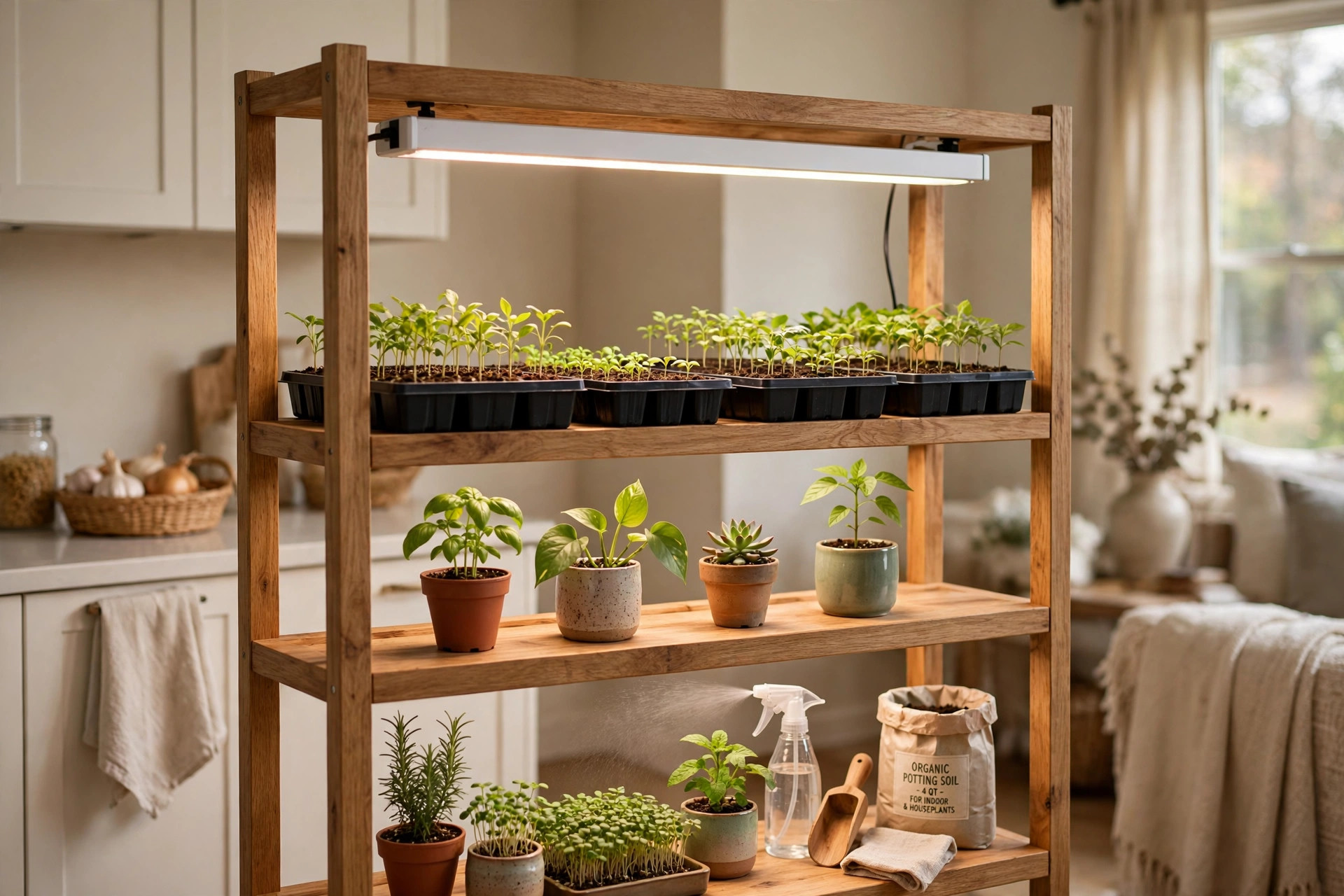
Grow lights fix this gap. They give steady light for set hours each day. They let you control the season inside your home. You can start tomato seeds in February. You can keep a lemon tree happy in a Chicago apartment. You can raise fresh basil all year. For people who want a deeper guide before they buy, our indoor grow lights buying guide covers the basics step by step.
A grow light also helps in a room with no windows. Basements, offices, and closets can become small gardens. Schools use them for science projects. Apartment renters use them where no yard exists. The right light, placed at the right distance, can turn a dark corner into a growing space.
How to Choose the Right Grow Light
Choosing a light is easier when you know the key facts. Four things matter most: spectrum, power and coverage, heat and noise, and controls.
Light Spectrum
Plants use light across the visible range. Blue light helps leaves grow strong. Red light helps flowers and fruit form. A “full spectrum” light gives both, and looks like normal white light to people. Full spectrum LED lights are now the most popular choice. They are simple to use and look natural in a living room. Some older lights give a purple glow. These “blurple” lights work for plants, but they can look odd in a home and make it hard to see the true color of leaves. For most homes, a full spectrum white light is the best pick. You can read more about efficient lighting technology from Energy Star’s lighting guides, which explain how modern LED lighting saves power in homes.
Wattage and Coverage
The size of the light must match the size of your plants. A small desk light suits one or two small pots. A larger panel can cover a shelf of seedlings. Check the “coverage area” listed by the seller. A common rule is that leafy herbs need less light than fruiting plants like peppers. If you are unsure, buy a light one size larger than you think you need. You can always raise it higher or dim it. Too little light is a common cause of weak plants. The U.S. Department of Energy notes that LED lighting gives more light per watt than older bulbs, which is why modern grow lights can cover more area with less power.
Heat and Noise
Some lights run hot. High-intensity discharge lights, for example, give off a lot of heat. In a small room, this can raise the temperature too much. LED lights run cooler and are safer for homes. Noise is another factor. Some panels have cooling fans. A fan can hum all day. If the light will sit in a bedroom or office, look for a fanless design or check buyer reviews for noise comments. A quiet, cool light is worth a little extra money.
Timers and Controls
Plants need dark hours as well as light hours. Most indoor plants do well with 12 to 16 hours of light per day. A built-in timer makes this easy. Some lights let you dim the brightness. Dimmers help when young seedlings need soft light and older plants need strong light. Adjustable height, often with a hanging kit or gooseneck arm, is also useful. You can keep the light close to short seedlings and raise it as they grow. For smart home control, our guide on wifi smart bulbs shows how timers and apps can work with home lighting, and many of the same ideas apply to grow lights.
Types of Indoor Grow Lights
Shoppers will meet four main types. Each has strengths and weak points.
LED Panels and Bars
LED panels are flat boards with many small diodes. LED bars are long strips that fit under shelves. These are the most common grow lights sold online today. They use little power, last for years, and give full spectrum light. Prices start near twenty dollars for a small bar and rise past two hundred dollars for large panels. For most home growers, LED is the best value. Philips is one of the established makers of LED grow lighting, and its product pages show how far the technology has come since the early days of indoor growing.
T5 Fluorescent Tubes
T5 tubes are thin fluorescent lights often sold in banks of two or four. They give even light across a wide shelf. They are popular for starting seeds. They cost less up front than many LEDs, but they use more power and the tubes must be replaced each year or two. They also give off more heat than LEDs. Many long-time gardeners still like them for spring seed starting because the light spreads so evenly.
CFL Bulbs
Compact fluorescent bulbs screw into a normal lamp socket. They suit a single small plant on a desk or shelf. They are cheap and easy to find. Their weak point is low power. One bulb will not cover a tray of seedlings. They also lose brightness as they age. CFL bulbs can work for a first try, but most growers move up to LED lights when they want more plants.
High-Intensity Discharge Lights
These include metal halide and high pressure sodium lights. They are very bright and were once the standard for serious indoor growing. Their weak points are high power use, strong heat, and the need for a heavy ballast box. They are loud and costly to run. For home use, LEDs have replaced them in almost every case. They now belong mainly to large commercial greenhouses.
Cost and Price: Getting the Best Online Deals
Prices for indoor grow lights vary widely. Small clip-on LED lights sell for fifteen to thirty dollars. Mid-range panels and bar sets sell for forty to one hundred dollars. Large high-power panels sell for one hundred fifty to four hundred dollars. Replacements are rare, so a higher price often buys a longer life and lower power bills.
Online deals appear in several forms. Many stores cut prices in late winter, when seed starting season begins. Clearance sales happen in early fall. Coupon codes, free shipping offers, and bundle packs can lower the total cost. Buying a set of four bar lights often costs less per light than buying one at a time. Large home improvement sites like The Home Depot and Lowe’s list grow lights with regular sales, and their customer reviews help you judge quality before you buy.
When you compare deals, look past the sale price. Check the true wattage, not the “equivalent” wattage claimed in the title. A light that claims to replace a 1000-watt bulb may use only 100 watts of real power. That is fine, but the claim can mislead. Check the warranty length. A two-year or five-year warranty shows the maker stands behind the product. Check the return policy in case the light arrives broken or does not suit your plants. Lighting catalog sites such as Lumens and Lamps Plus often show detailed specs that make honest comparison easier.
If you plan to buy several lights, look at our page on indoor grow lights for sale for current options. And remember that a cheap light with a short life can cost more in the long run than a well-made light bought on sale. Consumer Reports tests many home products for real performance, and its approach is a good model: judge a light by measured results, not by bright claims.
Care and Upkeep
Grow lights need little care, but a few habits keep them working well. Dust the light surface every few weeks. Dust blocks light and traps heat. A soft dry cloth is enough. Check hanging cords and chains for wear once or twice a year. Keep the light at the right distance from the plants. Too close can burn leaves. Too far gives weak growth. Most makers print a suggested distance on the box. Start at the far end of the range and move closer if plants stretch.
Watch your plants for signs. Pale leaves or long bare stems mean more light is needed. Brown crispy leaf edges can mean the light is too close. Adjust slowly and give the plant a week to respond. Clean the growing area too. Spilled water and soil can corrode metal parts over time.
Keep track of run hours. Many LEDs are rated for 25,000 to 50,000 hours. At 14 hours a day, that is five to ten years of use. Fluorescent tubes fade faster. Replace them when new seedlings look weaker than before, even if the tube still lights up. Gardening guides at The Spruce offer practical tips on matching light schedules to different plant types, which helps you get the most from every hour of run time.
Safety
Safety matters with any electric device that runs for hours each day. Buy lights with a UL or ETL safety listing. These marks show the light passed independent safety tests. Avoid no-name lights with no safety mark, even at a low price. Plug lights into a grounded outlet. Do not use damaged cords. Keep water away from the light and its plug. Watering cans and spray bottles should stay clear of fixtures.
Do not overload a power strip. Add up the real wattage of all lights on one strip and stay well under its rated limit. Use a timer rated for the total load. If a light smells hot or the plastic looks warped, unplug it and stop using it. Keep lights out of reach of small children and pets. Some bright LEDs can hurt eyes if stared at directly. Place them so the glare points down at the plants, not out into the room. The seed and garden experts at Burpee remind growers that safe indoor setups start with quality gear and simple habits, and The Old Farmer’s Almanac planting calendars can help you plan light schedules around your local season.
Frequently Asked Questions
How many hours per day should I run a grow light?
Most indoor plants do well with 12 to 16 hours of light daily. Seedlings often like 14 to 16 hours. Flowering plants may need a strict dark period of 12 hours to bloom. Set a timer and keep the schedule steady. Plants, like people, do best with a regular routine.
How far should the light hang above the plants?
It depends on the light. Small LED bars often sit 6 to 12 inches above seedlings. Larger panels may hang 18 to 24 inches above mature plants. Check the maker’s guide first. Watch the plants. If stems stretch and lean, lower the light. If leaf edges turn brown, raise it.
Do grow lights raise the electric bill a lot?
Modern LED grow lights are cheap to run. A 40-watt LED bar running 14 hours a day uses about half a kilowatt-hour daily. At average United States rates, that costs only a few dollars per month. Older high-intensity lights cost far more to run. This is one more reason LEDs win for home use.
Can I use a regular LED bulb instead of a grow light?
A regular bright LED bulb can keep a tough houseplant alive, but it is not made for growing. Grow lights give the right spectrum and enough intensity for strong growth. For herbs, seedlings, and fruiting plants, a true grow light gives far better results than a desk lamp.
When is the best time to buy grow lights online for a deal?
Late winter and early spring bring the most sales, as stores target seed starters. Black Friday and holiday sales in November and December also bring deep cuts. Watch for bundle deals, which often beat single-light sale prices. Signing up for store emails can bring a first-order coupon.
Do I need a special setup, or can I just clamp a light to a shelf?
A clamp or hanging kit on a shelf works fine for most home growers. You do not need a tent or a fancy frame. A simple shelf, a tray to catch water, and a timer are enough to start. You can add more gear later if your garden grows.
A Short Final Word
Indoor grow lights turn any home into a garden. Start with a full spectrum LED that fits your space. Compare real wattage, coverage, and warranty before you buy. Shop the online deals with a clear head, and put safety first. Your plants will pay you back with green leaves, fresh herbs, and flowers in every season.
References
Burpee. (n.d.). Seeds, plants, and gardening supplies. https://www.burpee.com Consumer Reports. (n.d.). Product reviews and ratings. https://www.consumerreports.org ENERGY STAR. (n.d.). Energy efficient products. https://www.energystar.gov Lamps Plus. (n.d.). Lighting and home decor. https://www.lampsplus.com Lowe’s. (n.d.). Home improvement products. https://www.lowes.com Lumens. (n.d.). Lighting and ceiling fans. https://www.lumens.com Philips. (n.d.). Lighting products. https://www.philips.com The Home Depot. (n.d.). Home improvement products. https://www.homedepot.com The Old Farmer’s Almanac. (n.d.). Gardening calendars and advice. https://www.almanac.com The Spruce. (n.d.). Home and garden advice. https://www.thespruce.com U.S. Department of Energy. (n.d.). Energy efficiency and renewable energy. https://www.energy.gov
Was this guide helpful?

About Michael Thompson
The My Garden US editorial team writes practical, in-depth home and garden guides for American homeowners — tested advice, no fluff.
You May Also Like
Motion Flood Lights California Homes USA: A Guide to Safe Outdoor Light
January 3, 2026 0 views
Kitchen Track Lighting Reviews: A Buying Guide for USA Homes
March 26, 2026 0 views
Motion Flood Lights for Sale USA: How to Choose the Right One
July 31, 2026 0 views