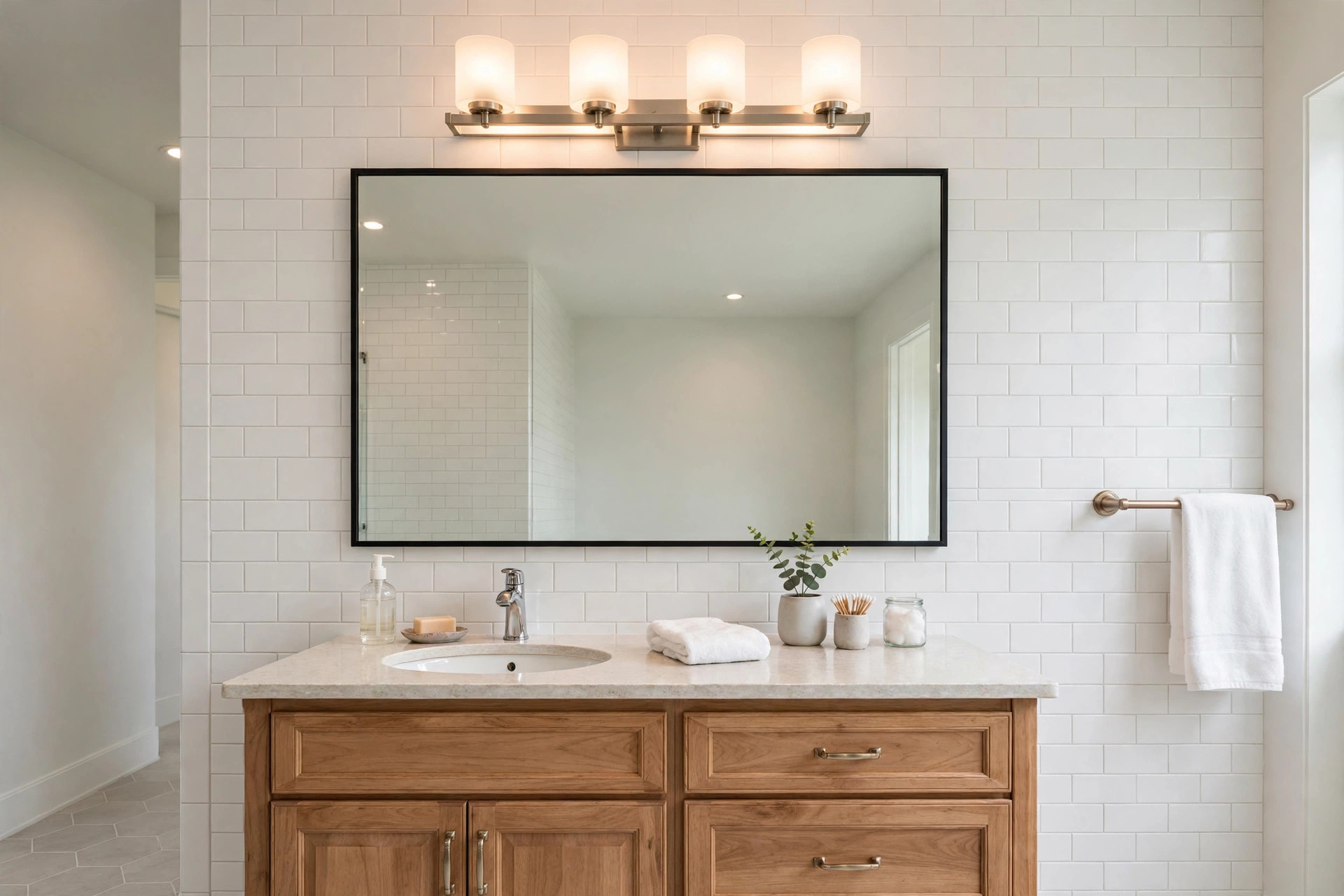
A bathroom mirror is of little use without good light above it. The search for vanity light bars california homes usa starts with this simple fact. A vanity light bar is the fixture that sits above or beside the bathroom mirror and throws light across the face. In California homes, from small ranch houses to city condos, this one fixture does more work than almost any other light in the house. It decides how easy the mirror is to use.
Why Vanity Light Bars Matter
A vanity light bar is not a decoration first. It is a working light. The face is the hardest surface in the home to light well, because every shadow shows. Light that comes only from the ceiling throws shadows under the eyes and the chin. A bar mounted above the mirror fills the face with light from a low and forward angle, and the shadows shrink.
In California homes the bathroom often has no window, or a small one with frosted glass. Daylight cannot be counted on, so the light bar must carry the room through dark winter mornings and late nights. A bar that is too dim leaves the corners dark and the mirror hard to read. A bar that is too harsh makes tile and chrome look cold.
The right fixture also shapes the whole bath. A slim brass bar warms a white tile wall. A black matte bar sharpens a gray modern bath. The fixture is the first thing the eye meets above the mirror, so it sets the tone of the room. Guides such as The Spruce note that bathroom lighting is the change that gives the biggest return for the money in a small remodel.
What to Look for When You Choose One: Vanity Light Bars California Homes Usa
Start with the mirror, not the catalog. Measure the mirror and the wall space around it. Then measure the height of the people who will use the sink. These two numbers decide the size of the bar and where it should sit. Most bars sit seventy five to eighty inches from the floor when measured to the center of the fixture, and the bar should span at least three quarters of the mirror width for even light.
Length and Number of Lights
Length matters more than the count of shades. A bar of twenty four inches suits a single sink with a thirty inch mirror. A double sink wants a bar of thirty six to forty eight inches, or two separate bars over each basin. Three or four lights spread across the bar give a smoother wash of light than two, but a short bar with three lights can crowd a small mirror and look busy. Check the spread of the light, not only the count of sockets, when you compare models in the Lowe’s lighting selection or at a local store.
Color of Light
The color of the light is measured in Kelvins. Warm white near 2700K feels like an old incandescent bulb and flatters skin. Cool white near 4000K to 5000K is sharper and shows colors truly, which helps with makeup. Most California bathrooms do best between 2700K and 3500K: warm enough to feel restful, clear enough to see by. Buy bulbs or bars with the same Kelvin number throughout the bath, or the mirror will show two tones of light at once. The U.S. Department of Energy’s lighting guidance explains these numbers in plain terms for home buyers.
Finish and Style
Chrome suits white tile and keeps a classic look. Brushed nickel is soft and hides water spots. Matte black reads modern and needs less cleaning of fingerprints. Brass and gold tones warm the room and match the fashion of recent years. Pick a finish that already appears in the bath, in the faucet or the cabinet pulls, so the room reads as one whole. The style of the shades also counts: clear glass shows the bulb, frosted glass spreads the light and hides the source, and open shades are easy to wipe but collect dust. Lighting specialists at Lumens carry all these styles side by side, which makes comparison simple.
Types and Options
Vanity light bars fall into a few clear families. Each has its own cost, its own look, and its own rules for wiring.
Hardwired and Plug-In Bars
Most bars in California homes are hardwired. The wires run inside the wall to a junction box, and the fixture sits flush against the wall. A hardwired bar is clean, permanent, and the standard choice for a new bath or a full remodel. It needs a licensed electrician in most cases, and any new wiring in California must meet the state electrical code.
A plug-in bar is the exception. It hangs on the wall and the cord runs to an outlet. It suits a renter or a powder room where no wiring work is planned. The cord must be managed so it does not hang across the sink, and the outlet should be protected by a ground fault interrupter near water.
LED Bars and Integrated Models
The older bars take screw-in bulbs. The newer ones carry LEDs built into the fixture. An integrated LED bar uses far less power, runs cool, and can last twenty five thousand hours or more. The trade is that when the LED fails, the whole fixture is replaced. If you buy an LED bar, check that it is dimmable and that it carries a solid warranty, five years at least. Buyers who want the old freedom of swapping bulbs can still choose a bar that takes standard sockets and fit it with LED bulbs from makers like Philips.
Some bars mount vertically, one on each side of the mirror, instead of across the top. Side bars give the most even light on the face of all, because the light comes from both sides and cancels shadows. They need more wall space and more wiring, so they are rare in small baths but common in high end remodels.
California Rules Worth Knowing
California holds stricter energy rules than most states. Title 24 of the state energy code sets high efficiency standards for lighting in new homes and major remodels. In practice this means the fixture must use high efficacy light sources, which today means LEDs, and it often must work with vacancy or dimmer controls depending on the scope of the work. The rules change over time, so check the current version before you buy for a new build.
Many fixtures sold across the United States carry a JA8 label, which is the California certification for high efficacy light sources. A JA8 listed fixture has been tested for color quality, long life, and low flicker, and it will pass the state rules without trouble. Look for the JA8 mark on the box or the spec sheet.
Bathroom fixtures also need the right location rating. A bar above the mirror needs a damp rating at least, because baths hold steam and moisture. A bar near a shower or a steam bath may need a wet rating. The ENERGY STAR ratings for lighting also help buyers pick efficient models that keep power use low and still give good light.
One more California point: the ground moves. Mount the bar to a stud or a rated box, and use the screws and anchors that the maker provides. In coastal towns the salt air also works on cheap metals, so choose a fixture with a corrosion resistant finish if the house sits near the sea.
Cost and Price
Vanity light bars for California homes span a wide range. A plain two light bar with chrome finish costs about forty to eighty dollars. A mid range bar with three or four lights, a good finish, and dimming runs from eighty to two hundred dollars. Designer bars in brass or matte black, and integrated LED models with long warranties, run from two hundred to five hundred dollars and more.
The fixture is only part of the cost. An electrician in California often charges one hundred fifty to four hundred dollars to replace a bar where wiring already exists, and more for new wiring or a new switch. A dimmer switch adds twenty to sixty dollars in parts plus labor. LED bars cost more at first but save money each year on power and bulb changes, as the Home Depot project guides show.
To keep the total low, measure twice and buy once. A bar that fits the mirror and the box in the wall needs no extra carpentry. Buy the bulbs at the same time as the fixture, and pick one color temperature for the whole bath.
Care and Upkeep
A vanity light bar asks for little but rewards care. Dust the shades and the bar with a dry cloth once a month. Wipe glass shades with a damp cloth and mild soap when they look hazy. Dust and haze cut the light by a surprising amount over a year.
Change bulbs in sets, not one at a time. An old bulb next to a new one makes the mirror show two shades of light. With LED bars there are no bulbs to change, but check the screws once a year and tighten any that have worked loose. In hard water areas, wipe chrome and nickel with a soft cloth so spots do not etch the finish.
Keep a record of the model number and the bulb type in a drawer or a phone note. When a shade breaks or a bulb type is retired, the record saves a long search.
Safety
Light and water are a dangerous pair, and the bath is full of water. Switch the power off at the breaker before you touch the fixture, not only at the wall switch. Test the wires with a non contact tester before your hands go near the box. If the wiring looks old, brittle, or spliced without a box, stop and call a licensed electrician.
Use only the bulb wattage printed on the socket, or the LED equivalent. A hot bulb in a small glass shade can scorch the shade and the wiring. Keep paper, towels, and chemicals away from the fixture while it is on. Never spray water or cleaner directly on a live fixture; spray the cloth instead.
Lamps Plus and other lighting retailers publish safety notes with their bathroom fixtures, and they are worth reading before the first install.
FAQ
How high should a vanity light bar sit above the mirror? The center of the bar should sit about seventy five to eighty inches from the floor for most adults. Adjust for tall or short users so the light falls across the face rather than above the forehead. Keep a few inches of clear space between the top of the mirror frame and the bar.
Can a vanity light bar be used with a dimmer? Yes, if the fixture and the bulbs are marked dimmable. Many integrated LED bars dim well, but they need an LED rated dimmer, not the old type made for incandescent bulbs. The wrong dimmer causes flicker and hum. Test the full dim range before the electrician leaves.
What is the best color temperature for a bathroom? Most buyers pick 2700K to 3500K. At 2700K the light is warm and flattering. At 3000K to 3500K it is a neutral white that shows makeup colors truly without looking harsh. Above 4000K the bath starts to feel like an office, which suits a few modern designs but tires the eye in the evening.
Do I need a special fixture to meet California Title 24? For new homes and major remodels, yes. The fixture must use high efficacy sources, which in practice means LED, and it must carry the right certification. Look for the JA8 mark on the box. A simple like-for-like replacement is usually exempt, but check with the local building office before a big remodel.
How long does an integrated LED vanity bar last? Makers rate most integrated bars at twenty five thousand to fifty thousand hours. At three hours a day, that is twenty to forty years of normal use. Heat shortens life, so a bath with poor ventilation may wear the fixture faster. A long warranty, five years or more, is the best sign of a well made bar.
Should the bar go above the mirror or on the sides? Above the mirror is the standard and fits almost every bath. Side bars, one on each side of the mirror, give the most even facial light and are the choice of many designers. They need wider walls and two runs of wiring. If the wall is narrow, the top bar is the practical choice.
A Short Final Word
The search for vanity light bars california homes usa ends where it began: with the mirror and the people who use it. Measure the mirror, pick a length that covers it, choose a warm and even color of light, and make sure the fixture carries the California marks it needs. Then mount it solidly, wire it safely, and keep it clean. A well chosen bar will serve the bath for twenty years and make every morning a little easier.
Readers who are lighting the rest of the home can continue with the vanity light bars buying guide for a national overview, the wifi smart bulbs buying guide for app controlled color and dimming, or the solar path lights buying guide to carry the same care out to the yard.
References
ENERGY STAR. (n.d.). Energy efficient products. https://www.energystar.gov Lamps Plus. (n.d.). Lighting and home decor. https://www.lampsplus.com Lowe’s. (n.d.). Home improvement products. https://www.lowes.com Lumens. (n.d.). Lighting and ceiling fans. https://www.lumens.com Philips. (n.d.). Lighting products. https://www.philips.com The Home Depot. (n.d.). Home improvement products. https://www.homedepot.com The Spruce. (n.d.). Home and garden advice. https://www.thespruce.com U.S. Department of Energy. (n.d.). Energy efficiency and renewable energy. https://www.energy.gov
Was this guide helpful?

About Emily Rodriguez
The My Garden US editorial team writes practical, in-depth home and garden guides for American homeowners — tested advice, no fluff.