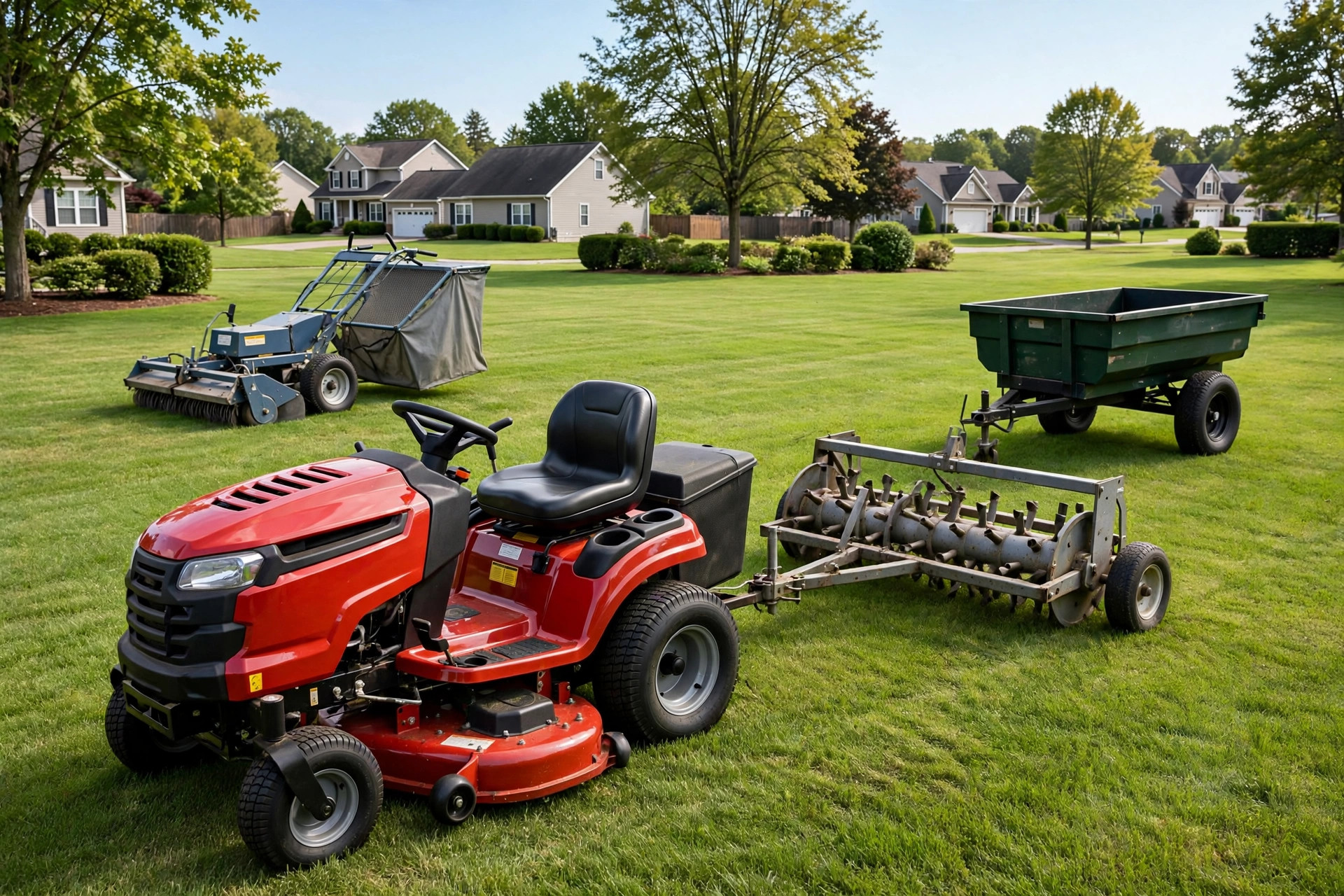
Most riding mowers spend their lives doing one job. They cut grass. Then they sit in the garage for the rest of the week. This is a waste. With the right add-ons, one machine can aerate the soil, spread seed, haul mulch, clear leaves, and grade the driveway. The best riding mower attachments for yard care save money, save space, and save time. Homeowners who own an acre or more of land gain the most. One engine does the work of five machines.
This guide explains which attachments matter, how to choose them, what they cost, and how to keep them in good shape. It is written for ordinary homeowners, not for landscapers with truck fleets. Every tool listed here works with a standard lawn tractor or riding mower and a simple pin hitch.
Why Attachments Matter
A riding mower is already a large purchase. For most families it is the most costly yard tool they own. Attachments turn that one-time cost into real value. Instead of buying a separate dethatcher, spreader, trailer, and aerator, you buy one hitch pin and four steel tools. The savings run into the hundreds of dollars.
There is also the matter of storage. A suburban garage has limited room. A full-size trailer, a walk-behind aerator, and a leaf blower cart take up half the wall space. Tow-behind tools hang on wall hooks or lean in a corner. A dump cart takes less room than a wheelbarrow fleet.
The work itself goes faster. Pulling a 40-inch aerator behind a mower covers ground in a tenth of the time of a walk-behind rental unit. A broadcast spreader puts down seed or fertilizer on a one-acre lot in under an hour. The machine does the pulling. The owner steers.
What to Look for When You Choose: Best Riding Mower Attachments for Yard
Not every attachment fits every mower. Start with the hitch. Most lawn tractors and zero-turn mowers use a standard rear pin hitch. Tow-behind tools slide onto this pin and are held with a clip. Check your owner manual for the hitch size and the maximum tow weight. A small lawn tractor may be rated to pull only 300 pounds. Larger garden tractors can pull 600 pounds or more. Exceeding the limit strains the transmission.
Next, match the tool width to your yard. A 48-inch dethatcher sounds fine until you try to thread it through a four-foot gate. Measure your narrowest gate and your widest open run before you buy. For lots under half an acre, 36 to 42 inches is usually right. For one acre and up, 48 inches and wider pay off.
Build quality decides how long the tool lasts. Look for a welded steel frame, not bolted thin sheet metal. Tines and blades should be spring steel. Bearings should be sealed or greaseable. Pneumatic tires roll easier over rough ground than solid plastic wheels. Powder-coated paint resists rust longer than plain enamel.
Also check how the tool is raised and lowered. The best designs let you lift the working parts with a lever or a rope pull from the seat. Cheaper models force you to stop, climb off, and adjust pins by hand. On a big lot, this small detail matters a great deal.
Types and Options Worth Owning
Lawn Aerators
Core aerators pull small plugs of soil from the lawn. This opens the ground so air, water, and seed can reach the roots. It is the single best treatment for a thin, compacted lawn. A tow-behind spike aerator costs less but only pokes holes. A core aerator does the deeper work. Fill the tray with concrete blocks or water jugs for added weight, and make two passes in a crosshatch pattern for full coverage.
Dethatchers
Thatch is the mat of dead stems that builds up between grass and soil. More than half an inch chokes the lawn. A spring-tine dethatcher rakes this mat loose so it can be swept away. Many owners compare buying one against lawn dethatcher rental prices near me and find that two seasons of rentals cost more than a tow-behind unit of their own.
Broadcast Spreaders
A broadcast spreader flings seed, fertilizer, or salt in a wide arc. It is the fastest way to treat a large lot evenly. Look for a model with an edge guard if your lot borders sidewalks or driveways, so product does not land on the concrete. Stainless steel hardware stands up to corrosive fertilizer better than plain steel.
Dump Carts and Trailers
A tow-behind dump cart is the workhorse of the group. It hauls mulch, soil, firewood, brush, and garden tools. Most hold 10 to 17 cubic feet. A true dump body tilts and lets the load slide out with one pull of a handle. Check the wheel size. Larger tires handle soft ground and curbs without sinking.
Lawn Sweepers
In autumn, a tow-behind lawn sweeper collects leaves faster than any rake. Rotating brushes throw leaves and grass clippings into a rear hopper. When the hopper fills, you dump it from the seat or with a quick pull. Sweepers also pick up pine needles and small twigs, which makes spring cleanup short work.
Lawn Rollers
After frost heave or new seeding, a lawn roller presses the ground flat. The best designs are steel drums that you fill with water for weight and drain for storage. A full 48-inch roller can weigh over 700 pounds, so tow it only on flat ground and never near retaining walls or septic fields. The best lawn roller for leveling uneven ground pairs well with a spring topdressing of sand and seed.
Snow Blades and Dozers
In cold states, a front blade turns the mower into a snow machine. It mounts to the front frame and is raised with a lever. A 42 to 48-inch blade clears most driveways in a few passes. This only suits mowers with a frame strong enough for the push load. Check the manual first.
Utility Rakes and Box Scrapers
For gravel driveways and dirt paths, a landscape rake or box scraper keeps the surface level. It evens out washboard ruts and pulls weeds from the edges. These heavier tools need a true garden tractor, not a light lawn tractor.
Cost and Price
Prices run wide. A simple lawn roller starts near 100 dollars. A quality dump cart runs 200 to 400 dollars. Core aerators and dethatchers sit in the 150 to 300 dollar range. A broadcast spreader costs 100 to 200 dollars. Lawn sweepers run 300 to 500 dollars for full-size models. Front snow blades range from 300 to 600 dollars.
Expect to pay more for welded frames, greaseable bearings, and pneumatic tires. Those parts decide whether the tool lasts five years or fifteen. A cheap tool that bends on the first season is no bargain.
Buying as a set can help. Some makers sell combo kits with a spreader, aerator, and cart at a small discount. Watch for end-of-season sales in late autumn, when dealers clear floor space. Used tools appear often in local listings, and steel frames hold their value well. Inspect used tines and bearings before you pay.
Budget for ballast too. Aerators and rollers need added weight to work. Concrete blocks cost little at a home store, but plan for them in the total.
Care and Upkeep
Steel tools last when they are kept dry and clean. Wash mud and fertilizer off after each use. Fertilizer corrodes bare metal fast, so rinse the spreader thoroughly. Grease the bearings on aerators and sweepers once a season. Check tire pressure on pneumatic tires before the spring run.
Store tools under cover. A tarp works if there is no garage space. Hang dethatchers and spreaders on wall hooks to keep frames straight. Drain water from rollers before winter or the drum can split in a hard freeze.
Replace wear parts on time. Tines bend and dull. Spreader agitator pins wear down. Sweeper brushes lose their edge. Most makers sell cheap rebuild kits. A thirty-dollar kit often buys five more years of life. Keep the mower itself in shape too. A worn drive belt slips under tow load, so follow the riding mower deck belt replacement guide on schedule and keep blades sharp for clean cutting.
Safety
Tow-behind tools add length and weight behind you. Slow down, especially on slopes. Never turn sharply on a hill with a loaded cart. The weight can push the mower sideways or tip the trailer. Keep speed under five miles per hour when towing.
Watch for bystanders. Aerator tines and dethatcher springs throw debris. Spreaders fling granules. Keep children and pets clear of the work area. Set the parking brake and shut off the engine before you hook or unhook any tool.
Do not overload. Stay under the tow rating in your owner manual. A cart piled high with wet soil can weigh over a thousand pounds. Split heavy loads into two trips. On slopes, add wheel weights or tire chains for grip if your manual allows them.
Read the engine guidance from the maker of your machine. Briggs & Stratton publishes engine and mower guidance for safe towing loads and maintenance intervals. Toro offers owner resources and model details at Toro. For larger garden tractors and heavy-duty attachments, John Deere posts specifications at John Deere.
Frequently Asked Questions
Will these attachments fit my riding mower?
Most fit any lawn tractor or garden tractor with a standard rear pin hitch. Measure your hitch and check the tow weight rating in the owner manual. Zero-turn mowers often have hitches too, but check their tow limits, which can be lower.
Which attachment should I buy first?
Buy the tool that matches your worst problem. If the lawn is thin and hard, start with an aerator. If leaves bury the yard each fall, start with a sweeper. If you haul mulch every spring, start with a dump cart. Most owners buy the cart first because it serves every season.
Can a lawn tractor pull a loaded dump cart?
Usually yes, within limits. A mid-size lawn tractor can tow a cart holding 10 to 12 cubic feet of mulch. Wet soil and gravel weigh far more than mulch, so split those loads. Stay under the tow rating in your manual.
Do I need to add weight to an aerator?
Yes. An empty aerator barely scratches the soil. Add concrete blocks, sandbags, or water jugs to the tray until the tines sink two to three inches. Test on a small patch first.
How do I store these tools in winter?
Clean them, dry them, and keep them under cover. Drain water-filled rollers before freezing weather. Grease bearings in the fall so they sit protected all winter.
Are tow-behind tools hard on the mower transmission?
They are fine when you stay within the tow rating and keep speed low. Hydrostatic transmissions are built for steady towing work. Avoid sudden stops and starts, and service the transmission fluid on the schedule in your manual.
A Short Final Word
The best riding mower attachments for yard care change what a mower is. It stops being a one-job machine and becomes the heart of the yard crew. Start with one tool that fits your worst chore. Learn it well. Add the next tool when the season calls for it. In a few years you will own a small fleet of tools, one engine, and a yard that shows the difference.
References
Toro. (n.d.). Lawn mowers and yard equipment. https://www.toro.com John Deere. (n.d.). Lawn tractors and outdoor equipment. https://www.deere.com Briggs & Stratton. (n.d.). Engines and outdoor power equipment. https://www.briggsandstratton.com
Was this guide helpful?

About Lisa Anderson
The My Garden US editorial team writes practical, in-depth home and garden guides for American homeowners — tested advice, no fluff.