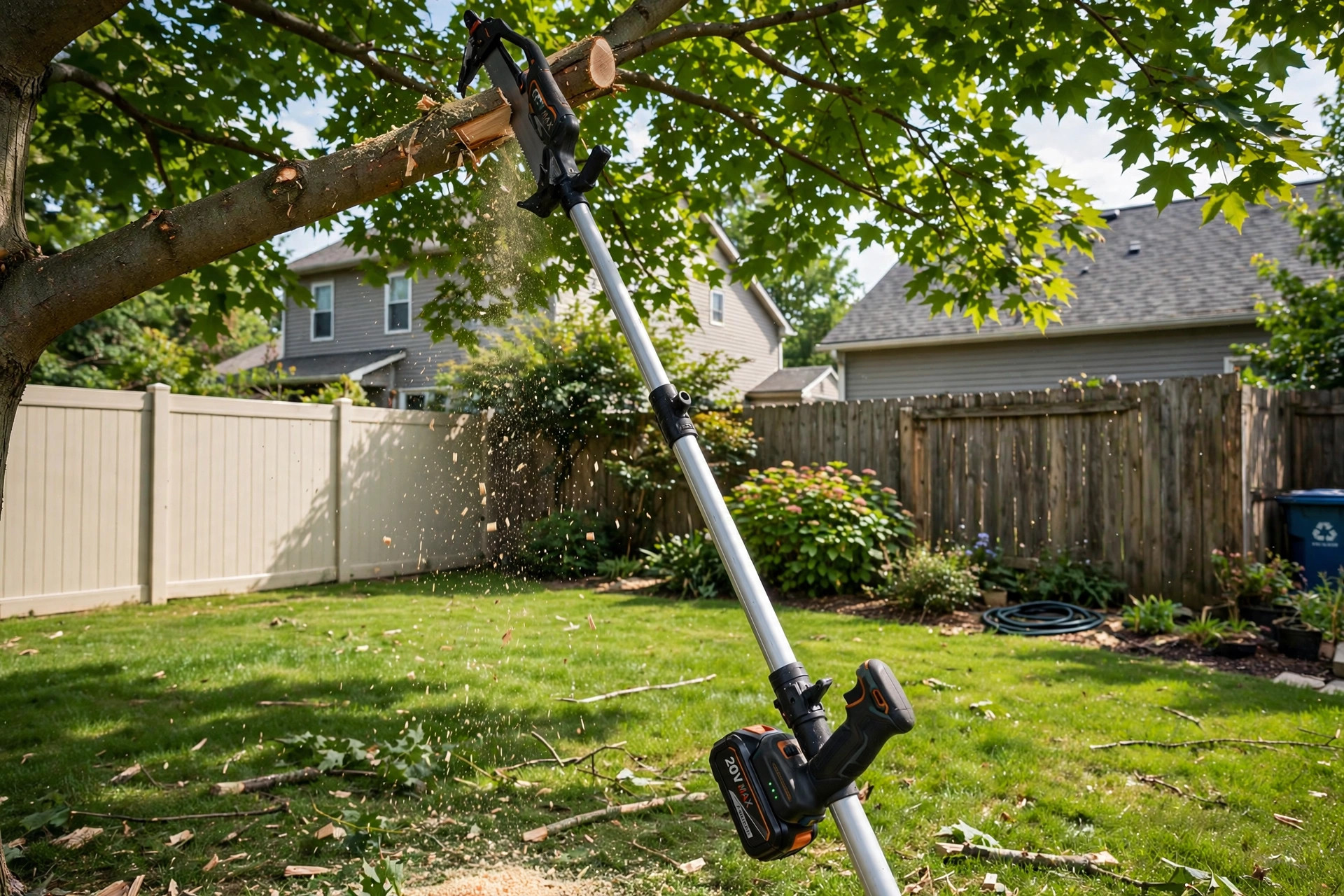

Low branches can ruin the look of a good yard. They block sunlight. They scratch cars. They drop sticks all over the lawn. Many home owners now trim their own limbs. The best cordless pole saw for limbs makes this work far easier than it used to be. No cords. No gas. No ladder in most cases. You stand on the ground and reach up to ten or fifteen feet. This guide explains how to pick one, what to pay, and how to use it with care.
Why a Cordless Pole Saw Matters
A pole saw is a small chain saw on a long pole. A cordless model runs on a rechargeable battery. For limbs up to six inches thick, it is often the right tool. It reaches places that need a ladder otherwise. That alone makes it safer.
Gas pole saws were the old answer. They are strong, but they are heavy and loud. They need fuel mixing. They need pull starts. A cordless saw starts with a button. It is quiet enough to use early on a Saturday. Neighbors notice the difference.
The battery is the heart of the tool. Modern batteries hold far more charge than the packs from ten years back. Most saws use 18-volt or 40-volt platforms. Bigger voltage usually means more cutting power and longer run time. Many brands share batteries across tools. If you already own a cordless trimmer from the same brand, the same pack may fit the saw.
How to Choose the Right One: Best Cordless Pole Saw for Limbs
Think first about the limbs you will cut. Most home pole saws cut branches three to six inches thick. Measure the largest limb you plan to remove. A six-inch bar handles a six-inch limb. A ten-inch bar cuts faster and handles thicker wood. Do not buy a saw for limbs twice as thick as it can cut. You will strain the motor and the chain.
Reach matters next. Telescoping poles extend from about seven feet to ten or fifteen feet. A longer pole reaches higher limbs. It also gets heavier in your hands. Most people find a nine to ten foot reach is enough for common yard trees. Stand on the ground and look at the limb you must cut. Add your own height. That is the reach you need.
Battery run time is the third point. Check the amp-hour rating of the pack. A 2.5 amp-hour pack may give thirty cuts through small limbs. A 5.0 amp-hour pack doubles that. Extra packs help for big jobs. Look at charge time too. A fast charger fills a pack in under an hour.
Comfort and Weight
A pole saw gets heavy at full length. Look for one under ten pounds with the battery. A shoulder strap spreads the load. Rubber grips help your hands. Some saws have a padded head where the bar meets the pole. Small details like these matter on a long job.
Bar and Chain Quality
The bar is the metal blade that guides the chain. The chain does the cutting. Good saws use a low-kickback chain. The teeth stay sharp longer. Check that the chain is easy to tighten. Tool-free chain tensioning is a real help. You will adjust the chain often as it wears.
Motor Power and Speed
The motor turns the chain. Chain speed is measured in meters per second. Faster chains cut quicker and smoother. Most home cordless saws run near the speed of small gas saws. That is plenty for limbs. Brushless motors are the better pick. They run cooler and waste less battery. They also last longer because they have fewer wearing parts. A brushed motor costs less, but it drains the pack faster and wears out sooner. If you plan to trim every season, the brushless motor is worth the extra price.
Battery Platform and Sharing
One of the best parts of cordless tools is battery sharing. Many brands sell a line of tools on one battery platform. The same pack may run your pole saw, your trimmer, and your blower. Check this before you buy. If you already own cordless yard tools, stay with that brand. You save money on spare packs. You also need only one charger. Look at the pack size offered in the kit. Some kits ship with a small pack to keep the price low. A larger pack sold alone may cost nearly as much as the kit upgrade. Read the kit contents with care.
Types and Options
Cordless pole saws come in a few styles. Each fits a different kind of yard work. A pole saw reaches high limbs; for thicker wood at ground level, a cordless chainsaw for tree limbs reviews guide helps you pick the right partner tool.
Fixed-length pole saws are the simplest. The pole does not extend. They are light and cheap. They reach about eight feet. They suit small yards with low trees.
Telescoping pole saws extend and lock at several lengths. They cost more but reach higher. This is the most popular style for home owners.
Combination saws split into two tools. The head comes off the pole. Used alone, it works like a small hand saw. Attached, it works like a full pole saw. These are handy if you also prune shrubs at ground level.
Convertible power heads use one battery head with many attachments. You may attach a pole saw, a hedge trimmer, or a string trimmer. If you plan to buy several yard tools from one brand, this can save money. A good pruning head pairs well with limb work when trimming lighter branches nearby.
Some models add a pruning saw head. This is a small fixed blade rather than a chain. It cuts slower but needs less care. For light trimming of thin limbs, a best cordless pruning saw for branches style head can be enough.
Cost and Price
Cordless pole saws for home use run from about one hundred dollars to four hundred dollars. The price depends on bar length, battery size, and brand.
One hundred to one hundred fifty dollars buys a basic fixed-length saw. The bar is six to eight inches. The battery is small. This is enough for a yard with a few small trees.
One hundred fifty to two hundred fifty dollars is the middle ground. Telescoping poles are common here. Bars run eight to ten inches. Batteries last longer. Most home owners find their pick in this range.
Two hundred fifty to four hundred dollars buys a pro-style home saw. Longer reach. Bigger battery. Stronger motor. These handle storm cleanup and large lots.
A spare battery adds fifty to one hundred dollars. A fast charger adds thirty to sixty. Compare full kits rather than tool-only prices. One brand may look cheap until you add the pack and charger. Reports from Consumer Reports help set fair price expectations for cordless yard tools, and brand sites like Toro show current battery platform lineups.
Hiring a tree service for one visit often costs two hundred to five hundred dollars. If you trim limbs twice a year, a saw can pay for itself fast.
Care and Upkeep
A cordless pole saw needs little care, but it needs some. A clean saw cuts better and lasts longer.
Oil the bar and chain before each use. Most saws have a small oil tank. Use bar and chain oil. It cuts friction. It keeps the chain cool. Check the level often during a long job.
Keep the chain sharp. A sharp chain pulls itself into the wood. A dull chain needs force. You will feel the difference. Learn to file the teeth with a round file. It takes ten minutes. Or have a shop sharpen it for a small fee.
Store the battery right. Charge it before long storage. Keep it in a cool, dry place. Do not leave it in a hot garage all summer. Heat shortens battery life. This advice matches what makers like Briggs & Stratton publish about battery-powered yard equipment care.
Clean the saw after each job. Brush sap and sawdust off the bar. Wipe the pole. Check the chain tension. A loose chain can slip off the bar. Tighten it per the manual.
Safety Comes First
A pole saw has a real chain. It can hurt you. Treat it with respect.
Wear safety glasses. Chips fly fast. Wear gloves with a good grip. Wear a hard hat if you cut limbs above your head. Falling branches are heavy. Ear protection helps on long jobs.
Keep both hands on the pole. Never hold a limb with one hand while cutting with the other. Never stand on a ladder with a running saw. The reach is the point. Stay on the ground.
Watch where the limb will fall. Cut limbs in small pieces. Make a small cut on the underside first. Then cut from the top. This keeps the bark from tearing. It also keeps the limb from pinching the bar.
Stay clear of power lines. If a limb touches a line, call the power company. Do not cut near wires yourself. This rule is absolute.
Keep children and pets away from the work area. A helper can warn you of falling wood. Do not let anyone stand under the branch you cut.
For thicker trunks or whole trees, a pole saw is the wrong tool. A full-size saw made for the ground is better. Compare options in our best battery chainsaw for yard work guide before you tackle big wood.
Frequently Asked Questions
How thick a limb can a cordless pole saw cut?
Most home models cut limbs three to six inches thick. Larger bars reach eight inches. For anything thicker, use a full-size chainsaw or hire a service. Pushing a small saw past its limit dulls the chain and strains the motor.
How long does the battery last?
It depends on the pack and the wood. A 5.0 amp-hour pack often gives forty to sixty cuts through three-inch limbs. Dead wood drains the battery faster than green wood. For long jobs, keep a second pack on the charger.
Can I cut wet or storm-damaged limbs?
Yes, but take care. Storm limbs may be split or hanging by bark. They can twist and pinch the bar. Cut them in short sections. If the limb is large or tangled in wires, call a tree service.
Do I need to oil the chain?
Yes. Every time. Bar and chain oil keeps the chain cool and sharp longer. Fill the tank before you start. Check it during breaks. Running dry wears out the bar fast.
Is a cordless saw strong enough for hard wood?
For limbs up to its rated size, yes. Oak and maple cut slower than pine, but a good cordless saw handles them. Let the chain do the work. Do not push. For many small limbs, it works as well as gas.
What reach do I need?
Add your height to the pole length. A ten-foot pole lets a six-foot person reach about fifteen feet up. Most yard trees have problem limbs below that height. Measure your highest limb before you shop.
A Short Final Word
The best cordless pole saw for limbs is the one that fits your trees, your strength, and your budget. Pick the right bar length. Pick a battery that lasts. Learn the basic cuts. Keep the chain sharp and oiled. With steady care, a good saw will trim your yard for many years, and it will do it quietly, cleanly, and without a cord.
References
Briggs & Stratton. (n.d.). Outdoor power equipment. https://www.briggsandstratton.com Consumer Reports. (n.d.). Product reviews and ratings. https://www.consumerreports.org Toro. (n.d.). Lawn and garden equipment. https://www.toro.com
Was this guide helpful?

About James Carter
The My Garden US editorial team writes practical, in-depth home and garden guides for American homeowners — tested advice, no fluff.
You May Also Like

Grub Killer for Lawns Safe for Dogs: A Practical Guide
July 1, 2026 2 views
Best Riding Mower for Hills Reviews: What to Know Before You Buy
September 10, 2026 0 views
Best Riding Mower Attachments for Yard
February 22, 2026 0 views