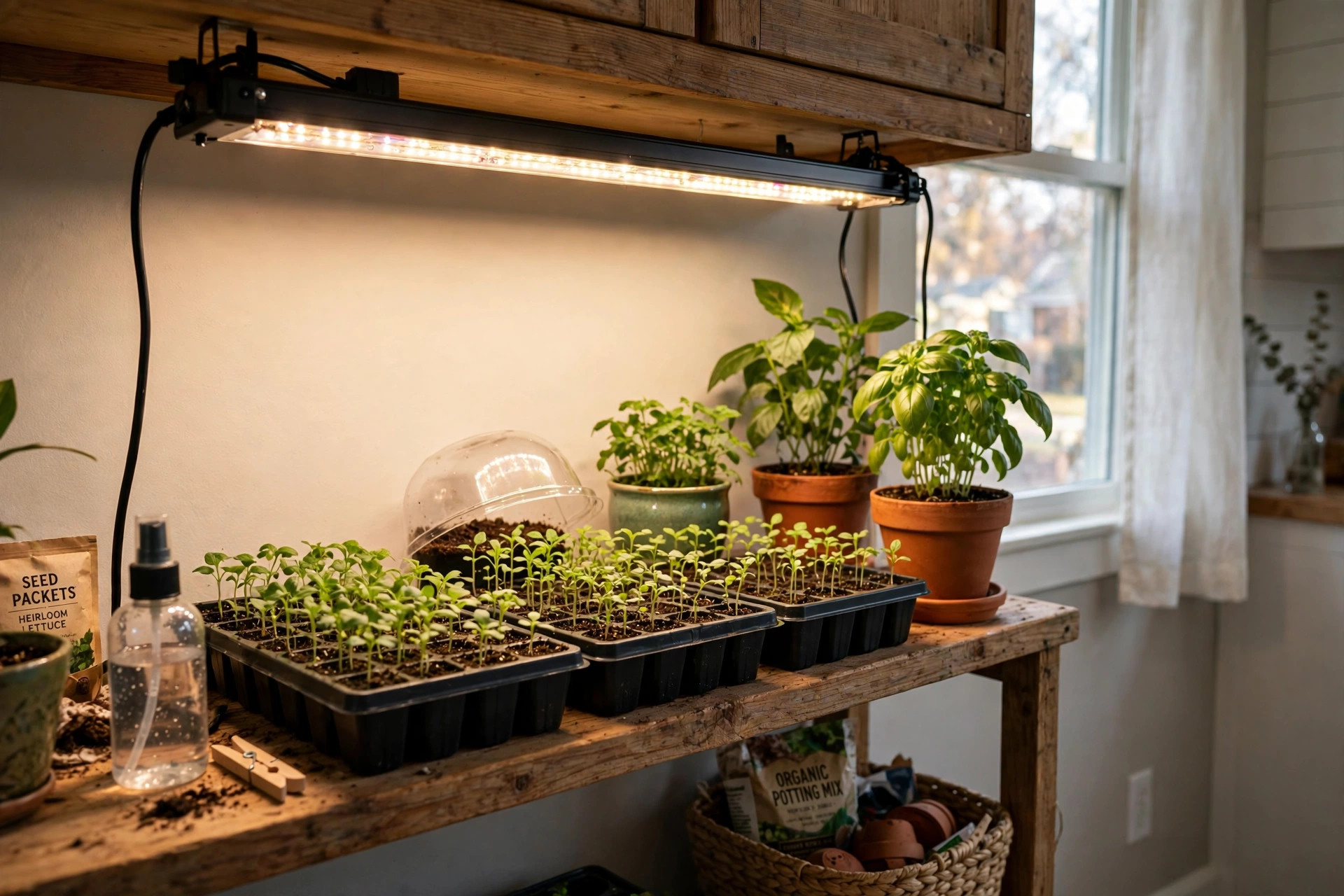
Many home gardeners begin with a simple search for indoor grow lights deals near me. They want to grow herbs on a kitchen counter, start seedlings in winter, or keep a houseplant collection alive through short days. A grow light makes all of that possible. It gives plants the light they cannot get from a dark room. This guide shows how to find good deals close to home, what to check before you buy, and how to choose a light that fits your plants and your budget.
Why Buying Close to Home Still Matters
A garden store a few miles away offers things a faraway warehouse cannot. You can hold the light in your hand. You can check the weight of the fixture. You can ask a clerk who knows plants. You can also bring the light back the same day if something is wrong.
Local deals on indoor grow lights appear in several places. Big home centers clear out older models each season. Hardware stores run holiday sales. Garden nurseries mark down display stock. Even discount stores carry small grow lamps in spring. A shopper who checks a few of these places often finds a price as low as anything on a screen.
There is another gain. When you look at indoor grow lights for sale usa listings on paper flyers and store shelves, you learn the real prices in your area. That knowledge helps you spot a true bargain. A price that looks low online may be average in your town once shipping is added. A shelf tag that seems high may drop by half during a store clearance.
What to Look for Before You Buy: Indoor Grow Lights Deals near Me
Light Type and Strength
The type of bulb decides how well plants grow. Older shops may still stock fluorescent tubes. These tubes work for small seedlings. They are cheap to buy. They use more power for the light they give, and they wear out fast.
Most new stock is LED. LED grow lights use less power. They last far longer. They come in full spectrum, which means they give off light like the sun. A comparison from the federal energy office shows that LED lights turn more of their power into useful light than old bulbs. For plants, that means stronger growth at a lower cost on the power bill.
Check the label for the wattage. Small herb pots need only a low wattage lamp. A tall tomato plant in a tent needs a stronger panel. The box should list the coverage area in square feet. Buy a light whose coverage matches your shelf or grow space.
Spectrum and Color
Plants use blue and red light most of all. Blue light helps leaves grow. Red light helps flowers and fruit form. Full spectrum lights give both. Some lamps let you switch between growth and bloom modes.
A warm white light looks nice in a living room. A purple pink grow light looks odd but works well for plants. Think about where the light will sit. If it sits in a main room, a white full spectrum lamp will please the eye more. The product pages at Philips explain how different light colors serve different plant stages.
Size and Shape
Grow lights come as bars, panels, bulbs, and strips. A screw-in bulb fits a desk lamp. A bar light hangs over a long shelf. A square panel covers a grow tent. Measure your space before you shop. A light that is too big wastes power. A light that is too small leaves the edges of your plants in the dark.
Types and Options
Screw-In Grow Bulbs
These bulbs screw into any normal socket. They cost the least. They suit one or two small pots. Look for them in the deal bins at large retailers like Home Depot and Lowe’s. During spring sales, these bulbs often drop to a few dollars each.
Clip-On and Desk Lamps
A clip-on lamp holds a grow bulb on a gooseneck arm. It clamps to a shelf or table edge. It is handy for a small herb garden in a kitchen. Deals appear at the start of the growing season and after the holidays.
Bar and Strip Lights
Bars are long, thin lights. They hang in rows over wide shelves. They suit people who start many seedlings at once. Strip lights link end to end, so you can cover a long bench with one plug. Store clearances on these models are common in late summer.
Panel Lights
Panels are the workhorses for serious indoor growers. They hang from a frame or a tent ceiling. They cover two to four square feet. They cost more than bulbs, but the price per square foot of coverage is often better. A deal on a panel is worth checking when a store updates its model line.
Cost and Price
The price of an indoor grow light runs from about ten dollars for a small bulb to several hundred dollars for a large panel. Most home gardeners spend between thirty and one hundred and fifty dollars for a good mid-size LED unit.
A deal is only a deal if the light does the job. A ten dollar bulb that dies in two months costs more than a forty dollar lamp that lasts five years. Read the rated life on the box. Good LED units list thirty thousand to fifty thousand hours. That is many years of normal use.
Watch for real price cuts. Stores lower prices at certain times. January and February bring post-holiday clearances. March and April bring spring garden sales. Late August and September bring end of season markdowns. A shopper who searches for indoor grow lights deals near me during these windows will find the best shelf prices of the year.
Online price trackers can help, but do not forget the cost of shipping. A store within driving distance saves that fee. Some shoppers compare local shelf tags with indoor grow lights usa online deals pages to see which side wins. Often the local store matches the web price when asked.
The federal ENERGY STAR program lists lights that meet strict rules for power use. A light with this mark will cost less to run each month. The mark also signals that the maker met tested quality standards. Buying a certified light on sale gives you both a low price and low running costs.
Where to Find Deals Near You
Start with the big home centers. Their lighting aisles carry the widest stock. Ask about open box and display models. A display lamp that ran on a shelf for a month often sells at a steep cut, and it is still almost new.
Next, try local garden centers and nurseries. They carry grow lights in spring. They may mark them down when the season ends. The staff often grow plants themselves and can give honest advice.
Hardware stores and farm supply shops also stock grow lights. They may not have a large range, but their sale flyers can surprise you. Check their weekly ads.
Discount and warehouse clubs sometimes carry seasonal grow kits. A kit with a light, a stand, and a timer can be a good deal if you need all three parts.
Finally, ask about indoor grow lights where to buy usa options from other gardeners in your area. A local garden club or plant swap group knows which shops give fair prices. Members often share news of sales the day they start.
Care and Upkeep
A grow light needs little care, but a few habits keep it working well.
Keep the lens clean. Dust blocks light. Wipe the lens with a dry cloth every month or two. Unplug the unit first.
Check the timer. Most plants need twelve to sixteen hours of light each day. A simple outlet timer costs little and saves you from guessing. If the timer drifts, reset it.
Watch the hanging height. Seedlings want the light close, often six to twelve inches above the leaves. Larger plants do better with the light a foot or two away. Move the light up as plants grow so leaves do not burn.
Store lights in a dry place. Damp sheds and wet basements shorten the life of the fixture. If you pack a light away for summer, coil the cord loosely and keep the box.
Safety
Grow lights are safe when used as the maker directs. A few rules matter.
Do not stare into a bright LED panel. The light is strong. Set up the fixture so it faces the plants, not the room.
Keep water away from the fixture. Watering cans and mist sprayers belong below the light, not near the plug. If a light gets wet, unplug it at once and let it dry fully.
Do not cover the vents. Panels need air flow to stay cool. Hang them in open air, not inside a closed box.
Check the cord each season. A cord with cracks or bare wire is not safe. Replace the unit rather than taping a damaged cord.
Buy lights that carry a safety mark from a known testing lab, such as UL or ETL. These marks show the unit passed electrical safety tests. A consumer review site like Consumer Reports often notes which models carry these marks.
Frequently Asked Questions
How many hours a day should I run a grow light?
Most houseplants and herbs do well with twelve to sixteen hours of light per day. Give plants a dark rest of at least six hours. A timer makes this easy. Seedlings like the longer end of the range. Plants that flower may need a shorter day, so check the seed packet or plant tag.
Are cheap grow lights worth buying?
Cheap lights can work for small jobs. A low price bulb over a pot of basil will do fine. For larger plants or many pots, cheap lights often fall short. They give less light per watt and wear out sooner. The best value is usually a mid-price LED with a long rated life. Shopping the sale season brings those mid-price models down to near the cheap price.
Can I use a normal LED bulb as a grow light?
A normal LED bulb gives some light that plants can use, but it is not made for the job. It lacks the strong blue and red output that plants need. It may keep a hardy plant alive, but growth will be slow and weak. A real grow light costs only a little more and gives far better results.
What size grow light do I need for a four foot shelf?
A four foot shelf suits two bar lights or one long strip set linked together. Look for units whose stated coverage adds up to four square feet. Hang them about a foot above the plants. Measure before you buy, since bars from different makers vary in length.
Do grow lights raise the power bill a lot?
A modern LED grow light uses far less power than old bulbs. A thirty watt lamp run fourteen hours a day uses about thirteen kilowatt hours a month. At common power rates, that adds roughly two dollars a month. Larger panels cost more to run, but still less than most people expect. A guide at The Spruce breaks down these running costs in plain terms.
When is the best time to buy?
The best shelf deals appear in late winter clearances and late summer markdowns. Spring brings the widest stock but not always the lowest prices. If you can wait, buy in August or September when stores clear garden stock. If you need a light now, check the clearance end caps at your local store before you order from far away.
A Final Word
A search for indoor grow lights deals near me is the start of a good habit. It puts you in the store, where you can see the light, read the box, and ask questions. Buy the light that fits your plants, your space, and your budget. Choose LED for long life and low power use. Keep an eye on the sale seasons. With a little patience, you can light a whole indoor garden for less than you might think. Specialty lighting shops like Lumens and Lamps Plus also carry grow lamps worth comparing, so bring your local price notes with you and judge each deal on its merits.
References
Consumer Reports. (n.d.). Product reviews and ratings. https://www.consumerreports.org ENERGY STAR. (n.d.). Energy efficient products. https://www.energystar.gov Lamps Plus. (n.d.). Lighting and home decor. https://www.lampsplus.com Lowe’s. (n.d.). Home improvement products. https://www.lowes.com Lumens. (n.d.). Lighting and ceiling fans. https://www.lumens.com Philips. (n.d.). Lighting products. https://www.philips.com The Home Depot. (n.d.). Home improvement products. https://www.homedepot.com The Spruce. (n.d.). Home and garden advice. https://www.thespruce.com U.S. Department of Energy. (n.d.). Energy efficiency and renewable energy. https://www.energy.gov
Was this guide helpful?

About Robert Taylor
The My Garden US editorial team writes practical, in-depth home and garden guides for American homeowners — tested advice, no fluff.