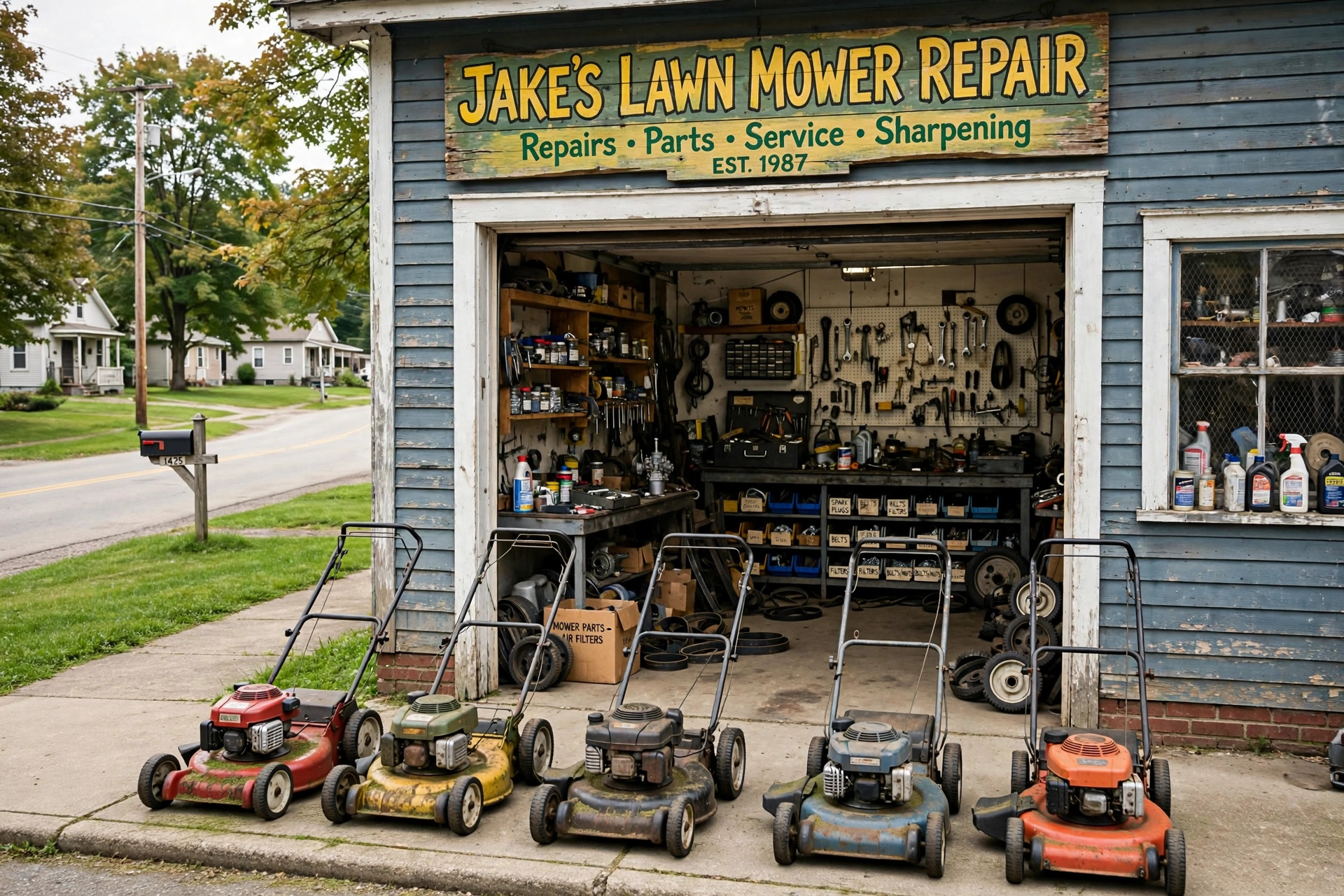

Most homeowners learn about lawn mower repair shops near me the hard way. The mower will not start on a Saturday morning. The grass is already tall. The weekend is short. A new mower costs hundreds of dollars, and no one wants to pay that when the old one may only need a small fix. A good local shop can save you money and save you time. This guide explains what these shops do, how to pick one, what repairs cost, and how to care for your mower so you visit the shop less often.
Why Local Repair Shops Matter
A mower is a simple machine, but it still needs care. Blades go dull. Belts wear out. Spark plugs foul. Oil gets dirty. When you look for lawn mower repair shops near me, you are really looking for someone with the right tools and the right parts. A trained mechanic can find the problem in minutes where you might guess for hours.
Local shops also keep older mowers alive. Many mowers sold in the 1990s still cut well if they get new blades and a tune-up. Big stores will sell you a new mower. A repair shop will fix the one you own. That is often the better deal.
There is another reason. Small engines are fussy. A mower that sits all winter with old gas may not start in spring. A shop can clean the carburetor, change the fuel, and get it running again. They do this work every day.
What to Look For When You Choose a Shop: Lawn Mower Repair Shops near Me
Not all shops are the same. Use these points to judge them.
Experience With Your Type of Mower
Push mowers, self-propelled mowers, riding mowers, and zero-turn mowers all work in different ways. Ask if the shop fixes your kind. If you own a riding mower for a big yard, ask about that directly. If you are thinking about a new machine for a large lot, read our guide to the best riding lawn mower for one acre lots before you decide.
Clear Prices
A good shop will tell you the cost before the work starts. Many shops charge a bench fee or a check fee. This fee covers the time to find the problem. Ask what the fee is and whether it comes off the final bill if you say yes to the repair.
Turnaround Time
In spring and early summer, shops get busy. Ask how long the job will take. Some shops offer a loaner mower. Some offer pick-up and delivery for a small charge. If you cannot lift a heavy riding mower into a truck, pick-up service is worth the money.
Real Reviews
Ask neighbors who they use. Read reviews, but read them with care. One bad review among many good ones is normal. Many bad reviews about the same thing, such as lost parts or wrong prices, are a warning.
Factory Training and Parts
Some shops are dealers for big brands. A dealer for a brand like Toro or John Deere can get factory parts fast. For engine work, a shop that knows Briggs & Stratton engines is a strong choice, since those engines sit in many mowers sold in America.
Common Repairs and What They Cost
Every shop has its own price list, but some jobs come up again and again. Here are the usual ones.
Blade sharpening or replacement. A dull blade tears grass instead of cutting it. Torn grass turns brown at the tips. Sharpening costs little. A new blade costs more but is still cheap. If you want to buy blades yourself, see our guide on where to buy lawn mower blades near me.
Oil change. Dirty oil wears an engine out fast. An oil change on a push mower is a quick job. On a riding mower it takes longer and costs more.
Spark plug and air filter. These are the first things a mechanic checks when a mower will not start. Both parts cost little.
Carburetor cleaning. Old gas leaves a sticky film in the carburetor. The shop will clean it or fit a new one. This is one of the most common spring repairs.
Belt replacement. Self-propelled and riding mowers use drive belts. A worn belt slips, so the mower will not move right. Replacing a belt is routine work.
Tire and wheel work. Riding mower tires go flat. Push mower wheels wear down. Shops keep these parts on the shelf.
Battery and starter. Riding mowers have batteries. A dead battery is a simple fix. A bad starter motor costs more.
Deck repair. The deck is the metal shell under the mower. Rust and dents can be patched or welded.
As a rule, small push mower repairs cost much less than riding mower repairs. If the repair bill passes half the price of a new mower, most shops will tell you so. That is honest advice, and it is one sign of a shop you can trust.
Types of Mowers and Their Typical Problems
Push Mowers
These are the most common mowers in America. They are light and simple. Most problems are dull blades, old gas, or dirty air filters. Repairs are cheap and fast.
Self-Propelled Mowers
These mowers drive themselves forward. They have drive belts, wheels, and cables that a plain push mower does not have. Belt and cable repairs are common. If you are shopping for one, our piece on self propelled mower deals for usa homeowners may help you compare prices.
Riding Mowers
Riding mowers suit yards over half an acre. They have batteries, bigger engines, and more belts. Repairs cost more because there is more machine to check. Ask the shop if they service riding mowers before you haul yours there.
Zero-Turn Mowers
These cut fast and turn tight. They have two drive levers and often two engines belts. They need a shop with real skill. Not every shop takes them, so call first.
Electric and Battery Mowers
Battery mowers need less care than gas mowers. No oil, no gas, no spark plug. But batteries wear out in a few years, and a new battery can cost a lot. Ask if the shop works on your brand of electric mower.
Care and Upkeep at Home
You can keep many small problems from ever reaching the shop. A little care goes far.
Change the oil once a year. Check the air filter each spring. Keep the blade sharp. A sharp blade cuts clean and keeps the grass green.
Use fresh gas. Gas older than 30 days can go stale. Add fuel stabilizer if the mower will sit all winter. In the fall, run the tank dry or treat the fuel, then store the mower in a dry place.
Clean the deck after each cut. Wet grass sticks to the deck and holds rust. A stiff brush or a hose takes it off in a minute.
Check the tire pressure on riding mowers. Low tires make the cut uneven. Check belts for cracks before the season starts.
Keep the mower manual. It lists the right oil, the right spark plug, and the right blade part number. A shop will ask for these if they need to order parts.
How to Get Ready for Your Shop Visit
A little prep makes the repair faster and cheaper.
Write down what is wrong. Note when the problem started. Did the mower lose power all at once, or did it get weak over weeks? Does it start and then die? Does it make a strange noise? A clear note saves the mechanic from guessing.
Bring the model number. It sits on a tag or a sticker on the mower, often under the seat on a riding mower or on the back of the deck on a push mower. With the model number, the shop can order the right parts the first time.
Clean the mower before you bring it in. Knock off loose grass and dirt. A clean machine is easier to work on, and some shops charge extra for a filthy one.
Empty the gas tank if you can, or ask the shop if they want it full. Some shops prefer to drain old gas themselves so they can see what is in it.
Ask what to expect. A good visit ends with a written note that lists the work done, the parts used, and the total cost. Keep that note. It helps at the next visit and it helps if you ever sell the mower.
Safety Notes
A mower is safe when you treat it with care. It is not safe when you rush.
Disconnect the spark plug wire before you touch the blade. On a battery mower, take the battery out first. A blade that moves by accident can cut deep.
Let a hot engine cool before you add gas. Gas on a hot muffler can catch fire. Never fill the tank indoors.
Keep hands and feet away from the deck while the engine runs. Never lift a running mower. Keep children and pets far from the yard while you mow.
Wear closed shoes, not sandals. Wear eye protection when you trim near stones. A mower can throw a stone hard enough to break a window.
Frequently Asked Questions
How much does a lawn mower tune-up cost? A basic tune-up on a push mower is one of the cheapest jobs a shop does. It often covers an oil change, a new spark plug, a new air filter, and blade sharpening. Riding mower tune-ups cost more because the machine is larger and takes longer to check.
Why will my mower not start after winter? Old gas is the most common cause. Gas goes stale in a few months and clogs the carburetor. A shop can clean the carburetor and drain the old fuel. Next fall, add fuel stabilizer before you store the mower.
Should I repair my mower or buy a new one? Compare the repair bill to the price of a new mower. If the repair costs less than half the price of a new one, repair is usually the smart move. If the mower is very old and needs several big parts, a new mower may cost less in the long run.
How long do mower repairs take? Simple jobs like blade sharpening may be done the same day. Engine work can take several days, more in the busy spring season. Always ask for a time estimate when you drop the mower off.
Do repair shops sell parts too? Most do. Many shops sell blades, belts, filters, spark plugs, and oil. Buying the part from the shop that will fit it can save a return trip.
Can a shop fix a mower I bought online? In most cases, yes. The brand matters more than where you bought it. Call ahead and give the brand and model number so the shop can check that it can get parts.
A Short Final Word
The search for lawn mower repair shops near me ends well when you know what to ask. Look for a shop with experience on your type of mower, clear prices, and honest advice. Keep up with simple care at home, and your mower will give you many more years of clean cuts. A shop that knows your name and your machine is worth more than the cheapest ad in town.
References
Toro. (n.d.). Lawn mowers and outdoor power equipment. https://www.toro.com Deere & Company. (n.d.). John Deere lawn care and agriculture equipment. https://www.deere.com Briggs & Stratton. (n.d.). Small engines and outdoor power parts. https://www.briggsandstratton.com
Was this guide helpful?

About Sarah Mitchell
The My Garden US editorial team writes practical, in-depth home and garden guides for American homeowners — tested advice, no fluff.
You May Also Like
The Best Backpack Sprayer for Weed Killer: A Plain Guide
May 13, 2026 0 views
Sprinkler System Design Layout Guide for Homeowners
May 31, 2026 0 views
Robot Lawn Mower for Half Acre Yards: What to Know Before You Buy
September 10, 2026 0 views