Introduction
This ceiling fans lights buying guide USA was written for the ordinary shopper. A ceiling fan with a light kit is one of the most common fixtures in American homes. It moves air in summer, it spreads warm air in winter, and it lights the room at the same time. Yet many buyers walk into a store or open a web page and find too many choices: sizes, blade counts, light kits, motor types, and remotes. The result is often a wrong pick. A fan that is too small for the room, a light that is too dim for reading, or a model that wobbles on the first day. This guide keeps the matter simple. It explains what to look for, what types exist, what they cost, and how to keep them safe. Read it through once, and you will know enough to buy with confidence.
Why a Ceiling Fan With Lights Matters: Ceiling Fans Lights Buying Guide Usa
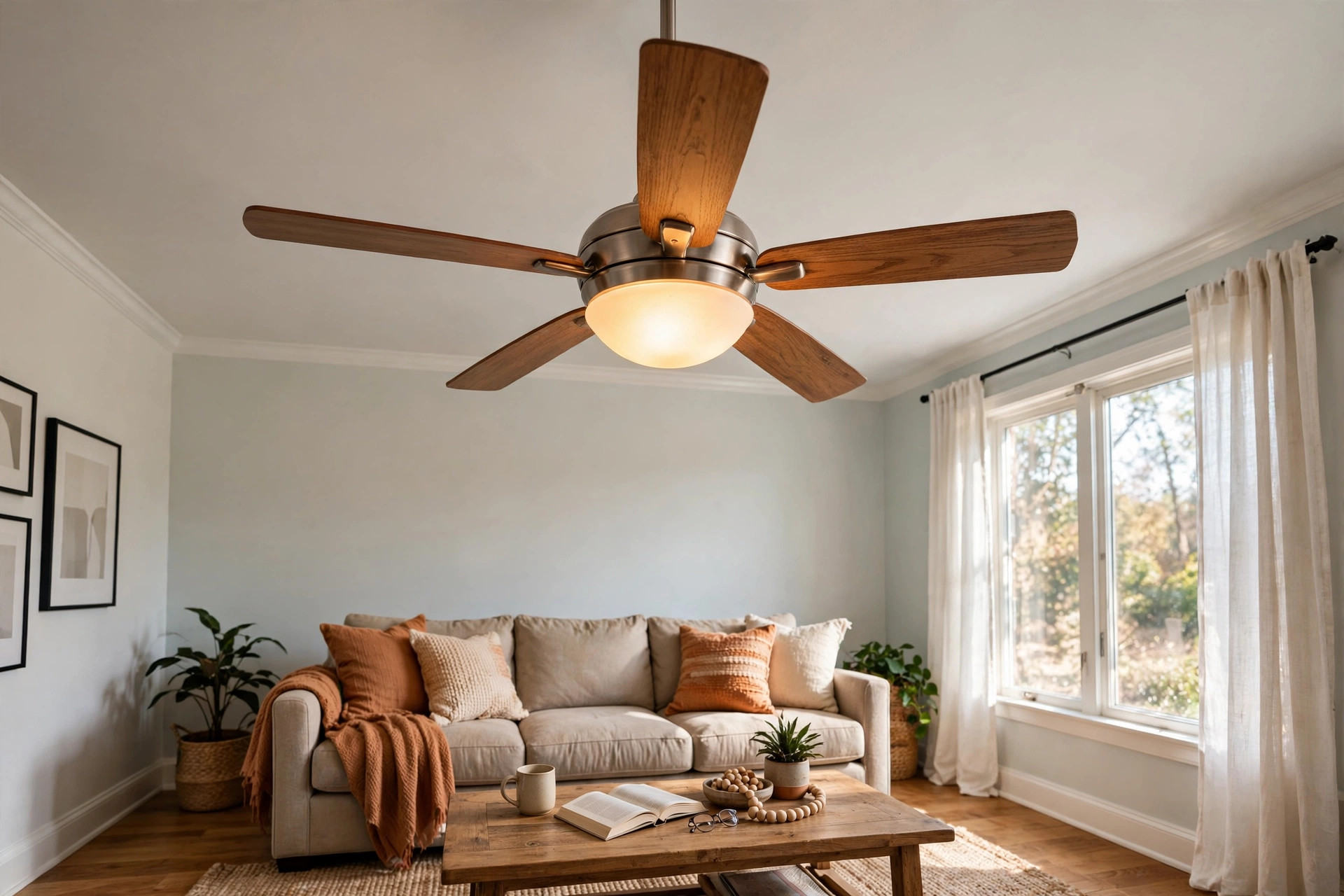
A ceiling fan does two jobs at once. It is a cooling device and a light fixture. That is the plain reason millions of American homes carry one in the living room, the bedroom, or the dining room.
The fan part matters because moving air feels cooler than still air. A good fan can let a family raise the thermostat a few degrees in summer and still feel at ease. Over a full cooling season, that can trim the electric bill. In winter, many fans carry a reverse switch. The blades then turn the other way and push warm air down from the ceiling, where heat gathers. That is a small gain, but it is real, and it costs nothing after the fan is installed.
The light part matters because the center of a room is the natural place for a light. A fan with a light kit gives general light where it is needed most, right over the seating area or the table. Modern light kits use LED lamps. They give off bright, steady light and use a small amount of power. The ENERGY STAR program lists ceiling fans that meet strict efficiency rules, and its pages are a useful place to learn what a good rating looks like.
What to Look For When You Shop
Size and Blade Span
Size is the first thing to get right. A fan that is too small must run at full speed to move air, which makes noise and wastes the point of the purchase. Measure the room in square feet. Then follow a common rule: rooms up to about 75 square feet take a fan of 29 to 36 inches; rooms up to about 175 square feet take 36 to 42 inches; rooms up to about 350 square feet take 44 to 52 inches; larger rooms take 52 inches or more, or two fans.
Blade span is the full width from blade tip to blade tip. The package will state it. Check it against your room before you check anything else.
The Light Kit
The light kit is the glass or shade section under the motor. It holds the lamps that light the room. Decide what you need from the light. A bedroom may need only soft light. A kitchen or a desk area may need brighter light. Look at the lumens number on the package, not just the watt number. Lumens tell you how much light comes out. For general room light, look for 800 lumens or more from the kit. For a small hallway or bedroom, 400 to 600 lumens may be enough.
Color temperature matters too. It is measured in Kelvin. A number near 2700K gives warm, yellowish light, much like an old incandescent bulb. A number near 4000K gives a cooler, whiter light that suits work areas. Many light kits now let you switch between two or three color settings. That is a handy feature.
Motor Type
Two motor types dominate the market. The standard AC motor has served homes for decades. It is reliable and less costly. The newer DC motor runs quieter, uses less power, and usually gives more speed settings. A DC motor fan often costs more at the store but costs less to run. If quiet matters to you, especially in a bedroom, a DC motor is worth the extra money.
Mounting and Ceiling Height
A fan should hang so that the blades sit seven to nine feet above the floor. That is the safe and useful range. If the ceiling is high, buy a downrod, which is a metal pipe that lowers the fan. If the ceiling is low, buy a hugger or flush-mount model that sits close to the ceiling. A sloped ceiling needs a fan made for sloped mounting, or an adapter kit. Check the box for the maximum slope angle.
Controls
Basic fans use pull chains. That is fine and costs less. Many buyers prefer a remote control, which handles fan speed and light from a chair. Wall controls are another option. If the room already has a wall switch for a light, a fan with a remote can keep the wiring simple. Check whether the remote is included or sold separately, because that changes the real price.
Types and Options on the Market
Ceiling fans with lights come in several broad types. Each suits a different room and taste.
Standard downrod fans hang from a rod and suit rooms with ceilings of eight feet or more. They are the most common type in the country.
Flush-mount or hugger fans sit tight against the ceiling. They suit low ceilings where a hanging fan would hang too low.
Outdoor-rated fans carry a wet or damp rating. A wet-rated fan can take direct rain on a porch or gazebo. A damp-rated fan can take humid air in a covered patio but not direct rain. Never hang an indoor fan outdoors, even under cover.
Smart fans connect to a home network and answer to a phone app or a voice assistant. They cost more, but they add scheduling and can tie into a smart thermostat.
Dual-head or specialty fans carry two blade sets or unusual shapes. They serve niche uses, such as a long workshop or a retail space.
When you are done with the ceiling fan itself, the rest of the room may still need light. Many shoppers who study the fan market also look at LED recessed lights with current online deals for kitchens and hallways, or at solar path lights built for Florida homes for the yard. The fan is one piece of a full home lighting plan.
Cost and Price
Prices run wide. A basic ceiling fan with a light kit can cost 50 to 80 dollars at a Home Depot or a Lowes store. A mid-range model with a DC motor, a remote, and an LED light kit often runs 150 to 300 dollars. Designer models and smart fans can pass 400 dollars.
Installation is the second cost. A homeowner with basic electrical skills can install a fan in place of an existing light in an hour or two. Hiring an electrician usually costs 75 to 200 dollars per fan, depending on the town and whether new wiring is needed. An older ceiling box may need to be swapped for a fan-rated box, which adds labor.
Running costs are small. A modern LED light kit may draw 10 to 15 watts. The fan motor may draw 15 to 60 watts depending on speed and motor type. Together they cost only a few cents per hour of use. The real savings come from the thermostat. If the fan lets you raise the air conditioning by a few degrees, the summer savings can exceed the cost of the fan in a year or two. The U.S. Department of Energy publishes plain facts on home cooling that put these numbers in context.
Care and Upkeep
A ceiling fan needs little care, but it needs some. Dust the blades every month or two. Dust on blades throws off balance and sends dirty air through the room. Use a pillowcase or a damp cloth to trap the dust.
Tighten the screws once or twice a year. Screws loosen with vibration. A loose blade arm causes wobble, and a bad wobble wears the motor mount. Most fans ship with a balancing kit, which is a set of small weights. If the fan wobbles after tightening, follow the kit instructions to find the heavy blade.
Change or clean the light covers when they dim. LED kits last many years, often 15,000 hours or more, but integrated LEDs cannot be swapped like bulbs. If the kit uses standard bulbs, keep spares on hand. A fixture with a single dead bulb looks broken long before its time.
Check the reverse switch each fall. Set the blades to turn clockwise at low speed in winter to push warm air down. Set them counterclockwise at high speed in summer for a cooling breeze. Guides at Bob Vila and Family Handyman show this seasonal change with clear photos, and they cover small repairs such as noisy motors and loose downrods.
Safety
Safety rules for ceiling fans are short but worth honoring.
First, the ceiling box must be rated for fan support. An ordinary light box cannot hold a moving fan. A fan-rated box is marked for the job. If you are unsure what box you have, ask an electrician.
Second, keep blade height right. Blades must sit at least seven feet above the floor so that no one can reach them. On a high ceiling, use a downrod long enough to bring the blades into the seven-to-nine-foot band.
Third, turn off power at the breaker before you wire anything. A wall switch can be wired wrong, and the switch alone is not proof the wires are dead.
Fourth, respect the outdoor ratings. A fan marked for indoor use only will rust and fail outdoors, and the warranty will not cover it.
The Consumer Product Safety Commission tracks fan recalls and publishes warnings on faulty models. A quick check of its site before you buy is a wise habit. For buyers comparing brands and test results, Consumer Reports runs independent lab tests on fans and light kits, though its full ratings sit behind a membership.
Frequently Asked Questions
How do I pick the right size fan for my room? Measure the room in square feet. A room up to 75 square feet needs a 29 to 36 inch fan. A room up to 175 square feet needs 36 to 42 inches. A room up to 350 square feet needs 44 to 52 inches. Larger rooms need a 52 inch fan or two smaller fans. This is the single most important step in this ceiling fans lights buying guide USA shoppers can follow.
Can I use a ceiling fan in winter? Yes. Most fans carry a reverse switch on the motor. In winter, set the blades to turn clockwise at low speed. That pushes warm air down from the ceiling without making a cooling breeze.
Are LED light kits better than bulb-based kits? LED kits use less power, give off less heat, and last far longer. A standard LED kit can run 15,000 to 25,000 hours. Bulb kits let you change bulbs and color temperature by hand. Both are fine, but LED kits save more money over time.
Do I need an electrician to install a ceiling fan? If a fan-rated box is already in place, many homeowners do the job themselves with basic tools. If there is no box, or if new wiring must run through the ceiling, hire a licensed electrician. The work involves live wires, and mistakes are costly.
How much does it cost to run a ceiling fan with lights? Very little. The light kit draws 10 to 15 watts, and the motor draws 15 to 60 watts. At typical power rates, an hour of use costs a few cents. The savings come from using less air conditioning.
Where can I compare models and prices? Large retailers such as Home Depot and Lowes stock dozens of models with reviews from buyers. Specialty lighting shops like Lamps Plus and Lumens carry designer models and give strong spec sheets. Reading several sources before you buy is always wise.
A Final Word
A ceiling fan with lights is a humble fixture, but it earns its place. It cools, it lights, and it cuts power use when it is used with sense. Buy the right size, check the light output, mount it at the right height, and keep it clean and tight. That is the whole of this ceiling fans lights buying guide USA in one paragraph. And when one room is done, the next project often waits nearby. Readers finishing this guide often move on to reading floor lamps and local deals for the corners where a ceiling fan cannot reach, and they may want to know more about Philips lighting and The Spruce for plain advice on home light quality.
References
Bob Vila. (n.d.). Home improvement advice. https://www.bobvila.com Consumer Reports. (n.d.). Product reviews and ratings. https://www.consumerreports.org ENERGY STAR. (n.d.). Energy efficient products. https://www.energystar.gov Family Handyman. (n.d.). DIY home repair and maintenance. https://www.familyhandyman.com Lamps Plus. (n.d.). Lighting and home decor. https://www.lampsplus.com Lowe’s. (n.d.). Home improvement products. https://www.lowes.com Lumens. (n.d.). Lighting and ceiling fans. https://www.lumens.com Philips. (n.d.). Lighting products. https://www.philips.com The Home Depot. (n.d.). Home improvement products. https://www.homedepot.com The Spruce. (n.d.). Home and garden advice. https://www.thespruce.com U.S. Consumer Product Safety Commission. (n.d.). Product safety information. https://www.cpsc.gov U.S. Department of Energy. (n.d.). Energy efficiency and renewable energy. https://www.energy.gov
Was this guide helpful?

About David Wilson
The My Garden US editorial team writes practical, in-depth home and garden guides for American homeowners — tested advice, no fluff.