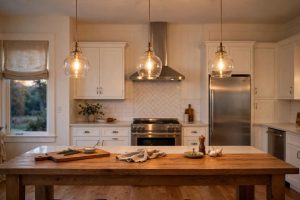
Many American kitchens have dark spots. The wall cabinets block the ceiling light. The counter below stays in shadow. This under cabinet strips buying guide USA homeowners can use explains how to fix that problem. Under cabinet strips add light right where you work. They make food prep safer. They make the kitchen look warm and complete. The guide below covers what to look for, the types you can buy, what they cost, how to care for them, and how to use them safely.
Why Under Cabinet Lighting Matters
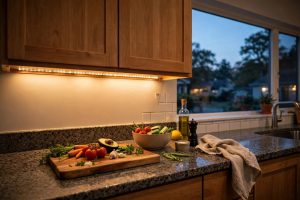
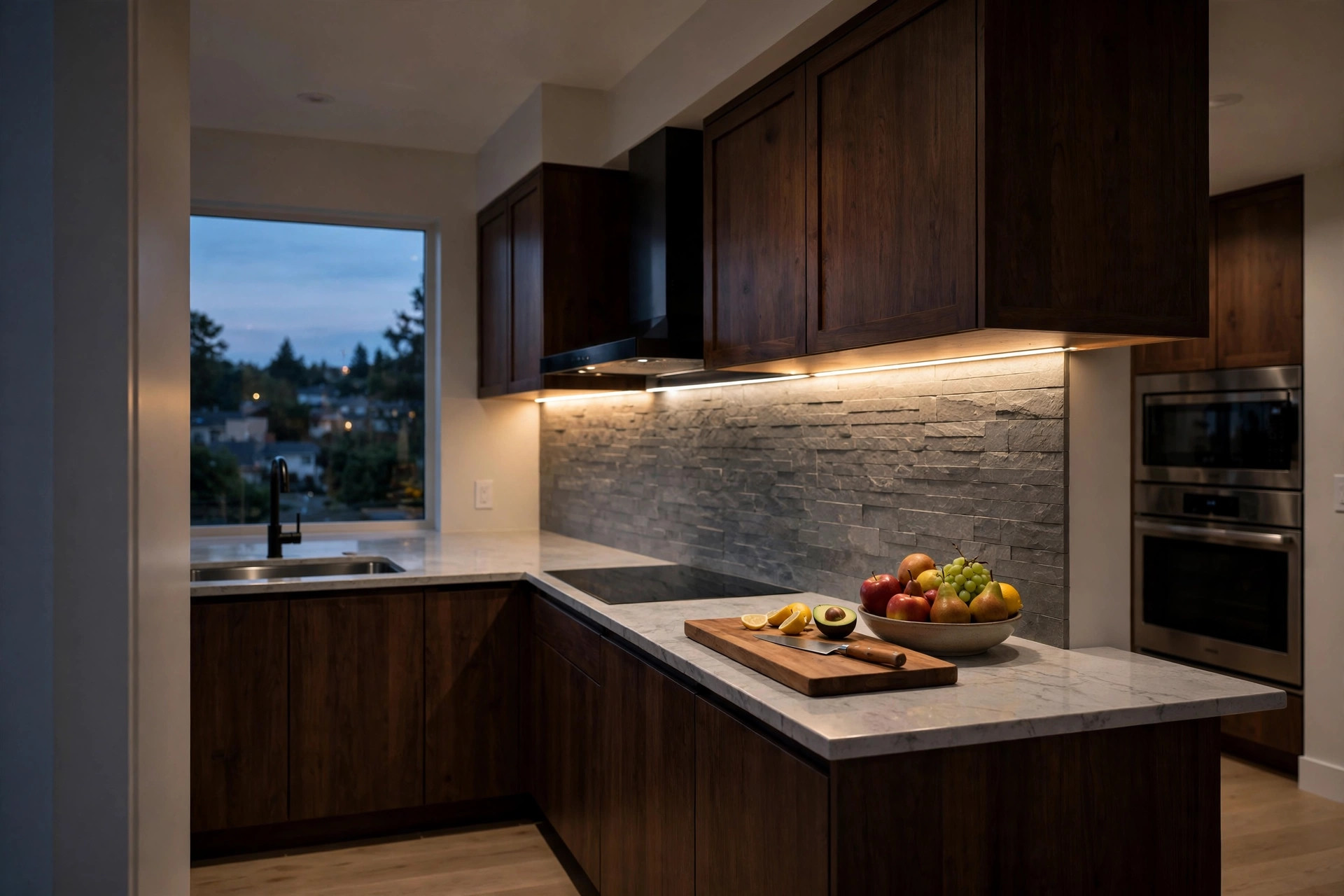
Good light matters in a kitchen. You chop, slice, and read labels there. Shadows on the counter make these tasks hard. A knife can slip when you cannot see well. Under cabinet strips solve this. They sit under the wall cabinets. They shine straight down onto the counter. The light is even. It has no hard shadows.
Task lighting is the term the lighting trade uses. It means light placed for a job. Ceiling lights give general light for a room. Task lights give focused light for work. Under cabinet strips are task lights. They do one job well.
There are other gains too. A lit counter looks clean and bright. Dark glass tiles and stone counters show their color under warm light. Many people leave the strips on in the evening. The kitchen glows softly. It feels welcoming. It costs little to run. Modern LED strips use very little power.
What to Look for When You Buy Under Cabinet Strips: Under Cabinet Strips Buying Guide Usa
Shoppers face many choices. The box may show watts, lumens, and color numbers. The terms are simple once you know them. Here is what each one means.
Brightness
Brightness is measured in lumens. More lumens mean more light. A small galley kitchen needs less light than a wide open kitchen. Most makers suggest 175 to 525 lumens per foot for task work under cabinets. For a 12 inch run of cabinets, look for strips that give about 200 to 500 total lumens. Very bright strips can glare off polished counters. If your counters are glossy, choose a medium level and add a diffuser. A diffuser is a frosted cover. It softens the light and hides the tiny diodes.
Color Temperature
Color temperature tells you how warm or cool the light looks. It is measured in kelvin, written as K. Low numbers look warm and yellow. High numbers look cool and blue white.
– 2700K to 3000K: warm white. It feels like an old bulb. Good for kitchens that feel like home. – 3500K to 4000K: neutral white. It is crisp but not harsh. Good for task work. – 5000K to 6500K: daylight. It looks like noon sun. Some people find it too cold for a kitchen.
Many shoppers pick 2700K or 3000K for kitchens. The food looks natural. The room feels warm. If you do a lot of fine prep work, 3500K can help you see detail. Some strips let you change the color with a remote. These cost more. They are a good pick if two people in the house like different light.
Power Source
Under cabinet strips come in three power types.
– Plug in strips use a wall outlet. They are easy to install. You need an outlet near the cabinets. The cord can show unless you hide it. – Hardwired strips connect straight to house wiring. They look clean. No cord shows. An electrician should do this work. It costs more up front. – Battery strips need no wires at all. You stick them up with tape or screws. They are good for rentals. You must change or charge the batteries. They are not as bright as wired types.
Most buyers in the USA pick plug in LED strips. They are simple and safe for do it yourself work.
Controls
Think about how you will turn the strips on. Simple strips have a switch on the cord. Some have a touch sensor on the strip. Wave your hand and the light turns on. That is handy when your hands are wet or covered in flour. Higher end strips work with a wall switch or a remote. A few link to smart home systems. If you already use smart lighting at home, check the strip’s label for the right marks. Pairing them with the WiFi smart bulbs in the same room can give you one control point for the whole kitchen, and our wifi smart bulbs buying guide usa explains how to choose those.
Types of Under Cabinet Strips
LED Tape Strips
LED tape strips are the most common type. They are a thin flexible ribbon with tiny light diodes. Most have a sticky back. You peel and press them under the cabinet. You can cut them at marked lines to fit your cabinet length. They are thin, so they hide well. They use little power and last a long time. Many kits come with a plug in driver. A driver is the small box that changes wall power to the low voltage the strip needs.
Tape strips work best on straight runs. Corners need special connectors. Read the kit box. It will say how many strips one driver can run.
LED Puck Lights
Puck lights are small round discs. You mount them in a row under the cabinet. They give pools of light. They look like small downlights. Some are battery powered with a remote. They are easy to place. They do not give the smooth even line that tape gives. They suit cabinets with doors that break up the space.
LED Bar Fixtures
Bar fixtures are rigid aluminum bars with LEDs inside. They give a clean line of light. They are tougher than tape. Many have a built in diffuser. They link end to end with short cables. They cost more than tape. They are a good pick for long runs where you want a pro look.
Fluorescent and Xenon Fixtures
Older kitchens may still have fluorescent under cabinet lights. They work. They are cheap. They hum and flicker as they age. They use more power than LEDs. Xenon fixtures give warm light. They run hot. They can warm the cabinet wood over time. Most buyers today pick LEDs. LEDs last longer, run cool, and use less power. If you are replacing old fixtures, LED bars often fit the same spot.
How to Choose the Right Strips for Your Kitchen
Start by measuring. Measure the length of cabinet you want to light. Write it down. Count how many separate cabinet runs you have. A long L shaped kitchen may need two or three strips.
Next, check your outlets. Plug in kits need an outlet within reach of the cord. Many kitchens have an outlet inside a cabinet or behind the range hood area. If no outlet is near, you may need a longer cord run or a hardwired kit.
Think about the look you want. If the strip will show from across the room, pick a slim tape that hides. Mount the strip toward the front edge of the cabinet. This keeps the light from washing the wall and puts it on the counter where you work. Leave a small gap from the front edge so the strip itself does not show.
Check the color of your kitchen. Warm wood cabinets pair well with 2700K strips. White and gray kitchens look fresh with 3000K to 3500K. Bring home one strip first if you can. Test it at night. The Philips lighting guide has charts that show how color temperature looks in real rooms.
Climate matters in some states. Kitchens in hot and humid places run warm. LEDs still work fine. Make sure the strips have air space around them. Our note on under cabinet strips in Florida homes covers how heat and humidity affect strip life in the South.
If you are lighting more than the kitchen, keep a plan. Many homes add strips in the pantry and the laundry room too. The same buying rules apply. For the porch and yard, see our page on outdoor wall lanterns for where to shop.
Cost and Price of Under Cabinet Strips in the USA
Prices vary by type and brand. These are typical USA price ranges in 2026.
– Basic LED tape kits, 6 to 12 feet, plug in: $15 to $40. – Mid range LED tape with dimmer and remote: $30 to $70. – LED bar fixture kits: $40 to $120 for a set. – Battery puck light sets of 6: $20 to $50. – Hardwired LED systems with professional install: $150 to $500 or more per kitchen, plus electrician fees.
Running cost is low. A 12 foot LED strip may use 24 watts. That is less than one old bulb. The ENERGY STAR lighting page lists certified LED products that meet strict tests for life and light quality. Certified products often last 25,000 hours or more. At three hours a day, that is over 20 years of use.
Watch for hidden costs. Long runs may need a second driver. Corner connectors and extension cables add a few dollars each. If you hire an electrician for hardwired strips, ask for a flat quote first.
Care and Upkeep
Under cabinet strips need little care. Dust them every few months. Grease from cooking can coat the strip. Wipe it with a dry cloth. Do not use water or spray cleaners on the diodes. If the strip has a diffuser, you can wipe that with a damp cloth. Unplug the strip first.
Check the sticky back once a year. Heat and steam can loosen tape over time. If a section sags, press it back or add a small clip. Many kits sell extra mounting clips.
LEDs fade slowly. They do not burn out like old bulbs. After many years the light may dim a little. That is normal. When a strip fails, most plug in kits let you swap just the strip. Keep the driver and cables. They often outlast the strip.
Battery pucks need battery changes. Mark your calendar. Dead batteries can leak. Take them out if you will not use the light for a month or more.
Safety Tips
LED strips run on low voltage. They are safer than old line voltage fixtures. Still, follow these rules.
– Buy strips with a UL or ETL mark. The mark means an independent lab tested them. For lighting safety basics, energy.gov publishes home lighting safety guides. – Do not plug too many strips into one driver. The box states the max load. Going over it can overheat the driver. – Keep strips away from the stove’s direct heat. Mount them under cabinets, not above burners. – Do not run cords across the sink or stove. Tuck cords inside cabinets. – For hardwired installs, hire a licensed electrician. House wiring is not a do it yourself job. – Unplug strips before you clean them or move them. – If a strip smells hot or the driver feels very warm, unplug it and stop using it.
Frequently Asked Questions
Are under cabinet strips hard to install?
Plug in tape strips are simple. You clean the cabinet underside, peel the backing, and press the strip in place. Most kits take under an hour. Hardwired systems are harder. Hire an electrician for those.
How bright should under cabinet strips be?
For task work, aim for 175 to 525 lumens per foot. A normal 2 foot cabinet section does well with 350 to 1000 total lumens. If the light glares, add a diffuser or pick a lower lumen strip.
Can I cut LED strip lights to fit?
Yes, most tape strips have cut lines marked with scissors icons. Cut only on those lines. Cutting elsewhere can break the circuit. After cutting, you need the right end connector if you want to join pieces.
Do under cabinet strips use a lot of electricity?
No. A full kitchen run often uses less power than one old 60 watt bulb. The ENERGY STAR program notes that certified LEDs use at least 75 percent less energy than old bulbs.
Should I pick warm or cool white for my kitchen?
Most USA buyers pick warm white, 2700K to 3000K. It makes food look good and feels cozy. Pick 3500K to 4000K if you want crisper light for detail work. Try one strip at home before you buy for the whole kitchen.
Where can I buy under cabinet strips in the USA?
Home centers carry them in store and online. Big lighting shops carry wider ranges. Home Depot and Lowes stock many kits. Specialty shops like Lumens and Lamps Plus carry design grade options. The Spruce lighting guides review popular kits each year.
A Final Word
Under cabinet strips are a small change with a big effect. They light the counter where you work. They cut shadows. They make the kitchen feel finished. Start with your measurements. Pick LED tape or bars. Choose warm white light. Check for a safety listing. Keep the install simple with a plug in kit unless you want the clean look of hardwired strips. With this under cabinet strips buying guide USA shoppers have a clear path from a dark counter to a bright one. Buy once, install with care, and enjoy the light for years.
References
ENERGY STAR. (n.d.). Energy efficient products. https://www.energystar.gov Lamps Plus. (n.d.). Lighting and home decor. https://www.lampsplus.com Lowe’s. (n.d.). Home improvement products. https://www.lowes.com Lumens. (n.d.). Lighting and ceiling fans. https://www.lumens.com Philips. (n.d.). Lighting products. https://www.philips.com The Home Depot. (n.d.). Home improvement products. https://www.homedepot.com The Spruce. (n.d.). Home and garden advice. https://www.thespruce.com U.S. Department of Energy. (n.d.). Energy efficiency and renewable energy. https://www.energy.gov
Was this guide helpful?

About Robert Taylor
The My Garden US editorial team writes practical, in-depth home and garden guides for American homeowners — tested advice, no fluff.