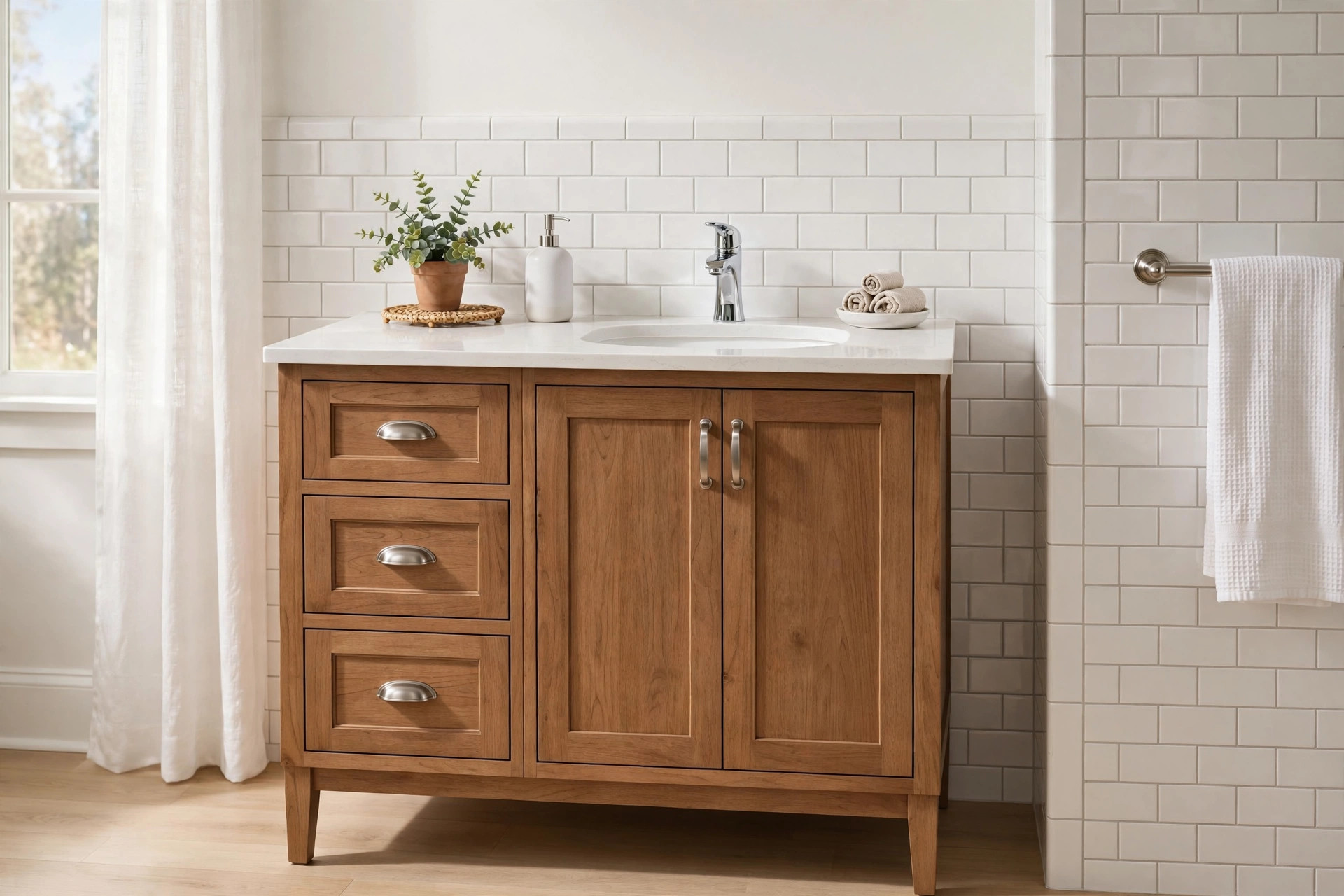

A good bathroom sink vanities buying guide usa can save a homeowner from an expensive mistake. A vanity is the piece of furniture that holds the bathroom sink. It also holds the countertop, the faucet, and often the storage cabinets below. It sets the style of the whole room. This guide explains what to know before you buy. It covers size, style, material, sink type, cost, care, and safety. Read it once, and you will shop with confidence.
Why the Vanity Matters So Much
The vanity is the center of most bathrooms. It is the first thing a guest sees. It is also the hardest working part of the room. Every morning it holds your toothbrush, your soap, and your towel. Every night it takes the same load again. Water splashes on it. Steam rises around it. Cosmetics sit on it. A cheap vanity will show this wear in a year or two. Paint peels. Wood swells. Doors stick.
A well chosen vanity lasts fifteen years or more. It must resist water. It must hold weight. It must fit the plumbing. It must also look right in the room. That is a lot of work for one piece of furniture. This is why buying it deserves care. A little planning now avoids repairs later.
What to Look for When You Shop: Bathroom Sink Vanities Buying Guide Usa
Measure First
Start with a tape measure. Measure the wall where the vanity will sit. Note the width, the height, and the depth you can allow. Leave room for the door to open. Leave room for drawers to pull out. In a small bath, even two inches matter.
Check the plumbing. Note where the water lines come through the wall or floor. Note where the drain sits. Most vanities have an open back or a cutout for pipes. If your pipes are off center, you may need a different model or a plumber to move them. Moving pipes costs money. It is cheaper to pick a vanity that fits what you have.
Standard vanities are 24, 30, 36, 48, 60, and 72 inches wide. The depth is usually 18 to 22 inches. The height with countertop is 30 to 36 inches. Taller vanities, around 34 to 36 inches, suit most adults. Shorter ones work well in a child’s bath.
Cabinet Construction
Look inside the cabinet before you judge the outside. Solid wood and plywood hold up best in a damp room. Particle board and medium density fiberboard are cheaper. They can swell if water gets in. If you pick one of these, make sure the finish seals every edge.
Doors and drawers should close flat and smooth. Soft close hinges are a nice extra. They stop doors from slamming. Dovetail joints on drawers show good work. Full extension drawer slides let you reach items at the back.
The cabinet must stand level. Some floors are not flat. Adjustable feet help. Check that the feet or base can be trimmed or set to match your floor.
Countertop and Sink Type
The countertop takes the most water. Quartz and granite resist stains and heat. They cost more but last long. Marble looks fine but stains easy and needs sealing. Solid surface tops, such as cultured marble, are molded in one piece with the sink. They are cheap and easy to clean. Laminate is the lowest cost choice. It can peel at the edges over time.
Sinks come in four main styles. An undermount sink sits below the countertop. It gives a clean look and easy wipe down. A drop in sink rests on top of the counter. It is the easiest to install and replace. A vessel sink sits like a bowl on the counter. It looks modern but needs a tall faucet. An integrated sink is molded into the top. There are no seams to clean.
Pick the sink with the faucet in mind. A wall mount faucet suits a vessel sink. A standard centerset faucet fits most drop in and undermount sinks. For matching advice, a brushed nickel faucets buying guide may help you pair the right faucet with your vanity choice.
Types of Bathroom Sink Vanities
Freestanding Vanities
Freestanding vanities stand on legs or a solid base. They are the most common type. They come in every width. They are easy to install. Most sit against the wall and bolt to it. They suit any bath size.
Floating Vanities
Floating vanities hang on the wall. The floor shows below them. This makes a small bath look larger. It also makes mopping easy. They need strong wall blocking behind them. A handyman should check the wall before you hang one. They hold less storage than a full base cabinet.
Single and Double Sink Vanities
A single sink vanity fits baths up to about 48 inches wide. A double sink vanity needs 48 inches at least, and 60 inches is better. Two sinks help a busy couple in the morning. Each person gets their own space. A double sink vanities buying guide goes deeper into sizing for two sinks.
A good vent fan keeps steam low. It should move at least 50 cubic feet per minute for a small bath and 100 for a large one. Pick a fan rated for quiet running. You will use it more if it is quiet.
Corner Vanities
Corner vanities fit into tight spaces. They work in small powder rooms. Storage is limited. They can be hard to find in stock. Most buyers order them online.
Open Shelf Vanities
Open shelf vanities have no doors. Towels and baskets sit in the open. They look light and airy. They need tidiness. Dust and damp can reach stored items. They suit a guest bath more than a daily family bath.
Cost and Price: What to Expect
Prices for bathroom sink vanities in the USA run wide. A basic 24 inch vanity with top can cost 150 to 300 dollars. A mid range 36 to 48 inch vanity with quartz top runs 500 to 1,200 dollars. A fine furniture style double vanity of 60 to 72 inches can cost 1,500 to 4,000 dollars or more.
What drives the price? Size is first. Material is second. Solid wood and stone tops cost more than fiberboard and laminate. Brand names add to the cost. Custom sizes cost the most.
Do not forget the extra costs. The faucet is often sold apart. Expect 50 to 250 dollars for a decent faucet. A new mirror, light fixture, and plumbing parts add more. If a plumber must move pipes, budget 300 to 800 dollars for the labor. Set your full budget before you shop, not after.
Sales help. Home centers and online stores cut prices on holiday weekends. Floor models can save 20 to 40 percent. Check the return policy before you buy. A vanity is heavy. Return shipping can cost a lot.
For current product ranges and pricing, large retailers such as Home Depot and Lowe’s list hundreds of vanities with buyer reviews. Manufacturer sites like Kohler and American Standard show full lines with specs.
Care and Upkeep
A vanity lasts long if you treat it well. Wipe up standing water at once. Water is the main enemy. Check the caulk line where the top meets the wall once a year. If it cracks, cut it out and lay a fresh bead of bath caulk. This stops water from running behind the cabinet.
Clean with a soft cloth and mild soap. Avoid strong acids and rough pads. They dull the finish. For stone tops, use a stone safe cleaner. For wood cabinets, a damp cloth is enough most days.
Tighten loose hinges and handles once a year. A small screwdriver is all you need. Check under the sink for leaks every few months. A slow drip can ruin a cabinet base before you notice. Put a small tray under the pipes to catch drips. It costs little and saves a lot.
Keep the bath vent fan running during showers and for twenty minutes after. Steam is water too. Good venting protects the vanity, the paint, and the mirror. Pairing your vanity with a mirrored medicine cabinets buying guide can also add storage that keeps counters clear and dry.
Safety Points to Remember
Anchor every vanity to the wall. A tall cabinet can tip if a child climbs it. Use the anti tip hardware that comes in the box. If it is missing, buy a strap kit. It takes ten minutes to fit.
Check for sharp edges on stone tops and metal legs. File down or cover any sharp corner in a child’s bath. Round edge tops are safer.
Make sure electrical outlets near the sink have ground fault protection. This is code in the USA. A GFCI outlet shuts off fast if water and power meet. Test the reset button each month.
Vent fans and lights near water must be rated for damp rooms. Read the label. The sites of Moen and Delta Faucet give clear install guides for faucets and fixtures that sit above the vanity.
FAQ
What size vanity fits a small bathroom?
A 24 or 30 inch vanity suits most small baths. A corner vanity or a floating model can save even more space. Measure twice. Allow room for the door swing and for drawers to open fully.
Should I pick a single or double sink?
Pick a double sink if two people use the bath at the same time and you have at least 48 inches of width. Sixty inches is more comfortable. For one user, a single sink with more counter space is the better pick.
Which countertop material is best for a vanity?
Quartz is the best mix of looks, strength, and low care for most homes. Granite is strong too. Marble looks fine but needs sealing and stains easy. Cultured marble and solid surface tops are low cost and easy to clean.
Can I install a vanity myself?
A basic freestanding vanity is a fair do it yourself job if the plumbing stays in place. You need a level, a drill, and simple hand tools. If pipes must move, call a licensed plumber. Floating vanities need wall blocking and are best left to a pro.
How long does a bathroom vanity last?
A well made vanity lasts 15 to 20 years. Cheaper fiberboard models may last 5 to 10 years in a steamy bath. Good venting, fast wipe ups, and sealed edges stretch the life of any vanity.
Do vanities come with the sink and faucet?
Many vanities sold in the USA come with the sink and countertop but not the faucet. Read the listing with care. Check what is in the box. Budget for the faucet, the drain assembly, and the water lines if they are not included.
A Short Final Word
Buying a bathroom sink vanity is simple when you work in order. Measure the space. Match the plumbing. Pick solid construction. Choose a top and sink that fit your habits. Set the full budget, extras included. This bathroom sink vanities buying guide usa was written to give you that order. Take your time, compare two or three models side by side, and read buyer reviews before you pay. For style ideas and how to guides, This Old House, HGTV, Bob Vila, and The Spruce all cover bath remodels in plain terms. A careful choice now will serve your home for many years.
References
American Standard. (n.d.). Bathroom and kitchen products. https://www.americanstandard.com Bob Vila. (n.d.). Home improvement advice. https://www.bobvila.com Delta Faucet. (n.d.). Kitchen and bathroom faucets. https://www.deltafaucet.com HGTV. (n.d.). Home and garden ideas. https://www.hgtv.com Kohler. (n.d.). Bathroom and kitchen fixtures. https://www.kohler.com Lowe’s. (n.d.). Home improvement products. https://www.lowes.com Moen. (n.d.). Faucets and plumbing fixtures. https://www.moen.com The Home Depot. (n.d.). Home improvement products. https://www.homedepot.com The Spruce. (n.d.). Home and garden advice. https://www.thespruce.com This Old House. (n.d.). Home renovation guidance. https://www.thisoldhouse.com
Was this guide helpful?

About Lisa Anderson
The My Garden US editorial team writes practical, in-depth home and garden guides for American homeowners — tested advice, no fluff.
You May Also Like

Bathroom Vanity Light Bars for Florida Homes
August 20, 2026 0 views
Bathroom Wall Tiles California Homes USA: A Plain Buying and Care Guide
February 17, 2026 0 views
Where to Buy Brushed Nickel Faucets in the USA: A Plain Guide
January 21, 2026 0 views