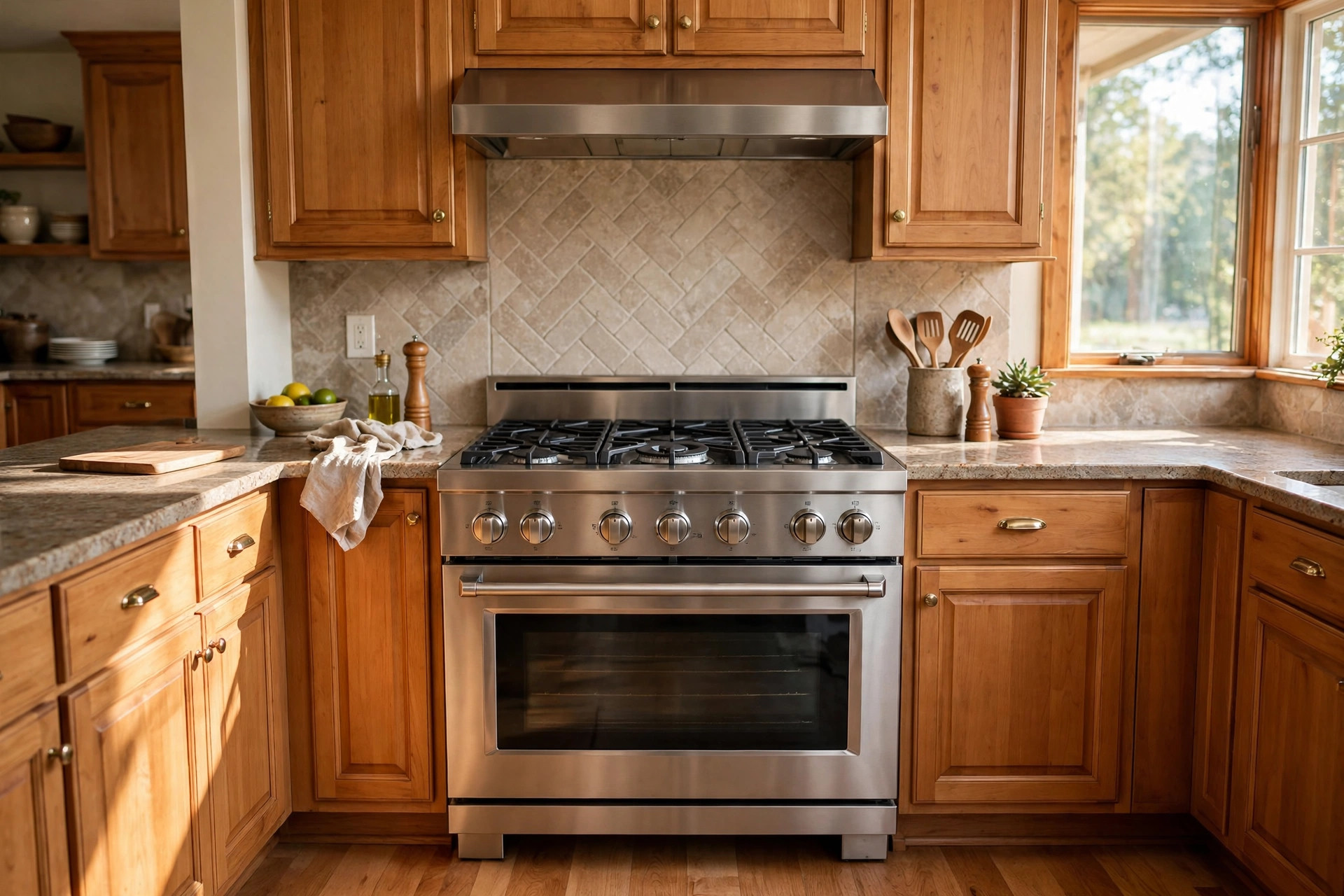

The search for gas kitchen ranges texas homes usa leads many buyers to the same question. Which range fits a real Texas home, and how do you pick one that lasts? Texas cooks love gas. The open flame gives fast heat and fine control. It works for quick weeknight meals and for large family feasts. This guide covers what matters most. It explains how to choose a range, what types exist, what they cost, and how to keep one safe. You will also find answers to common questions. Use it before you shop, and you will buy with calm and clear eyes.
Why Gas Ranges Suit Texas Homes
Texas is a gas-friendly state. Natural gas lines run through most towns and cities. Propane serves many rural homes beyond the main lines. Both fuels feed gas kitchen ranges texas homes usa buyers rely on every day. Gas gives instant heat. You turn the knob and the flame answers. There is no wait for a coil to glow. Cooks in Texas use this to sear fajita meat, to boil a large pot of chili, and to simmer beans low and slow.
Texas weather plays a part too. Summers are hot, and a gas flame adds heat to the room. A good range hood takes the heat away. The ENERGY STAR program offers tips on home energy use that apply to kitchen gear. Winters are short but sharp. A gas range keeps cooking even when the power fails. Storms knock out power in parts of Texas each year. A gas cooktop with match lighting still works. That is a real comfort to many families.
The Texas way of cooking also favors gas. Outdoor culture is strong. Grills and smokers are common. A gas range brings that live-flame feel indoors. Big families gather often. Holidays bring large pots and long cooking days. A gas range handles heavy pots with ease. Heavy grates hold cast iron skillets well. Texas kitchens often center on the stove. A gas range becomes the heart of that kitchen.
How to Choose a Gas Range: Gas Kitchen Ranges Texas Homes Usa
Start with size. Most Texas homes use a 30-inch freestanding range. It fits a standard cabinet opening. Some kitchens allow a 36-inch range. These are wider and hold more burners. Measure your opening first. Measure width, height, and depth. Write the numbers down. Bring them to the store or keep them near you when you shop online.
Next, think about fuel. Natural gas is the common choice where lines reach the house. Propane is the answer where they do not. Many gas ranges can switch between the two with a conversion kit. Check the manual before you buy. Ask the dealer if the kit is in the box. A licensed plumber should make the change.
Look at the burners. Most ranges have four or five. Some have six. A high-heat burner boils water fast. It may reach 15,000 to 18,000 BTU. A low simmer burner holds a gentle flame for sauces. Grates matter too. Continuous grates let you slide a pot across the top. Separate grates are lighter and easier to clean.
The oven deserves a close look. Gas ovens give moist heat. Bakers like this for cakes and bread. Some cooks want a gas cooktop with an electric oven. That mix is called a dual fuel range. It gives flame on top and dry even heat below. It costs more. It also needs a 240-volt line for the oven.
Check the controls. Knobs are simple and last long. Touch pads look clean but cost more to fix. Self-cleaning ovens save work. They lock the door and burn off grease at high heat. Convection fans move hot air around the oven. Guides on The Spruce explain how convection changes bake times. A Sabbath mode helps some families. It keeps the oven on for long hours without lights or sounds.
If you want a deeper walk through every feature, our gas kitchen ranges buying guide covers each part step by step.
Types and Options of Gas Ranges
Freestanding Ranges
Freestanding ranges are the most common. They have finished sides. They slide into place between cabinets. A backguard holds the controls at the rear. They are the easiest to install. They also cost the least. Brands like Whirlpool and GE Appliances sell wide lines of freestanding models. Most Texas homes use this style.
Slide-In Ranges
Slide-in ranges sit flush with the counters. The controls are on the front. They look built in. They cost more than freestanding models. The sides are not finished, so they must fit between cabinets. Many new kitchens in Texas choose this clean look.
Pro-Style Ranges
Pro-style ranges are wide and bold. They come in 36, 48, or even 60 inches. They have strong burners and big ovens. They look like restaurant gear. They need a large kitchen and a strong hood. They also cost far more. Some large Texas homes and ranch kitchens love them.
Dual Fuel Ranges
Dual fuel ranges mix gas burners with an electric oven. Many cooks call this the best of both worlds. The flame gives fast control on top. The electric oven gives even heat below. These ranges need both a gas line and a 240-volt plug. They cost more to buy and more to install.
Propane and Convertible Ranges
Some homes run on propane from a tank. Many gas ranges convert to propane with a kit. The kit swaps the small burner orifices. Only a trained worker should do this job. Always check the plate on the range. It must list propane as an approved fuel.
Gas Lines and Venting in Texas Homes
A gas range needs a safe gas line. Older Texas homes may have a line already in place. Newer builds may need one run from the main. A licensed plumber should do this work. The plumber will check pipe size and shutoff valves. Most ranges use a standard half-inch connection. Local codes set the rules. Texas cities often follow national fuel gas codes with local changes. Check with your city permit office before work starts.
Venting matters just as much. Every gas range needs a range hood. The hood pulls heat, smoke, and gas byproducts out of the kitchen. Ducted hoods move air outside. They work best. Recirculating hoods filter and return air. They work in places where ducts cannot run. Choose a hood that covers the full cooktop. For a 30-inch range, a 30-inch hood is the match.
The hood should move enough air. A common rule is 100 cubic feet per minute for each 10,000 BTU of cooktop power. A strong range may need 400 to 600 CFM. This Old House offers step-by-step guides on sizing hoods for gas ranges. Hoods that strong need make-up air in tight homes. This is fresh air that replaces what the hood blows out. Texas codes may require it. Ask your installer.
Installers in Texas also check clearances. The hood must sit at a set height above the burners. Cabinets must keep a set distance from the flame. The range needs room behind and to the sides. Read the manual. The manual lists each distance. Follow it to the letter.
Cost and Price of Gas Kitchen Ranges
Prices vary wide. A basic freestanding gas range may cost between 500 and 900 dollars. These have four burners and a simple oven. They cook well. They lack extras like convection or self-cleaning.
Mid-range models cost between 900 and 2,000 dollars. These add convection fans, self-cleaning, and stronger burners. Many Texas families buy in this range. The value is strong.
High-end models cost between 2,000 and 5,000 dollars or more. These include slide-in designs, pro-style looks, and dual fuel builds. Bosch Home and other makers build dual fuel models with electric convection ovens. Pro-style ranges can pass 10,000 dollars at the widest sizes. Consumer Reports tests ranges each year and publishes reliability scores.
Installation adds to the bill. A simple swap of an old gas range may cost 100 to 300 dollars. Running a new gas line may cost 300 to 800 dollars or more. It depends on distance and wall work. A new range hood may add 200 to 1,500 dollars with install. Permits add a small fee in most Texas cities.
When you are ready to compare prices, check models at The Home Depot or Lowe’s to see live prices and stock. Our gas kitchen ranges for sale roundup points you to current offers across the USA.
Care and Upkeep
A gas range lasts long with simple care. Clean spills soon. Burnt food is hard to remove later. Lift the grates and wipe the cooktop each week. Use a soft cloth and mild soap. Skip harsh scouring pads on coated tops. They scratch.
Clean the burner caps and bases often. Grease blocks the small flame ports. A soft brush clears them. Never use water inside the burner base. Let parts dry fully before you light them again.
Clean the oven on schedule. Self-cleaning models do most of the work. Remove the racks first. They can stain at high heat. Manual ovens need a gentle oven cleaner. Keep cleaner off the gasket around the door. A damaged gasket leaks heat.
Check the igniters. Gas ranges spark to light the flame. If a burner clicks but will not light, clean the igniter tip. Food and grease cause weak sparks. If the problem stays, call a repair worker.
Check the flame color each month. A healthy flame is steady and blue. A yellow or lazy flame may mean a dirty burner or low gas flow. Clean the burner first. If the color does not change, call for service.
Safety in the Kitchen
Gas is safe when you treat it with respect. Never leave a lit burner alone. Turn pot handles inward. Keep towels and paper away from the flame. Teach children to stay back from a hot range.
Know the smell of gas. Gas companies add a rotten-egg odor so leaks are easy to spot. If you smell gas, do not touch switches or phones. Leave the house. Call the gas company from outside. Many Texas utilities keep a 24-hour leak line.
Install a carbon monoxide detector near the kitchen. Gas burners make small amounts of this gas. A working hood and a detector keep levels low. Change the detector battery on a set date each year.
Check hoses and connections once a year. Look for wear and loose fittings. A licensed worker should check the line pressure every few years. After any kitchen remodel, ask for a leak test.
Keep a fire extinguisher in the kitchen. A dry chemical model rated for kitchen fires is the right pick. Learn how to use it before you need it. Smother a grease fire with a lid. Never throw water on it.
Frequently Asked Questions
Do gas kitchen ranges work during a Texas power outage? Yes, the cooktop usually works. Most gas burners can be lit with a match when the power is out. The oven may not work if it needs power for the igniter or fan. Some ovens have battery-free ignition. Check your manual.
Is natural gas or propane better for Texas homes? Natural gas costs less where lines reach the house. Propane works well where lines do not reach. Both cook the same way. Propane burns a bit hotter per unit. Your range must be set up for the fuel you use.
How long does a gas range last? Most gas ranges last 13 to 15 years with good care. Simple models often last longer. Ranges with many electronic parts may need more repairs over time.
Can I install a gas range myself? You should not. Gas lines need a licensed plumber or gas fitter. A leak can cause fire or harm. Many Texas cities require a permit and an inspection. Hire a pro and keep the paperwork.
Do I need a vent hood for a gas range? Yes. A hood keeps the kitchen air clean. It removes heat, steam, grease, and combustion gases. A ducted hood that vents outside works best. The U.S. Department of Energy offers guidance on kitchen ventilation and home energy use.
Are gas ranges bad for indoor air? Gas burners release small amounts of nitrogen dioxide and carbon monoxide. A good hood used every time you cook keeps levels low. Open a window while cooking if your hood is weak. The U.S. Environmental Protection Agency provides information on indoor air quality and gas appliances.
A Final Word
A gas kitchen range is a strong pick for Texas homes. It cooks fast, controls well, and works through storms. Take time to choose. Measure your space. Pick your fuel. Match the hood to the heat. Hire licensed help for gas and vent work. Then keep the range clean and safe for years of good meals. If you want more shopping detail, read the full gas kitchen ranges buying guide before you buy.
References
Bosch. (n.d.). Home appliances. https://www.bosch-home.com Consumer Reports. (n.d.). Product reviews and ratings. https://www.consumerreports.org ENERGY STAR. (n.d.). Energy efficient products. https://www.energystar.gov GE Appliances. (n.d.). Kitchen and home appliances. https://www.geappliances.com Lowe’s. (n.d.). Home improvement products. https://www.lowes.com The Home Depot. (n.d.). Home improvement products. https://www.homedepot.com The Spruce. (n.d.). Home and garden advice. https://www.thespruce.com This Old House. (n.d.). Home renovation guidance. https://www.thisoldhouse.com U.S. Department of Energy. (n.d.). Energy efficiency and renewable energy. https://www.energy.gov U.S. Environmental Protection Agency. (n.d.). Protecting human health and the environment. https://www.epa.gov Whirlpool. (n.d.). Home appliances. https://www.whirlpool.com
Was this guide helpful?

About Robert Taylor
The My Garden US editorial team writes practical, in-depth home and garden guides for American homeowners — tested advice, no fluff.
You May Also Like
Under Counter Wine Fridges for Texas Homes: What to Buy and How to Care for It
April 20, 2026 0 views
Quartz Countertop Installation Buying Guide USA
January 16, 2026 0 views
Kitchen Island Hanging Lights: Where to Buy in the USA
March 4, 2026 0 views