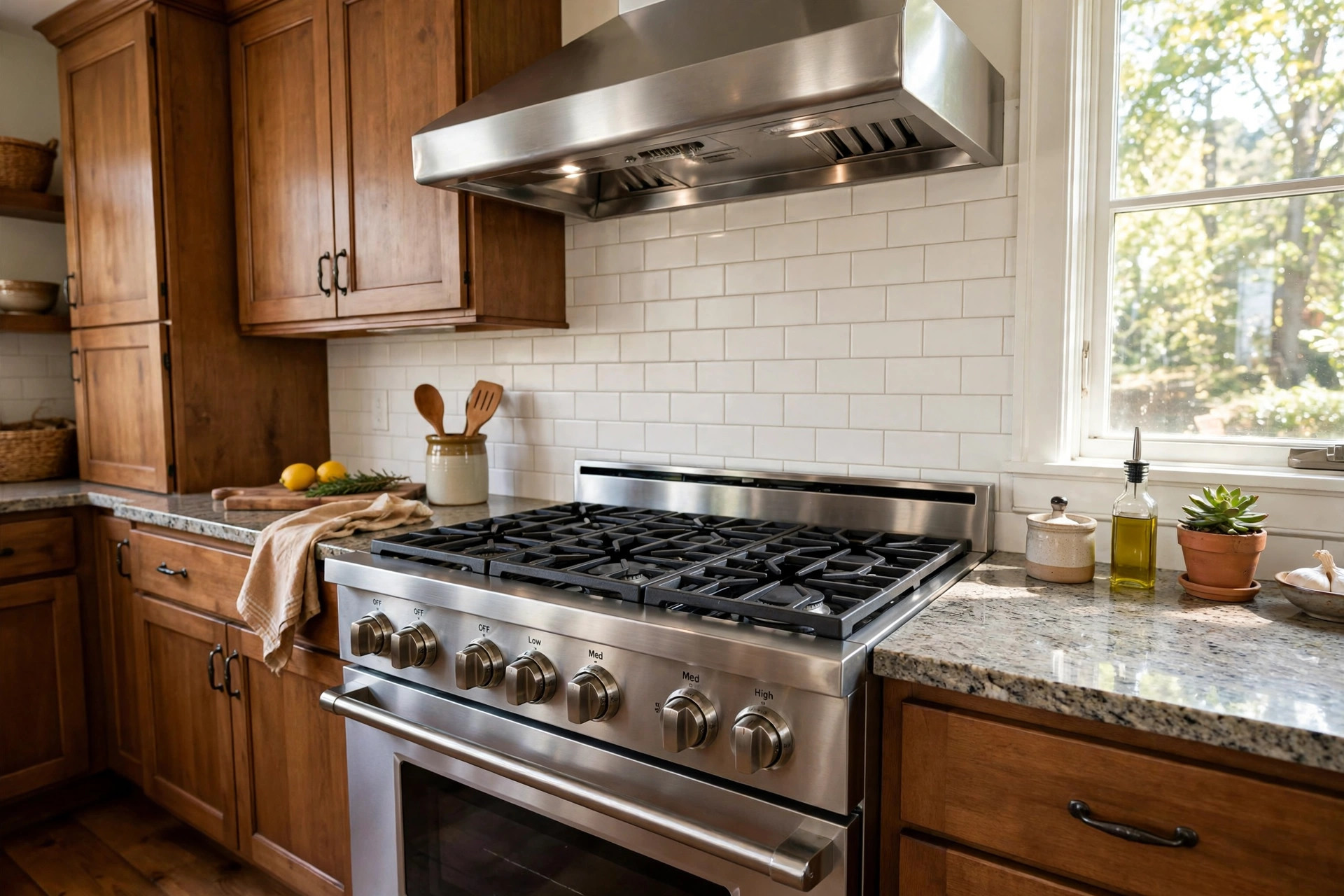

A gas kitchen ranges reviews buying guide usa helps you sort through the many models on the market today. The gas range has been a favorite of American cooks for over one hundred years. It gives quick heat. It gives exact control. It keeps working when the lights go out.
This guide walks you through the main facts. You will learn what sizes are common. You will learn what burner power means. You will learn what the ovens do. You will learn what prices to expect. You will learn how to keep the range clean and safe. Many shoppers also check independent lab test results before they buy.
We base this guide on what reviews and buyers in the United States report again and again. We do not sell ranges. We do not earn a fee from any sale. Our aim is to help you choose with a clear head.
Why a Gas Range Matters in the American Kitchen
Gas ranges stay popular in the United States for clear reasons. The flame answers at once. You turn the knob. The heat rises. You turn the knob down. The heat falls. Electric coils and smooth tops take time to catch up.
Chefs and home cooks both praise this control. It helps with hard tasks. A sear on a steak needs strong heat. A sauce needs a low simmer. A wok needs fire that climbs the sides. Gas does all three well.
Many cooks also like the look of the flame. They can see what they are doing. A small blue flame means low heat. A tall flame means high heat. There is no guesswork.
Gas ranges also bring value to the home. Kitchen buyers in many states look for them. A good gas range can help a kitchen feel modern and warm. Real estate notes often point to gas cooking as a plus.
How to Choose the Right Gas Kitchen Range: Gas Kitchen Ranges Reviews Buying Guide Usa
Reviews across the country point to five points that matter most. Read them before you shop. They will save you time and money.
Size and Fit
The standard width in the United States is 30 inches. Most kitchens are built for this size. If your old range is 30 inches wide, a new 30-inch model should fit the same spot.
Some homes have 24-inch models. These fit small kitchens and apartments. Larger kitchens may take a 36-inch range. A few luxury models run 48 inches or more. These are wide and heavy. They need a strong floor and a wide vent.
Measure before you buy. Measure the width of the opening. Measure the depth from the wall. Measure the height from the floor to the counter. Write the numbers down. Bring them to the store. Check that the gas line is in place behind the wall.
Burner Power and Count
Most gas ranges have four or five burners on top. A few wide models have six or eight. Each burner has a power level. The power is listed in British Thermal Units, or BTU. A BTU is a unit of heat.
A basic burner gives about 9,000 to 10,000 BTU. This is fine for daily cooking. It boils water in fair time. It fries eggs without trouble.
A power burner gives 15,000 to 18,000 BTU or more. Reviews praise these for big pots. They bring a full stockpot to a boil fast. They sear meat hard and quick. Major retailers such as The Home Depot and Lowe’s print the BTU rating of every burner on the model page.
A simmer burner gives about 5,000 BTU or less. It melts butter without burning it. It keeps a soup warm without a rolling boil.
Sealed burners are now common. The burner sits in a sealed pan under the grate. Spills do not fall inside the range. They stay on the top and wipe off with ease. Reviews call sealed burners one of the best modern features.
The Oven
Most gas ranges have a gas oven below the cooktop. It bakes, roasts, and broils. Some models add a convection fan. The fan moves hot air around the food. It browns food more evenly. It lets you bake on two racks at once.
Check the oven size. A standard oven holds about 4.8 to 5.8 cubic feet. This is enough for a large turkey or two sheet pans. Small models hold less.
Look at the broiler too. Some ranges have a top broiler. Some have a drawer broiler at the bottom. A top broiler is easier to reach. A drawer broiler keeps the top free.
Self-cleaning ovens burn food stains at very high heat. This feature costs more. It also adds weight to the price. Many buyers say it is worth it. Others clean by hand and save the money. Energy Star guides explain what efficiency labels mean for ovens and other large appliances.
Safety Features
Gas needs respect. A good range has strong safety features. Look for flame failure guards. These cut the gas if the flame blows out. Look for child lock knobs. These stop small hands from turning the gas on.
Check that the oven door locks during self-cleaning. Check that the knobs feel solid. They should not turn with a light touch. The range should sit level on the floor. A range that rocks can tip. A tip-over can cause burns.
The Grates
Heavy cast iron grates cover the burners. They hold the pots steady. They spread heat under the pan. They also make the range look strong.
Dishwasher-safe grates are easy to clean. Some grates lift off in one piece. This makes wiping the top simple. Some ranges add a center griddle. It sits between burners. It is good for pancakes and sandwiches.
Types and Options
Freestanding Ranges
Freestanding models are the most common. They stand alone. They have finished sides. They fit between cabinets or at the end of a counter. The control panel sits at the back. These are the easiest to install.
Slide-In Ranges
Slide-in models sit between cabinets. Their sides are plain. They are made to look built in. The controls sit on the front edge. The cooktop overlaps the counter a little. This gives a smooth look. Reviews say slide-in models cost more than freestanding ones. This Old House and Bob Vila show photos of slide-in ranges in finished kitchens.
Pro-Style Ranges
Pro-style ranges look like the ranges in a restaurant. They are wide. They are heavy. They have strong burners and large ovens. They suit serious home cooks. They need a strong vent hood above them. They cost the most.
Dual Fuel Models
Some ranges burn gas on top and use electric heat in the oven. These are called dual fuel ranges. The gas top gives flame control. The electric oven gives even baking. You can read our dual fuel ranges buying guide to compare the two styles.
Cost and Price
Prices in the United States vary by size, brand, and features. Basic 30-inch freestanding models often cost between 700 and 1,200 dollars. These have four sealed burners and a plain gas oven.
Mid-range models often cost between 1,200 and 2,500 dollars. These add power burners, convection fans, and better grates. Many reviews call this the sweet spot. You get strong features without paying for extras you will not use.
High-end models often cost between 2,500 and 6,000 dollars or more. These are wide pro-style units. They have six or eight burners. They have two ovens in some cases. They suit large families and home chefs.
Watch for added costs. A gas line may need to move. That work needs a licensed plumber. A vent hood may need to be added. Strong ranges need strong vents. Read our stainless range hoods buying guide before you plan the vent.
Sales come often. Major holidays bring deep cuts. Many buyers report saving hundreds on holiday weekends. Floor models can cost less too. Ask the store if the box is open. An open box can save a large sum.
Care and Upkeep
A gas range lasts long if you care for it. Most last 15 years or more. Some last 20. A few habits keep it in good shape.
Wipe the cooktop after it cools. Use warm water and mild soap. Do not let spills bake on. Burnt food is hard to remove. It can also block the burner ports.
Lift the grates and clean under them once a week. Use a soft brush on the burner caps. If a flame looks yellow instead of blue, a port may be blocked. Turn off the gas. Let the burner cool. Clear the port with a thin brush or pin.
Clean the oven as the maker advises. If it has a self-clean mode, run it when the kitchen is cool. Open a window for air. Wipe the ash out after the cycle ends. If it has no self-clean mode, use oven cleaner made for gas ovens. Follow the label to the letter. The Spruce keeps plain step-by-step cleaning guides for sealed burners and gas ovens.
Check the gas line once a year. Look for wear. Smell for gas. If you smell gas and cannot find the cause, leave the house. Call the gas company from outside. Do not use a phone inside near the leak.
Safety
Gas cooking is safe when you follow the rules. The danger comes from carelessness, not from the gas itself.
Always use a vent hood or fan when you cook. Gas flames make heat, steam, and small amounts of carbon monoxide. A vent pulls these out of the house. Run the fan every time the burners are on.
Keep cloth and paper away from the flames. Towels catch fire fast. Keep handles turned inward on the stove. This stops a small child from pulling a hot pot down.
Teach children that the stove is not a toy. Turn the knobs off after use. Check them before bed. If a burner clicks but does not light, turn it off. Wait a full minute. Then try again.
Install a carbon monoxide alarm near the kitchen. Test it twice a year. It will warn you if the air is not safe. This is a cheap guard that every home should have. Makers such as Whirlpool and Bosch also publish safety manuals for their gas cooking products.
Frequently Asked Questions
Do gas ranges need electricity?
Most modern gas ranges need a small amount of electricity. The power runs the clock, the lights, and the electric igniters that light the flame. A few basic models use pilot lights and need no power. Check the spec sheet before you buy.
Can I use a gas range during a power cut?
If the range has electric igniters, the burners may not light on their own during a power cut. You can often light them with a match or a lighter. The oven will not work without power. Use care and vent the room well.
Are gas ranges hard to install?
A licensed pro should make the gas hookup. The work is not hard for a pro, but it is not a job for a beginner. A bad hookup can leak. If your home has no gas line, adding one costs more. Get a written quote before you buy the range.
How do I know what size range fits my kitchen?
Measure the opening where the range will stand. Measure width, depth, and height. Most United States kitchens take a 30-inch model. Compare your numbers with the range spec sheet. Leave a small gap on each side for air and heat.
Should I buy a slide-in or a freestanding range?
Freestanding models cost less and are easier to install. Slide-in models look more built in and modern. Both cook much the same. If budget matters most, buy freestanding. If the look matters most, buy slide-in.
What is the difference between a gas range and a dual fuel range?
A gas range burns gas in the oven and on the cooktop. A dual fuel range burns gas on the cooktop and uses electric heat in the oven. Cooks who love flame control often still pick gas for both. Bakers who want even heat often pick dual fuel.
A Short Final Word
A gas range is one of the most used tools in the home. It serves you three times a day for many years. The right choice comes down to fit, burners, oven, and price.
Read reviews from real buyers in the United States. Compare two or three models side by side. Check the fit in your kitchen. Think about how you cook on most days, not on holidays.
If you are also planning other parts of the kitchen, read our double wall ovens buying guide for oven pairs that work with gas cooktops. A planned kitchen saves money and works better for years.
Buy with care. Keep it clean. Vent it well. A good gas range will pay you back in fine meals for a long time.
References
Bob Vila. (n.d.). Home improvement advice. https://www.bobvila.com Bosch. (n.d.). Home appliances. https://www.bosch-home.com Consumer Reports. (n.d.). Product reviews and ratings. https://www.consumerreports.org ENERGY STAR. (n.d.). Energy efficient products. https://www.energystar.gov Lowe’s. (n.d.). Home improvement products. https://www.lowes.com The Home Depot. (n.d.). Home improvement products. https://www.homedepot.com The Spruce. (n.d.). Home and garden advice. https://www.thespruce.com This Old House. (n.d.). Home renovation guidance. https://www.thisoldhouse.com Whirlpool. (n.d.). Home appliances. https://www.whirlpool.com
Was this guide helpful?

About Lisa Anderson
The My Garden US editorial team writes practical, in-depth home and garden guides for American homeowners — tested advice, no fluff.
You May Also Like

French Door Refrigerators Reviews Buying Guide USA
May 2, 2026 0 views
Pot Filler Faucets for Florida Homes: A Guide for American Kitchens
June 22, 2026 0 views
Garbage Disposal Installation: A Plain Guide for American Homes
August 22, 2026 0 views