
The Price of a Good Blowout
Every fall, millions of American homeowners ask the same question: what is the sprinkler winterization blowout service cost for a yard like mine? The answer is less than most people fear, and far less than the price of a cracked pipe. A professional blowout service usually runs between 75 and 150 dollars for a standard home system. Larger systems, extra zones, and long drives for the technician can push the bill toward 200 dollars or more. This article explains what the service includes, what moves the price up or down, and how to book the work at a fair rate.
A sprinkler system is a network of pipes, valves, and heads buried a few inches under the lawn. It works well in spring and summer. It does not work well when water sits inside it through a hard winter. Water expands as it freezes. The pressure splits pipe walls, cracks valves, and breaks sprinkler heads. A blowout service pushes compressed air through the lines and forces the water out. Done right, it takes less than an hour. Done never, it can mean a repair bill in the hundreds or thousands.
Why Winterization Matters: Sprinkler Winterization Blowout Service Cost
The first reason is simple math. A full system repair after freeze damage often costs 300 to 800 dollars, and a backflow device replacement can cost more. A yearly blowout costs a fraction of that. The second reason is time. A broken system discovered in April means brown spots, dead grass, and a wait for a repair crew during the busiest season of the year.
The third reason is the warranty. Many sprinkler contractors will not honor a parts warranty on a system that was never winterized. Some manufacturers say the same about their valves and backflow preventers. Keeping a receipt from each fall blowout is a small habit that protects a large investment.
Climate sets the stakes. In the deep South, where freezes are rare and light, a blowout may not be needed at all. In the Midwest, the Northeast, and the Mountain West, where the ground freezes solid, it is close to required. The local rule of thumb is to schedule the service before the first hard freeze, which usually arrives between early October and mid-November in cold zones.
What a Blowout Service Includes
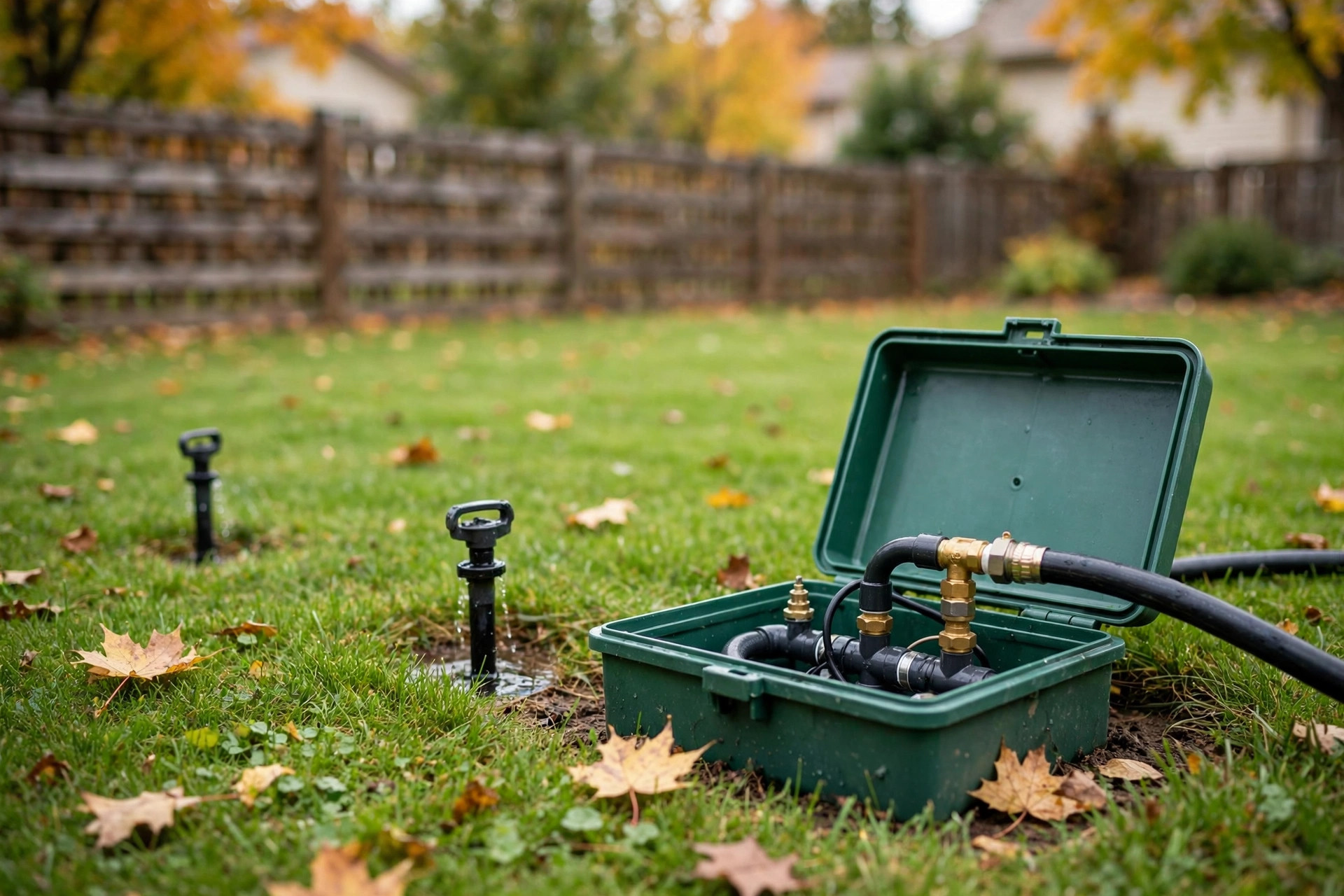
A proper professional visit follows the same steps almost every time. First, the technician shuts off the main water supply to the sprinkler system. Second, the system controller is set to the correct program, often with the rain sensor switched off. Third, the technician connects a compressor to the blowout port, usually after the backflow device.
Then comes the core of the work. The compressor fills the lines with air. The technician opens each zone, one at a time, and lets the air push the water out through the sprinkler heads. Each zone runs until only a fine mist of air comes out, usually one to three minutes. The technician keeps the air pressure low, because high pressure can damage the pipes and heads. Finally, the valves are set to a half-open position, the controller is turned off or set to rain mode, and the compressor is disconnected.
A good technician also checks the backflow device, notes any heads that looked weak or broken during the blowout, and leaves the system in a safe resting state for winter. The whole visit often takes 30 to 60 minutes.
Types of Winterization Options
Not every system needs a compressor blowout, though most modern systems do. There are three main methods.
Compressed air blowout. This is the standard method in the United States. It works on nearly every system and clears the most water. It needs a large compressor, not a small shop model, because the air must flow at high volume and low pressure. This is the service this article prices.
Manual drain. Some older systems were built with drain valves at the low points of the pipe network. The homeowner opens each valve and lets the water run out by gravity. It is cheap and simple. It is also less reliable, because water can remain trapped in dips and rises of the line.
Automatic drain. Some systems have automatic drain valves that open when the pressure drops. In mild climates they can be enough. In cold climates most professionals still recommend a blowout, because a stuck valve can leave a whole zone full of water.
How to Choose a Blowout Service
Start with local irrigation companies and lawn care firms. Many list fall winterization as a seasonal special. Ask three questions before you book: How many zones can you service in one visit? What air pressure do you use for residential zones? Do you include the backflow device in the service?
Pressure matters. Most residential sprinkler lines are rated for about 80 pounds per square inch. A careful technician keeps the compressor between 40 and 80 PSI and never lets it run above the system rating. A company that answers this question with confidence is usually a company that does the work right.
Read the small print on the quote. Some companies charge a flat fee for up to a set number of zones, then add a per-zone fee after that. Some charge extra for pump systems, wells, or systems that need the technician to locate a buried blowout port. Clear answers up front prevent an awkward bill at the end.
If you already track your yard as a system, this is a good time to plan ahead. Homeowners who research the sprinkler head replacement cost estimate usa often find that small fall repairs are cheaper than spring repairs, and the blowout visit is a natural moment to spot a failing head. A technician who finds a weak spray pattern in October can often fix it before the cold sets in.
Cost and Price Breakdown
The national picture for sprinkler winterization blowout service cost is fairly stable from year to year. Here is how the numbers usually break down.
Standard home system. A typical yard with 4 to 8 zones costs 75 to 150 dollars. This is the most common quote in suburban markets. Many companies offer an early-fall discount of 10 to 20 dollars for bookings made before October.
Large or complex systems. Yards with 9 or more zones, multiple controllers, or systems fed by a well or pump often cost 150 to 250 dollars. The extra time on site and the extra wear on the equipment explain the gap.
Per-zone pricing. Some companies quote 10 to 20 dollars per zone with a minimum charge of about 60 to 75 dollars. This model can be cheaper for small systems and fair for large ones.
Add-on fees. Common extras include 25 to 50 dollars to locate a buried blowout port, 30 to 60 dollars for pump blowout on well systems, and 20 to 40 dollars per head for small repairs made during the visit.
What moves the price? Five things matter most: the number of zones, the local labor market, the timing of the booking, the type of water source, and whether the technician must dig to find the connection. Urban areas with a short fall season often charge more, because every company is booked solid for the same three weeks. Booking in September, when demand is lower, is the simplest way to pay less.
DIY is the other option. A large towable compressor rents for about 75 to 125 dollars per day, plus the cost of fittings. For a homeowner with one system and no experience, the savings are thin once rental, fuel, and time are counted. For a homeowner with two properties, or a neighbor willing to split the rental, DIY can make sense. The risk is real, though. Too much pressure can shatter heads and split fittings. Most homeowners do well to watch a professional once before trying it themselves.
Related upgrades can change the math for the whole year. A smart sprinkler controller for usa homes can shut the system down on a fixed schedule and reduce the chance of a late-season watering that leaves the lines full before a freeze. Some homeowners pair a controller upgrade with the fall blowout visit to save a second service call.
Care and Upkeep Through the Seasons
Winterization is one half of the yearly cycle. The other half is spring startup, and the two work together.
After the blowout, leave the controller in the off or rain position for the winter. Do not run the system on a warm November day without a plan to winterize again. If you must water late in the season, blow the lines out once more afterward.
In spring, the startup visit is the mirror image of the fall service. The technician repressurizes the lines slowly, checks each zone for leaks, and replaces any heads that cracked despite the blowout. Spring startup usually costs 75 to 125 dollars, and many companies sell the fall blowout and spring startup as a yearly package for 150 to 250 dollars. The package is often the best value on the price list.
Between seasons, walk the yard once a month. Look for sunken spots that may mark a settling pipe, heads that sit too high or too low, and puddles that appear when the system has been off for days. Small problems found early stay small.
Homeowners building a longer plan for their irrigation often look at control equipment too. The best irrigation controller with rain sensor is a common fall research topic, because a rain sensor that works well can stop the system from running right before a freeze, which is exactly when the lines need to stay dry.
Safety Notes
Compressed air is safe in trained hands and dangerous in careless ones. Keep people and pets away from sprinkler heads while air is moving through the system. A head can pop up with force, and debris can blow out of the line. Never stand directly over a head during a blowout.
Wear eye protection if you are the one running the compressor. Keep the pressure within the system rating, and open the zone valves before starting the compressor so the air always has somewhere to go. A closed system with a running compressor can build pressure fast.
Protect the backflow device. It is often the most expensive single part in the system, and it is sensitive to freezing. If your device sits above ground in a box, make sure the box is closed and, in very cold areas, consider an insulated cover. Many technicians include a quick check of this device in the blowout visit.
Frequently Asked Questions
When should I schedule my sprinkler blowout? Book the service before the first hard freeze in your area. In most cold-climate states that means sometime between late September and early November. Local irrigation companies know the usual date for their county and will tell you if you call. Booking two to three weeks early is wise, because the busiest week of the season books up fast.
How long does a blowout service take? Most residential visits take 30 to 60 minutes. A small system with four zones may be done in half an hour. A large system with twelve zones, a pump, and hard-to-find connections can take up to two hours. The technician spends most of the time moving from zone to zone on the controller.
Can I skip winterization if my system has automatic drains? In mild climates, automatic drains may be enough. In areas with hard freezes, most professionals say no. Automatic drain valves can stick, clog with soil, or sit above the freeze line. A blowout removes the doubt. When the cost of the service is under 150 dollars and the cost of a repair is several times that, the blowout is the safer bet.
Does the blowout service include repairs? Usually not. The quoted price covers draining the system with compressed air and leaving it in a safe state. Small repairs found during the visit, such as a cracked head or a broken nozzle, are billed as extras. Ask the company for its repair rates before the visit so you can approve small fixes on the spot.
What happens if I forget to winterize? The risk is freeze damage to pipes, valves, heads, and the backflow device. The damage often stays hidden until spring, when the system is turned on and leaks appear. Repair costs for a neglected system commonly run 300 to 800 dollars. If you missed the fall window, call a company anyway; a late blowout is better than none, as long as the ground has not frozen solid.
Is a yearly service package worth it? For most homeowners, yes. A combined fall blowout and spring startup package usually costs 150 to 250 dollars, which is less than buying the two visits separately. The package also puts you on the company’s schedule, so you get a reminder call each fall instead of remembering the date yourself.
A Short Final Word
The sprinkler winterization blowout service cost is one of the smallest bills in home ownership, and it prevents one of the largest. Know your zone count, book before the rush, and keep the receipt. A dry pipe cannot crack. Come spring, the system will wake up ready to work, and the only surprise will be a green lawn.
References
Toro. (n.d.). Lawn care and irrigation equipment. https://www.toro.com Deere. (n.d.). Lawn and garden equipment. https://www.deere.com Briggs & Stratton. (n.d.). Outdoor power equipment engines. https://www.briggsandstratton.com
Was this guide helpful?

About David Wilson
The My Garden US editorial team writes practical, in-depth home and garden guides for American homeowners — tested advice, no fluff.
You May Also Like
Best Backpack Leaf Blower for Homeowners: A Practical Guide
January 30, 2026 0 views
How to Pick the Best Garden Hose for Lawn Watering
January 15, 2026 0 views
Pet Safe Lawn Weed Killer Reviews: What Really Works
February 14, 2026 3 views