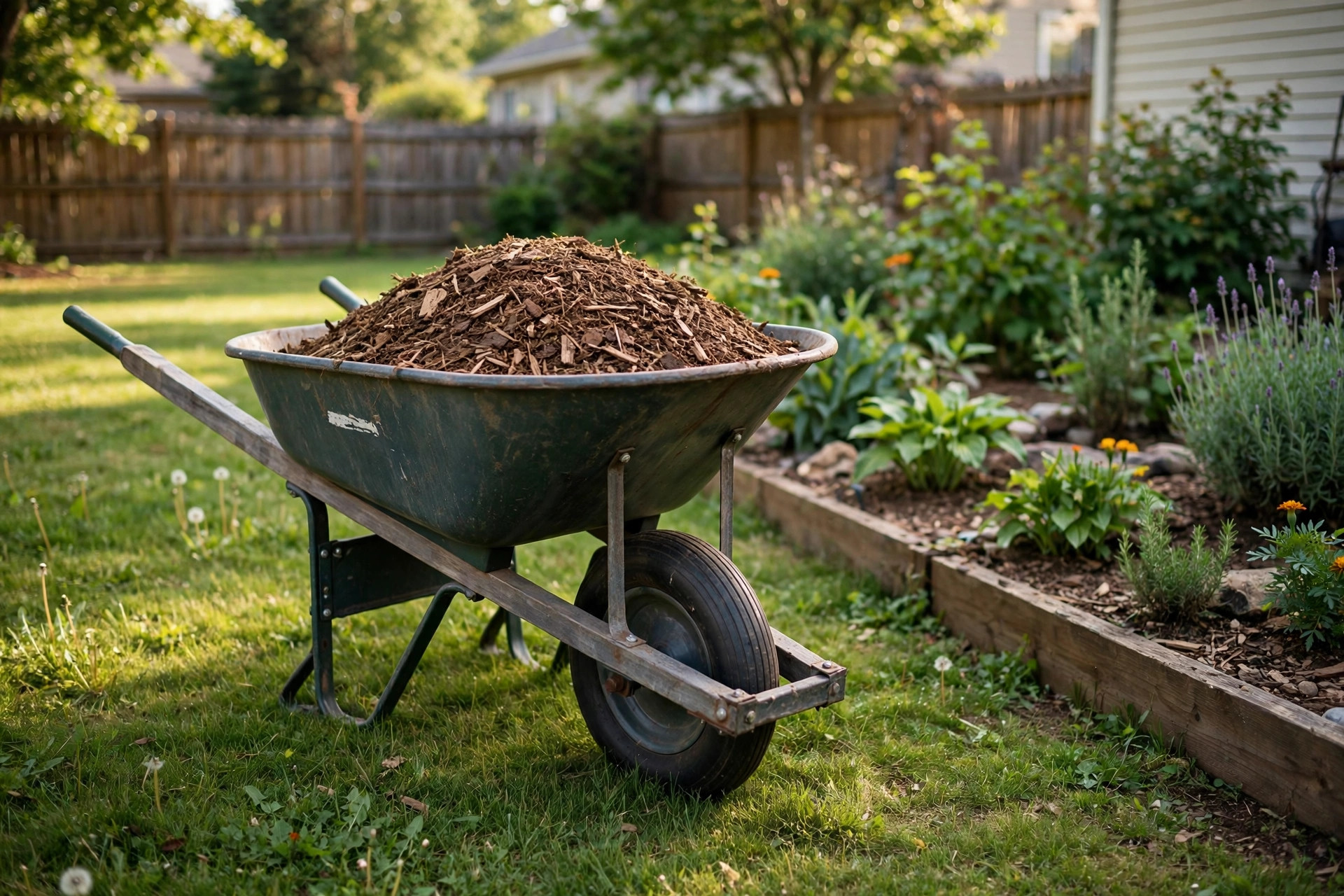

A wheelbarrow is one of the most useful tools a homeowner can own. It carries soil, mulch, stones, firewood, and leaves from one corner of the yard to another. Our best wheelbarrow for yard work reviews look at the features that matter most: how much the tray holds, how steady the frame feels, and how long the handles last. Whether you tend a small flower bed or a full acre, the right wheelbarrow will save your back and cut your work time in half.
Why the Right Wheelbarrow Matters
Yard work asks a lot of the human body. Lifting five-gallon buckets of soil one at a time strains the shoulders and the lower back. A good wheelbarrow takes that burden and spreads it across a frame, a wheel, and two long handles. You push, and the wheel does the work.
The wrong wheelbarrow, on the other hand, fights you. A tray that is too deep tips forward on slopes. A wobbly frame spills mulch all over the driveway. Thin handles splinter after a single season. When you read best wheelbarrow for yard work reviews, look past the price and ask one simple question: will this tool make the job easier for years?
Homeowners who take care of their own yards often find that the wheelbarrow is the tool they reach for first. It hauls bagged mulch for flower beds, it carries clippings to the compost pile, and it moves gravel for a new path. A sturdy model becomes a partner in every season.
What to Look For When You Choose: Best Wheelbarrow for Yard Work Reviews
A wheelbarrow has only a few parts, but each one counts. The tray, the wheel, the handles, and the frame must work as a team.
Tray Size and Material
Trays are measured in cubic feet. Most home models hold four to six cubic feet. A six-cubic-foot tray moves more mulch in each trip, which saves time on large jobs. But a full six-cubic-foot tray is also heavy, and on uneven ground it can feel tippy. For general yard work, a five-cubic-foot tray is a sound middle ground.
Trays come in steel or plastic. Steel trays resist punctures and carry rocks without fear. Poly or plastic trays will not rust, and they are lighter to push. If you live where rain is common, a plastic tray asks for less care. If you haul gravel and bricks, steel is the safer pick.
Wheels: One or Two
The classic wheelbarrow has one wheel in front. It is nimble. You can steer around plants and through garden gates with ease. Two-wheel wheelbarrows are far steadier. They do not tip sideways when you set them down, which makes them kind to beginners and older gardeners. If your yard is hilly, two wheels give you more control on slopes.
Tire type matters too. Air-filled tires roll softly over rough ground and absorb bumps. Flat-free tires never go soft in the garage, which many homeowners prefer. Pneumatic tires give the best ride, but flat-free tires give the least trouble.
Handles and Frame
Wood handles are the old standard. Hickory and ash handles feel warm in the hand and can be sanded smooth again. Steel handles are stronger and will not splinter. Cushion grips on the ends keep your hands from blistering on long days.
The frame and legs should be made of thick steel tube. Lean on the tray at the store. If it twists, the frame is too light. Look for wide braces under the tray and legs that sit flat on the ground.
Types of Wheelbarrows for Yard Work
Not every wheelbarrow looks the same. Here are the main types you will find in stores and in best wheelbarrow for yard work reviews.
Steel tray, one wheel. This is the classic model. It holds five to six cubic feet and handles soil, compost, and mulch with ease. It is the best all-around choice for most American homes.
Plastic tray, two wheels. This model is built for steadiness. It will not rust, and it tips far less often. It suits older gardeners and anyone who hauls light loads often.
Folding or collapsible. A folding wheelbarrow packs flat for a shed or a small garage. It cannot carry as much as a rigid model, but it is a fine second cart for light work.
Powered wheelbarrow. Battery-powered models have a drive motor that helps on slopes and long hauls. They cost much more, but for large lots they remove almost all the strain.
Garden cart. A cart with four wheels and flat sides is not a true wheelbarrow, but many homeowners prefer it for hauling bagged soil and potted plants. It pulls behind a riding mower if you add a hitch pin.
When you compare models, think about your own yard. A flat quarter-acre lot and a steep half-acre lot ask for different tools.
A helpful rule is to match the cart to the haul. Short hauls across flat ground need only a modest tray. Long hauls up a hill reward a larger tray with flat-free tires, because each trip counts. If you keep a lawn roller or a soil spreader in the shed, note that the wheelbarrow is the one tool that links them all: it feeds every other job in the yard.
How We Reviewed
Our best wheelbarrow for yard work reviews weigh the same points any buyer should weigh. We looked at tray capacity and material, wheel count and tire type, handle comfort, frame strength, and how the model holds up over time. We read long-term owner reports, not just first-day impressions. A wheelbarrow that still rolls true after three summers tells you more than a shiny box in the store.
We also considered the jobs a real yard demands. Spring brings mulch and soil. Summer brings weeds and storm debris. Fall brings mountains of leaves. The best wheelbarrow for yard work handles all of them without complaint, and it pairs well with other yard tools like a backpack leaf blower when the season turns.
Balance was a key part of our testing. A wheelbarrow that feels fine empty can feel very different with fifty pounds of wet soil in the tray. We paid close attention to how each model behaved on grass, on gravel, and on a gentle slope. Models with wide tires and a low center of gravity earned higher marks because they stayed calm where narrower carts wobbled. We also looked at assembly. Most wheelbarrows arrive in a box and take thirty to sixty minutes to put together. Clear instructions, labeled parts, and hardware that fits without force all counted in a model’s favor. A buyer should not need a workshop full of tools to build a simple cart.
Cost and Price
Wheelbarrows sell at every price point. Here is what the money buys.
– $60 to $90. Basic steel-tray models. They work, but the steel is thin and the hardware may need tightening each season. – $90 to $160. The sweet spot. Thick steel trays, hardwood or steel handles, and decent tires. Most of the best wheelbarrow for yard work reviews point to models in this range. – $160 to $250. Heavy-duty and contractor-grade models with reinforced frames and flat-free tires. A good buy if you haul gravel or stone often. – $400 and up. Powered wheelbarrows and large professional carts.
A wheelbarrow in the middle range, kept dry and oiled, can last ten to fifteen years. That makes it one of the cheapest tools you will ever buy per year of service.
Care and Upkeep
A wheelbarrow asks for little, but it asks for something. After a wet job, rinse the tray and let it dry. Steel trays rust where paint chips, so touch up bare spots with spray paint. Wood handles last far longer if you rub them with linseed oil once a year.
Store the wheelbarrow under cover or upside down. A tray that holds rain all winter will rust from the inside. Keep the tire at the pressure printed on its sidewall, or choose a flat-free tire and forget about it. Tighten the bolts that hold the tray to the frame each spring. This small habit keeps the whole cart from working loose.
For plastic trays, sun is the enemy. Ultraviolet light makes plastic brittle over years. A spot in the shade or under a tarp adds seasons to its life.
Safety Tips for Wheelbarrow Work
Wheelbarrow injuries are common and easy to prevent. Never overload the tray. A load that is too heavy for the wheel will take control away from you on a slope. Keep the load low and centered.
Watch your feet. The front wheel runs close to your toes on turns. Wear sturdy closed shoes, not sandals, when you haul. On slopes, walk beside the wheelbarrow rather than behind it, and never let it roll free downhill.
Set the load down before you rest. Leaning a loaded wheelbarrow against a fence invites a spill. Two-wheel models sit flat and steady when you pause, which is one reason many homeowners switch to them.
When you spread heavy materials, remember to take breaks. Even a good tool does not remove the strain of bending and lifting. Work for twenty minutes, then rest for five. Your back will thank you.
FAQ
What size wheelbarrow is best for yard work? A five or six-cubic-foot tray suits most homes. It holds enough mulch to matter but stays light enough to steer. If you mostly tend beds and paths, four cubic feet is plenty.
Are plastic or steel wheelbarrows better? Steel handles abuse better and costs less. Plastic will not rust and weighs less. For soil, mulch, and leaves, either works well. For gravel and rocks, choose steel.
Is one wheel or two wheels better? One wheel turns in tight spots. Two wheels stand steady and tip less. Beginners, older gardeners, and anyone on slopes should lean toward two wheels.
How much weight can a wheelbarrow hold? Most home wheelbarrows are rated for 200 to 300 pounds. The tray can hold more, but the handles and your arms are the real limit. Two trips with a fair load beat one trip with an overloaded cart.
Do flat-free tires ride as well as air tires? Flat-free tires are a bit stiffer, but they never go soft in storage. Most homeowners find the trade worth it. Air tires ride softer and suit rough, bumpy ground.
How long should a wheelbarrow last? A mid-priced wheelbarrow kept dry and maintained should last ten to fifteen years. Cheap models often fail in three to five years at the frame welds or the tire.
Final Word
The best wheelbarrow for yard work is the one that fits your yard, your strength, and your budget. Read the reviews, check the tray size, count the wheels, and feel the handles before you buy. A sound wheelbarrow turns heavy chores into simple ones, season after season. Buy once, care for it a little, and it will haul for a decade.
New buyers sometimes worry that they will pick the wrong model. In practice, any wheelbarrow in the middle price range with a sturdy frame will serve a normal home well. The features that matter most are the ones you feel on the first day: steady balance, smooth rolling, and handles that do not twist in your grip. Trust those signs, and the cart will not let you down.
References
Toro. (n.d.). Yard tools and outdoor equipment. https://www.toro.com Briggs & Stratton. (n.d.). Outdoor power equipment engines and parts. https://www.briggsandstratton.com John Deere. (n.d.). Lawn and garden equipment. https://www.deere.com
Was this guide helpful?

About James Carter
The My Garden US editorial team writes practical, in-depth home and garden guides for American homeowners — tested advice, no fluff.
You May Also Like
How to Choose the Best Cordless Leaf Vacuum Mulcher
August 28, 2026 0 views
Top Rated String Trimmer for Thick Weeds: A Practical Guide
January 17, 2026 2 views
Sprinkler Head Replacement Cost Estimate USA: What to Expect
August 11, 2026 0 views