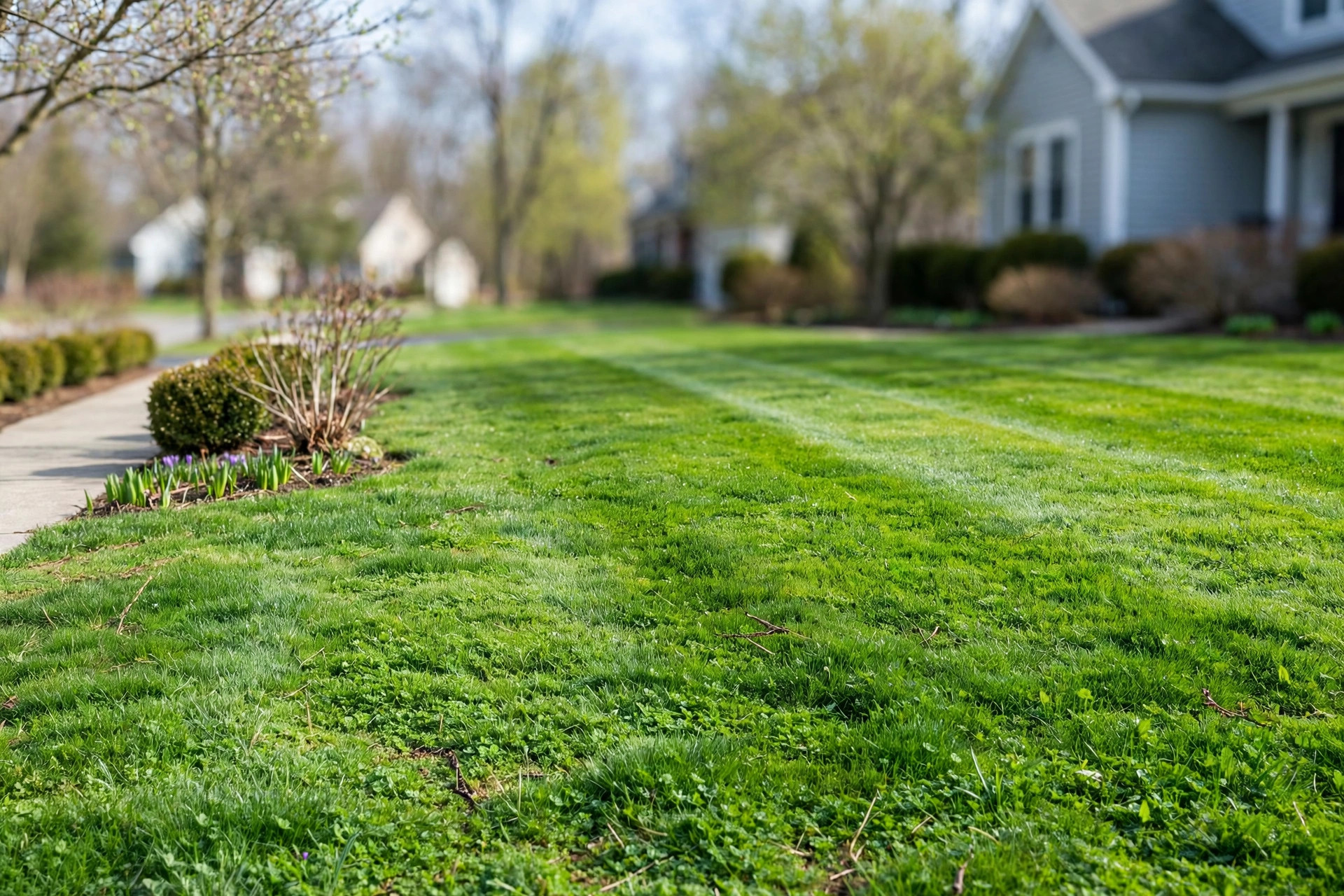

A good lawn does not happen by chance. It is the result of work done at the right time. This pre emergent weed killer application timing guide explains when to put down pre emergent products, why the date matters more than the brand, and how to avoid the common mistakes that waste money and leave weeds behind. A pre emergent herbicide stops weed seeds before they grow. Once the weed is up and green, the product can do nothing. That single fact is the whole reason timing is the heart of the matter.
Why Timing Matters More Than the Product
Many homeowners shop for the strongest weed killer on the shelf. They read labels, compare active ingredients, and pick the bag with the boldest claims. Then they apply it on a fine Saturday in June, when crabgrass is already tall and seed heads are waving. The product fails, and the gardener blames the brand. In truth the product was never given a fair chance.
Pre emergent weed killer works by forming a chemical barrier in the top layer of soil. When a weed seed takes in water and tries to send out its first root, it meets that barrier and dies. The key word is before. The seed must be stopped at the moment of germination. If you apply the product after the seed has sprouted, there is nothing for it to do. It cannot kill plants that are already growing.
Soil temperature controls germination. Weed seeds lie quiet through winter. When the soil warms past a certain point, they wake up. In most parts of the United States, crabgrass, the most hated lawn weed of all, begins to germinate when the soil holds a temperature near 55 degrees Fahrenheit for several days in a row. Foxtail and goosegrass follow a similar pattern. Miss that window and the season is lost before it starts.
Timing also matters because the barrier breaks down. Most pre emergent products last about eight to twelve weeks in the soil. Apply too early, and the barrier fades before the main flush of weeds arrives. Apply too late, and the weeds are already ahead of you. A good pre emergent weed killer timing guide from Scotts stresses watching the soil, not the calendar.
What Soil Temperature Tells You: Pre Emergent Weed Killer Application Timing Guide
The calendar is a poor guide for lawn work. A warm March in Georgia is not the same as a warm March in Minnesota. Soil temperature is the true clock. Weed scientists have studied germination for decades, and their findings are plain.
Crabgrass seed begins to stir when soil temperatures reach 50 to 55 degrees. By 60 degrees, germination is in full swing. The standard advice from university turf programs is simple: put your pre emergent down when soil temperatures are near 55 degrees and holding. Do not wait for 60. At that point you are already behind.
How do you know the soil temperature? The old way is a soil thermometer, pushed two inches into the ground in the morning. Take readings for a few days. When the average sits at 55, it is time. Some gardeners use nature as their guide. The blooming of forsythia bushes is a well-known sign. When the bright yellow flowers fade and fall, soil is near the right range. It is not exact science, but generations of gardeners have trusted it. Toro’s yard care guides also describe how to plan spring work around soil warmth rather than air temperature.
Keep in mind that air temperature lies. A week of warm afternoons in February can push air temperatures into the 60s while the soil is still cold. Night frosts pull the average back down. Base your decision on the soil, not on how the day feels.
The Spring Application: Stopping Summer Weeds
For most of the country, the spring application is the big one. It targets summer annual weeds. These are the weeds that sprout in spring and torment you all summer: crabgrass, foxtail, spurge, purslane, and knotweed.
The window is tight. In the deep South, soil reaches 55 degrees as early as February. In the upper Midwest and New England, it may be late April or even early May. The exact date moves from year to year. A mild winter shifts it earlier. A long cold spring shifts it later. Watch the ground each year and treat each spring as its own case.
Water the product in after you apply it. Nearly every label calls for about half an inch of rain or irrigation within a day or two of application. The water moves the chemical into the top half inch of soil, where the weed seeds live. A dry spell right after application leaves the granules sitting on the surface, doing nothing. If the forecast shows no rain, run the sprinklers. Guides at Pennington describe watering-in as the step most people skip, and the step that decides success or failure.
Do not aerate or dethatch after a spring application. Pulling cores of soil breaks the chemical barrier. If your lawn needs aeration, do it before you apply the pre emergent, or wait until fall. The same goes for overseeding.
The Fall Application: Stopping Winter Weeds
Many homeowners learn about spring applications and never hear about fall. That is a pity. Fall pre emergent stops the winter annuals: henbit, chickweed, annual bluegrass, and shepherd’s purse. These weeds sprout in autumn, sit quietly through winter, and flower in early spring, long before your grass greens up.
The timing rule in fall is the mirror of spring. Apply when soil temperatures drop back through the 70s toward the mid-60s. In much of the country that means September. In the South it may be October. The goal is to have the barrier in place before the first flush of cool-season weeds germinates.
Fall applications give a second benefit. Some products with long residual life carry over and give a head start on early spring weeds. A split approach, half the yearly rate in fall and half in spring, keeps the barrier fresh across both germination seasons. Many lawn programs used by professionals follow this split pattern. LawnStarter’s lawn care advice notes that fall treatment is often the difference between a clean spring lawn and one full of chickweed.
One caution for fall: seeding. Fall is the best season to overseed cool-season lawns, and pre emergent will block your new grass seed just as it blocks weed seed. If you overseed in September, skip the fall pre emergent on those areas.
Timing by Grass Type and Region
Not all lawns are alike. The right timing shifts with the grass you grow and the climate you live in.
Cool-season grasses, such as Kentucky bluegrass, fescue, and ryegrass, grow in the North. They green up in spring and struggle in summer heat. For these lawns, the spring pre emergent goes down as the grass wakes up, and the fall application is the more important one for keeping the lawn clean through winter and into the next spring.
Warm-season grasses, such as Bermuda, zoysia, and St. Augustine, grow in the South. They sleep through winter and green up late. Their spring application often comes weeks earlier than in the North. Because the soil warms sooner, southern gardeners must be ready in February or early March. Readers looking for grass-specific care may also read our guide on the best fertilizer for St. Augustine grass in Texas.
Transition zones, the belt across the middle of the country, face the hardest timing task. Both warm and cool season weeds are active. Many turf experts in this zone recommend two spring applications, spaced six to eight weeks apart, to stretch the barrier through the long germination season. This is sometimes called a split application.
Always read the label for your grass type. Some products are not safe on certain grasses, especially young or newly seeded lawns. A product fine on Bermuda may damage fine fescue. The label is the law of the bag.
Granular vs. Liquid: Does Form Change Timing?
Pre emergent weed killer comes in two forms. Granular products spread from a broadcast spreader. Liquid products spray from a tank or hose-end sprayer. The timing rules are the same for both. The barrier must be in place before germination. What changes is the ease of use and the evenness of coverage.
Granular products suit most homeowners. They are forgiving. A spreader lays them down in a fairly even pattern, and watering moves them into the soil. Liquid products give a more uniform barrier and work well on large lawns, but they demand care. Overlap causes double rates. Missed strips leave gaps where weeds pour through. Whether you choose granules or liquid, apply on a calm day. Wind carries spray and pushes granules off target.
Equipment matters less than timing, but good tools help. Keeping your spreader and mower in good shape makes every application more even. Engine and equipment upkeep guides can be found at Briggs & Stratton and John Deere, while ECHO USA covers handheld yard tools.
How Weather and Rain Affect Your Window
Rain is your friend after application and your enemy before it. A heavy rain right after spreading helps wash granules into the soil. A heavy rain weeks before, followed by a warm spell, can trigger early germination. In a year with an odd winter warm spell, weeds may start earlier than the calendar suggests. This is why the soil thermometer beats the calendar every time.
Drought changes the picture too. In dry soil, the chemical barrier stays where it sits, but weed seeds also wait for moisture. When rain finally comes, everything germinates at once. If your barrier is old and thin by then, the weeds win. In dry years, a second application later in spring is worth the cost.
Frost after application does no harm. The product sits in the soil and waits. What harms the plan is warm weather that starts germination before you apply. Once a warm spell has lasted several days, get the product down even if the forecast shows a cool snap ahead. Waiting for perfect weather is how the window closes.
Common Timing Mistakes
The first mistake is applying by the calendar instead of the soil. “I always apply on April first” is a habit, not a plan. Some years it works. Some years the weeds are a month ahead of you. Let the ground decide.
The second mistake is applying once and forgetting the barrier wears out. One spring application fades by midsummer. Late-germinating weeds, such as goosegrass and spurge, walk right through a worn-out barrier in July. A second application, on time and at the label rate, closes that gap.
The third mistake is seeding and treating at the same time. New grass seed and pre emergent do not mix. Plan the year. Seed in fall, treat in spring, or treat in fall and seed in spring, but never both at once in the same area.
The fourth mistake is skipping the watering-in step. Half an inch of water is all it takes. Without it, the product lies on the blades of grass and breaks down in sunlight. With it, the barrier forms where the seeds live.
The fifth mistake is treating the whole lawn the same when only part needs it. Weeds start along driveways, sidewalks, and south-facing slopes, where the soil warms first. Those edges deserve attention early. Some gardeners treat the warm edges first and the rest of the lawn a week later. Retailer guides at The Home Depot show how edge-first timing works in practice.
Cost and Price of a Season’s Program
Pre emergent weed killer is one of the cheaper lawn treatments. A bag of granular product that covers 5,000 square feet typically costs between 15 and 40 dollars, depending on the active ingredient and the brand. Liquid concentrates cost about the same per area covered. Most lawns need two applications a year, spring and fall, so a full program runs 30 to 80 dollars in product for an average suburban lot.
Professional lawn services charge far more. A seasonal program with four to six visits can cost 300 to 600 dollars a year. Doing it yourself saves money, but the trade is your time and your care with timing. Buying guides at Consumer Reports compare product value across brands and remind readers that timing beats brand.
Do not chase bargains by splitting one bag across too many applications. Under-rate applications leave a weak barrier. Follow the label rate for your grass and your square footage. Measure your lawn once with a tape or a free online tool, write the number down, and calibrate your spreader each spring.
Care and Upkeep Through the Season
Pre emergent is one tool, not the whole toolbox. After application, mow high. Taller grass shades the soil and cools it, which slows weed germination. Three to four inches is right for most cool-season lawns. Sharp blades matter. A dull blade tears grass and opens the lawn to weeds. Greenworks and Ryobi both stress sharp blades and steady mowing height, and ECHO notes the same in its trimmer and mower care guides.
Fertilize on schedule. A thick lawn is the best weed control ever made. Weed seeds need light and bare soil. Dense turf gives them neither. Water deeply and seldom rather than a little every day. Deep roots make a strong lawn that crowds out weeds.
Watch for breakthroughs. No barrier is perfect. If a few weeds appear, pull them by hand before they set seed. One crabgrass plant can drop thousands of seeds. A minute of pulling in July saves an hour of trouble next spring. For weed problems that slip past the pre emergent, read our review of pet safe lawn weed killer options.
At season’s end, look back and note your dates. Write down when the soil hit 55 degrees, when you applied, and how the lawn looked in August. A simple notebook turns guesswork into a plan. After two or three years, you will know your yard’s pattern better than any general lawn calendar from The Spruce can tell you.
If your lawn has thin or bare patches that need a fresh start, our guide on hydroseeding cost per square foot can help you plan a full renovation alongside your weed control program.
Safety Around Children, Pets, and the Garden
Pre emergent products are among the milder lawn chemicals, but they are still chemicals. Keep children and pets off the lawn until the product has been watered in and the grass is dry. Read the label for the exact re-entry time. Most labels say to wait until the application has dried.
Store bags and jugs out of reach, in a dry shed or garage. Do not spread near vegetable gardens, flower beds, or ponds unless the label says it is safe. Granules can drift on a windy day. A calm morning is the safest time to work.
If you prefer a lighter hand on chemicals, timing becomes even more important. Corn gluten meal is a natural product some gardeners use as a pre emergent. It is weaker than synthetic products and needs exact timing to do any good. Apply it when soil nears 55 degrees, water it in well, and expect modest results. It will not match the barrier of a synthetic product, but it adds a layer of protection for those who want one.
Frequently Asked Questions
When exactly should I apply pre emergent weed killer in spring?
Apply when soil temperatures hold near 55 degrees Fahrenheit for several days. Use a soil thermometer two inches deep, or check your state extension soil temperature map. Do not go by the calendar alone.
Can I apply pre emergent too early?
Yes. Applied months early, the barrier breaks down before weeds germinate. Aim for the weeks just before soil reaches 55 degrees, not the middle of winter.
What happens if I miss the window?
If weeds have already sprouted, pre emergent will not kill them. You must switch to a post emergent weed killer for the weeds that are up, and plan better timing next season.
Can I apply pre emergent and fertilizer at the same time?
Yes, many products combine the two in one bag. These combination products save a trip across the lawn. Just make sure the timing suits the weed killer part, since that is the time-sensitive half.
Will pre emergent stop my grass seed from growing?
Yes. It stops all seeds, including grass seed. Do not overseed and apply pre emergent in the same area at the same time. Seed in fall and treat in spring, or the other way around.
How long does one application last?
Most products last eight to twelve weeks. Heat, rain, and soil type change the exact life. Plan a second application if your weed season runs longer than that.
A Short Final Word
Timing is the quiet skill behind every weed-free lawn. The product matters less than the day you put it down. Learn your soil, watch the thermometer, water the product in, and keep notes year to year. Do that, and this pre emergent weed killer application timing guide will have done its job. Your lawn will show the result long before the neighbors ask what your secret is.
References
Briggs & Stratton. (n.d.). Outdoor power equipment and engine care. https://www.briggsandstratton.com
Consumer Reports. (n.d.). Product ratings and buying guides. https://www.consumerreports.org
Deere, J. (n.d.). Lawn and grounds care equipment. https://www.deere.com
ECHO USA. (n.d.). Outdoor power equipment. https://www.echo-usa.com
Greenworks Tools. (n.d.). Battery-powered outdoor tools. https://www.greenworkstools.com
LawnStarter. (n.d.). Lawn care guides and services. https://www.lawnstarter.com
Pennington. (n.d.). Grass seed and lawn care products. https://www.pennington.com
Ryobi Tools. (n.d.). Power tools and outdoor equipment. https://www.ryobitools.com
Scotts. (n.d.). Lawn care products and guides. https://www.scotts.com
The Home Depot. (n.d.). Home improvement products and guides. https://www.homedepot.com
The Spruce. (n.d.). Home and garden advice. https://www.thespruce.com
Toro. (n.d.). Lawn mowers and yard equipment. https://www.toro.com
Was this guide helpful?

About Jennifer Lee
The My Garden US editorial team writes practical, in-depth home and garden guides for American homeowners — tested advice, no fluff.
You May Also Like

Affordable Fence Installation Companies Near Me: A Homeowner’s Guide
January 10, 2026 0 views
How to Fix Brown Patches in Lawn
April 27, 2026 0 views
Weed Barrier Fabric Reviews for Gardens: What Really Works
March 9, 2026 0 views