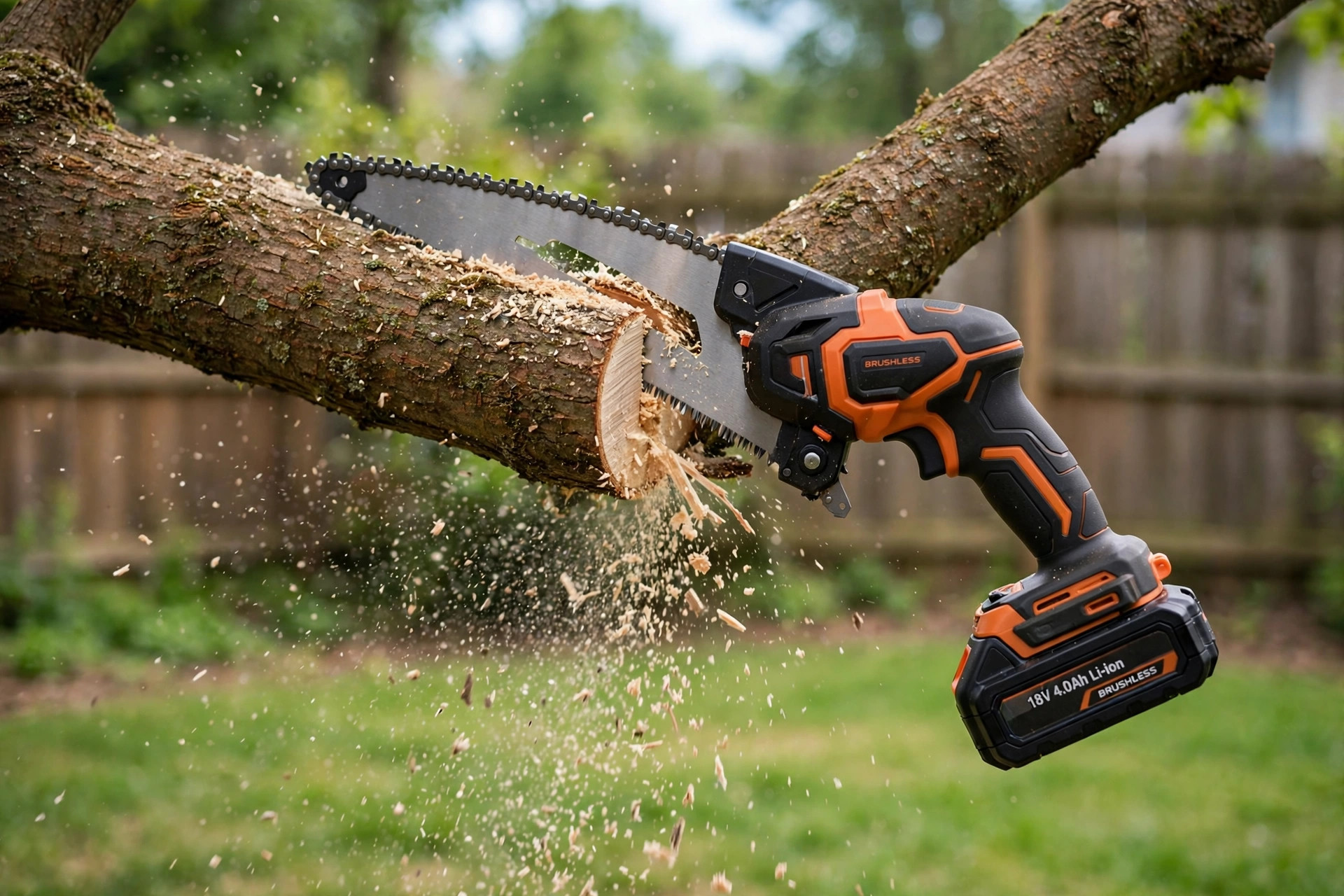

A tree limb hangs low over the fence. It drops leaves on the lawn. It blocks the sun from the garden. A hand saw will cut it, but the work is slow and hard on the arms. This is where the best cordless pruning saw for branches earns its place in the shed. It cuts thick wood fast and runs on a battery.
This guide explains what a cordless pruning saw is, why it matters, and how to pick one. It covers price, care, and safe use. It also answers common questions. The aim is plain talk, so you can buy with care and cut with skill.
Why a Cordless Pruning Saw Matters
Trees and shrubs need care each year. Dead limbs must go. Branches that cross or rub must be cut. Low limbs that block a walk or a drive must be raised. If you put the work off, small problems grow. Dead wood invites insects. A crowded tree grows weak shoots. Storms break what is already weak.
A cordless pruning saw makes the work easy enough to do on time. A full size chain saw is too much for most yard work. It is heavy. It needs gas and oil. It is loud. A bow saw is cheap and safe, but it tires the arm on thick limbs. A cordless pruning saw sits between the two. It has the power of a small chain saw with the ease of a hand tool.
The tool is small. Most models weigh four to eight pounds with the battery in place. The bar is short, often six to ten inches. This makes it easy to lift into a tree and hold at arm height. The chain runs at high speed. It cuts oak, maple, and fruit wood with ease. Because it has no cord, you can walk around the yard freely. Because it has no gas engine, it starts at once and runs quiet.
People who care for a home orchard or a row of shade trees find the saw a true help. Storm cleanup is another good use. After a wind storm, small limbs fall across the lawn. A cordless saw lets you cut them into short lengths for the trash or the wood pile.
What to Look for in a Cordless Pruning Saw: Best Cordless Pruning Saw for Branches
Not all cordless saws are the same. A few points matter most. Learn them before you shop.
Battery voltage. Most pruning saws run on 18-volt or 20-volt batteries. Some run on 40-volt packs. Higher voltage often means more power and longer run time. For branches up to four inches thick, an 18-volt or 20-volt saw is enough. For thicker limbs, look at 40-volt models. If you already own other cordless tools, pick a saw that uses the same battery line. One set of batteries for all your tools saves money.
Bar length. The bar is the flat steel strip that holds the chain. Common lengths are six, eight, and ten inches. A six-inch bar handles branches up to about five inches thick. An eight-inch bar gives more reach. A ten-inch bar cuts the thickest limbs these saws are made for. Longer is not always better. A long bar on a weak motor will stall in hard wood.
Chain speed. This is often listed in feet per second. A faster chain cuts quicker and binds less. Look for a chain speed of at least 15 feet per second. Better saws run near 20 feet per second or more.
Weight and balance. You will hold this saw over your head at times. A heavy saw tires you fast and is hard to guide. Look for a saw under seven pounds with the battery. Pick it up in the store if you can. It should feel balanced, not nose heavy.
Oil system. The chain needs oil to cut well and last long. Some saws oil by hand. You press a button or a bulb to feed oil to the chain. Others oil on their own with an auto oiler. An auto oiler is worth the extra cost. It keeps the chain wet at all times and saves you from dry cuts.
Safety features. A chain brake is a must. It stops the chain fast if the saw kicks back. A hand guard shields your front hand. A trigger lock keeps the saw from starting by mistake.
Tool free chain tension. The chain must be kept tight. Some saws need a wrench to set the tension. Others have a knob you turn by hand. Tool free tension is easier and lets you fix a loose chain in the field.
Types and Options
Cordless pruning saws come in three main forms. Each suits a different job.
One-hand pruning saws. These are small saws with a six-inch bar. They are light, often under five pounds. Many have a guard that covers the chain for safe one-hand use. They suit quick cuts on limbs up to four inches thick. They are the best pick for most home owners. They store in a small bag and are easy to carry up a ladder.
Standard mini chain saws. These look like a small chain saw with a top handle. They have bars of six to ten inches and full chain saw controls. They cut faster than the one-hand type and suit thicker limbs. They need two hands and more care. They are a good step up for yards with many trees.
Pole pruning saws. These mount a small saw head on a pole, sometimes reaching ten or twelve feet. They are made for high limbs you cannot reach from the ground. They are heavier and harder to guide. Buy one only if you often cut high branches. For most work from the ground, a hand-held saw is better.
When you shop, you will see many brands. The major makers of yard tools and the big farm equipment makers sell cordless lines. Small engine firms such as Briggs and Stratton also offer battery tools. For side-by-side test results, Consumer Reports rates many models. A cordless chainsaw for tree limbs reviews guide can help you compare the step-up models, and a battery powered hedge trimmer reviews 2026 page covers the tool for the fine work a pruning saw leaves behind.
Cost and Price
A cordless pruning saw costs less than most people think. Prices run in three bands.
Budget saws cost 60 to 100 dollars. They often come with one battery and a charger. They cut well on soft wood and small limbs. The batteries may be small, so run time is short. They suit a home owner with one or two trees.
Mid range saws cost 100 to 180 dollars. These are the best value for most buyers. They have auto oilers, good chain speed, and a solid battery. They cut hardwood with ease. Two batteries in the kit let you work while one charges.
Top models cost 180 to 300 dollars. These have 40-volt power, long bars, and brushless motors. A brushless motor runs cooler and lasts longer than an old style motor. These saws suit large yards or heavy storm work.
The affordable tree pruning service near me page is worth a read if your trees need more work than a small saw can do. For one tree or a few limbs, the saw pays for itself after a single use.
Care and Upkeep
A cordless pruning saw needs little care, but what it needs matters. A sharp chain cuts fast and safe. A dull chain binds, heats, and kicks back. Learn to keep the chain sharp.
Keep the chain sharp. Check the chain before each use. The teeth should have clean edges. If the saw throws dust instead of chips, the chain is dull. You can file the teeth with a small round file made for the chain size. Many home owners have the chain sharpened at a shop once a year. A new chain costs 10 to 15 dollars and is easy to fit.
Keep oil in the tank. Bar and chain oil cuts friction. Run the saw only with oil in the tank. Check the level each time you charge the battery. Use real bar oil, not motor oil. Bar oil is thick and clings to the chain.
Keep the chain tight. A new chain stretches as it warms. Check the tension often. Pull the chain away from the bar with your fingers. It should lift a little and snap back. If it sags, tighten it with the tension knob. A loose chain can fly off the bar, which is a real danger.
Clean the saw after use. Sap and sawdust build up on the bar and chain. Wipe them down with a rag. Clear the oil ports with a small stick. A clean saw runs cooler and lasts longer.
Care for the battery. Do not leave batteries in a hot car or a freezing shed. Store them at room heat. Charge them before you put them away for the winter. Most lithium batteries hold a charge for months. Do not run a battery until it is dead each time. Short charges are fine and keep the cells healthy.
Store it right. Hang the saw on a hook or keep it in its case. Put the chain guard on. Keep it out of reach of children. A saw on a high shelf is out of sight and out of harm.
Safety
A small saw can still hurt you. Treat it with the same care as a full size chain saw.
Wear gear. Put on safety glasses each time you cut. A hard hat helps when limbs fall. Gloves grip the saw and shield your hands. Ear plugs help on long jobs, though battery saws run quiet. Steel toe boots guard your feet from falling wood.
Plan each cut. Look at the limb before you start. Note where it will fall. Stand to the side, not under it. Keep both feet on firm ground. Do not cut from a ladder if you can avoid it. A saw that binds can pull you off balance.
Use both hands. Keep your left hand on the front handle and your right on the rear. Keep thumbs wrapped around the handles. Never cut with one hand unless the saw is made for it and guarded for it.
Watch for kickback. Kickback happens when the tip of the bar strikes wood and the saw jumps up toward you. It is the main cause of chain saw injury. Do not cut with the tip. Cut with the bottom of the bar. Keep the chain sharp and the chain brake on.
Cut in three steps on thick limbs. First, cut up from below about six inches from the trunk. Cut one third of the way through. Second, cut down from above a few inches farther out. The limb will break and fall without tearing the bark. Third, cut the short stub near the trunk, just outside the raised ring of bark. This method keeps the tree healthy and keeps you safe.
Mind the weather. Wet wood is slick. Wet ground is slick. Do not cut in rain or high wind. Put the work off until the ground is dry.
Keep children and pets away. Set a clear zone of at least 15 feet around your work. Ask a helper to watch the zone if one is near.
Frequently Asked Questions
What size branch can a cordless pruning saw cut? Most models cut limbs up to five or six inches thick with ease. Larger 40-volt models with a ten-inch bar can cut limbs near eight inches. For wood thicker than that, use a full size chain saw or hire a crew.
How long does the battery last? A full battery gives 20 to 40 minutes of cut time, which is often 40 to 80 cuts on three-inch limbs. Run time falls in hard wood and cold weather. A second battery keeps the work moving while the first charges.
Can I cut wet wood with it? Yes, but with care. Wet wood cuts fine. Wet ground and wet bark are slick, so your footing and grip suffer. Wait for dry weather if you can. Dry the saw and oil it well after a wet job.
Is a cordless pruning saw better than a corded one? For most home yards, yes. A corded saw needs an outlet and a long cord, which is a trip risk and a bother. A cordless saw goes anywhere. Corded saws run forever without a charge, so they suit long bench jobs, but for pruning around trees the cordless tool wins.
Do I need to mix fuel or add oil like a gas saw? No fuel mixing is needed. That is one of the joys of battery tools. You still must add bar and chain oil to the oil tank. The chain needs oil whether the power comes from gas or a battery.
When should I call a tree service instead? Call a pro for limbs over power lines, large dead trees, or any work more than 15 feet up that needs a ladder. Also call if a tree leans toward a house. The cost of a crew is small next to the cost of a fall or a crushed roof.
A Final Word
The best cordless pruning saw for branches is the one that fits your yard, your hands, and your budget. A light six-inch saw serves a small lot well. A stronger 40-volt model suits a home with old oaks and maples. Pick a saw with a chain brake, an auto oiler, and a battery line you can grow with. Keep the chain sharp and the oil full. Wear your glasses and plan each cut. Do that, and your trees will stand clean and sound for years.
References
Toro. (n.d.). Yard tools and outdoor equipment. https://www.toro.com Deere. (n.d.). Agriculture and yard equipment. https://www.deere.com Briggs & Stratton. (n.d.). Engines and battery power products. https://www.briggsandstratton.com Consumer Reports. (n.d.). Product reviews and ratings. https://www.consumerreports.org
Was this guide helpful?

About Emily Rodriguez
The My Garden US editorial team writes practical, in-depth home and garden guides for American homeowners — tested advice, no fluff.
You May Also Like
How to Install a Landscape Lighting Transformer
April 30, 2026 0 views
Affordable Lawn Overseeding Service Near Me: A Practical Guide
August 13, 2026 0 views
How to Install French Drain Around House: A Step-by-Step Guide
April 5, 2026 0 views