
Why Fresh Herbs Start With Organic Herb Seeds
A small pot of basil on a kitchen sill can change the way a home cooks. When you grow from organic herb seeds, California homes across the USA gain fresh flavor at arm’s reach. The leaves are cut only seconds before they meet the plate. No plastic packs from the store. No wilted stems in the fridge. Just green, living herbs that were raised without man-made chemicals.
Organic seed means the parent plants were grown without synthetic sprays or lab-made feeds. The seed itself carries no chemical coating. California adds one more gift: long sun and mild winters. Few other states give herbs such an easy life.
The habit is also kind to the purse. A single store pack of fresh basil may cost three or four dollars. A seed packet costs about the same and can give dozens of plants.
What Organic Really Means on a Seed Packet: Organic Herb Seeds California Homes Usa
The word organic is printed on many packets. It is worth knowing what it stands for. True organic herb seeds in California homes across the USA should come from growers who follow set rules. The USDA National Organic Program sets those rules. Farms must avoid synthetic pesticides and most man-made fertilizers. They must keep clear records. Many seed sellers are certified by an outside body, and they show the certifier on the packet.
Some packets say “natural” or “untreated” instead. Those words are not the same as organic. Natural has no legal meaning on seed. Untreated only means the seed has no chemical coating. If the organic label matters to you, look for the USDA organic seal or a clear line that names the certifier.
Seed age matters as well. Herb seed stays good for a few years, but fresh seed wakes up faster. Check the “packed for” year on the packet. A packet packed for this year gives the best start. Store spare packets in a cool, dry drawer. Heat and damp air shorten seed life fast.
Choosing the Right Herbs for a California Home
California is not one garden. It is many. The coast is cool and foggy. The inland valleys bake in summer heat. The deserts are hot and dry. The good news is that most common herbs adapt well if you match the herb to the spot.
Herbs for Hot, Sunny Patios
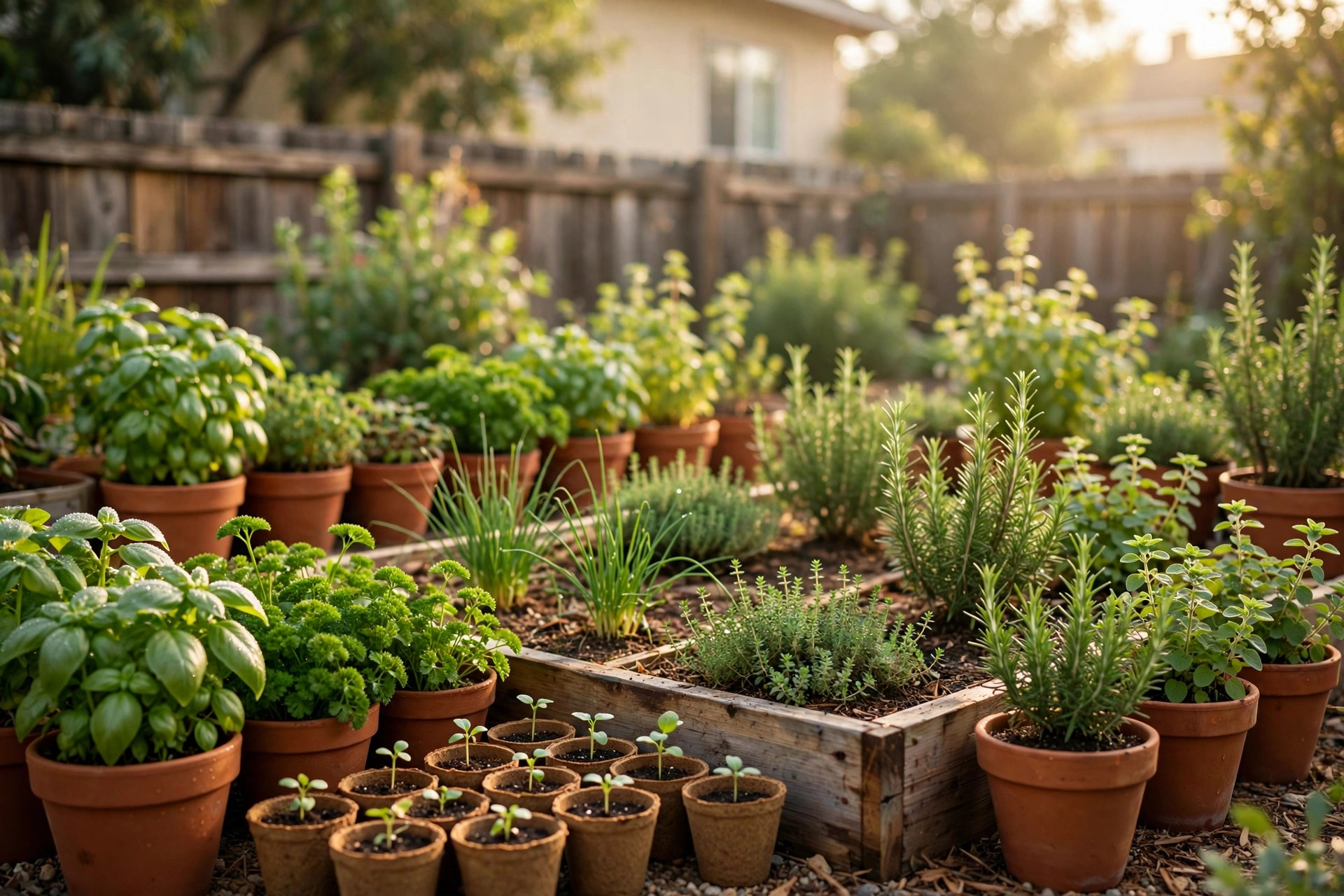
Rosemary, thyme, oregano, and sage love sun and heat. They come from the dry hills of the far side of the world, and they feel at home in inland California. Give them the sunniest spot you have. They ask for little water once they settle in. Their leaves turn more fragrant when they are not drowned.
Herbs for Cool Coastal Yards
Parsley, cilantro, chives, and mint like cooler air. They do well on the coast and in foggy bays. Cilantro dislikes hard heat and runs to seed fast in summer. On the coast it stays leafy longer. Mint is a bold grower. Keep mint in its own pot or it will take over the bed.
Herbs for Kitchen Windows
Basil, chives, and parsley can live on a bright sill all year. A south or west window is best. Turn the pots every few days so the stems grow straight. Indoor herbs need less water than outdoor pots. Touch the soil first. Water only when the top feels dry.
A fine way to start is with five or six easy kinds: basil, parsley, chives, thyme, oregano, and mint. These six cover most cooking. They are also kind to new growers.
What to Look for When You Buy Seed
Walk into a seed rack with a plan. Pick kinds your family will actually eat. Three packets you will sow this week are worth more than ten that sit unopened.
Read the packet back. It should name the exact kind, such as “Genovese Basil” or “Italian Flat-Leaf Parsley.” Names matter. Sweet basil and Thai basil taste quite different. Flat-leaf parsley has more flavor than the curly kind for most cooks.
Check the germination note. Many packets print “germination 85%” or a similar figure. Higher is better. Some also print days to sprout and days to harvest. Basil may sprout in a week. Parsley can take three weeks. Knowing this stops worry when a pot looks bare after ten days.
Buy from sellers you trust. Long-standing seed houses such as Burpee and Park Seed print clear growing notes on every packet. Gurney’s and White Flower Farm are also well-known names among American gardeners. If you want seed raised for warm zones, Monrovia and Proven Winners list plants bred to take heat.
How to Sow and Start Your Herbs
Most herbs ask for little. A clean pot, good soil, and steady dampness will wake the seed.
Start with the right container. Make sure the pot has drain holes. Roots rot in still water. A pot eight to ten inches wide suits a single basil or parsley plant. Small thyme and oregano can share a wide, shallow bowl.
Use a light potting mix. Heavy garden soil packs down in pots and chokes small roots. A bagged potting mix made for containers is best. For a strict organic start, pick a mix with the organic seal. Some growers begin seed in peat pots, which go straight into the soil and spare the roots any shock.
Sow thin. Small seeds like thyme barely need cover. A light dust of mix is enough. Larger seeds like basil go about a quarter inch deep. Press the soil down gently with your palm. Water with a soft spray so the seed is not washed away.
Warmth wakes seed faster. Most herbs sprout best between 65 and 75 degrees. A warm shelf or the top of the fridge works while you wait. Once green shows, move the pot to full light at once. Weak, pale stems mean the light came too late.
Thin the seedlings with a steady hand. It feels hard to pull out young plants, but crowded herbs stay small and weak. Leave the strongest one or two in a small pot.
From Seed to Table: Care Through the Season
Herbs are not fussy, but they do keep a few rules.
Water deep and less often. Let the top inch of soil dry between waterings. Then soak until water runs from the drain holes. This trains roots to grow down. Shallow daily sips keep roots near the top, where they dry out fast.
Feed lightly. Organic herbs do best with gentle food. A weak mix of fish emulsion or compost tea once a month is plenty. Too much feed makes soft, watery leaves with less flavor. Herbs grown a little lean taste stronger. That is a fair trade.
Pinch to keep plants bushy. When basil has three or four sets of leaves, pinch the top set off with your nails. Two new stems grow where one stood. Do this all summer and one plant turns into a small bush. Pinch flower buds off basil and cilantro. Once they flower, leaf flavor fades.
Cut in the morning. Oils in the leaves are strongest before the heat of the day. Snip what you need for dinner just before cooking. Never take more than a third of the plant at once. It needs leaves to make food for itself.
Move tender herbs inside before cold snaps. Most of California is kind in winter, but inland valleys and high deserts can frost. Basil dies at the first frost. Parsley and chives can take light frost. If frost is forecast, bring pots under cover for the night. A simple frost cloth from the garden center saves many plants.
Cost and Price: What a Herb Garden Really Costs
Starting from seed is the cheapest way to grow herbs. A packet of organic herb seed costs about three to six dollars. One packet of basil can give forty or more plants if you sow with care. Compare that to four dollars for a single store pack of cut basil that lasts a week. The math is plain.
Pots and soil are the main first cost. A ten-inch clay pot runs about eight to twelve dollars. A bag of organic potting mix is about ten dollars and fills several pots. Basic hand tools cost little. Many growers start with pots they already own and buy only soil and seed.
Year two costs almost nothing. Perennial herbs like rosemary, thyme, oregano, sage, and chives live for years in California. Only basil, cilantro, and dill need fresh sowing each year, and one packet covers it.
Over a single summer, a six-pot herb garden can replace fifty dollars or more of store herbs. The flavor is better, the leaves are fresher, and nothing is wasted. That is value no store pack can match.
Care and Upkeep Through the California Year
California lets you grow herbs in every season, but each season asks for small changes.
Spring is sowing time. Sow basil, dill, and cilantro after the last frost date for your town. Set out young plants on cloudy days so the sun does not shock them.
Summer is harvest time. Water pots daily in inland heat. Mulch the soil surface with straw to slow drying. Move pots to afternoon shade during heat waves over one hundred degrees. Basil wilts fast in such heat but lifts again after a deep drink.
Fall is second spring on the coast. Sow cilantro, parsley, and chives again in September. They grow well in cool fall air. Bring tender pots near the house wall, where nights stay warmer.
Winter is rest time inland. Cut back woody herbs like rosemary and sage lightly. Do not cut into old bare wood. Refresh the soil top with compost. For more seasonal timing ideas, The Spruce keeps simple month-by-month garden guides.
Watch for pests with a light touch. Aphids love new herb tips. A hard spray of water knocks most off. Ladybugs do the rest. Organic growers avoid harsh sprays on food plants, and the Gardening Know How library keeps plain guides to organic pest care.
Safety in the Home Herb Garden
Herbs are food, so clean habits matter. Wash all leaves before eating, even from your own pots. Dust and soil carry germs. Rinse under cool running water and shake dry.
Keep garden products away from children and pets. Even organic feeds and soaps should be stored on a high shelf. Read every label before use.
Know which plants are which. Keep herbs in marked pots, apart from flower beds, so no one picks the wrong leaf. Teach children to ask before tasting any plant. For household product safety rules, the Consumer Product Safety Commission is a useful public source, and the farm research arm at NIFA supports safe growing science across the states.
Mint, oregano, and lemon balm spread fast in open soil. In small yards they can crowd out weaker plants. Pots keep them polite. If you plant them in the ground, sink a bottomless bucket around the roots to hold them in.
Sun and heat safety counts for the gardener too. Work in the cool of morning. Wear a hat. Drink water. California sun is strong even in spring.
Frequently Asked Questions
How long do organic herb seeds take to sprout? It depends on the kind. Basil often shows in five to ten days. Chives take about two weeks. Parsley is slow and may need three weeks. Keep the soil damp and warm, and do not give up too soon.
Can I grow herbs indoors all year in California? Yes. A bright south or west window suits basil, chives, parsley, and mint. Give them six hours of light or more. A small grow light helps in dark winter rooms. Indoor herbs need less water than outdoor pots.
Do I need special soil for organic herbs? A light, bagged potting mix with the organic seal is the simple choice. Heavy yard soil packs down in pots. Mix in a little compost for food. Good drainage matters more than any costly mix.
Which herbs come back every year? Rosemary, thyme, oregano, sage, chives, and mint are perennials in most of California. They live through winter and grow back strong in spring. Basil, cilantro, and dill are annuals and need fresh sowing each year.
Why did my cilantro bolt so fast? Cilantro dislikes heat. When days turn hot, it rushes to flower and seed. Sow it in early spring and again in fall. On the coast it lasts longer. In hot inland towns, give it afternoon shade.
Where can I learn more about growing zones and timing? Seed sellers print zone notes on packets. For plain, tested advice, Burpee and Park Seed keep growing guides on their sites. The Old Farmer’s Almanac prints frost dates by zip code and is a handy check.
Related Reading
If you are setting up a full growing corner, our guide to peat pots for seedlings shows a gentle way to start tender seed. When fall comes, you may enjoy our notes on tulip bulbs for fall planting. And if low-care green life appeals to you, read our air plant buying guide for plants that need no soil at all.
A Short Final Word
A packet of organic herb seeds is a small promise. It asks for a pot, some soil, and a little daily care. In return it gives fresh flavor for months. California homes from the foggy coast to the hot valley can keep that promise with ease. Start with a few kinds you love. Sow thin, water deep, and pinch often. By summer your kitchen will smell of basil and thyme, and the store herb packs will be a thing of the past.
References
Burpee. (n.d.). Seeds, plants, and gardening supplies. https://www.burpee.com Gardening Know How. (n.d.). Gardening guides and plant care. https://www.gardeningknowhow.com Gurney’s Seed & Nursery Co. (n.d.). Seeds, plants, and garden supplies. https://www.gurneys.com Monrovia. (n.d.). Plants for home gardens. https://www.monrovia.com National Institute of Food and Agriculture. (n.d.). Agricultural research and extension. https://www.nifa.usda.gov Park Seed. (n.d.). Seeds, plants, and gardening supplies. https://www.parkseed.com Proven Winners. (n.d.). Plants and gardening inspiration. https://www.provenwinners.com The Old Farmer’s Almanac. (n.d.). Gardening calendars and advice. https://www.almanac.com The Spruce. (n.d.). Home and garden advice. https://www.thespruce.com U.S. Consumer Product Safety Commission. (n.d.). Product safety information. https://www.cpsc.gov White Flower Farm. (n.d.). Plants, bulbs, and garden supplies. https://www.whiteflowerfarm.com
Was this guide helpful?

About Jennifer Lee
The My Garden US editorial team writes practical, in-depth home and garden guides for American homeowners — tested advice, no fluff.
You May Also Like
Tulip Bulbs Fall: Where to Buy in the USA
January 22, 2026 0 views
Wildflower Seed Mixes Deals Near Me: A Practical Buyer’s Guide
January 5, 2026 0 views
How to Grow Elderberries: Native Fruit Bush
October 8, 2026 0 views