
Buying air plants in bulk has become one of the easiest ways for Americans to fill a home with living green. A bulk pack brings ten, twenty, or even fifty small tillandsia to your door at a price that beats buying one plant at a time. But not every pack is worth the money. Some arrive brown and dry. Others arrive fine but die within weeks because the buyer never learned the basics of care. This air plants bulk reviews buying guide usa report gathers what buyers across the country say about bulk packs and gives you a plain buying guide so you can choose well the first time.
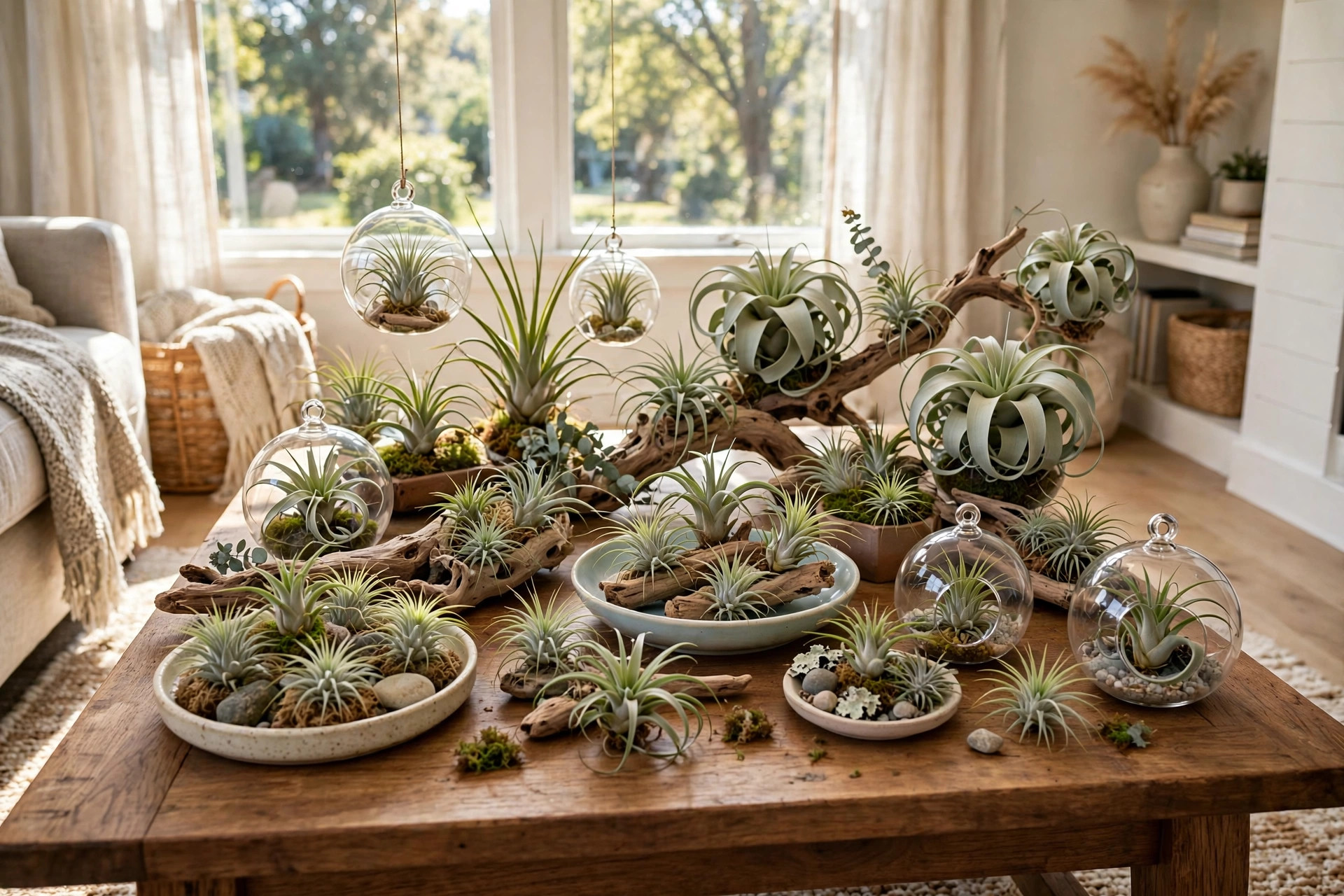
Air plants, known to growers as tillandsia, are a family of plants that need no soil. They pull water and food from the air through tiny scales on their leaves. That single trait made them famous. You can set them in a shell, hang them from wire, or rest them on a piece of driftwood. They ask for light, air, and a short bath each week. When you buy in bulk, you get enough plants to try many spots at once: the kitchen window, the bathroom shelf, the office desk, and a gift box for a friend.
Why Buying Air Plants in Bulk Makes Sense
The first reason is price. A single small air plant at a garden center may cost four to six dollars. A bulk pack of twenty of the same size often costs less than two dollars per plant. Reviews from American buyers repeat the same happy math again and again. For weddings, party favors, office desks, and large displays, bulk packs are the only sane choice.
The second reason is variety. Many bulk packs mix species. You might receive ionantha, xerographica, bulbosa, and capitata in one box. That mix lets you learn which shapes and sizes you like best. Beginners often find that one species thrives on their windowsill while another struggles. A mixed pack teaches that lesson fast, without much money at stake.
The third reason is gifts and craft projects. Air plants sit well in glass globes, wooden boxes, and hanging frames. People who make wedding centerpieces or holiday ornaments buy in bulk because the project needs matching numbers. Reviewers say that bulk packs meant for crafts hold up well when the plants are fresh on arrival.
What to Look for Before You Buy: Air Plants Bulk Reviews Buying Guide Usa
Start with the seller. Read the reviews written by real buyers, and look for words about how the plants looked on the day they arrived. Fresh tillandsia should have firm leaves and good color. Silver-green or blue-green is normal. Brown tips on the oldest leaves are also normal. A plant that is fully brown, soft, or flat as paper is dead or close to it. The best sellers pack plants in paper or loose fill, not sealed plastic, because the plants need air during shipping.
Next, check what the pack actually contains. Some listings say “20 air plants” but the photo shows one large plant and nineteen tiny pups. Read the size chart. Honest sellers list each species and the size range in inches. If the listing hides that detail, move on. A fair pack names the species it mixes or at least promises a named assortment with a count.
Shipping matters more than many buyers expect. Air plants are alive, and a week in a dark hot truck can weaken them. The best bulk reviews mention fast shipping and arrival in cool weather. In winter, some sellers add a heat pack or warn buyers in cold states. Buy early in the week when you can, and open the box the day it arrives.
Types of Bulk Air Plant Packs
Most bulk offers fall into a few clear groups. Single-species packs hold one kind of plant, often ionantha, which is small, cheap, and hardy. These suit party favors and uniform displays. Mixed packs hold several species in a range of sizes. These suit home decorating, where you want different looks in different rooms.
Size packs are sold by plant size rather than species: small, medium, large, or extra large. Large and extra large packs cost more per plant but give instant impact in a bowl or wall frame. Sampler or collector packs hold rare species at a higher price. These are for hobbyists, not beginners.
Some sellers also sell “wholesale” lots of fifty or a hundred plants. The price per plant drops further, but so does the care you can expect. Wholesale lots often arrive with mixed health, and buyers must sort and revive the weak ones. That is fine for experienced growers and resellers, not for a first-time buyer.
Reading Air Plants Bulk Reviews Like a Smart Buyer
Reviews are your best tool, but only if you read them with care. Look for patterns across many reviews, not one angry or glowing note. If ten buyers say the plants arrived green and firm, trust that. If several mention rot or dead plants, trust that too. Watch the dates. A seller with strong reviews from two years ago and weak ones this season may have changed suppliers.
Pay attention to reviews that describe the aftercare advice the seller gave. Good sellers include a care card with the box. That small habit tells you the seller wants the plants to live, not just to sell. Many of the top air plants bulk reviews praise sellers who answer care questions by message after the sale.
Photos in reviews matter more than stars. A four-star review with a clear photo of healthy plants tells you more than a five-star review with no photo. Look for green color, upright leaves, and plants that look full rather than starved. When you are ready to compare bulk air plant packs, sites like Burpee, Park Seed, and Gurney’s give you a sense of how established plant sellers present their stock and care information.
Cost and Price: What Is Fair in the USA
Prices for bulk air plants in the United States follow simple rules. Small plants in packs of twenty usually run between twenty and forty dollars. Medium mixed packs of ten run between thirty and fifty dollars. Large specimen plants, such as a full xerographica, can cost fifteen dollars or more each even in bulk. Shipping adds five to ten dollars to most orders.
Be wary of prices that seem too low. A pack of fifty “large” air plants for twenty dollars will not hold large plants. It will hold tiny ones, or dead ones. Fair sellers price by real size. Also be wary of listings that charge high shipping and then ship slowly. Fast, careful shipping costs money, but it is worth paying.
Watch for seasonal sales. Late winter and early spring bring the best stock, because growers ship their strongest plants before the hot months. Holiday gift season brings many craft-oriented packs at good prices. Summer is the riskiest season for shipping, so buy from sellers with a heat-safe shipping plan if you order in July or August.
How to Choose the Right Pack for Your Home
Think about where the plants will live. A bright east or south window suits most tillandsia. Bathrooms with a window suit them well too, since the steam adds moisture. Offices with no window will need a small grow light or at least bright desk lamp light for part of the day. Match the pack to the spot. Small ionantha packs suit desks and shelves. Larger mixed packs suit window displays and hanging frames.
Think about your skill level. First-time buyers should start with a mixed pack of ten to twenty hardy species. Ionantha, capitata, and stricta forgive mistakes. Wait on the fancy xerographica until you have kept a few small plants alive for six months. Many bulk reviews from beginners say they wish they had started smaller. A modest first pack teaches the watering rhythm without a big loss if a few plants fail.
Think about the number you truly need. Twenty plants sounds small until you place them. Count your spots first. Five on the kitchen shelf, three in the bathroom, four at the office, two for a friend, and a few spares is a full twenty. Buying more than you can place leads to neglected plants on a back shelf.
Care and Upkeep After the Box Arrives
Open the box right away. Take each plant out and look it over. Remove any fully dead leaves, which pull off with a gentle tug. Give the whole group a soak: fill a bowl with room-temperature water, submerge the plants for twenty to thirty minutes, then shake each one gently upside down so water leaves the center. Set them upside down on a towel to dry for a few hours. This first soak wakes them up after the dark trip.
Set a weekly routine. Once a week, soak the plants for twenty to thirty minutes, shake off the water, and let them dry fully. In dry winter homes, mist them once or twice between soaks. Good air flow matters as much as water. A plant that sits wet in a closed glass jar will rot. A plant in an open globe with a wide mouth will thrive. Bright indirect light suits most species. A few hours of gentle morning sun is fine. Clear care guides on The Spruce give the same steady advice: keep it simple, water weekly, and let the plant dry between waterings.
Feeding is optional but helpful. A light orchid or bromeliad fertilizer, mixed at one quarter strength, once a month in the growing season gives stronger growth. Do not use copper-based feeds, since copper harms tillandsia. Guides on sites such as The Old Farmer’s Almanac and Gardening Know How explain gentle feeding for houseplants in plain words.
Watch for the bloom. A mature air plant will bloom once in its life, showing bright pink, red, or purple flowers. After blooming, the mother plant slowly fades but grows small pups at its base. Leave the pups attached until they are one third the size of the mother, then pull them apart gently. One bulk pack can thus become many plants over a few years, which is part of the long-term value buyers mention in their reviews.
Common Problems and How to Fix Them
Rot is the most common killer. It starts at the base and spreads up. The base turns dark and soft, and leaves pull out too easily. Rot comes from water sitting in the center of the plant. Prevent it by shaking plants after soaking and drying them upside down. Once rot reaches the center, the plant is lost. Remove it so the problem does not spread to neighbors.
Brown leaf tips are the second most common complaint. They come from dry air, missed waterings, or water with too much salt. Trim the brown tips with clean scissors, increase the soaking time, and try rain or filtered water if your tap water is hard. Brown tips are ugly but rarely fatal.
Pests are rare but possible. Mealybugs show up as small white cottony spots. Dab them with rubbing alcohol on a cotton swab. Keep a new pack apart from your other houseplants for two weeks, just to be sure no pests came along for the ride. Buyers who run a quick check on arrival almost never face a serious pest problem.
Cold damage shows as dark, water-soaked patches after a cold snap. Air plants dislike frost. If your pack arrives in winter and the box sat on a cold porch, soak and dry the plants gently and wait. Some will recover. Some will not. Order with a heat pack in winter, or wait for spring.
Where to Learn More and Compare Sellers
General garden retailers describe pack sizes and species clearly, and plant specialists go deeper on care. When you compare options, pages from Monrovia, White Flower Farm, and Proven Winners show how serious growers handle plant quality, sizing, and shipping. Their standards give you a yardstick for judging smaller bulk sellers.
Read a mix of new and old reviews. Sellers change growers, and only recent reviews tell you how the current stock arrives. If you are also shopping for other garden goods in bulk, our guides to heirloom vegetable seeds and dahlia bulbs in bulk use the same plain method for judging sellers and stock.
FAQ
How many air plants should a beginner buy in bulk? Ten to twenty plants is a good start. That number fills several rooms, costs little, and lets you learn the watering routine. If a few plants fail, you still have plenty left. Larger packs of fifty or more suit gifts, weddings, and craft projects, not first-time learning.
What is the best species for a first bulk pack? Tillandsia ionantha is the safest pick. It is small, cheap, hardy, and forgiving of missed waterings. Tillandsia capitata and stricta are also strong choices. Save the large xerographica and rare collector species until you have kept simple plants alive for a season.
How long do bulk air plants take to arrive and recover? Most American sellers ship in two to five days. Plants may look dull or curled on arrival after days in a dark box. A good soak on day one and proper light usually bring them back within a week. If a plant shows no green at all after a soak and a week of light, contact the seller about a replacement.
Do air plants from bulk packs bloom? Yes, if they are mature. Blooming is a sign of a healthy, well-grown plant. After the bloom, the plant makes pups. Many buyers say the pups are the best part of a bulk pack, because one order keeps growing into more plants for years.
Are bulk air plants safe for homes with pets? Air plants are widely listed as non-toxic to cats and dogs, which is one reason pet owners love them. Still, keep plants out of reach of chewing pets, since no plant should be eaten in quantity. When choosing plants for a pet-friendly home, pair this guide with our lavender seed packet guide for more pet-safe garden ideas.
Can I return a bulk pack if the plants arrive dead? Most good sellers offer replacements or refunds for dead-on-arrival plants, often with a photo as proof. Read the seller’s policy before you buy. The best air plants bulk reviews mention fast, fair replacements, which is a strong sign of a seller worth trusting again.
A Short Final Word
Buying air plants in bulk is one of the cheapest ways to bring living green into an American home. The formula is simple: pick a trusted seller, read the recent reviews with photos, choose a pack size that fits your rooms and your skill, and learn the weekly soak. Do that, and a single box of twenty small plants can decorate your home, stock your office, supply a craft project, and multiply into pups for years. This air plants bulk reviews buying guide usa summary ends with the same advice found in review after review: buy fresh, water weekly, let them dry, and give them bright light and moving air.
References
Burpee. (n.d.). Seeds, plants, and gardening supplies. https://www.burpee.com Gardening Know How. (n.d.). Gardening guides and plant care. https://www.gardeningknowhow.com Gurney’s Seed & Nursery Co. (n.d.). Seeds, plants, and garden supplies. https://www.gurneys.com Monrovia. (n.d.). Plants for home gardens. https://www.monrovia.com Park Seed. (n.d.). Seeds, plants, and gardening supplies. https://www.parkseed.com Proven Winners. (n.d.). Plants and gardening inspiration. https://www.provenwinners.com The Old Farmer’s Almanac. (n.d.). Gardening calendars and advice. https://www.almanac.com The Spruce. (n.d.). Home and garden advice. https://www.thespruce.com White Flower Farm. (n.d.). Plants, bulbs, and garden supplies. https://www.whiteflowerfarm.com
Was this guide helpful?

About David Wilson
The My Garden US editorial team writes practical, in-depth home and garden guides for American homeowners — tested advice, no fluff.
You May Also Like
Snake Plants Indoor Deals Near Me: A Simple Buying Guide
May 23, 2026 0 views
Sunflower Seed Packs California Homes USA: A Plain Guide to Growing Tall, Happy Blooms
March 23, 2026 0 views
Wildflower Seed Mixes for Florida Homes: A Plain Guide for American Gardeners
January 21, 2026 0 views