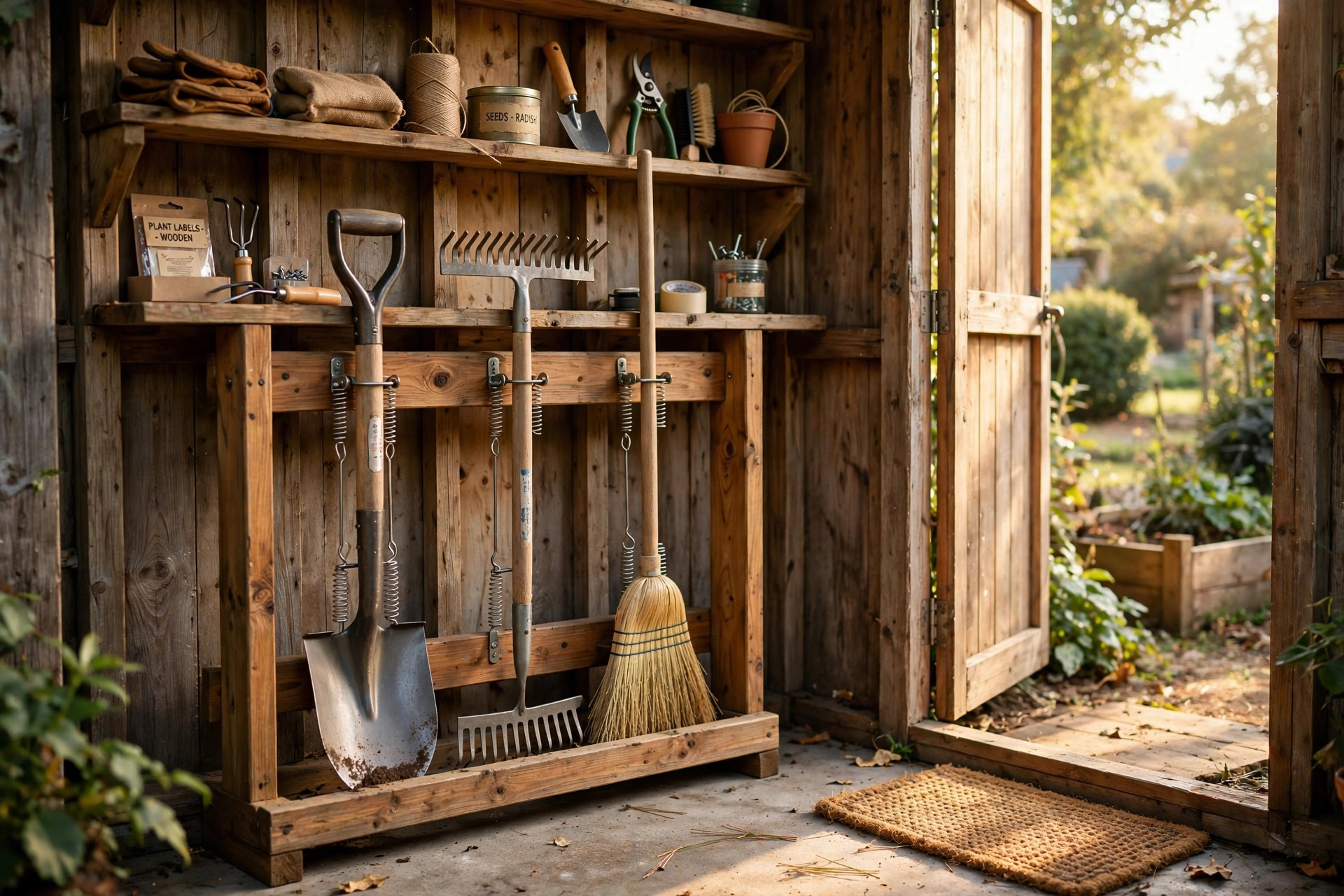

A good storage rack can change the way a garden shed looks and works. This guide gathers the best garden tool storage rack reviews from buyers and puts them into plain terms. It covers what owners like, what they dislike, and what you should check before you spend your money.
Why a Storage Rack Matters
Every garden has tools. Rakes, shovels, hoes, brooms, and trimmers pile up fast. Left loose, they fall over, block the door, and rust on the floor. Many reviews tell the same story. The buyer was tired of tripping over handles and wanted order.
A rack holds long handles upright. That simple change does three things. First, it frees floor space. Second, it keeps blades and edges off the ground, where damp soil starts rust. Third, it makes each tool easy to find. You walk in, take the rake, and walk out. No digging through a pile.
Reviewers also note a safety gain. A loose shovel can slide and hit a foot. A rake left flat can catch an ankle. Standing tools in a rack keeps them still. Families with children mention this point often.
What to Look for When You Choose: Best Garden Tool Storage Rack Reviews
Reviews of the best garden tool storage racks point to the same set of traits. Keep these in mind as you shop.
Size and Capacity
Count your tools first. Most racks hold between five and fifteen long-handled tools. Large racks may hold thirty or more items, with hooks for small hand tools. Measure your wall or corner space before you order. A rack that is too wide will eat half a small shed.
Material
Wood racks are common and cheap. They look fine but can warp in damp air. Metal racks, often steel with a powder coat, resist rust and hold more weight. Plastic racks are light and cheap but can crack in cold weather. Many of the highest rated reviews go to metal frames with plastic grips.
Grip Style
Older racks used round holes or slots. Newer racks use spring clips or rubber grips. Clips hold handles of many sizes and let you pull one tool out without moving the rest. Buyers say clips are the single best feature to look for. They keep handles from slipping sideways.
Stability
A tall rack full of tools is top heavy. Floor-standing models need a wide base or wall screws. Wall-mounted models must be fixed into studs, not just drywall. Reviews with one star often tell of a rack that tipped over on the first week. Check the weight limit and the mounting hardware.
Indoor or Outdoor Use
If the rack will sit in a shed, most materials work. If it will sit in the open, choose coated metal or weatherproof plastic. Wood will rot in rain within a season or two. For more ideas on shed storage, see our guide on /best-garden-scissors-for-pruning-roses/ hand tools kept near the rack for quick jobs.
Types of Garden Tool Storage Racks
Shoppers will meet four main types. Reviews rank them in different ways for different needs.
Wall-Mounted Racks
These screw to a wall or shed side. They hold tools flat against the wall and save the most floor space. Buyers like them for small sheds and garages. The weak point is the wall itself. Brick and wood studs hold well. Thin shed panels may need backing boards.
Freestanding Floor Racks
These stand on their own like a small tower. They move when you want them to move. They work in sheds with no good wall space. The best garden tool storage rack reviews praise wide bases and anti-tip designs. Weak models wobble, so read the fine print on base width.
Corner Racks
Corner racks use space that often goes to waste. They fan tools out in a quarter circle. Buyers with small sheds rate them well. They hold fewer tools than wall units, usually six to ten.
Combination Organizers
These mix long-handle slots with hooks, shelves, and small bins. They store hand tools, gloves, and twine next to the big tools. Reviews call them the best garden tool organizer style for people who want one station for everything. They cost more and take more space, but owners rarely regret the extra room.
Cost and Price
Prices vary by type and size. Simple plastic wall racks cost about ten to twenty dollars. Mid-range metal racks with clips cost about thirty to sixty dollars. Large combination organizers cost about eighty to one hundred fifty dollars. Premium wood and metal units can reach two hundred dollars.
Reviews suggest the sweet spot sits near forty to seventy dollars. Below that, clips break and frames bend. Above that, you pay for looks more than strength. Watch shipping costs too. Large racks ship in big boxes, and freight fees can add twenty dollars or more.
Used racks appear at yard sales and online markets. A solid metal rack can last for years, so a used one may be a fair deal. Check that all clips and screws are present before you pay.
How Buyers Rate Common Brands
The best garden tool storage rack reviews come from hardware sites and home guides. Buyers at Home Depot and Lowe’s leave long notes on fit and strength. Many say the same thing. A rack that looks fine online may feel flimsy in the hand.
Review sites such as Consumer Reports test racks for load and wear. Home guides such as The Spruce and Bob Vila compare models side by side. Garden shops such as Gardener’s Supply carry racks made for garden sheds, and buyers there focus on daily garden use rather than garage use.
Tool makers also sell storage. Fiskars and Corona Tools offer racks sized to their own long-handled lines. Owners of those tools often find the fit perfect. General garden guides such as Burpee also discuss storage as part of shed planning.
Care and Upkeep
A rack needs little care, but a small habit keeps it sound for years. Wipe wet handles before you store them. Water that drips into clips can rust steel or rot wood. Once a year, tighten screws and bolts. They loosen as the wood of the shed moves with the seasons.
Check rubber grips for cracks. Sunlight breaks rubber down over time. If a clip fails, most makers sell spare parts. Oil the moving parts of spring clips once a year with a drop of household oil.
If you store tools in a damp shed, raise the rack base off the floor with small blocks. This keeps the bottom edge out of standing water. For step-by-step shed tips, Family Handyman publishes clear plans that many readers follow.
Safety
A rack is a safety tool in itself, but it must be set up right. Always anchor tall racks to a wall. A full rack can weigh a great deal, and a child pulling on it can bring it down. Mount wall racks into studs or solid wood. Do not trust drywall anchors with heavy tools.
Keep sharp blades at the back. Place rakes and forks with teeth facing the wall. Store shears and loppers closed or in sheaths. Keep the rack away from the door swing so no one walks into handle ends.
If you spray pesticides, store the sprayer away from the rack. See our notes on /best-garden-sprayer-for-pesticides-reviews/ for safe sprayer handling. Chemists and safety guides agree that chemicals and hand tools should not share the same small shelf.
FAQ
How many tools can a standard rack hold?
Most wall and floor racks hold between five and fifteen long-handled tools. Combination units with hooks hold more, often twenty to thirty items when you count hand tools and accessories. Count your tools and add two slots for future buys.
Do storage racks work in a damp shed?
Yes, if you choose the right material. Coated steel and weatherproof plastic do well in damp air. Raw wood will warp and rot. Wipe tools dry before storage and raise the rack base off the floor.
Are wall-mounted or freestanding racks better?
It depends on your space. Wall racks save floor space and feel solid when screwed into studs. Freestanding racks move easily and need no drilling. Small sheds favor wall racks. Large sheds with open floor favor freestanding towers.
What is the best garden tool storage rack for small sheds?
Corner racks and short wall racks fit small sheds best. They use dead space and keep the center floor clear. Reviews favor models with clips rather than slots, since clips grip thin and thick handles alike.
Can I build my own rack?
Yes. Many plans use scrap lumber, a few screws, and rubber straps. Homemade racks cost little and fit odd spaces. They rarely grip as well as store-bought clips, and they need paint or sealant for damp sheds.
Can I use a storage rack outdoors in winter?
Yes, but choose the material with care. Powder-coated steel and heavy plastic stand up to cold and snow. Wood will soak up melt water and may split when it freezes. Many buyers bring clip parts indoors for the winter, since rubber grips crack in deep cold. Cover the rack with a tarp if it stands in the open.
How much should I spend?
For most buyers, forty to seventy dollars buys a solid rack that lasts. Cheaper racks work for light use but bend under full loads. Spending more than one hundred fifty dollars buys looks and extra bins more than added strength.
Common Mistakes Buyers Make
Reviews of the best garden tool storage racks reveal a set of errors that come up again and again. The first is buying too small. Shoppers count only the tools they own today. Then they buy a new trimmer or an extra rake and run out of slots. Buyers advise adding at least two empty slots for future tools.
The second mistake is trusting weak mounting. A wall rack rated for heavy loads still falls if it is screwed only into thin panel board. Many one-star reviews describe this exact failure. Always fasten into studs or add a wooden backing board behind the panel.
The third mistake is ignoring handle size. Some racks grip only standard round handles. Tools with D-shaped grips or padded handles may not fit the clips. Measure the thickest handle you own and compare it to the clip range before you order.
The fourth mistake is placing the rack where it blocks light or movement. A tall tower next to the shed door can catch sleeves and cast shadows over the workbench. Map your shed layout on paper first. Leave clear paths to the door and to the mower.
The fifth mistake is storing dirty tools. Soil left on blades holds moisture against the metal. This rusts the tool and can stain the rack. A quick wipe with a rag before storage adds years to both tool and rack life.
Avoid these five errors and the rack will serve you well from the first day.
A Short Final Word
The best garden tool storage rack reviews agree on the basics. Choose coated metal with spring clips. Anchor it well. Size it for your tools, not your dreams. Do those three things and your shed will stay tidy for years.
If you are setting up a growing station too, our piece on /seed-starting-under-lights-schedule/ sits well next to this guide. A tidy shed and a good light schedule make spring work a pleasure.
References
Bob Vila. (n.d.). Home improvement advice. https://www.bobvila.com Burpee. (n.d.). Seeds, plants, and gardening supplies. https://www.burpee.com Consumer Reports. (n.d.). Product reviews and ratings. https://www.consumerreports.org Corona Tools. (n.d.). Garden and landscape tools. https://www.corona-tools.com Family Handyman. (n.d.). DIY home repair and maintenance. https://www.familyhandyman.com Fiskars. (n.d.). Garden and cutting tools. https://www.fiskars.com Gardener’s Supply Company. (n.d.). Gardening tools and supplies. https://www.gardeners.com Lowe’s. (n.d.). Home improvement products. https://www.lowes.com The Home Depot. (n.d.). Home improvement products. https://www.homedepot.com The Spruce. (n.d.). Home and garden advice. https://www.thespruce.com
Was this guide helpful?

About Robert Taylor
The My Garden US editorial team writes practical, in-depth home and garden guides for American homeowners — tested advice, no fluff.
You May Also Like

Drip Irrigation Pressure Regulator Guide
February 3, 2026 0 views
Best Garden Cart for Heavy Loads: How to Choose the Right One
August 27, 2026 0 views
The Best Garden Trowel Set for Beginners: How to Choose Well
March 24, 2026 0 views