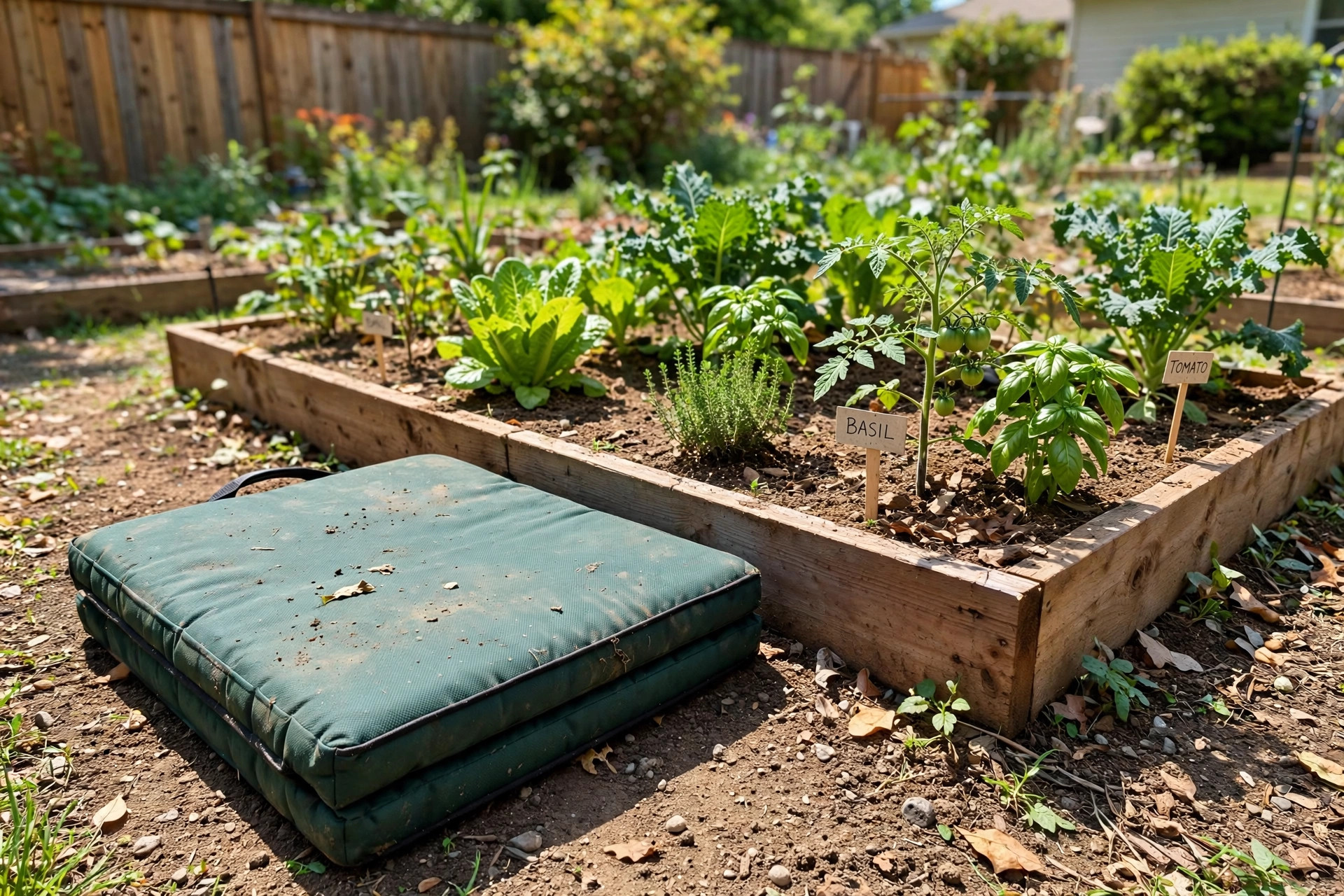

Gardening should bring joy, not pain. Yet many gardeners dread the ache that comes with kneeling. The best garden kneeler for bad knees turns this common complaint into a solved problem. A good kneeler spreads your weight over a soft pad. It keeps hard soil and gravel from pressing into the joint. It also gives you handles to push up from, which matters most when your knees already hurt.
Older gardeners and anyone with arthritis, bursitis, or old sports injuries know the feeling well. You kneel to pull weeds. After ten minutes your knees burn. You dread standing up. A proper kneeler removes that fear. It is a simple tool, but it changes how long you can work and how much you enjoy the work.
Why a Good Kneeler Matters
Knees carry the full weight of the upper body when you kneel. On bare ground, that weight presses onto a small area of the kneecap. The firm advice from garden retailers echoes the same point: padding matters. With thin padding, pressure builds fast. Blood flow slows. Pain sets in within minutes.
A thick kneeler changes the math. Two or three inches of firm foam spread the load across the shin and thigh. Less pressure means less pain. Gardeners who use one often report they can weed or plant twice as long as before. That is not a small gain. For someone who tends a large bed, it is the difference between finishing the job and giving up.
There is also a safety angle. When knees hurt, people fall. Getting up from a low kneel without support is risky for older gardeners. The best garden kneeler for bad knees designs add side rails or handles. These give your hands something to grip as you rise. A simple rail can prevent a bad fall.
What to Look For When You Choose: Best Garden Kneeler for Bad Knees
Shopping for the best garden kneeler for bad knees is easier when you know the key traits. Each one matters more when joints are sore.
Pad Thickness and Foam Quality
Look for at least two inches of dense foam. Cheap thin pads flatten in a month. Dense foam springs back after use. Some kneelers use layered foam with a hard core for support and a soft top for comfort. These last longer and feel better. A memory foam garden kneeling pad style design holds shape well but may cost more.
Handles and Support Rails
This is the most important feature for bad knees. Side handles let you lower yourself down slowly. They also let you push up without twisting the joint. Look for rails that are wide enough to grip and rated for your weight. Metal frames hold more weight than plastic ones.
Size and Weight
A wide pad gives your knees room to shift. A pad that is too narrow forces you into one fixed pose. Most good kneelers measure about 20 by 10 inches of pad space. Weight matters too. You will carry it around the yard. Anything under five pounds is easy to manage. Folding models collapse flat for storage in the shed.
Water Resistance
Garden soil is damp. Morning dew soaks bare foam. A water-resistant cover keeps the pad dry and wipes clean. Look for sealed seams or a vinyl-type shell. This also stops mold from growing inside the foam.
Stability on Uneven Ground
Some kneelers rock on bumpy soil. Wide feet or a broad flat base sit steady. If your garden beds are on a slope, stability matters even more. A folding garden kneeler bench style frame doubles as a low seat, which is handy on uneven plots.
Types of Garden Kneelers
There are four main types. Each suits a different gardener.
Simple Flat Pads
These are thick foam pads with a strap handle. They are cheap, light, and easy to toss in a cart. They suit gardeners with mild knee soreness. They offer no help getting up, so they are less ideal for severe pain. Still, for short weeding sessions they do the job.
Kneeler Benches with Handles
This is the type most often named as the best garden kneeler for bad knees. A low bench frame holds a padded top. You kneel on the pad and grip the side rails to rise. Flip it over and it becomes a low seat for tasks like pruning shrubs. Many models fold flat. Gardeners with arthritis swear by them. Retailers such as The Home Depot carry several models, and tool guides at Family Handyman explain the trade-offs in detail.
Rolling Garden Seats
These are low stools on wheels with a padded seat and sometimes a tool tray under it. You sit rather than kneel. They roll along rows, which saves your knees entirely. They work best on flat ground or paths. On soft tilled soil, small wheels can bog down. For flat vegetable rows they are excellent. Readers weighing this option may also want to look at the /best-garden-stool-for-elderly-gardeners/ guide for related comfort picks.
Wheeled Scooters and Carts
Some gardeners prefer a low rolling cart they can straddle. These suit long rows of crops. They are bulkier and harder to store. They cost more than simple pads. For large gardens they can be worth the money.
Cost and Price
Prices vary widely. A basic flat foam pad costs under twenty dollars. A mid-range kneeler bench with handles runs from thirty to sixty dollars. Heavy-duty models with steel frames and thick pads can reach eighty dollars or more. Reviews at Consumer Reports note that price often tracks durability more than comfort.
Do not buy on price alone. A thin pad that flattens in weeks is money wasted. A mid-priced kneeler bench from a known maker often lasts years. Check the weight rating. A frame rated for 250 pounds will serve most adults well. Read the warranty. A one-year warranty on a sixty-dollar tool is a fair deal.
For bad knees, spend a little more. The handles and thick foam are worth it. The cost of a good kneeler is less than one visit to a clinic. Think of it as joint insurance.
Care and Upkeep
A kneeler needs little care, but a few habits extend its life.
Wipe the pad after each use. Soil holds moisture. A quick wipe with a damp cloth keeps the cover clean. Once a month, wash it with mild soap and water. Let it air dry in the sun. Sunlight kills most mold spores.
Store it out of the weather. Foam breaks down in long sun exposure. Rain soaks unsealed pads. A shed hook or a garage shelf is fine. Folding models hang flat against a wall.
Check the frame joints each season. Metal frames can loosen. Tighten bolts with a wrench. Plastic frames can crack if dropped on concrete. Inspect before spring planting begins.
Keep the handles clean and dry. Wet grips slip. If the grip foam wears smooth, wrap it with tape for extra hold. Guides on Gardener’s Supply offer more seasonal tool care tips for kneelers and other gear.
Safety Tips
Safety starts before you kneel. Clear stones and sticks from your work spot. A sharp stone under a thin spot in the pad can still hurt.
Set the kneeler on level ground when you can. On a slope, place it across the slope, not pointing downhill. This keeps it from sliding as you shift weight.
Use the handles every time you get up. Do not twist while rising. Plant both feet, grip the rails, and push straight up. If you feel dizzy when standing, pause with your hands on the rails until it passes.
Do not leave the kneeler where others walk. It is a trip hazard on a path. Carry it with you or set it inside the bed you are working. A bright-colored pad is easier to spot and harder to trip over. Seed suppliers like Burpee remind gardeners to keep work areas tidy, and the same habit applies to tools.
Wear knee sleeves under long pants if your knees are very sore. The pad handles the hard surface. The sleeve keeps the joint warm. Together they cut pain more than either alone.
Matching the Kneeler to Your Garden
Think about how you garden before you buy.
If you weed long rows of vegetables, a kneeler bench with handles is ideal. You move down the row, kneel, weed, and rise with help each time. A garden kneeler with handles in this style is the top pick for bad knees.
If you plant flowers in raised beds, the bed height may let you sit on the edge instead. A simple pad still helps for the low corners. Raised beds also pair well with /garden-tool-set-for-beginners-reviews/ picks that keep every tool within reach.
If you prune shrubs and bushes, a flipping bench that works as a seat is best. You sit at bush height and work without kneeling at all. Gloves matter here too, so see the /best-garden-gloves-for-thorn-protection/ guide for hand protection.
If your whole garden is containers on a patio, you may not need a kneeler at all. A low stool is enough. Save the kneeler for the few in-ground beds.
Frequently Asked Questions
How thick should a garden kneeler be for bad knees?
Two inches of dense foam is the minimum. Three inches is better for very sore joints. Thin pads under one inch flatten fast and give little relief. When testing in a store, press hard with your thumbs. Good foam springs back at once.
Are kneeler benches better than flat pads?
For bad knees, yes. The bench gives you rails to push up from. That help matters more than the padding itself for many people. Flat pads are fine for mild soreness but offer no standing aid.
Can a garden kneeler help with arthritis?
It eases the symptoms but does not treat the disease. A kneeler cuts pressure on the joint and reduces the strain of getting up. Many gardeners with arthritis say it lets them garden again. Talk to your doctor about the best overall plan for your joints.
How much weight can a kneeler bench hold?
Most hold 225 to 300 pounds. Check the rating before you buy. Metal frames hold more than plastic. If you are near the limit, choose the heavier-rated model. The frame is what keeps you safe when you lean on the rails.
Will the foam go flat over time?
All foam wears, but dense foam lasts years. Cheap soft foam can flatten in one season. Store the kneeler out of the sun and off damp ground. Flip the pad now and then so wear spreads evenly. Replace the pad when it stays dented after you press it.
Is a rolling seat better for bad knees than a kneeler?
It depends on the garden. On flat paths and rows, a rolling seat lets you avoid kneeling at all. On soft soil or slopes, wheels sink and a kneeler bench works better. Many gardeners own both and choose by the task.
A Short Final Word
The best garden kneeler for bad knees is the one that gets you back into the garden. Thick foam, strong handles, and a stable frame are the three things to demand. Do not suffer through another season of sore knees. Pick a kneeler that fits your body and your beds. Then plant, weed, and harvest in comfort. Your knees will thank you for years to come.
References
Bob Vila. (n.d.). Home improvement advice. https://www.bobvila.com Burpee. (n.d.). Seeds, plants, and gardening supplies. https://www.burpee.com Consumer Reports. (n.d.). Product reviews and ratings. https://www.consumerreports.org Corona Tools. (n.d.). Garden and landscape tools. https://www.corona-tools.com Family Handyman. (n.d.). DIY home repair and maintenance. https://www.familyhandyman.com Fiskars. (n.d.). Garden and cutting tools. https://www.fiskars.com Gardener’s Supply Company. (n.d.). Gardening tools and supplies. https://www.gardeners.com The Home Depot. (n.d.). Home improvement products. https://www.homedepot.com The Spruce. (n.d.). Home and garden advice. https://www.thespruce.com
Was this guide helpful?

About James Carter
The My Garden US editorial team writes practical, in-depth home and garden guides for American homeowners — tested advice, no fluff.
You May Also Like
Seed Packet Organizer for Gardeners: A Simple Way to Keep Every Packet in Order
May 26, 2026 0 views
The Best Garden Wagon for Hauling Soil: What to Buy and Why
August 29, 2026 0 views
How to Prune Apple Trees in Winter
February 24, 2026 0 views