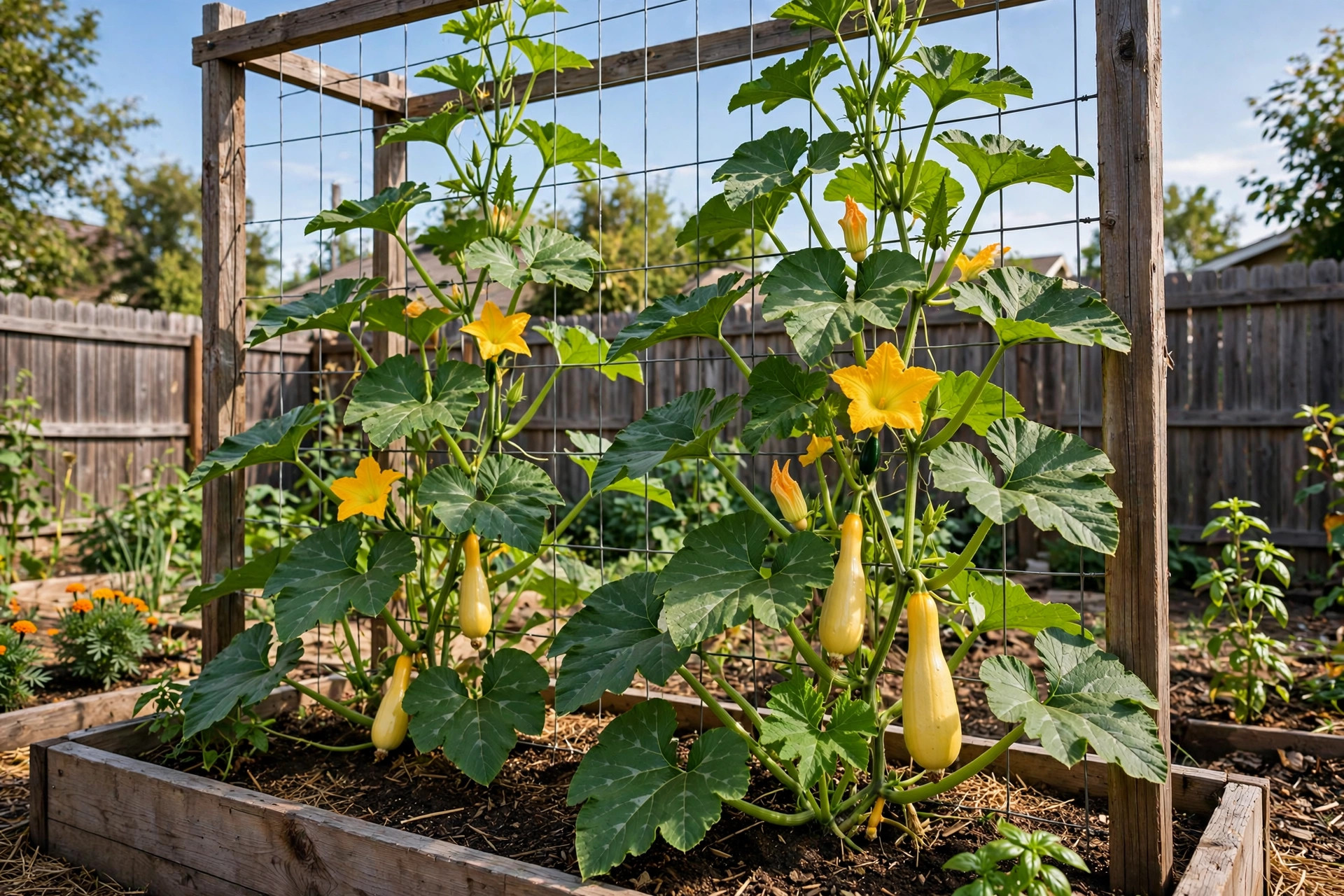

Squash is a generous plant. A single hill of summer squash can feed a family for weeks, and a few winter squash vines can fill a pantry shelf by fall. Yet squash has one habit that tests many gardeners: it sprawls. A zucchini plant can claim four square feet of bed, and a butternut vine may wander ten feet across a yard. For gardeners with small plots, learning how to grow squash vertically on a trellis is a way to keep the harvest without giving up half the garden. This guide explains the method step by step, in plain terms, so any home gardener can try it this season.
Why Grow Squash Vertically
Squash grown flat on the ground works, but it asks for a lot of space. When vines lie on soil, the fruit rests in damp earth, where rot and insects find it fast. Leaves crowd together, air cannot move, and mildew settles in after rain. Harvesting means bending low and pushing leaves aside to find each fruit.
A trellis changes all of this. When vines climb upward, the leaves spread out and catch more light. Air moves freely around the stems, which cuts down on mildew and mold. Fruit hangs in the open air instead of sitting in wet soil, so it stays cleaner and suffers less damage from slugs and ground insects. Picking is easier too, since most of the fruit hangs at a comfortable height.
A wall of green vines with bright yellow blossoms also turns a small garden into something worth looking at. Gardeners who use garden trellis ideas for small beds often report that vertical planting doubles the useful space of a raised bed.
What to Look for in a Trellis: How to Grow Squash Vertically Trellis
Not every trellis suits squash. The plant is heavy. A full vine with fruit can weigh far more than a tomato vine or a bean vine. The key quality of a good squash trellis is strength.
First, consider height. Summer squash such as zucchini climbs a shorter distance, so a trellis four to five feet tall is enough. Winter squash such as butternut, acorn, or Hubbard sends out long vines and needs a trellis six to eight feet tall. Choose the height for the variety you plan to grow.
Second, look at the material. Wooden lattice, steel cattle panels, metal mesh, and sturdy nylon netting all work when built on a solid frame. Thin decorative trellises made of light bamboo or flimsy plastic often collapse under a loaded squash vine. If the trellis flexes when you lean on it, it will not hold fruit in August.
Third, check the openings. Vines need something to grip or weave through. Openings of four to six inches are ideal. Wire grid panels, often called cattle panels, are a favorite for this reason: they cost little and last for years.
Finally, think about anchoring. The frame must stand firm in wind. Posts driven a foot or more into the ground, or a frame tied to a raised bed, hold up well. A freestanding trellis that wobbles in June will be on the ground by September.
Types of Trellises That Work for Squash
There are several shapes that gardeners use. Each has its own strengths.
The flat panel is the simplest. A sheet of wire mesh or wooden lattice is held upright by two or more posts, and the vine climbs straight up one face. This design fits well along the north edge of a bed, where it will not shade other crops.
The A-frame uses two panels joined at the top like a tent. Vines climb both sides. The shaded space under the frame stays cool and makes a fine home for lettuce or herbs. This design handles heavy winter squash well because the load is shared across two faces.
The arch turns a walkway into a tunnel of vines. Two panels curve over a path, and fruit hangs down inside where it is easy to pick. An arch needs the strongest construction of the three, since long winter squash vines can cover the whole span.
Some gardeners build a lean-to, one panel slanted between a fence and the ground.
Best Squash Varieties for Vertical Growing
Not all squash vines climb with the same eagerness. Choosing the right variety makes the work much easier.
For beginners, summer squash such as zucchini, yellow crookneck, and pattypan are the simplest. They grow in a bush form with short vines, so they need only light support and simple tying. Tromboncino, an Italian summer squash, climbs eagerly and makes an excellent vertical crop.
When buying seed, read the packet. Look for words such as vine, trailing, or climbing. Compact or bush varieties need less support. Seed houses such as Burpee and the seed collections at Gardener’s Supply Company describe the growth habit of each variety clearly.
Planting and Training Step by Step
Start with the trellis. Build or set it up before the plants go in. Driving posts into soil around young roots later will damage them.
Prepare the soil at the base of the trellis. Squash is a hungry feeder. Work compost or aged manure into the top six inches of soil.
Plant when the soil is warm. Squash seed needs soil above sixty degrees to sprout well. In most regions this means planting two weeks after the last expected frost. Sow seeds one inch deep, two seeds per spot, and thin to the strongest seedling. Space planting spots eight to twelve inches apart along the trellis.
Water gently and often while seeds sprout. Once seedlings stand three inches tall, begin training. This is the heart of learning how to grow squash vertically on a trellis.
At first, the vine will not know where to go. Guide the main stem to the trellis and tie it loosely with soft cloth strips or garden twine. Never use wire, which cuts into growing stems. Tie every six to eight inches as the vine lengthens. Check the ties each week, because stems thicken fast and a tight tie will strangle the vine.
Side shoots will appear. With summer squash, let them grow; they stay short. With winter squash, keep one or two main vines and pinch back the extra shoots so the plant puts its strength into fruit. Weave the vines through the mesh openings where you can, and tie where you cannot.
When young fruit forms, watch its weight. Fruit under two pounds usually hangs fine on its own stem. Larger fruit needs a sling. A piece of old pantyhose, a cloth bag, or a square of netting tied to the trellis holds the fruit and takes the strain off the stem. This simple step saves many a butternut from snapping its stem before harvest.
Water and Feeding
Squash drinks deeply. Water at the base of the plant, not from above, and give the soil a good soaking two or three times a week in hot weather. Mulch with straw or shredded leaves to hold moisture and keep the soil cool.
Feed the plant through the season. A side dressing of compost every three to four weeks keeps vines vigorous. Pale leaves and slow growth are signs the plant wants more food.
Tools for this work need not be fancy. A sharp pruning shear trims old leaves cleanly, and a simple hand trowel from a set like those at Fiskars handles planting holes. Home stores such as The Home Depot and Lowe’s carry the twine, stakes, and mesh panels used for trellis frames.
Cost and Price
A squash trellis can cost very little or a fair sum, depending on the design.
The cheapest option is a homemade panel trellis. A sixteen-foot cattle panel costs between twenty-five and forty dollars at farm supply stores, and two metal T-posts add about ten dollars more. Cut the panel to size with bolt cutters and the total stays under sixty dollars. Such a trellis lasts a decade.
A wooden A-frame built from two-by-twos and lattice costs roughly forty to eighty dollars in lumber, depending on local prices. It looks better in a visible garden but needs new paint or stain every few years.
Store-bought decorative trellises run from thirty to well over one hundred dollars. Most are too light for squash, so read the weight rating before buying. A trellis rated for heavy vines, sold at garden centers and reviewed in places like The Spruce and Consumer Reports, is worth the price only if it truly holds the load.
Compared with the price of organic squash at a market, a single trellis often pays for itself in one season. Guides at Bob Vila and Family Handyman offer plans for building sturdy frames at low cost.
Care and Upkeep Through the Season
A vertical squash planting asks for a weekly visit. Walk the row once a week and look at every vine.
Check ties first. Loosen any that have grown tight and replace broken ones. Retie vines that have slipped.
Look under the leaves for insects. Squash bugs and cucumber beetles are the two common enemies. Handpicking bugs into a bucket of soapy water controls small numbers. Yellow sticky traps catch beetles. Row covers laid over young plants keep insects off until flowers open, though the covers must come off so bees can reach the blossoms.
Watch for powdery mildew, the white dust that coats leaves in late summer. Good air flow from vertical growing slows it down. At the first sign, remove the worst leaves and thin crowded stems. Watering at the base rather than overhead keeps leaves dry and helps prevent it.
Prune with care. Remove leaves that touch the soil, leaves that are yellow or spotted, and any stem that is clearly dying. Keep the pruning light; the plant needs its leaves to feed the fruit.
At season’s end, pull the vines from the trellis and compost the healthy ones. Burn or bag any vine with heavy mildew so the disease does not rest in the compost. Store the trellis frame dry. A garden kneeler with handles makes the low work of clearing the bed base far easier on knees and back.
Safety in the Garden
Squash gardening is gentle work, but a few cautions apply.
Wear gloves when handling vines. Squash stems carry tiny stiff hairs that scratch skin and raise a rash on some people.
Lift with care. A full watering can and a bag of compost are heavier than they look. Bend the knees, not the back.
Keep tools clean and stored. A rake left tines-up on a path is an old and honest danger. Hang tools on a wall rack or stand them in a barrel when not in use. A garage tool organizer keeps sharp tools off the floor and out of the way.
Watch the sun. Trellis work often happens in the heat of the afternoon. Wear a hat, drink water, and rest in the shade. Heat strikes faster than most gardeners expect.
If you use any spray, even an organic one, read the label fully and follow it. Keep sprays away from children, pets, and ponds.
Frequently Asked Questions
Can all squash grow on a trellis? Almost all of them can, with the right frame. Bush summer squash needs only light support. Climbing winter squash needs a tall, strong trellis and fruit slings. Only the giant varieties, such as prize pumpkins and full-size Hubbard, are too heavy for any trellis.
How tall should a squash trellis be? Four to five feet suits summer squash. Six to eight feet suits winter squash with long vines. Taller is fine if the frame is well anchored, but a very tall trellis makes picking the top fruit difficult.
Will the fruit fall off and break? Small fruit holds on its own stem without trouble. Fruit over two pounds should rest in a sling tied to the trellis. The sling carries the weight so the stem never has to. Check slings weekly and adjust as fruit grows.
Do I need to hand-pollinate? Usually not. Bees do the work if flowers are open to them. If you grow under row covers, remove the covers when flowers appear. In a poor bee year, you can move pollen from a male flower to a female flower with a small paintbrush in the morning.
When is squash ready to pick? Summer squash tastes best small, at six to eight inches long. Pick often; every picked fruit tells the plant to make more. Winter squash is ready when the skin is hard enough that a thumbnail cannot dent it and the stem turns dry and brown. Cut winter squash with a short stem attached and cure it in a warm spot for a week before storing.
Can I grow squash vertically in containers? Yes, with a compact variety. Use a container of at least five gallons, a small sturdy trellis fixed to the pot, and water daily in hot weather. Feed every two weeks since container soil runs out of food quickly.
A Final Word
Learning how to grow squash vertically on a trellis takes one season of practice. The first year, some ties will slip and some vines will wander. By the second year, the motions feel natural: plant at the base, tie the stem, sling the heavy fruit, and pick at a comfortable height. The reward is a full harvest from a small piece of ground, cleaner fruit, healthier plants, and a garden that looks as good as it produces.
References
Bob Vila. (n.d.). Home improvement advice. https://www.bobvila.com Burpee. (n.d.). Seeds, plants, and gardening supplies. https://www.burpee.com Consumer Reports. (n.d.). Product reviews and ratings. https://www.consumerreports.org Corona Tools. (n.d.). Garden and landscape tools. https://www.corona-tools.com Family Handyman. (n.d.). DIY home repair and maintenance. https://www.familyhandyman.com Fiskars. (n.d.). Garden and cutting tools. https://www.fiskars.com Gardener’s Supply Company. (n.d.). Gardening tools and supplies. https://www.gardeners.com Lowe’s. (n.d.). Home improvement products. https://www.lowes.com The Home Depot. (n.d.). Home improvement products. https://www.homedepot.com The Spruce. (n.d.). Home and garden advice. https://www.thespruce.com
Was this guide helpful?

About David Wilson
The My Garden US editorial team writes practical, in-depth home and garden guides for American homeowners — tested advice, no fluff.
You May Also Like
The Best Garden Kneeler Pad for Concrete, and How to Choose One
February 14, 2026 0 views
Cold Hardy Plants for Zone Five: A Guide to a Strong Garden
April 28, 2026 0 views
Best Potting Soil for Container Gardens: What to Know Before You Buy
February 1, 2026 0 views