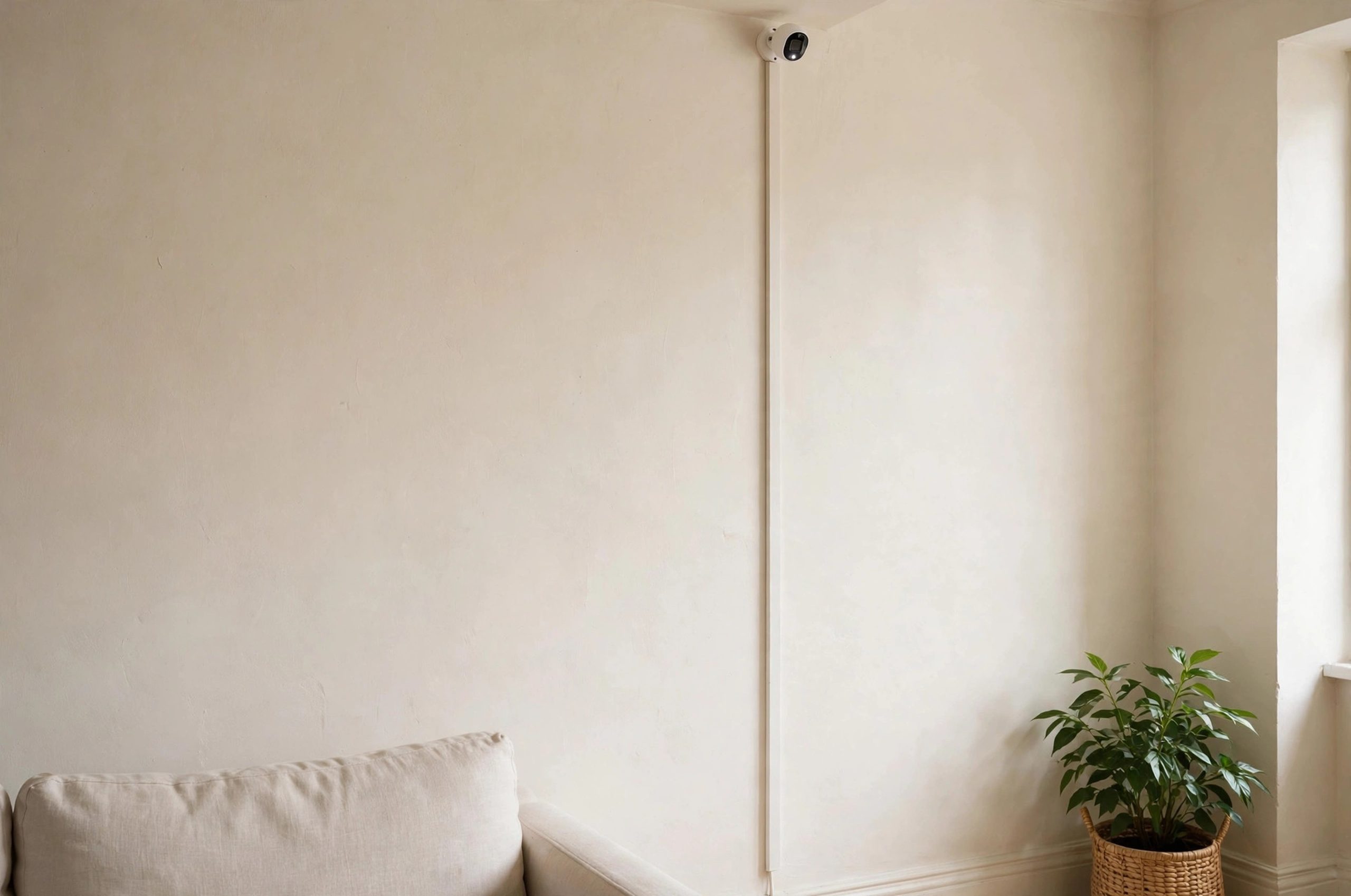
A wire running down your wall can ruin the look of a nice room. It also tells anyone who sees it exactly where your camera plugs in. Learning how to hide security camera wires indoors keeps your home looking neat and keeps the wiring safe from pets, kids, and anyone who might want to unplug it. This guide covers how to hide security camera wires indoors in plain steps.
Table of Contents
Table of Contents
- How to Hide Security Camera Wires Indoors: Start With a Plan Before You Touch the Camera
- Method 1: Paint the Wire to Match the Wall
- Method 2: Snap-On Cord Covers and Raceways
- Method 3: Tuck the Wire Behind the Baseboard
- Method 4: Hide the Cable in Crown Molding
- Method 5: Run the Wire Behind Furniture
- Method 6: Route the Cable Inside the Wall
- Method 7: Go Wireless or Use a Shorter Power Path
- What Not to Do
- Quick Picks by Situation
- Cleaning Up After the Job
- References
You do not need to be an electrician for most of these methods. Some take ten minutes. A few take an afternoon. All of them beat a loose black cable hanging down the wall. Start with the simplest option that fits your room, then work your way up to the permanent fixes if you want a truly invisible result.
How to Hide Security Camera Wires Indoors: Start With a Plan Before You Touch the Camera
When it comes to how to hide security camera wires indoors, getting the details right makes all the difference.
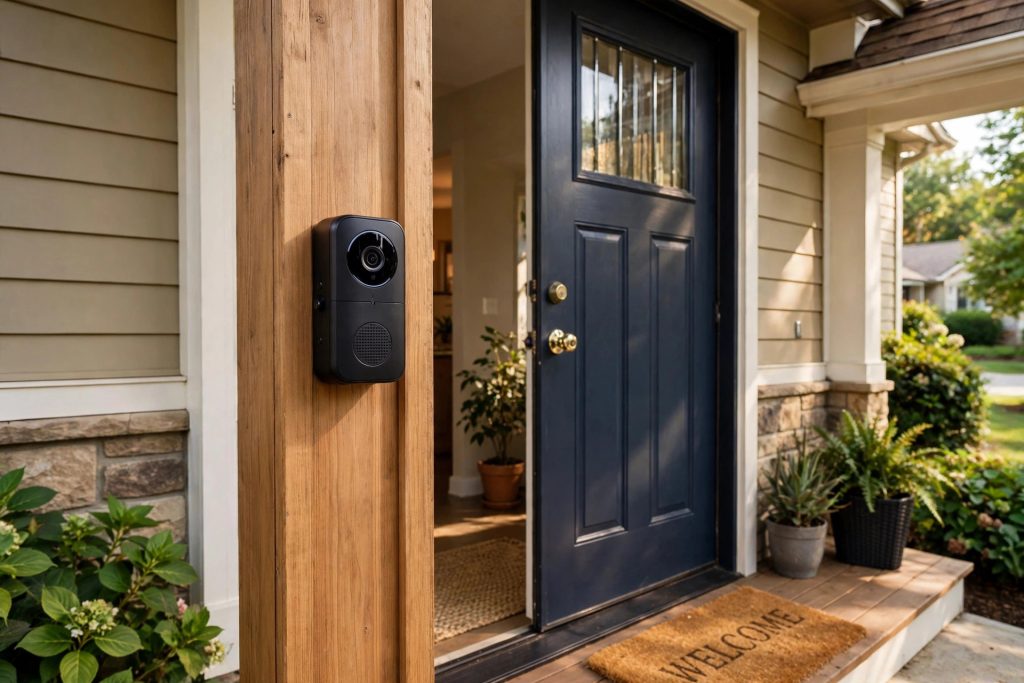
Many homeowners find that how to hide security camera wires indoors is easier than they expected once they know the basics.
Walk the room and decide where the camera will live. Most indoor cameras need power within six to ten feet of an outlet, unless you plan a long cable run. Hold the camera where you want it and look at the wall. The wire will fall straight down from there, so pick a spot where a straight line to the floor, the baseboard, or an outlet is easy to cover.
Write down three things: the distance from the camera to the nearest outlet, what the wall is made of, and whether you rent or own. Renters should stick to the no-drill options near the top of this list. Homeowners can use any method here.
If you are still shopping for cameras, think about power from the start. A wired camera system with a central recorder has more cable to hide, so guides to the best PoE security camera systems can help you pick gear that suits your house. Cameras with local storage need only a power wire, which is much easier to hide than a power wire plus a data cable.
Method 1: Paint the Wire to Match the Wall
Many homeowners find that how to hide security camera wires indoors is easier than they expected once they know the basics.
The key to how to hide security camera wires indoors is choosing the right approach for your space and budget.
This is the fastest trick in the book. Many camera cables come in white or black, and either color stands out against a painted wall. A cable painted to match the wall almost disappears from a few feet away.
Use a spray paint made for plastic, or brush on a coat of the same paint you used on the wall. Let the cable dry fully before you plug it back in. Secure the wire tight against the wall with small cable clips every foot or so. A wire that hugs the wall in a straight line looks far better than one that sags.
This method works best for short runs and light-colored cables. It costs almost nothing, and sources like the upgradedhome.com guide list it as a first step before moving to covers and raceways.
Method 2: Snap-On Cord Covers and Raceways
The key to how to hide security camera wires indoors is choosing the right approach for your space and budget.
With a little planning, how to hide security camera wires indoors can fit even a busy schedule.
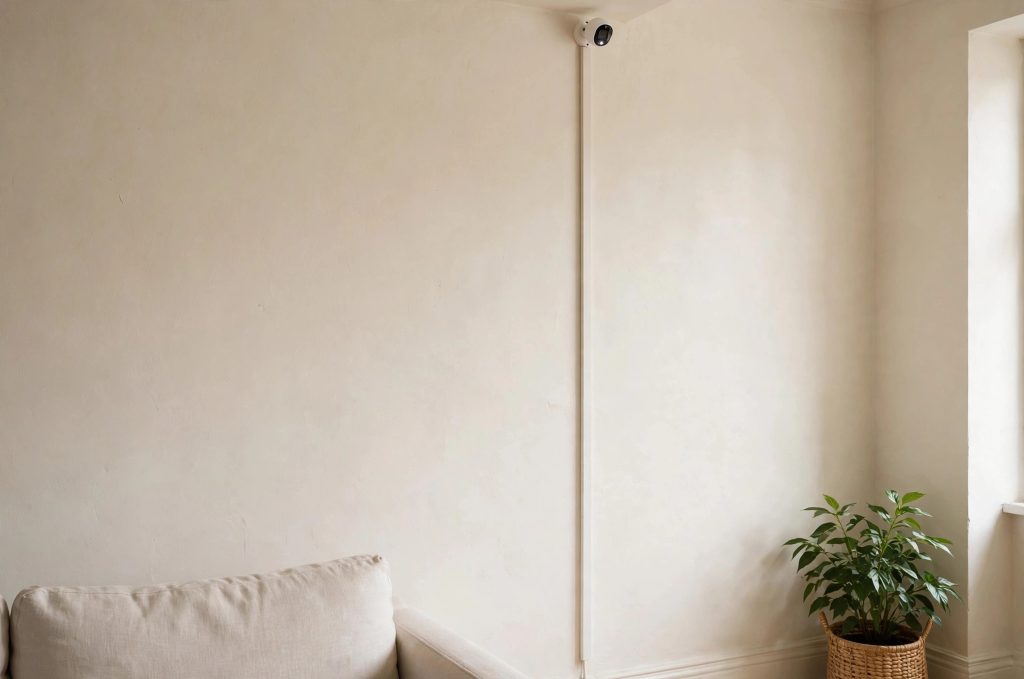
A raceway is a plastic channel that mounts to the wall and holds the cable inside. It is the most popular way to hide a wire without opening the wall. Most raceways come in white, and the better ones are paintable, so you can match them to your wall exactly.
Measure the run from camera to outlet. Buy a raceway kit a little longer than you need, because you will trim it to fit. Many kits use peel-and-stick backs, which is renter-friendly, though a dab of adhesive or a small screw at each end keeps long runs from peeling in a warm room.
Cut the raceway with a small hand saw or a utility knife. Run the cable inside, snap the cover shut, and press it onto the wall. Run it down a corner where two walls meet, or straight down to the baseboard, and it blends in. The techsynchron.com guide walks through picking a raceway that matches the color and style of the room, which matters more than most people expect.
For long runs, corner pieces and end caps make the finished job look like it was part of the house. Without them, the open ends of the channel look unfinished.
Method 3: Tuck the Wire Behind the Baseboard
With a little planning, how to hide security camera wires indoors can fit even a busy schedule.
Before you start, it helps to understand how how to hide security camera wires indoors works in real homes.
The gap between the bottom of the wall and the floor is a natural hiding spot. In many homes you can pop off a section of baseboard, lay the cable in the gap behind it, and put the baseboard back. The wire disappears completely, and you never touched the inside of the wall.
Use a thin pry bar and work slowly so you do not crack the baseboard or tear the paint. Lay the cable flat in the channel, then press the baseboard back into place. If the nails no longer hold, a little construction adhesive fixes it. As the engineerfix.com guide notes, this works well for short horizontal runs where you want zero visible wire and zero drywall repair.
This method shines when the camera sits near the floor or when the outlet is along the same wall a few feet away. It does not work well for wires that need to go up, over a door, or across a room.
Method 4: Hide the Cable in Crown Molding
Before you start, it helps to understand how how to hide security camera wires indoors works in real homes.
A good plan for how to hide security camera wires indoors saves time, money, and frustration.
Crown molding at the top of the wall hides wire the same way a baseboard does, just higher up. This is perfect for cameras mounted near the ceiling, which is where most indoor cameras live anyway.
If you already have crown molding, you may be able to fish a thin cable behind it without removing it. If you are installing molding anyway, cut a small channel in the back of the molding before you hang it, lay the wire in the channel, and nail the molding up. The wire sits behind the molding for its whole run.
The ideadesignhomes.com guide describes cutting a channel in molding to fit the wire, then finishing with caulk and paint so the whole run looks original to the house. Caulk the top and bottom edges of the molding after you hang it, and even a close look will not give the wire away.
Method 5: Run the Wire Behind Furniture
A good plan for how to hide security camera wires indoors saves time, money, and frustration.
For most people, how to hide security camera wires indoors comes down to a few smart choices.
Sometimes the easy answer is the right one. A tall bookcase, a wardrobe, or a big plant can hide a wire completely. Run the cable straight down behind the furniture to the outlet. Use a couple of adhesive clips to keep it from wandering out from behind the furniture edge.
This method works best in living rooms and home offices where large furniture already sits against the wall. It costs nothing and takes five minutes. The trade-off is that the wire is still there, just blocked from view. If you move the furniture, you move the problem too.
Keep the wire away from heat sources like radiators and the back of a TV. Heat shortens the life of cable insulation, and a pinched wire behind a heavy bookcase can wear through over time.
Method 6: Route the Cable Inside the Wall
For most people, how to hide security camera wires indoors comes down to a few smart choices.
If you are new to how to hide security camera wires indoors, start with the simplest option and build from there.
For a truly invisible install, the wire goes inside the wall cavity. This is the method professionals use, and it is not as scary as it sounds if you take it slow.
You will need a stud finder, a drywall saw, a fish tape or fiberglass rods, and a low-voltage wall plate. First, use the stud finder to map the studs and avoid pipes and electrical lines. Cut a small hole behind the camera mount and another small hole near the outlet. Push the fish tape through one hole, hook the cable, and pull it through to the other hole. Finish both holes with the wall plate or a brush-style grommet.
Vertical runs between two studs are simple because the cavity is open. Horizontal runs mean cutting through studs, which most homeowners should skip. As the techsynchron.com in-wall guide explains, planning the route first and checking for insulation or existing wiring keeps the job smooth.
One safety note: only low-voltage camera cable belongs in these holes. Never fish a power cord or an extension cord through a wall. That is a fire risk and it breaks electrical code in most places. If your camera needs real power inside the wall, call an electrician to add an outlet.
Method 7: Go Wireless or Use a Shorter Power Path
If you are new to how to hide security camera wires indoors, start with the simplest option and build from there.
When it comes to how to hide security camera wires indoors, getting the details right makes all the difference.
The best wire is the one that does not exist. Battery-powered cameras need no wire at all. You charge the battery every few weeks and the camera goes anywhere. A camera with a short USB cable to a hidden outlet behind furniture also keeps the visible wire under a foot long.
If you run a recorder-based system, you can sometimes move the recorder closer to the camera. A network video recorder tucked in a closet near the cameras means short cable runs that are easy to hide. Reviews of the best NVR security systems for home use can help you pick a recorder small enough to hide in a closet or cabinet.
For renters, a wireless camera is often the whole answer. There is no wire to hide, no holes to patch, and nothing to explain to the landlord. Pair it with the tips in how to secure smart home devices so the wireless signal stays private.
What Not to Do
When it comes to how to hide security camera wires indoors, getting the details right makes all the difference.
Do not run cable under carpet in a doorway. Foot traffic wears the insulation, and a worn wire is a shock and fire risk. Do not staple through the cable, and do not use metal staples on a live wire at all. Plastic cable clips with a nail cost little and hold the wire without pinching it.
Do not hide a wire inside a heating vent or a cold air return. That breaks code, and the wire insulation is not rated for that heat. The lensgearpro.com guide reminds installers to keep wire runs clear of HVAC openings and to secure cables with clips or ties instead of stretching them tight.
Do not leave service loops hanging. A coil of extra cable behind the camera looks messy and gives a burglar something to grab. Cut the cable to length or coil the extra neatly and zip-tie it behind the camera body.
Quick Picks by Situation
Many homeowners find that how to hide security camera wires indoors is easier than they expected once they know the basics.
Short on time: paint the wire and clip it tight to the wall. This takes under an hour.
Renting: use peel-and-stick raceways and hide wire behind furniture. Everything comes off clean.
Owning and want it perfect: fish the cable inside the wall. One afternoon of work gives a result that looks built-in.
Lots of cameras: move the recorder close to the cameras and use raceways for the short runs that remain. The digitaltrends.com guide covers the same ideas for the outdoor side of the job, where raceways and in-wall runs matter just as much.
For cameras watching entry points, a video doorbell without a subscription can cover the front door with a single short wire or no wire at all, which removes the hiding problem entirely.
Cleaning Up After the Job
The key to how to hide security camera wires indoors is choosing the right approach for your space and budget.
Walk the room from the doorway, since that is the view guests get. Look for any wire showing at the corners, any raceway end that needs a cap, and any clip that sits crooked. A dab of paint on the screw heads of a wall plate finishes the in-wall method.
Label both ends of each cable if you have more than one camera. A year from now you will not remember which wire feeds which camera, and labels save a lot of tracing. The safenow.org guide also suggests thinking about the camera body itself, since a well-hidden wire next to an obvious camera still draws the eye. With these steps, how to hide security camera wires indoors stays simple and safe.
References
With a little planning, how to hide security camera wires indoors can fit even a busy schedule.
- Engineer Fix. (n.d.). How to hide security camera wires. https://engineerfix.com/how-to-hide-security-camera-wires-2/
- TechSynchron. (n.d.). Effortless wire concealment: How to hide security camera wires inside. https://techsynchron.com/how-to-hide-security-camera-wires-inside/
- TechSynchron. (n.d.). Effortlessly conceal security camera wires: A how-to guide. https://techsynchron.com/how-to-hide-security-camera-wires/
- Idea Design Homes. (n.d.). How to hide security camera wires. https://ideadesignhomes.com/how-to-hide-security-camera-wires/
- Upgraded Home. (n.d.). How to hide security camera wires. https://upgradedhome.com/how-to-hide-security-camera-wires/
- LensGearPro. (n.d.). How to hide security camera wires inside. https://lensgearpro.com/how-to-hide-security-camera-wires-inside/
- Digital Trends. (n.d.). How to hide security camera wires outside your home. https://www.digitaltrends.com/home/how-to-hide-security-camera-wires-outside-your-home/
- SafeNow. (n.d.). How to hide a security camera: Everything you need to know. https://safenow.org/how-to-hide-a-security-camera/
Before you start, it helps to understand how how to hide security camera wires indoors works in real homes.
Was this guide helpful?

About My Garden US
The My Garden US editorial team writes practical, in-depth home and garden guides for American homeowners — tested advice, no fluff.
You May Also Like
Philips Hue vs LIFX Comparison 2026 USA: Which Smart Bulb Is Right for Your Home
January 2, 2026 22 views
Elderly Monitoring Camera for Home Reviews USA
February 28, 2026 18 views
Best Door Alarm Sensor for Apartments USA
February 14, 2026 20 views