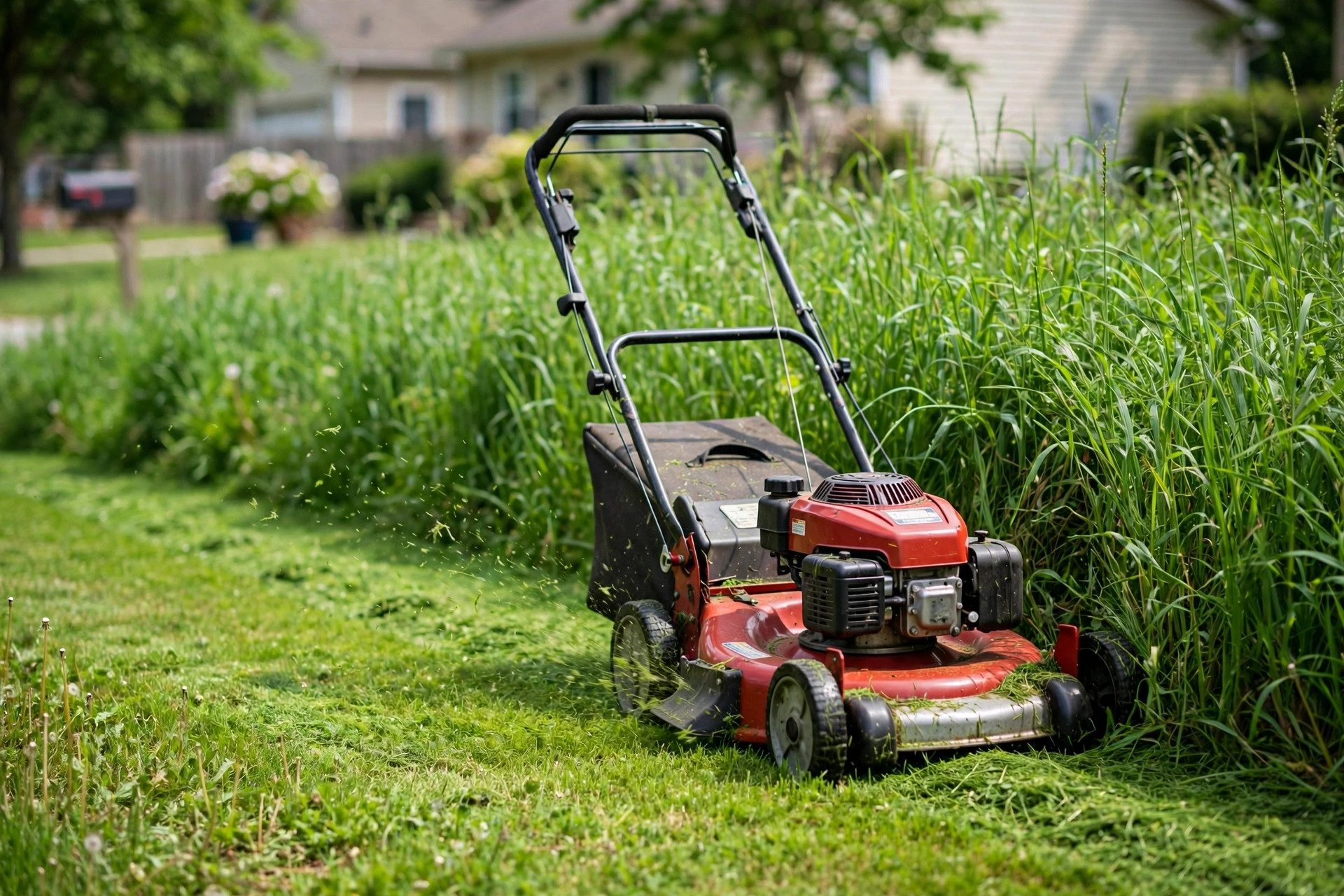
Finding the best push mower for thick grass can save you time, money, and a sore back. Thick grass is hard work for a weak mower. A cheap mower will stall in heavy growth. It will leave clumps and uneven lines. A mower with the right power will cut the lawn in fewer passes and leave it neat.
This guide explains what matters when you shop for a mower for thick grass. It covers engine power, deck size, drive type, and price. It also gives tips for cutting, care, and safety. By the end you will know what to look for and what to skip.
Why It Matters
Thick grass is common in many parts of the United States. Warm season grasses like Bermuda, Zoysia, and St. Augustine grow dense and low. Cool season grasses like tall fescue and Kentucky bluegrass can grow thick in spring. After a week of rain, any lawn can turn into a jungle.
A mower that is too weak will slow down in heavy grass. The blade will tear the grass instead of cutting it. Torn grass turns brown at the tips. It looks ragged for days. It can also let disease into the lawn. The best push mower for thick grass has enough torque to hold blade speed through dense patches.
A strong mower also saves fuel and time. When the engine does not labor, the cut goes faster. You finish the yard in one pass instead of two. Over a full summer, that adds up to many saved hours.
Many buyers start by comparing self-propelled mower deals for usa homeowners. Self drive helps on slopes and in thick grass. But a self-propelled mower is only as good as its engine and blade. Power comes first. Drive comes second.
What to Look For: Best Push Mower for Thick Grass
Not every mower handles thick grass well. Here are the traits that matter most.
Engine Power
For gas mowers, look for engines in the 159 to 190 cubic centimeter range. These engines give steady torque in heavy growth. Briggs and Stratton makes many of the engines found on homeowner mowers. A 190cc engine holds blade speed better than a 125cc engine when the grass is wet or tall.
For battery mowers, look for 40 volt or higher platforms. A 40 volt or 60 volt mower gives more cutting force than a 20 volt trim tool. Some new 80 volt mowers match small gas engines. Check that the model includes at least one large battery. Thick grass drains a battery faster than thin grass.
Cutting Deck Width
A 21 inch deck is the most common size for push mowers. It is a good middle ground. It cuts a wide path but still fits through a garden gate. A 22 inch deck covers more ground per pass. It can help on a large lawn. Wider decks need more power, so match a 22 inch deck with a strong engine.
Steel decks last longer than plastic decks. They hold up to rocks and sticks. Some high end mowers use cast aluminum decks. These are light and do not rust.
Self Propelled Drive
A self-propelled mower pulls itself forward. You only steer it. This helps a lot in thick grass because pushing a stalled mower is hard work. Front wheel drive is fine for flat yards. Rear wheel drive gives better grip on slopes and in wet grass. Variable speed drive lets you set the pace to match the grass.
If your lawn is flat and small, a push model can work. But most owners with thick grass prefer self propelled. It cuts fatigue and keeps the mower moving at a steady speed.
Deck Height Adjustment
Thick grass should be cut high. Most experts advise cutting cool season grass at three to four inches. Warm season grass can go a bit lower. Look for a mower with a single lever that adjusts all four wheels at once. It makes changing height fast and easy.
Never cut more than one third of the blade length in one pass. If the grass is very tall, raise the deck and cut once. Then lower it and cut again. This two pass method keeps the engine from bogging down.
Types of Mowers
Three main types of push mowers suit thick grass. Each has strengths and trade offs.
Gas Powered Mowers
Gas mowers are the classic choice for heavy growth. They run as long as the tank has fuel. They have strong torque at low speed. They are the best pick for large lawns and very thick grass.
The main costs are fuel, oil, and care. You must change the oil once a season and the air filter once a year. Gas mowers are louder than electric ones. They also need winter storage care. Drain the fuel or add stabilizer before the cold months.
A good gas mower from a brand like Toro or John Deere can last ten years or more. The Toro lineup includes models built for dense turf. The John Deere walk behind line has a strong record for steady power. Check both maker sites when you compare specs.
Battery Electric Mowers
Battery mowers have improved a lot in recent years. The best models now cut thick grass almost as well as gas. They are quiet. They start with a button. They need almost no care. There is no oil, no spark plug, and no gas can in the garage.
The main limit is run time. A single battery may last 40 to 60 minutes. Thick grass can cut that to 30 minutes. If your lawn is bigger than a quarter acre, buy a second battery or pick a model with a high capacity pack.
Corded Electric Mowers
Corded mowers plug into the wall. They have steady power and never run out of charge. They are light and simple. They work well for small flat lawns near the house.
The cord is the drawback. You must manage it while you mow. On a large yard with trees and beds, a cord is a nuisance. For thick grass, corded mowers can cut well if the motor is rated high enough.
Cost and Price
A good push mower for thick grass costs between 250 and 600 dollars. The price depends on power, drive, and brand.
Basic push mowers with a 159cc engine start near 250 dollars. These cut thick grass if you go slow and keep the blade sharp. Self-propelled gas models run 350 to 550 dollars. They are the most popular choice for heavy growth.
Battery mowers range from 300 to 700 dollars. A kit with a large battery and fast charger costs more. A second battery adds 100 to 200 dollars. Corded electric mowers are the cheapest. They run 150 to 250 dollars.
Do not judge by price alone. A 300 dollar mower with a sharp blade and a strong engine can beat a 500 dollar mower with a dull blade. Plan to spend 30 to 50 dollars a year on care. That covers a blade sharpening, an air filter, and an oil change.
If you are watching your budget, compare a walk behind mower with grass catcher sale with mid range models. A catcher bag helps in thick grass. It keeps clippings off the lawn so they do not smother the turf.
Care and Upkeep
A sharp blade is the single most important factor. A dull blade tears grass. Check the blade once a month in the growing season. Sharpen it when the edge looks rounded. Most hardware shops sharpen blades for about ten dollars. You can also learn to sharpen it yourself with a file.
Clean the deck after each mow. Wet grass sticks under the deck and blocks air flow. A clogged deck makes the engine work harder. Tip the mower on its side with the air filter up. Scrape the grass out with a stick.
Change the oil at the start of each season. Check the air filter and replace it if it is dirty. A clean filter helps the engine breathe in dusty summer air. Check tire pressure if your model has air filled tires. Low tires make the deck sit crooked.
For battery mowers, store the battery indoors in winter. Do not leave it on the charger for months. Keep the vents on the motor clear of grass.
Many owners also pair a mower with a top rated string trimmer for thick weeds. A trimmer handles edges, fence lines, and spots the mower cannot reach. Together the two tools finish the whole yard.
Safety
Mowers are useful but they can hurt you. Follow these rules every time you mow.
Read the manual before the first use. Wear closed toe shoes and long pants. Eye protection is wise in dusty yards. Never let children ride on or near the mower. Keep pets inside while you work.
Walk the lawn before you start. Pick up rocks, sticks, toys, and wire. A blade spinning at high speed can throw a stone hard enough to break a window.
Never pull a mower backward toward your feet. If you must back up, look behind you first. Turn the mower off before you clear a clog. Disconnect the spark plug wire on a gas mower before you tip it or touch the blade. On a battery mower, remove the battery before any service.
Mow when the grass is dry. Wet grass is slippery and clogs the deck. Take breaks in hot weather. Thick grass is heavy work even with a self-propelled model.
FAQ
What size engine is best for thick grass? For gas mowers, 159 to 190 cubic centimeters works well. The larger end of that range handles tall and wet grass with less strain. For battery mowers, pick 40 volts or higher.
Is a self-propelled mower worth it for thick grass? Yes, for most people. Self drive keeps the mower moving at a steady pace through heavy patches. It reduces strain on your back and arms. Rear wheel drive is best for slopes.
Can a battery mower handle thick grass? The best battery models can. Choose a high voltage platform and keep the blade sharp. Buy a second battery if your lawn is large. Cut in the morning when the grass is dry.
How often should I sharpen the blade? About every 20 to 25 hours of mowing. For most homeowners that means once or twice a season. Sharpen more often if you hit rocks or if the grass tips look torn.
Should I bag or mulch thick grass? Mulch when the grass is at a normal height. The fine clippings feed the soil. Bag when the grass is very tall or wet. Clumps of cut grass left on the lawn can kill the turf beneath them.
What cutting height is best for thick grass? Three to four inches for most cool season lawns. Two and a half to three inches for warm season lawns. Never remove more than one third of the blade at once.
A Short Final Word
The best push mower for thick grass is the one with enough power, a sharp blade, and a drive that suits your yard. Gas models still lead for heavy growth. Battery models are close behind and are easier to keep. Whichever type you choose, cut high, cut dry grass, and keep the blade sharp. Those three habits matter more than any brand name. Take care of your mower and it will take care of your lawn for many years.
References
Briggs & Stratton. (n.d.). Lawn mower engines. https://www.briggsandstratton.com Deere & Company. (n.d.). Lawn mowers. https://www.deere.com Toro Company. (n.d.). Walk behind mowers. https://www.toro.com
Was this guide helpful?

About James Carter
The My Garden US editorial team writes practical, in-depth home and garden guides for American homeowners — tested advice, no fluff.