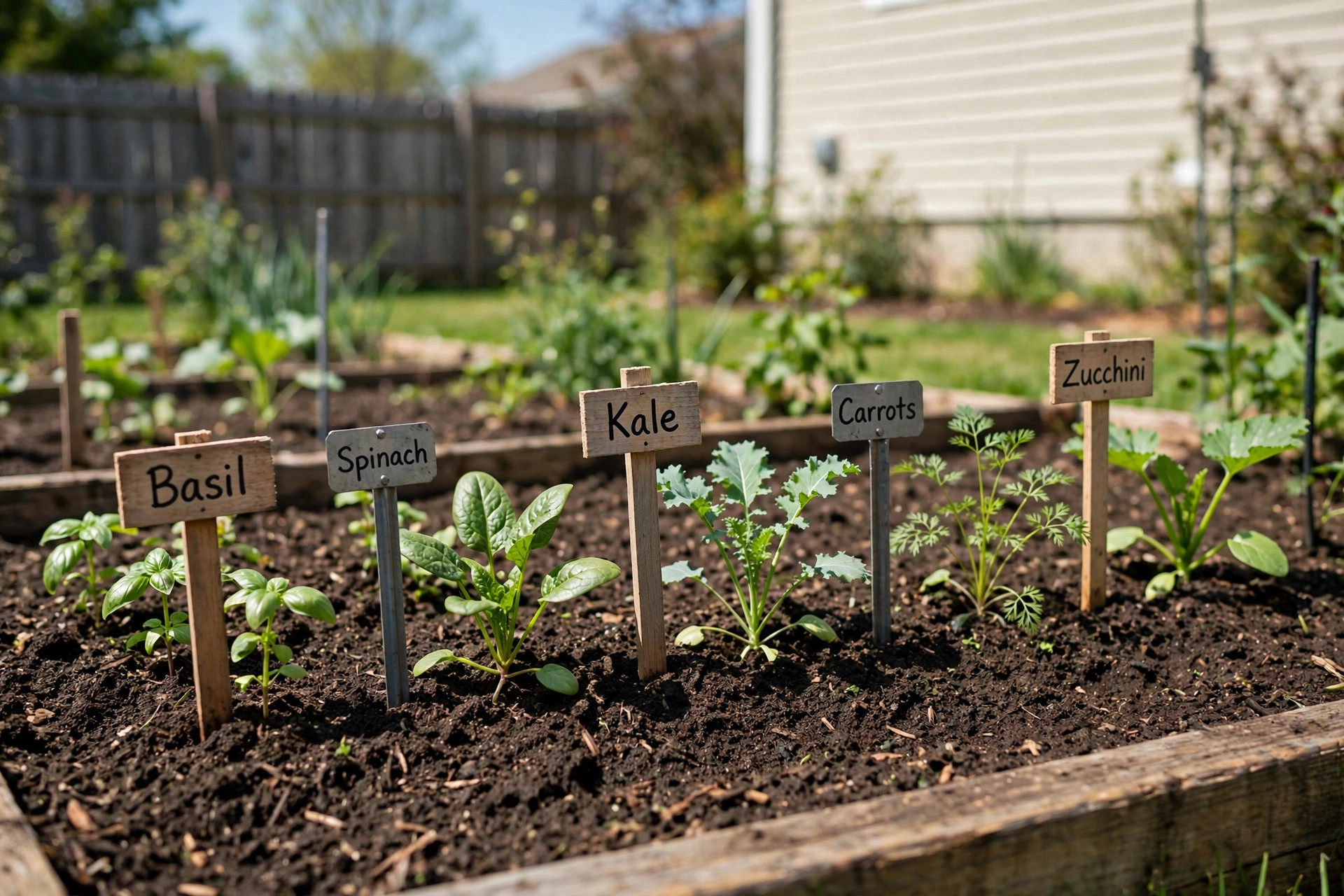
Every gardener knows the feeling. You plant a row of seeds in spring. The little green shoots come up. A month later you cannot tell the basil from the tomato seedlings. You guessed when you planted. Now you are not sure. The best garden labels for plant identification solve this common problem. A small tag next to each plant tells you the name, the variety, and the date you planted it. This guide explains how to choose labels that last, what they cost, and how to use them well.
Why Plant Labels Matter
A garden is a busy place. Dozens of plants grow side by side. Some look alike when they are young. Seedlings of tomatoes, peppers, and eggplants all have similar leaves at first. Without labels, you must wait for fruit to know what you planted. That wastes time and garden space.
Labels matter for record keeping too. When you write the plant date on a tag, you can track how long a crop took to mature. You learn which varieties did well in your soil. Next season you make better choices. A label turns a guess into a fact.
Labels also help other people. A friend who waters your garden while you travel will know which plants need special care. If you share seedlings with neighbors, a label makes the gift complete. Children learn plant names faster when they see them written down. A small piece of plastic or metal does all this work for very little money.
Serious vegetable growers depend on waterproof plant markers to keep rows straight through the season. The marker stays readable even when rain falls every day. That is the first test of any label. If the writing fades or washes away, the label fails at its one job.
What to Look for When You Choose: Best Garden Labels for Plant Identification
Readability
The whole point of a label is to be read. Big letters help. A blank space at least two inches wide gives room for a plant name and a date. Thin tags force you to write too small. In July, when leaves are thick, a large tag is easier to find.
Weather Resistance
Rain, sun, and frost attack labels every day. Sunlight bleaches ink. Rain washes it away. Winter freezes crack cheap plastic. The best garden labels for plant identification use materials and pens made for outdoor life. Look for tags described as weatherproof or UV resistant. Pair them with a garden marker pen made for this purpose. Ordinary ballpoint pens fade in weeks. Special garden markers hold for a full season or longer.
Sturdiness
Thin plastic tags snap in wind. They crack when soil freezes. Metal stakes bend but rarely break. Wooden stakes split along the grain. Choose a thickness that matches your soil. In hard clay, you need a strong stake. In soft potting soil, a light tag is fine.
Reusability
Some gardeners like to erase and reuse labels each year. Plastic and metal tags with smooth faces can be wiped clean with a damp cloth or a bit of alcohol. Wooden tags absorb ink and cannot be reused. If you start many seeds indoors each spring, reusable tags save money over time. Our guide on how to start seeds indoors shows where labeling fits into the seed starting routine.
Size and Shape
Long stakes suit tall plants and deep rows. Short T-shaped tags sit well in pots and seed trays. Copper and zinc tags wrap around tree trunks and shrubs. Match the shape to the place. A stake made for a raised bed may look out of place in a small herb pot, and a tiny tag disappears in a big garden row.
Types of Garden Labels
Plastic Plant Tags
Plastic T-shaped tags are the most common. They cost little. A pack of one hundred often costs less than a few dollars. They slide into soil fast. White plastic is the easiest to read with a black garden marker. Black plastic looks neat but needs a light-colored pen.
The weakness of plastic is sunlight. Cheap tags turn brittle after one season of sun. They snap when you pull them from hard soil. Better tags use thick UV-treated plastic. These can last two or three seasons. For most home gardeners, that is enough.
Metal Labels
Metal labels are the long-life choice. Copper, zinc, and stainless steel tags resist rain and sun for years. Copper develops a soft green patina that many gardeners like. Zinc and galvanized steel stay bright. You write on metal with an embossing pen or a paint marker. The mark sits in the surface and does not wash off.
Metal stakes cost more up front. A set of twenty copper labels may cost ten times what plastic costs. But they can last a decade. For a perennial garden, a fruit orchard, or a collection of roses, metal is the wise buy. You label once and read the tag for years.
Wooden Labels
Wooden stakes have an old garden charm. They look right in a herb garden or a flower bed. You write on them with pencil or marker. Cedar and bamboo resist rot better than plain pine.
The charm comes with a short life. Wood splits, rots, and fades. A wooden label may last one season. Some gardeners accept this and make new labels each spring. Others seal the wood with varnish to buy more time. For a natural look that matches rustic beds, wood is hard to beat.
Chalkboard and Slate Labels
Chalkboard stakes let you erase and rewrite with chalk markers. Slate tags take pencil well and last for years. Both styles look tidy in a kitchen garden. Chalk writing smudges in rain, so these suit covered spots or mild climates. Slate with a grease pencil mark survives weather far better than chalk.
Embossed and Engraved Tags
For the longest life, some gardeners emboss metal tags with a ballpoint pen or an embossing tool. The letters press into the soft metal. Even if the ink fades, the pressed letters stay readable for decades. Engraved tags cost the most. Nurseries and public gardens use them for trees and shrubs that will stand for many years.
If you are deciding between reusable styles, read reviews of waterproof plant markers to see which hold up through wet summers. Real user experience tells you more than package claims.
How to Write Labels That Last
The label is only half the job. The writing matters just as much. Follow these rules and your tags will stay readable all season.
– Use a garden marker or paint pen made for outdoor use. Sites like Gardener’s Supply carry pens designed to resist sun and water. – Write in block capital letters. They are easier to read at a glance. – Include the plant name and the variety. Write TOMATO – CHERRY instead of just tomato. – Add the date you planted. A short code like 4/20 works. – Let ink dry fully before you put the label in the soil. Wet ink smears. – Push the label deep enough that wind cannot pull it out. Leave the writing above the mulch line. – For metal tags, press hard with an embossing tool so the letters dent the surface.
When you store seeds for next year, the same habits pay off. Clear seed packets and dated notes are the heart of long-term seed storage. A garden runs on good records.
Cost and Price
Garden labels are one of the cheapest tools in the garden. Prices run from a few cents to a few dollars per tag.
– Basic plastic T-tags: often under five cents each in large packs. A hundred-pack is a common buy. – UV-treated plastic tags: a few cents to ten cents each. Worth the small extra cost. – Bamboo stakes: cheap in bulk, often sold in bundles of fifty. – Copper labels: fifty cents to two dollars each, depending on size and style. – Zinc or galvanized steel labels: similar to copper, sometimes a little less. – Slate or chalkboard labels: twenty-five cents to a dollar each. – Embossing tools and garden marker pens: a few dollars each, used for years.
For a small home garden, twenty to fifty labels cover a season. The total cost stays under twenty dollars even with mid-range tags. Big vegetable plots may need hundreds of tags, where cheap plastic wins on price. Many gardeners mix types: cheap plastic for annual vegetables, metal for perennials and fruit trees.
Compare prices at large retailers. Home Depot and Lowe’s both stock many label styles in their garden sections. Online, Burpee sells labels alongside seeds and starting supplies. Price checks take minutes and can cut costs in half.
Care and Upkeep
Labels need a little care to do their job. At the start of each season, walk your garden and check every tag. Replace any that cracked over winter. Rewrite any that faded. This ten-minute walk saves confusion later.
Clean reusable tags at season end. Wash plastic and metal tags in soapy water. Rub off old ink with a cloth damp with rubbing alcohol. Store clean tags in a dry box or jar. Keep them out of sun during the off season so UV damage does not start early.
Wooden stakes can be sanded lightly and reused once or twice. Copper tags can be polished if you want them bright again. Zinc tags need no care at all.
Keep a garden notebook beside your labels. Write down what each row produced and when. The tag in the soil and the note in the book work together. After a few seasons, your notes become a guide to your own garden. Advice sites like The Spruce and Bob Vila both stress that simple written records make gardeners better year after year.
Safety
Garden labels are safe tools, but a few points deserve care.
Sharp metal stakes can cut fingers. Push them into soil with steady pressure, not a hard shove. Keep the pointed ends away from small children. Some plastic tags have sharp edges too. Smooth them with a file if needed.
Wooden stakes can give splinters. Sand rough edges before use. Wear gloves when you handle weathered wood. Old stakes can harbor mold. Throw out any that show soft black spots.
If you use pressure-treated wood scraps as labels, keep them away from vegetable beds. The chemicals in treated lumber can leach into soil. Plain cedar or bamboo is safer near food crops. Safety guides from Consumer Reports remind shoppers that even simple garden products deserve a check for materials and coatings.
Store bulk packs of stakes where children and pets cannot reach them. A hundred thin stakes scattered on a patio can be a tripping hazard. Clean up after labeling day.
Frequently Asked Questions
How many labels does a home garden need?
Count your rows, pots, and seed trays. Most home vegetable gardens need thirty to sixty labels. Flower beds need fewer. Seed starters need the most, since every cell in a tray gets its own tag. Buy a few extra. Labels break, blow away, and get buried in mulch.
What pen works best on plastic plant tags?
A garden marker made for outdoor use works best. These pens use ink that resists water and UV light. Paint pens also work well. Avoid ballpoint pens and felt-tip office markers. Their ink fades in weeks of sun. Project guides on Family Handyman often recommend testing a pen on one tag and leaving it in full sun for a week before you label a whole garden.
Can I reuse garden labels?
Yes, many types reuse well. Smooth plastic and metal tags wipe clean with water or rubbing alcohol. Chalkboard labels erase with a damp cloth. Wooden tags absorb ink and rarely reuse. Embossed metal tags keep their pressed letters for years, so they do not need rewriting at all.
Do metal labels rust?
Copper does not rust. It turns a soft green-brown over time. Zinc and galvanized steel resist rust for many years. Plain iron tags will rust. Check the product description before you buy. Stainless steel is the most rust-proof choice and costs the most.
Are there eco-friendly garden labels?
Yes. Bamboo stakes break down in soil and cost little. Wood from managed forests is a natural choice. Some brands sell tags made from recycled plastic. Slate lasts for years, so it creates little waste. Avoid the cheapest thin plastic, which breaks fast and adds to trash.
Should I label plants in pots indoors?
Yes. Indoor pots dry out and move around. A tag tells you which pot holds which herb or seedling. Small T-shaped plastic tags fit pots well. They also help when you move seedlings outside. The plant keeps its name through the move.
A Short Final Word
The best garden labels for plant identification are the ones you will actually use. They do not need to be fancy. They need to be readable, tough enough for your weather, and cheap enough to buy in number. Start with simple UV-treated plastic tags and a good garden marker. Upgrade to metal for plants that stay in the ground for years. Write clear names, add dates, and check your tags each season. Your garden will reward you with order, good records, and harvests you can learn from. Tool makers like Corona Tools and Fiskars build their garden lines around this same idea: small, honest tools that make real work easier.
References
Bob Vila. (n.d.). Home improvement advice. https://www.bobvila.com Burpee. (n.d.). Seeds, plants, and gardening supplies. https://www.burpee.com Consumer Reports. (n.d.). Product reviews and ratings. https://www.consumerreports.org Corona Tools. (n.d.). Garden and landscape tools. https://www.corona-tools.com Family Handyman. (n.d.). DIY home repair and maintenance. https://www.familyhandyman.com Fiskars. (n.d.). Garden and cutting tools. https://www.fiskars.com Gardener’s Supply Company. (n.d.). Gardening tools and supplies. https://www.gardeners.com Lowe’s. (n.d.). Home improvement products. https://www.lowes.com The Home Depot. (n.d.). Home improvement products. https://www.homedepot.com The Spruce. (n.d.). Home and garden advice. https://www.thespruce.com
Was this guide helpful?

About Jennifer Lee
The My Garden US editorial team writes practical, in-depth home and garden guides for American homeowners — tested advice, no fluff.