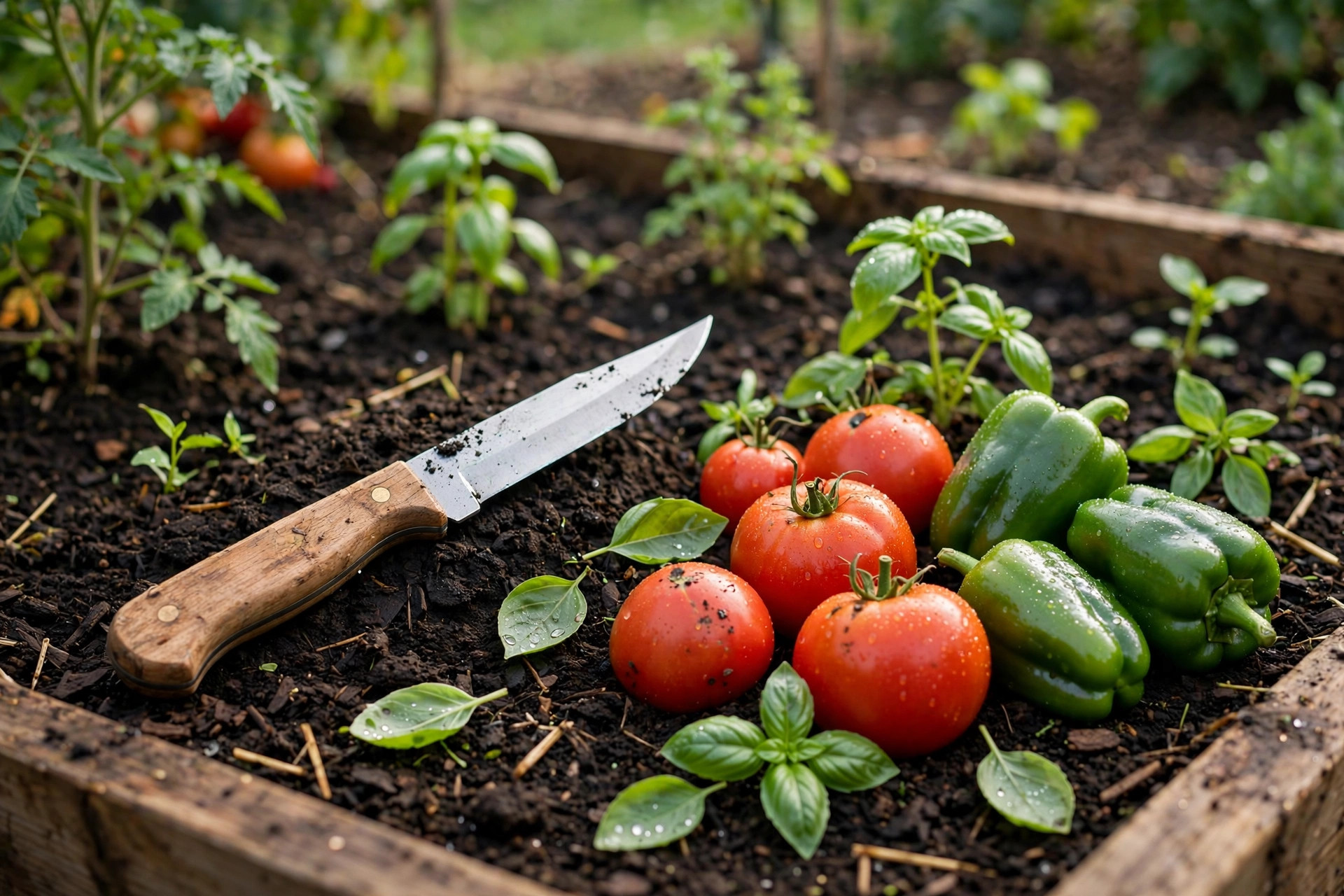

The best garden knife for harvesting reviews all point to one plain fact. A good knife makes harvest day easier. Vegetables come off the stem clean. Herbs cut without bruising. The work goes faster, and the plants stay healthy. Gardeners who once used kitchen scissors or dull pruners often say the same thing after they try a true harvest knife. They wish they had bought one years sooner.
This guide looks at what real buyers say about these tools. It also explains what to look for before you spend money. A harvest knife is a simple tool. It should cut well, feel good in the hand, and last many seasons. Read on to learn how to choose one that fits your garden.
Why a Good Harvest Knife Matters
Plants heal better from a clean cut. A sharp blade severs the stem in one motion. The wound is small. It dries fast. A dull blade tears the tissue. The ragged edge invites rot and disease. This is true for tomatoes, peppers, lettuce, and most herbs.
Harvest knives also save time. When beans are ripe, you may pick hundreds of pods in one session. A knife that glides through stems keeps your hand from tiring. A knife that needs three saws for each stem will slow you down and leave you sore.
There is also the matter of safety. A sharp knife sounds dangerous. In practice, a dull knife is the greater risk. Dull edges need force. Force leads to slips. A sharp blade does the work with a light touch. Reviews of harvest knives often mention this point. Many buyers say a new sharp knife felt safer than the old dull tool they had been using for years.
What to Look for in a Harvest Knife: Best Garden Knife for Harvesting Reviews
Not all garden knives are the same. Some are built for slicing soft stems. Others can saw through woody growth. Before you read reviews, it helps to know which traits count.
Blade Material
Most harvest knives use high carbon steel or stainless steel. High carbon steel takes a very sharp edge. It holds that edge well through a long day of cutting. The trade-off is that it can rust if you leave it wet. Stainless steel resists rust much better. It may need sharpening a bit more often, but it asks for less care. Many buyers in damp climates choose stainless for this reason.
Some knives carry a coating on the blade. The coating keeps sap from sticking and slows rust. It can wear off over time, but many gardeners find it worth having.
Handle Comfort
You will grip this tool for hours. The handle must fit your hand. Look for a shape that fills the palm without forcing the fingers wide. Soft grips with texture help when your hands are wet or dirty. Some handles are straight. Others curve to match the fingers. There is no single best shape. What feels right in the store will usually feel right in the field.
Many reviewers warn against handles that are too thin. A thin handle digs into the palm under pressure. A thicker, rounded handle spreads the force and cuts fatigue.
Size and Weight
A harvest knife should be light enough to carry all day. Most weigh only a few ounces. Blade length matters too. Short blades, around two to four inches, suit delicate work like cutting herbs and flowers. Longer blades, five to seven inches, reach into thick tomato vines and cut corn stalks.
Many gardeners keep two knives. A small one for herbs and greens. A larger one for heavy stems. If you buy only one, choose the size that matches your main crop.
Types of Garden Harvest Knives
Reviews cover several styles. Each has its strengths. The right one depends on what you grow.
The Japanese Hori Hori
The hori hori is a broad knife made for soil work. Its blade is wide, with one smooth edge and one serrated edge. Gardeners use it to cut root vegetables free, slice through thick stems, and even dig planting holes. It is the most flexible tool on this list. Many reviewers call it the first knife a new gardener should buy. If you grow both vegetables and flowers, a hori hori may do most of your work.
Harvesting Sickles and Kam
A sickle has a curved blade that hooks around stems. You pull to cut. These tools shine at leafy greens. A bunch of lettuce or spinach can be cut in one motion. Small hand sickles suit herb beds. Larger versions handle grain and tall cover crops. Reviews often praise how fast they work in rows.
Paring-Style Harvest Knives
These look like a kitchen paring knife built for the garden. The short straight blade cuts tomatoes, peppers, and eggplant from the vine with care. They are the best pick for gardeners who want one precise tool for tender fruit. They store easily in a pocket or tool belt.
Multi-Use Garden Knives
Some knives mix features. They may have a saw edge, a digging tip, and depth marks on the blade. These suit gardeners who want one tool that does many jobs. They will not cut as cleanly as a single-purpose blade, but they cover most tasks well enough.
What the Reviews Say: Styles Worth a Look
Across many review pages, a few patterns come back again and again. Buyers praise knives with full tang construction, where the steel runs the full length of the handle. This build feels strong. It does not bend or loosen. Cheap partial-tang knives get lower marks because the blade can shift with hard use.
Grip reviews are consistent too. Non-slip handles earn high praise, especially from gardeners who work in rain or dew. Smooth wood handles look handsome but can slip when wet. Many buyers solve this with simple cotton work gloves, yet the safest handle is one that grips on its own.
Edge reviews favor blades that arrive sharp and sharpen easily. A knife that needs a professional to restore its edge will sit dull in the shed. A knife you can touch up with a small whetstone will serve you for years. This is why so many experienced gardeners choose simple blade shapes over fancy ones.
Several buyers compare harvest knives to pruners. Pruners crush as they cut. That is fine for woody stems. For soft green growth, a knife gives a cleaner slice. Many gardeners keep both tools. They reach for the knife at harvest time and the pruner for winter trimming.
It is worth noting that some gardeners find their ideal knife only after trying two or three. Bodies differ. Gardens differ. Reviews can point you toward good brands, but your own hand should make the last call. When you read a harvest knife review, look for comments from people who grow what you grow. Their experience will match yours best.
Cost and Price
Garden harvest knives range from about five dollars to over sixty. Price reflects steel quality, handle build, and brand name. It does not always reflect cutting power. Many buyers report that a twelve-dollar knife with good steel out-cuts a forty-dollar knife with a poor heat treatment.
For a first knife, ten to twenty-five dollars is a fair range. At this price you can find stainless or carbon blades with solid handles. Tools under ten dollars can work, but they often need more sharpening and may rust fast. Knives above forty dollars suit heavy daily use or collectors of fine tools.
Think of cost over time, not cost at the counter. A twenty-dollar knife that lasts eight seasons costs less per year than a seven-dollar knife that fails in one. Independent testers such as the teams at Consumer Reports and the tool experts at Family Handyman often stress this point about garden tools in general. Buy once, buy well.
Care and Upkeep
A harvest knife asks for little care. Give it that care and it will last. After each use, wipe the blade clean. Sap and juice can pit steel if left overnight. A rag and plain water is enough. For sticky sap, a drop of vegetable oil on the rag helps.
Dry the knife before you store it. If the blade is carbon steel, oil it lightly. A thin film of mineral oil or camellia oil guards against rust. Store the knife in a sheath or a dry tool box. Never leave it lying in wet soil.
Sharpen when you feel the edge drag. A small pocket whetstone or a ceramic rod is enough for most blades. Keep the angle low and steady, about twenty degrees. A few strokes on each side restore the edge. Many gardeners sharpen at the start of harvest season and touch up as needed.
Between harvests, keep the whole bed tidy with the right tools for each job. Our guides to best garden rake for thatch removal and best garden rake for gravel reviews cover cleanup tools that pair well with a harvest knife. A clean bed makes harvest day faster and shows pests and problems sooner.
Safety in the Garden
Any sharp tool needs respect. Cut away from your body. Keep your free hand behind the blade path. Wear gloves when you cut thick stems. Good gloves protect against slips and thorns at once.
Carry the knife in a sheath. A loose knife in a pocket or basket can cut when you reach for something else. Many makers sell sheaths that fit their blades. If yours has none, a simple canvas sleeve works.
Teach young helpers how to hand you the knife. The safe way is handle first, blade down, with a clear “take it” before they let go. This small habit prevents many small cuts. The safety pages at The Spruce and the project guides at Bob Vila both note that most garden tool injuries come from dull tools and careless carry, not from the tools themselves.
Frequently Asked Questions
What is the best garden knife for harvesting vegetables? A short paring-style knife or a hori hori suits most home vegetable gardens. The paring style cuts tomatoes, peppers, and beans with care. The hori hori handles thicker stems and also digs. Many reviewers keep both and reach for each as the task demands.
How is a harvest knife different from a regular kitchen knife? Garden knives use tougher steel and grips made for wet, dirty work. Kitchen knives have thin blades that can chip on hard stems. Garden knives also come with sheaths for safe carry in the field.
Can I use a harvest knife to cut herbs? Yes. Herbs are where a sharp knife shows its worth. Basil, mint, parsley, and dill all bruise less with one clean cut. Use a short blade and cut stems just above a leaf joint so the plant sends out new growth.
How often should I sharpen my garden knife? Sharpen when cutting feels harder. For most home gardeners, that means a full sharpen at the start of the season and light touch-ups every few weeks during heavy harvest. A blade that glides is both faster and safer.
Should I choose carbon steel or stainless steel? Choose carbon steel if you want the sharpest edge and do not mind oiling the blade after use. Choose stainless steel if you want low care and live in a wet climate. Both cut well when kept sharp. Reviews split on this question, and both sides have good reason.
Where can I buy a good harvest knife? Major garden retailers carry wide selections. You can browse options at The Home Depot or Lowe’s, or look at specialist makers such as Fiskars and Corona Tools. Seeds and garden supplies from Burpee often list matching harvest tools as well, which is handy if you order your seed from them. Our seed starting schedule by zone guide can also help you plan which crops will need your knife first.
A Final Word
The best garden knife for harvesting reviews tell a simple story. Sharp steel, a comfortable grip, and honest build win the day. You do not need the most costly tool. You need one that fits your hand and your crops. Pick it with care, keep it clean, and it will serve you well for many harvest seasons to come.
References
Bob Vila. (n.d.). Home improvement advice. https://www.bobvila.com Burpee. (n.d.). Seeds, plants, and gardening supplies. https://www.burpee.com Consumer Reports. (n.d.). Product reviews and ratings. https://www.consumerreports.org Corona Tools. (n.d.). Garden and landscape tools. https://www.corona-tools.com Family Handyman. (n.d.). DIY home repair and maintenance. https://www.familyhandyman.com Fiskars. (n.d.). Garden and cutting tools. https://www.fiskars.com Lowe’s. (n.d.). Home improvement products. https://www.lowes.com The Home Depot. (n.d.). Home improvement products. https://www.homedepot.com The Spruce. (n.d.). Home and garden advice. https://www.thespruce.com
Was this guide helpful?

About Emily Rodriguez
The My Garden US editorial team writes practical, in-depth home and garden guides for American homeowners — tested advice, no fluff.
You May Also Like
Seed Storage Organizer for Gardeners: Keep Every Packet Fresh and Ready
March 11, 2026 0 views
Best Garden Kneeler Seat Combo Reviews: Comfort for Long Days in the Garden
February 15, 2026 0 views
Best Garden Apron for Harvesting Reviews
April 7, 2026 0 views