
Low water flow is one of the most common pool problems. When you learn how to fix low pool water flow, you protect your pump, keep the water clean, and avoid large repair bills. Weak flow from the return jets means something is wrong in the circulation system. The good news is that most causes are simple and easy to fix at home.
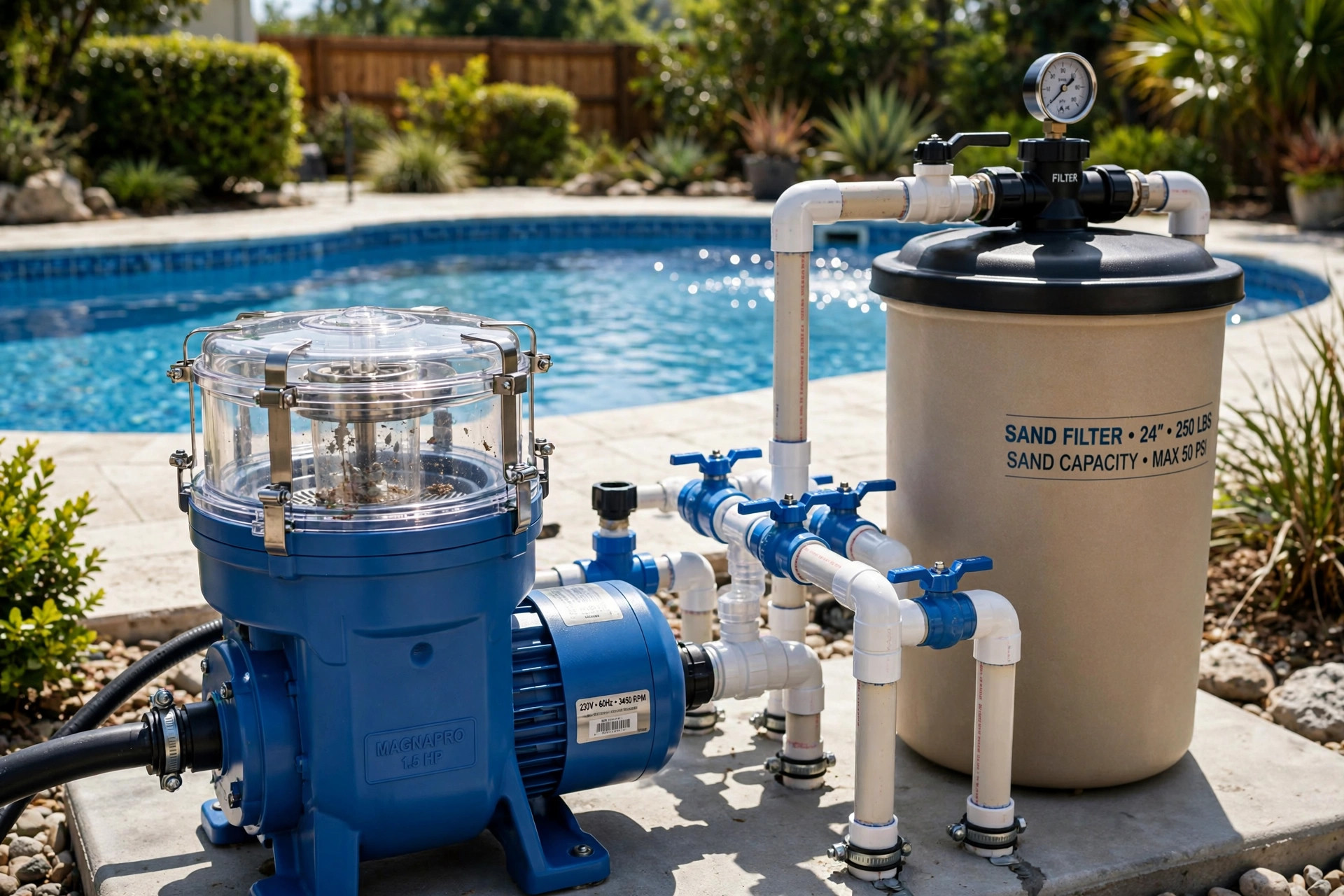
A pool system works like a loop. The pump pulls water from the pool through the skimmer and the main drain. The water passes through the filter, and then it returns to the pool through the return jets. When flow is low, there is a blockage or a leak somewhere in that loop. This guide walks through each part of the system in order, from the easiest checks to the harder ones.
Why Good Water Flow Matters
Your pump and filter can only do their job when water moves at full speed. Strong flow pushes dirt and debris into the filter. It also spreads chemicals evenly through the water. When flow drops, debris settles on the floor, algae can grow, and chemicals build up in one spot while other areas go untreated.
Low flow also puts strain on the pump motor. A pump that must work hard against a blockage can overheat. Over time, this shortens the life of the motor and may lead to a costly replacement. Fixing the problem early saves both money and time. Pool care guides on sites like SwimUniversity explain that steady circulation is the base of every healthy pool.
Signs of Low Water Flow: How to Fix Low Pool Water Flow
Before you start, look for the clear signs. The return jets feel weak when you hold your hand in front of them. The water in the pump strainer basket looks foamy or half full. The pressure gauge on the filter reads higher than normal. The pool surface collects leaves and dust that used to get pulled into the skimmer. The heater may shut off because it needs enough flow to run safely. If you see two or more of these signs, work through the steps below.
What to Check First
Empty the Skimmer Baskets
Start with the easiest step. Lift the skimmer lids at the side of the pool and pull out the baskets. Throw away leaves, bugs, and debris. Rinse each basket with a garden hose. Full baskets block water before it even reaches the pump, and this is the most common cause of weak flow.
Check the Pool Water Level
The water level must reach the middle of the skimmer opening. If the level is low, the skimmer pulls in air along with water. Air in the lines causes the pump to lose prime, and flow drops fast. Add water with a garden hose until the level is correct. This simple fix solves many low flow problems in minutes.
Clean the Pump Strainer Basket
The pump has its own basket inside the strainer pot. Turn off the pump first. Close the skimmer and main drain valves if you have them. Remove the pump lid, lift out the basket, and empty it. Check the lid for cracks and the O-ring for wear. A cracked lid or a bad O-ring lets air leak in, which cuts flow. Rinse the basket and put it back. Make sure the lid seals tight before you restart the pump.
How to Check and Clean the Filter
The filter is the next place to look. A dirty filter is the second most common cause of low flow. Your pressure gauge tells the story. Most filters run best at a set pressure noted in the manual. When the gauge reads eight to ten pounds per square inch above the clean reading, the filter needs cleaning.
Sand Filters
Sand filters are cleaned by backwashing. Turn off the pump and set the multiport valve to backwash. Turn the pump on and run it for two to three minutes, until the water in the sight glass runs clear. Turn the pump off, set the valve to rinse, and run it for thirty seconds. Return the valve to filter and restart. If flow stays low after backwashing, the sand may be worn out. Sand usually needs replacement every five to seven years. Guides at Leslie’s Pool describe backwash timing in more detail.
Cartridge Filters
Turn off the pump and open the filter tank. Lift out the cartridge and rinse it with a garden hose, spraying between each pleat. For deep cleaning, soak the cartridge in a filter cleaner solution overnight, then rinse well. A worn cartridge with torn or flat pleats must be replaced. Cartridges usually last one to two seasons with normal use.
D.E. Filters
Backwash a D.E. filter the same way as a sand filter. After backwashing, add fresh D.E. powder through the skimmer with the pump running. Follow the amount listed on the filter label. If the filter grids are torn or the fabric is worn, they must be replaced. Home improvement resources such as Home Depot carry replacement grids and D.E. powder for most models.
Look for Air Leaks in the Suction Line
If the baskets and filter are clean but flow is still low, air may be leaking into the suction side of the pump. Air bubbles in the pump strainer basket or bubbles coming out of the return jets are the telltale signs. Small leaks make a big difference because the pump cannot move air the way it moves water.
Check the pump lid O-ring first. Remove it, wipe it clean, and coat it lightly with pool O-ring lubricant. Replace it if it is cracked or flat. Check the drain plugs on the pump and the union fittings on the pipes. Tighten anything that is loose. If you have valves on the suction line, check that each valve seal is in good shape. A slow drip at any fitting on the suction side means air is being pulled in while the pump runs.
Check the Impeller for Clogs
Small debris can slip past the pump basket and jam the impeller. A clogged impeller cuts flow sharply even when everything else looks fine. Turn off the pump and lock out the power at the breaker for safety. Remove the pump basket and reach into the opening toward the impeller. Wear gloves. Pull out hair, leaves, small stones, or bits of plastic wrapped around the impeller. Turn the impeller by hand to confirm it spins freely. Put the pump back together and restart it. Articles from Family Handyman give clear photos of this job for common pump models.
Inspect Valves and Pipes
Walk the equipment pad and look at every valve. A suction or return valve that is only half open will choke the flow. Make sure each valve handle points in the direction of full open. Check for cracked pipes, loose joints, or wet spots that point to a leak on the pressure side. A leak on the pressure side wastes water and lowers jet strength. Small leaks can be patched, but cracked pipes should be cut out and replaced with new fittings.
Check the Pump Motor and Size
If the whole system is clean and sealed, the pump itself may be the issue. Listen to the motor. A loud hum or grinding noise can mean worn bearings. A pump that is too small for the pool and filter size will never move enough water. When you shop for a replacement, the best pool pump for inground pools guide can help you match pump size to your system. Variable speed pumps save energy and let you dial in the right flow rate for daily filtering.
Also check the age of the equipment. A pump motor that is more than eight to ten years old may be losing power. Seal plates, gaskets, and diffuser parts wear down with time. Replacing worn parts can restore flow without buying a whole new pump.
Water Chemistry and Flow
Flow and chemistry work together. Poor circulation lets chlorine sit in dead spots while algae grows in corners. After you fix the flow, test the water and balance it. Keeping pH in range matters for both swimmer comfort and equipment life. If your pH runs high, the guide on how to lower pool ph levels safely walks through the steps. Clean water and full flow go hand in hand.
Cost and Price of Common Fixes
Most low flow fixes cost little or nothing. Emptying baskets and adding water is free. A new pump lid O-ring costs a few dollars. Filter cleaner and D.E. powder are low cost items. A replacement cartridge runs from modest to mid range depending on size. Sand replacement costs more because of the labor and the weight of the sand. A new pump motor or a full pump replacement is the largest expense, often several hundred dollars. Catching the problem early keeps you at the cheap end of this list. Retailers such as Pool Warehouse list parts prices so you can plan ahead.
Care and Upkeep to Prevent Low Flow
A short weekly routine prevents most flow problems. Empty the skimmer and pump baskets once or twice a week. Check the water level after hot days when evaporation is high. Watch the filter pressure gauge and clean the filter when the reading climbs. Backwash on schedule during swim season. Once a year, inspect O-rings, drain plugs, and valve seals, and replace anything that looks worn. Open the pool correctly each spring, following a checklist like the one in how to open pool for summer season, so the system starts the season clean.
Winter care matters too. In cold climates, close the pool properly so pipes do not freeze and crack. Cracked underground pipes leak water and air, and they are costly to repair. Spa owners face the same rules. Brands such as Bullfrog Spas and Hot Spring Spas stress regular filter cleaning for steady flow in hot tubs as well.
Safety Notes
Always turn off the pump and shut off power at the breaker before you open the pump lid or the filter tank. A pressurized filter tank can cause serious injury if opened while under pressure. Release pressure through the air relief valve before you remove any clamp or lid. Keep chemicals stored away from the equipment pad and never mix products. The U.S. Consumer Product Safety Commission at CPSC offers guidance on safe pool equipment and drain covers. If a job involves wiring or the motor capacitor, call a licensed electrician. Home repair guidance from This Old House and The Spruce also stresses locking out power before pump service.
FAQ
How do I know if my pool filter needs cleaning?
Watch the pressure gauge. When it reads eight to ten pounds per square inch above the normal clean reading, clean the filter. Weak return jets and cloudy water are other signs.
Why is my pump basket only half full of water?
Air is entering the suction side. Check the pump lid O-ring, the lid itself, drain plugs, and union fittings. A low water level at the skimmer can also pull air into the system.
Can a dirty filter damage my pump?
Yes. A clogged filter forces the pump to work harder. Over time this overheats the motor and shortens its life. Clean the filter on schedule to protect the pump.
How often should I backwash my sand filter?
Backwash when the pressure gauge rises eight to ten pounds per square inch above the clean reading. For most pools this means every few weeks in swim season, depending on use and debris load.
Should I run my pump longer if flow is low?
Running the pump longer does not fix the cause. Find and fix the blockage or leak first. Once flow is restored, normal run times will keep the water clean.
When should I call a professional?
Call a pool technician if you suspect a cracked underground pipe, if the motor makes grinding sounds, or if flow stays low after you have cleaned every part of the system. Electrical work should always go to a licensed electrician.
A Final Word
Learning how to fix low pool water flow is mostly a matter of working in order. Start with the baskets and the water level. Clean the filter. Seal the air leaks. Clear the impeller. Check the valves and the pump. Most pool owners find the cause in the first three steps. Keep up with weekly care, and your system will run at full flow all season long.
References
Bullfrog Spas. (n.d.). Hot tubs and spas. https://www.bullfrogspas.com Family Handyman. (n.d.). DIY home repair and maintenance. https://www.familyhandyman.com Hot Spring Spas. (n.d.). Hot tubs and spas. https://www.hotspring.com Leslie’s Pool Supplies. (n.d.). Pool supplies and equipment. https://www.lesliespool.com Pool Warehouse. (n.d.). Pool equipment and supplies. https://www.poolwarehouse.com Swim University. (n.d.). Pool and hot tub care guides. https://www.swimuniversity.com The Home Depot. (n.d.). Home improvement products. https://www.homedepot.com The Spruce. (n.d.). Home and garden advice. https://www.thespruce.com This Old House. (n.d.). Home renovation guidance. https://www.thisoldhouse.com U.S. Consumer Product Safety Commission. (n.d.). Product safety information. https://www.cpsc.gov
Was this guide helpful?

About David Wilson
The My Garden US editorial team writes practical, in-depth home and garden guides for American homeowners — tested advice, no fluff.
You May Also Like
Best Pool Deck Cleaner for Concrete: A Plain Guide for Homeowners
March 2, 2026 0 views
Best Pool Filter Sand vs Cartridge: Which System Is Right for Your Pool?
May 3, 2026 0 views
Best Pool Floats for Pool Parties: A Practical Buying Guide
July 4, 2026 0 views