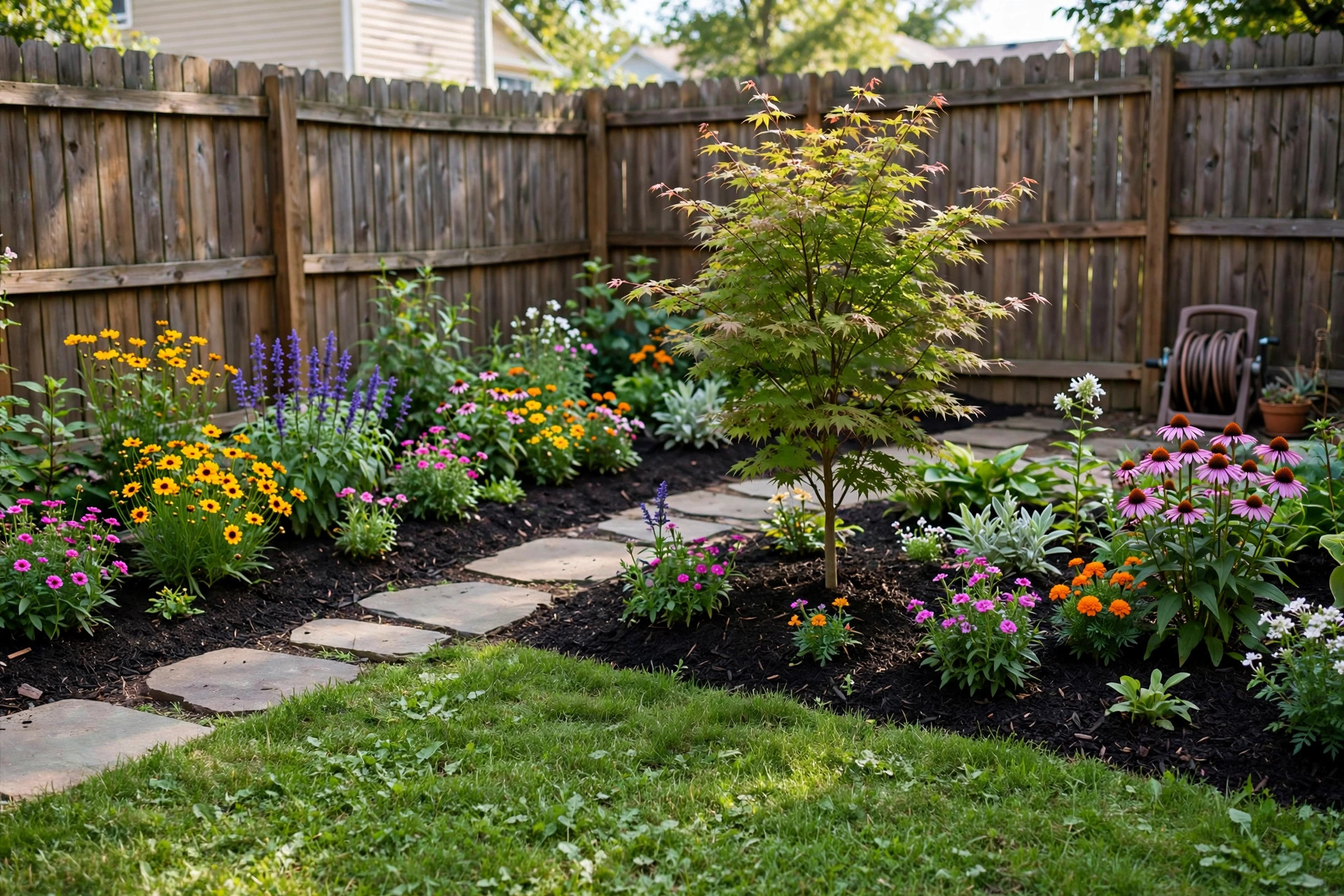

A good yard does not need to be big. It does not need to cost a great deal of money either. With small yard landscaping ideas on budget, a modest patch can become a fine place to sit, play, and rest. The work is simple. The rules are plain. And the cost can stay low with care.
Many American homes have small yards. Townhouses, duplexes, and older city lots often have only a few hundred square feet of open ground. Owners look out and see weeds, bare dirt, or an old fence. They think a nice yard is beyond their means. It is not. A small yard is in fact cheaper to fix than a large one. Less ground means less soil, less mulch, fewer plants, and less water. The trick is to use every square foot with care.
Why It Matters
A yard is the first thing a guest sees. A neat yard makes a home feel cared for. It also gives the family a place to live in the open air. Children can play. Adults can sit with a cup of coffee. A small yard can do all of this as well as a big one, and it takes less time to keep up.
Money matters too. Most small yards can be dressed up for a few hundred dollars. The labor is free if you do the work yourself on weekends, and materials are cheap if you buy in bulk and choose common plants.
How to Choose the Right Plan: Small Yard Landscaping Ideas on Budget
Before you buy anything, walk the yard and look. Note where the sun falls in the morning and where it falls in the late day. Note where water stands after rain. Note the paths you already walk, from the back door to the gate or the shed. These lines tell you where paths and beds should go.
Next, set a budget and write it down. Many small yards can be dressed up for 300 to 800 dollars. Keep a list of every item you buy. It is easy to lose track, and small costs add up fast.
Keep the plan simple. A small yard looks best with few shapes, not many. One bed shape, one path line, and one sitting spot are enough. Too many little beds and bits of lawn look messy. Think of the yard as one outdoor room, not a set of small rooms.
Pick a style and hold to it. A cottage style uses many flowers. A modern style uses clean lines and few plants. A natural style uses grasses and wildflowers. Any of these can be done cheaply. Mixing them all in one small yard looks untidy.
Finally, work in the right order. Clear weeds first. Then set the paths and edges. Then put in soil and plants. Mulch goes on last. To do it in any other order is to do the work twice.
Ideas That Cost Little
Here are ideas that keep costs down while making a small yard look fine.
A clean edge. A sharp line between lawn and bed makes any yard look cared for. A spade and a little time can cut a clean edge. Cheap plastic or steel edging from a home store keeps the line sharp for years.
Mulch beds. Mulch is one of the cheapest ways to cover bare ground. A layer of pine bark or wood chips, three inches deep, turns a weedy strip into a neat bed. Pine straw is often the cheapest of all in the South, and you can even arrange for cheap pine straw mulch delivery near me cheap-pine-straw-mulch-delivery-near-me style savings by buying in bulk with a neighbor. One cubic yard covers about one hundred square feet at three inches deep.
A simple path. A path of flat stones or concrete pavers set on sand guides the eye and keeps feet dry. You do not need cut stone. Irregular fieldstone or plain square pavers look fine. Space them a step apart on a small lawn and let grass grow between them for a soft look.
Plants that spread. Groundcover plants spread on their own and fill space fast. Creeping thyme, creeping Jenny, and Asian jasmine cost little in small pots and soon cover a bed. They also hold back weeds, which saves work later.
Perennials over annuals. Annual flowers must be bought and planted every year. Perennials come back on their own. Daylilies, coneflowers, black-eyed Susans, and hostas are cheap, tough, and long-lived. One plant can be split in a few years to make more plants for free.
A small tree or shrub as a focal point. One good plant gives the yard a center. A dwarf crepe myrtle, a Japanese maple in a pot, or a large ornamental grass can anchor the whole space. Buy the smallest pot size. It grows fast and costs much less.
Containers. Pots let you plant without digging. A few large pots by the door, filled with flowers or small shrubs, make a plain entry look planned. Pots also let renters take their plants with them when they move.
Seeded borders. Wildflower seed mixes cost a few dollars and cover a large area. In a sunny corner, scatter a mix suited to your region and water it well for the first weeks. The result is a bright bed that costs almost nothing. For yards that stay dry, native plants are a wise pick; see these native plant landscaping ideas for front yards for more low-water choices.
A small lawn, kept well. A little grass looks better than a lot of thin grass. Feed it on time, mow it high, and water it deep but not often. If the yard is too shady for grass, let the whole area become beds or groundcover instead of fighting a losing lawn. When the grass is worn out and thin, best drought tolerant grass seed california options and similar tough seed types can help in dry, hot regions.
Vertical planting. When the ground is small, grow up. A trellis with beans or morning glories, or a wall with hanging pots, adds green without using floor space.
Free plants. Ask friends for cuttings and divisions. Many perennials need to be split every few years, and gardeners are glad to give away the extra pieces. Local garden clubs often hold plant swaps in spring.
Keep it neat. Neatness is free. Mow on time, pull weeds when they are small, and sweep the path. A tidy small yard looks better than a messy big one, and tidy habits cost nothing.
Types and Options for Small Yards
Small yards fall into a few common shapes, and each has a plan that fits.
The long narrow side yard. Use a straight path down the middle with beds on both sides. Plant the same shrub three or four times in a row. Repetition makes a narrow space feel calm and wide.
The small square back yard. Divide it into three parts: lawn or groundcover in the middle, a bed along the fence, and a sitting spot near the house. A curve in the bed line softens the square shape.
The sloped yard. A slope is hard to mow. Turn it into beds with groundcover, or build one or two low terraces with cheap landscape timbers. Groundcover holds the soil and needs no mowing.
The shady yard. Under big trees, grass will not grow well. Use shade beds with hostas, ferns, and mulch.
The dry sunny yard. Where water is scarce, use drought-wise plants: ornamental grasses, lavender, salvia, and native shrubs. A deep mulch layer holds what rain falls.
Cost and Price Guide
Costs vary by region, but the ranges below are common in the United States for do-it-yourself work.
A cubic yard of bark mulch, delivered, often runs 35 to 60 dollars. Bagged mulch at a home store costs more per yard but needs no delivery truck. Pine straw bales are cheap in the Southeast, often 4 to 8 dollars a bale, and one bale covers about 40 square feet.
Common perennials in one-gallon pots run 8 to 15 dollars. Smaller quart pots run 4 to 8 dollars. A flat of annual flowers runs 15 to 25 dollars. Shrubs in three-gallon pots run 20 to 45 dollars. A bag of wildflower seed that covers 500 square feet runs 10 to 20 dollars.
Landscape fabric is not needed in most beds. A thick layer of mulch blocks weeds just as well and lets water through. Save the money.
Tools can be borrowed or bought used. A spade, a rake, a wheelbarrow, and a hand pruner do most small-yard work. Many tool libraries and some home stores rent larger tools by the day. For bigger machines, such as mowers, maker sites like Toro and John Deere show the full range of models, and Briggs and Stratton covers small engines and parts.
For a 400-square-foot yard, a fair sample budget is about 550 dollars: 150 for mulch, 160 for 20 perennials, 125 for 5 shrubs, 40 for edging, 30 for 6 pavers, 50 for soil amendment, and 40 for seed or sod. Hiring a crew for the same work could double or triple the cost.
Care and Upkeep
A small yard is easy to keep, but it still needs steady care. Water new plants deeply for the first month. After that, most established plants need water only in dry spells. A deep watering once a week is better than a light sprinkle every day.
Mulch breaks down. Add a fresh inch each spring to keep beds neat and weed-free. Pull weeds when they are small; a weed pulled young is a minute of work, while a weed left to seed is a season of work.
Feed plants lightly. A general slow-release fertilizer in spring is enough for most beds. Too much feed makes soft growth that pests like. Lawns need feed on a set schedule, in spring and fall in most regions.
Prune shrubs once a year, in late winter or after they bloom. Cut out dead wood first, then shape lightly. Never shear a shrub into a hard ball unless the style calls for it; natural shapes look better and need less cutting.
Mow the lawn high. Three inches is a good height for most grasses. Tall grass shades the soil, holds water, and crowds out weeds. Keep the mower blade sharp. A dull blade tears the grass and leaves brown tips.
In fall, rake leaves off the lawn and beds, or run a mower over them to chop them fine. A thin layer of chopped leaves feeds the soil. A thick mat of whole leaves smothers it.
Safety
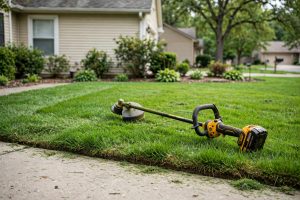
Yard work is safe when done with care, but a few rules matter. Wear gloves when handling mulch, soil, and thorny plants. Wear eye protection when using a string trimmer or pruner on thick stems. Lift bags of soil and stone with the legs, not the back, and get help with heavy items.
Keep tools sharp and clean. A sharp spade cuts soil with less force. Store tools out of the rain.
Check for buried lines before you dig. A call to the local utility marking service will have lines marked for free.
Use chemicals with care, or not at all. Read the label and follow it. In many small yards, hand pulling and mulch do the whole job without chemicals.
Make paths safe. Set pavers level so no one trips. Keep the path clear of hoses and tools. At night, a solar light or two marks the way.
Frequently Asked Questions
How much does it cost to landscape a small yard? Most do-it-yourself small yard projects cost 300 to 800 dollars. Doing the labor yourself is the biggest saving; hiring a crew can double the cost.
What is the cheapest way to landscape a small yard? Mulch beds, seed, and free or divided plants are the cheapest path. A thick layer of mulch over cleared ground, edged cleanly, looks planned at once.
Should I keep grass in a small yard or remove it? Keep a small patch of lawn if the family uses it for play or pets. If the yard is deeply shaded, beds and groundcover are easier to keep than a failing lawn.
When is the best time to start? Spring and fall are the best times to plant in most of the United States. The air is mild and rain is more common, so new plants settle in fast. Summer planting works too, but it needs more water. Winter is a good time to plan and to spread mulch.
Do I need a landscape designer for a small yard? No. Most small yards can be planned by the owner with a tape measure and a sketch on paper. A designer can help with a tricky slope or drainage problem, but for a plain small yard, a simple plan of your own is enough.
A Short Final Word
A small yard is not a small chance. It is a fair chance, and a cheap one. Clear the weeds, draw a simple plan, edge it clean, mulch it deep, and plant tough perennials. Do a little each weekend. In one season, the yard will look like a place you meant to make. Small yard landscaping ideas on budget ask only for care and patience. The yard will pay you back every day you step out the door.
References
Toro. (n.d.). Lawn mowers and yard equipment. https://www.toro.com Deere & Company. (n.d.). Lawn and garden equipment. https://www.deere.com Briggs & Stratton. (n.d.). Small engines and power products. https://www.briggsandstratton.com
Was this guide helpful?

About Lisa Anderson
The My Garden US editorial team writes practical, in-depth home and garden guides for American homeowners — tested advice, no fluff.
You May Also Like
Best Weed Control for Flower Beds: A Complete Guide
July 9, 2026 0 views
Lawn Fertilizer for Sandy Soil Florida: A Plain Guide for Homeowners
June 8, 2026 0 views
How to Install a Landscape Lighting Transformer
April 30, 2026 0 views