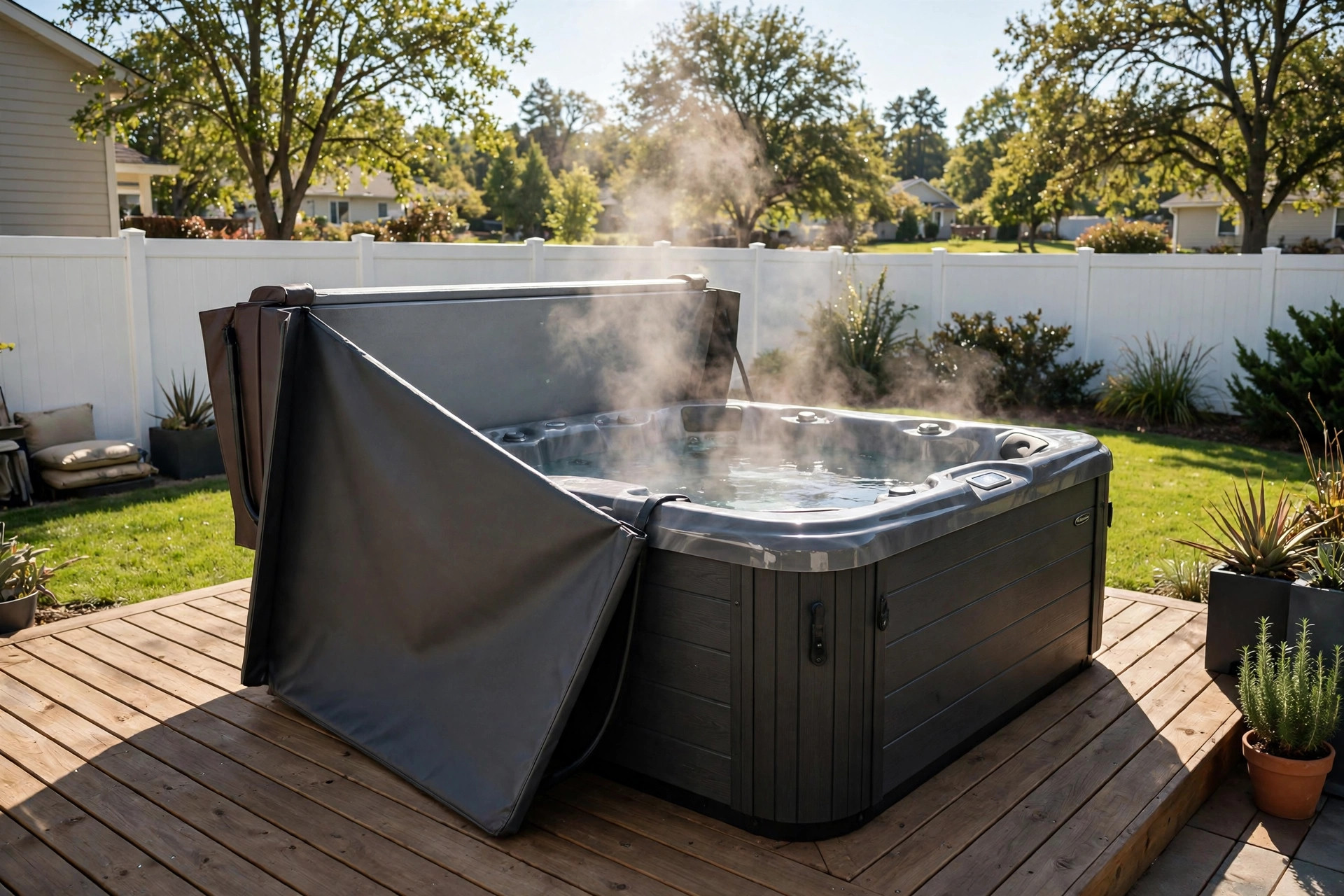
A hot tub cover is a hard worker. It holds heat in, keeps leaves and rain out, and guards the tub against children and pets. Yet it does not last forever. Sun, steam, and snow wear the foam and vinyl down over a span of years. When the old cover grows heavy, cracks, or stops sealing, the time comes to replace it. This hot tub cover replacement cost guide walks through what a new cover costs, what shapes the price, and how to choose one that will serve your tub for years.
Why a Good Cover Matters
The cover does more for your electric bill than any other part of the tub. Heat rises off warm water fast when no cover stands in the way. A worn cover leaks heat through torn seams and waterlogged foam. The heater then runs longer to hold temperature. Over a season, that extra run time shows up in dollars.
A sound cover also protects water quality. It blocks leaves, dust, and insects from falling in. That means fewer chemical adjustments and less time skimming debris. It also shields the shell and cabinet from sun fade and winter frost. Viewed over its full life, a cover is one of the cheapest parts of tub ownership.
What Drives the Cost of a Replacement: Hot Tub Cover Replacement Cost Guide
No single price fits every tub. The cost moves with size, materials, and features. The points below explain each factor.
Size and Shape
A cover must match the tub’s top almost exactly. Standard round and square tubs are the cheapest to cover because makers stock common sizes. Large swim spas or odd shapes cost more. Custom-cut covers carry a premium of fifty to one hundred fifty dollars over stock sizes in many shops.
Foam Thickness and Density
The foam core gives the cover its insulating power. Standard covers use foam about four inches thick at the center, tapering to about two and a half inches at the edge. Thick covers for cold regions use five inches or more. Density matters too. Foam rated at one and a half pounds per cubic foot is standard; two-pound foam is stronger and resists water soak better. Each step up in thickness and density adds twenty to eighty dollars to the price.
Vinyl Skin and Stitching
The vinyl skin stands between foam and weather. Marine-grade vinyl with UV treatment costs more than basic vinyl, but it holds color and resists cracking far longer. Double stitching along the seams adds strength. Some covers add a reflective bottom liner to shed steam. A stronger skin and liner can raise the price by thirty to one hundred dollars, yet they often add a year or two of life.
Hinge, Lock, and Skirt
A good hinge folds the cover without tearing. A full skirt, the flap that hangs over the tub edge, blocks wind and snow from lifting the lid. Locking straps keep the cover shut. Covers with a wide skirt and strong locks cost a little more, and they are worth it in windy or snowy areas.
Types of Hot Tub Covers
Shoppers will meet several cover types. Each suits a different climate and budget.
Standard replacement covers fit most tubs in mild climates. They offer middle-grade foam and vinyl at the lowest price. For a tub under a porch roof in a warm state, this type is often enough.
Cold-climate covers use thicker, denser foam and a tighter seal. Owners in the north and mountain states favor them. A guide to choosing a hot tub built for cold weather pairs well with this section, since the tub and cover work as a team.
Walk-on covers carry a strong top shell that bears weight. They suit households where the tub sits near a path or play area. They cost the most of the foam types.
Roll-off or sliding covers replace the folding lid with a roller track. They need no lifting, which helps owners with stiff backs. The hardware raises the price, but the ease of use is real.
When a Repair Will Do
Not every tired cover must be thrown away. A small tear in the vinyl can be patched with a spa cover repair kit, which costs about twenty to forty dollars. The kit holds a vinyl patch and a strong adhesive. Clean the spot, press the patch on, and give it a day to cure. Patching works best on a single tear on the top face.
Waterlogged foam is a different story. Once the cells fill with water, no patch will fix them. If one panel sags while the other stays light, a shop can sometimes replace just one foam panel, though many modern covers glue the panels into one unit. Hinge damage is often worth fixing on its own. A new hinge costs fifteen to thirty dollars and takes minutes to sew or strap on. Use this rule: patch small skin damage, replace the whole cover when the foam is heavy, the seams are splitting, or the heater runs day and night.
How Much Does a Replacement Cost
The table below gives common ranges seen across American retailers in recent years. Prices shift with region and season, so treat them as planning figures, not quotes.
| Cover type | Common price range | |—|—| | Basic stock cover, standard foam | 250 to 400 dollars | | Mid-range cover, dense foam, UV vinyl | 400 to 650 dollars | | Thick cold-climate cover | 500 to 800 dollars | | Custom size or shape | Add 50 to 150 dollars to stock prices | | Walk-on or roll-off systems | 800 to 1,500 dollars |
Labor is rarely a factor. Most owners fit a new cover themselves in under an hour. Some dealers charge a small delivery fee, often twenty to forty dollars, when the cover ships to a shop rather than your door. A cover lifter is a separate purchase, usually eighty to three hundred dollars, and it pays for itself in saved strain. Plan the full project, not just the lid. A fresh cover, a working lifter, and a bottle of vinyl protectant together make up the real budget. Buying the protectant at the same time saves a second trip to the store, and starting good care habits on day one adds years to the new lid.
How to Measure for the Right Fit
A cover that misses by an inch will leak heat and slide in wind. Measure twice before ordering.
1. Measure the length and width across the widest points of the tub lip, corner to corner. 2. Measure the corner radius with a carpenter’s square or a printed template. 3. Check which side the hinge folds across, and note the strap positions. 4. If the old cover had a skirt, measure its length so the new one matches.
Take each measurement twice. If the numbers differ, take them a third time. Most makers print a clear measuring guide, and retailers like Leslie’s Pool Supplies and The Home Depot carry diagrams for common brands.
Care That Extends Cover Life
A new cover should last three to five years, and good care can push it toward seven. Simple habits do most of the work.
– Rinse the cover monthly with mild soap and water. Harsh cleaners crack vinyl. – Treat the vinyl twice a year with a UV protectant made for spa covers. – Keep the underside clean. Wipe away the chemical film that builds up from steam. – Never stand on the cover unless it is rated walk-on. Weight crushes foam cells. – Open the cover a few hours a week to let trapped steam escape. A brief airing slows waterlogging. – In winter, brush snow off before it piles deep. Wet snow is heavy and bends foam. – Keep the water line at the proper height. Water that slaps the underside of the lid speeds foam soak.
Waterlogging is the main killer. When foam absorbs water, the cover grows heavy and loses insulation. Once soaked, the foam rarely dries back. If your old cover feels like lifting a mattress, the foam has failed and replacement is the only fix. Check the foam warranty before you buy; many makers cover foam failure for two to three years, and a clear warranty signals a maker that trusts its own build.
Safety Notes
A hot tub is safe only when the cover is on and locked between uses. Federal safety guidance stresses barriers around spas, and a locked cover is the first line of defense. The U.S. Consumer Product Safety Commission publishes clear rules for spa barriers that every owner should read.
Straps should click shut with a key or latch. Teach children that the cover is not a toy and not a seat. Keep the area around the tub free of tripping hazards, since a wet deck and a heavy lid make a poor pair. Check the hinge each season for rust or torn fabric; a failed hinge can slam the cover shut on hands.
Frequently Asked Questions
How do I know my cover needs replacing?
Three signs tell the story. The cover feels much heavier than when new. The vinyl shows cracks, flaking, or torn seams. The heater runs more often even though the weather has not changed. Any two of these together mean the foam has given out.
Can I buy a universal cover?
Some universal covers exist, but they fit poorly on most tubs. A poor fit leaks heat and costs more in electricity than a proper cover would have cost. Measure your tub and order a cover cut for your brand and model when possible.
How long should a new cover last?
Expect three to five years from a mid-range cover with regular care. Thick covers in mild climates may reach six or seven years. Covers left in harsh sun without treatment may fail in two.
Should I replace the lifter too?
If the lifter still works smoothly, keep it. Replace worn straps or a bent arm rather than the whole unit. A new cover with an old lifter pairs well as long as the hinge line matches. Many spa care guides explain how to adjust a lifter to a thicker lid.
Does a thicker cover always save money?
Not always. In a warm climate, a standard cover with good care does the job. The thick cover pays back in cold states, where the extra insulation cuts heater run time through winter. Match the cover to your climate, not to the thickest option on the shelf.
Where can I compare cover specs?
Maker sites publish honest spec sheets. Hot Spring Spas and Bullfrog Spas both describe foam thickness, vinyl grade, and warranty terms in plain language. Pool supply retailers like Pool Warehouse list sizes and prices side by side. Independent reviews at Consumer Reports and home guides at The Spruce round out the picture, and big-box listings at Lowe’s show current shelf prices.
A Short Final Word
A hot tub cover is a simple part, but it does honest work every day. Spend the money on foam that suits your climate, vinyl that resists the sun, and a fit that seals tight. Measure with care, treat the vinyl kindly, and lock the lid when you step away. Do these things, and the new cover will earn back its price in saved heat and clean water, season after season. A little care at the start saves a big bill later, and your tub will thank you with warm, ready water every time you lift the lid.
References
Bullfrog Spas. (n.d.). Hot tubs and spas. https://www.bullfrogspas.com Consumer Reports. (n.d.). Product reviews and ratings. https://www.consumerreports.org Hot Spring Spas. (n.d.). Hot tubs and spas. https://www.hotspring.com Leslie’s Pool Supplies. (n.d.). Pool supplies and equipment. https://www.lesliespool.com Lowe’s. (n.d.). Home improvement products. https://www.lowes.com Pool Warehouse. (n.d.). Pool equipment and supplies. https://www.poolwarehouse.com Swim University. (n.d.). Pool and hot tub care guides. https://www.swimuniversity.com The Home Depot. (n.d.). Home improvement products. https://www.homedepot.com The Spruce. (n.d.). Home and garden advice. https://www.thespruce.com U.S. Consumer Product Safety Commission. (n.d.). Product safety information. https://www.cpsc.gov
Was this guide helpful?

About David Wilson
The My Garden US editorial team writes practical, in-depth home and garden guides for American homeowners — tested advice, no fluff.