
Introduction
Finding the best pool skimmer for inground pools is one of the first steps to clear water. A skimmer pulls leaves, bugs, and small bits of trash off the surface before they sink. When debris sinks, it clouds the water and feeds algae. A good skimmer stops that trouble at the surface.
An inground pool is a large investment. The skimmer is a small part of it, but it does heavy work every day. It also protects the pump. When large leaves reach the pump basket or the filter, they can clog the system and raise pressure. Clean surface water means less work for the whole pool system.
This guide explains what a pool skimmer does, the types you can buy, and how to pick the right one. It covers prices, simple upkeep, and safety notes. It also answers common questions pool owners ask. By the end, you will know how to judge the best pool skimmer for inground pools and keep yours working for years.
Why a Good Skimmer Matters for Inground Pools: Best Pool Skimmer for Inground Pools
An inground pool holds thousands of gallons of water. Leaves fall in all year. In autumn, one storm can cover the surface in an hour. Without a skimmer, all that material sinks to the floor. Then the owner must brush and vacuum much more often.
The skimmer draws water from the top few inches of the pool. It catches floating debris in a basket. The basket is easy to lift out and empty. This daily cycle keeps the surface clean with very little effort. Pool owners who empty the basket often use less chlorine and fewer chemicals. Clean water needs less treatment.
Skimmers also help the pump. The pump moves water through the filter. When the skimmer basket catches leaves first, the pump basket stays clear. The filter lasts longer between cleanings. Energy use drops a little because water flows freely.
A pool with weak surface skimming also looks bad. Film, pollen, and dust gather on top. Swimmers notice. A steady skimmer line pulls that film away. The water looks bright and inviting.
Types of Pool Skimmers for Inground Pools
Not all skimmers work the same way. Inground pools usually rely on built-in skimmers, but owners often add other types for heavy debris seasons. The sections below describe each kind.
Built-In Wall Skimmers
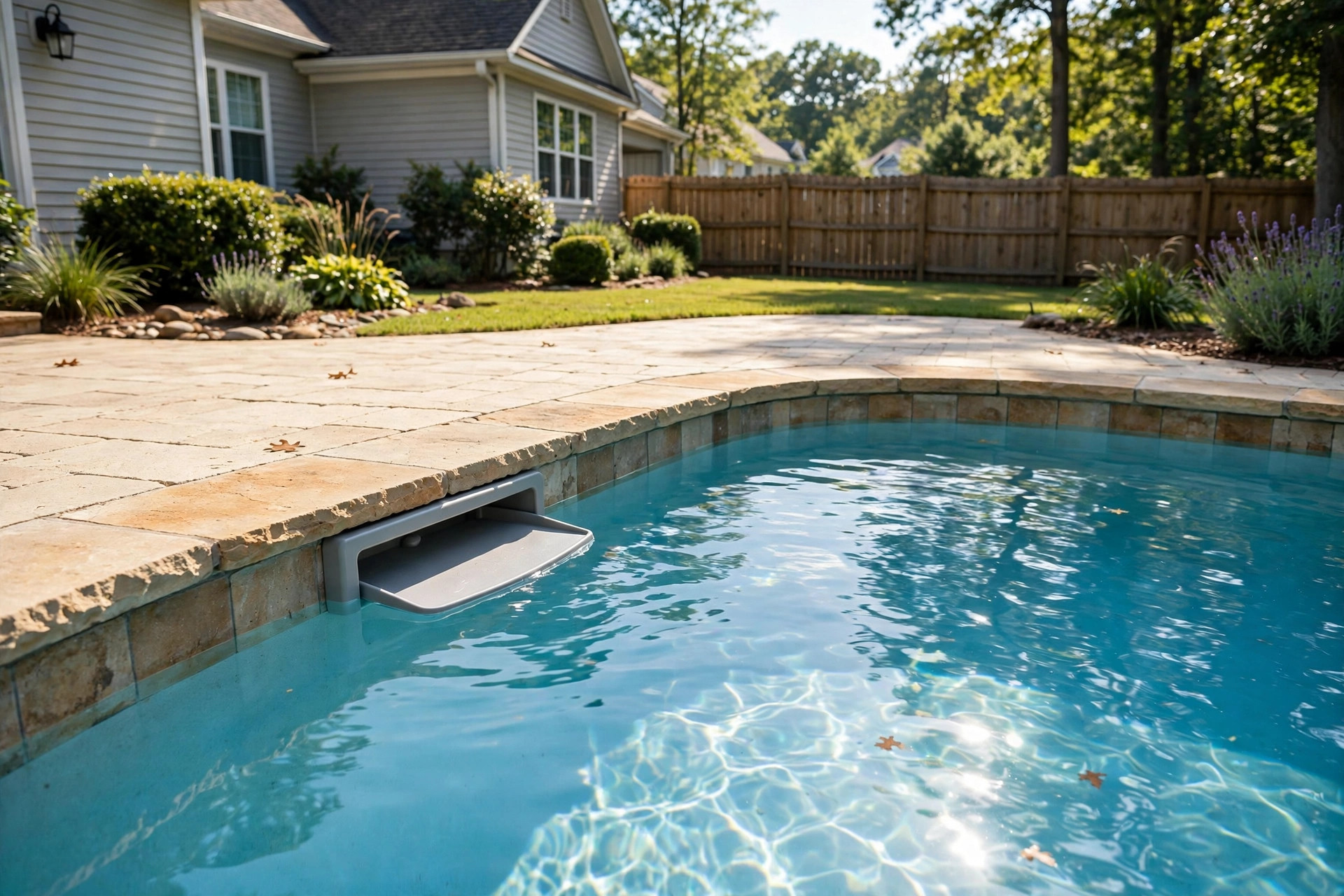
Most inground pools come with one or more built-in skimmers. These sit in the pool wall at the waterline. Water flows through a wide mouth into a basket inside the wall housing. A weir door floats at the mouth. It lets water in and keeps debris from floating back out.
Built-in skimmers run whenever the pump runs. They need no extra power. The owner only has to empty the basket. Many pool builders install two skimmers on large pools to double surface coverage.
When you shop for a replacement wall skimmer, check the throat size and the basket size. A larger mouth pulls more surface water. A deeper basket holds more leaves between emptying. Widely sold pool brands make replacement parts easy to find at a pool supply store or a big home retailer like The Home Depot.
Automatic and Solar Surface Skimmers
Automatic surface skimmers are small floating devices that roam the pool on their own. Some plug into the pool’s return line. Others run on solar power and recharge in the sun. They collect leaves in an onboard basket or mesh bag.
These units shine during heavy leaf fall. A built-in skimmer can only pull from its corner of the pool. A roaming skimmer covers the middle. Owners who live near trees often run both. The automatic unit handles the bulk, and the wall skimmer handles the edges.
Prices range from under one hundred dollars to several hundred. Solar models cost more up front but use no power from the house. Check reviews for run time and basket size before you buy. Pool Warehouse and similar specialty shops list several models with owner ratings.
Hand Skimmers and Leaf Rakes
Every pool owner should own a hand skimmer. It is a flat net on a long pole. You sweep the surface by hand. A leaf rake is a deeper net for scooping debris from the floor. These tools cost little and last for years.
Hand skimmers matter because no machine reaches every spot. Steps, corners, and shaded coves collect debris. A quick sweep each morning keeps the pool inviting. It is the cheapest way to help any skimmer system.
Buy a net with a sturdy frame and fine mesh. Fine mesh catches pollen and small seeds. Coarse mesh only catches big leaves. A pool care guide can show proper sweeping technique so you spend less time on the chore.
What to Look for When You Choose
Choosing the best pool skimmer for inground pools comes down to a few clear points. Use this checklist when you compare models.
First, match the skimmer to your pool size. A small pool needs only one wall skimmer. A large pool or an odd shape may need two. Automatic units also list a suggested pool size. Do not buy an undersized unit for a big pool. It will run all day and still leave debris.
Second, look at basket size and ease of emptying. A bigger basket means fewer trips. Some baskets lift out with one hand. Others need a twist.
Third, check the build quality. Pool water carries chlorine or salt. Cheap plastic cracks in the sun after two or three seasons. Look for thick walls and UV-resistant plastic. Stainless steel parts last longer but cost more. The U.S. Consumer Product Safety Commission also publishes pool safety material worth reading while you shop for equipment.
Fourth, think about your trees and wind. Heavy leaf loads need a wide mouth or a roaming unit. If pollen is your main problem, fine mesh matters more than basket size. Walk your yard in each season and note what falls into the water. Buy for the worst week of the year, not the best.
Fifth, check noise and power needs. Pump-driven add-on skimmers can be loud. Solar units are silent but need full sun to charge. If the pool sits in shade, a solar skimmer may not keep up. Battery models need a charging routine you will actually follow.
Finally, keep the whole system in mind. A skimmer works with the pump, filter, and return jets. A home improvement guide can help you understand how these parts connect. If the pump is weak, even the best skimmer will pull slowly. Sometimes a pump upgrade matters more than a new skimmer.
Related pool chores go hand in hand with skimming. Many owners pair surface skimming with a good vacuum routine. If your pool has a vinyl liner, see our guide to the best pool vacuum head for vinyl. Regular vacuuming removes what sinks past the skimmer line.
Cost and Price Guide
Pool skimmers cover a wide price range. Hand skimmers cost the least. You can buy a sturdy leaf net and pole for twenty to forty dollars. Replacement baskets for wall skimmers cost ten to thirty dollars. These small parts wear out first, so keep a spare basket on hand.
A replacement built-in wall skimmer unit costs between fifty and one hundred fifty dollars, plus labor if you hire a pool technician. Installing a new wall skimmer in an existing pool is a bigger job. It may require cutting into the deck or liner. Most owners replace the basket, weir door, and lid rather than the whole housing. Those parts cost far less.
Automatic and solar surface skimmers cost more. Simple plug-in models start near eighty dollars. Well-known solar roaming skimmers run from two hundred to five hundred dollars. They pay for themselves in saved time during leaf season. Owners with many trees call them the best money they spend on the pool.
Running costs are small. A wall skimmer adds nothing beyond normal pump power. A solar unit charges itself. A battery unit adds a few dollars a year in electricity. The real cost is time. Empty the basket daily in heavy season and weekly in calm months. Five minutes a day beats an hour of heavy cleanup later.
Shop around before you buy. Prices shift between spring and fall. End-of-season sales can cut twenty percent off robotic units. Compare warranties too. A two-year warranty on a three-hundred-dollar unit is a fair deal.
Care and Upkeep
A skimmer needs little care, but it needs it often. Make these habits part of your pool routine.
Empty the basket before it fills. A full basket chokes water flow. The pump then works harder and may run hot. In autumn, check the basket every day. In summer, twice a week is often enough. Rinse it with a hose once a month.
Inspect the weir door each month. The weir is the small floating flap at the skimmer mouth. It should swing freely. If it sticks, debris can escape back into the pool. A stuck weir also makes a gurgling sound. Replacement weirs are cheap and snap in without tools.
Check the skimmer lid and deck ring. The round lid sits flush with the deck. If it cracks, feet can catch on the edge. Replace cracked lids at once. They cost little. Keep the deck around the skimmer clear of mulch and dirt so nothing washes into the basket housing.
Watch water level. A skimmer works best when water sits at the middle of the mouth. Too low, and the pump sucks air. Too high, and debris floats over the weir. After heavy rain, drain a little water. In hot weeks, top the pool up with a hose.
Winter care matters in cold states. Blow out skimmer lines before the first freeze. Plug the skimmer mouth with a winter plug or a foam gizmo. This keeps ice from cracking the housing. Your pool closing guide should list these steps in order.
Clean water chemistry also helps the skimmer last. Balanced water does not eat plastic parts. Test chlorine and pH weekly. Homeowners with a spa at home should follow the same habit; see our notes on how to maintain hot tub water chemistry. Makers of spas and hot tubs, such as Hot Spring and Bullfrog Spas, also publish water care basics that apply to pools.
Safety Notes
Pool equipment brings real safety duties. Take these points to heart.
Never let children play with the skimmer lid or basket. A missing lid leaves an open hole in the deck. Small feet can slip in. Replace lids at once and keep spares. The CPSC pool safety pages at cpsc.gov list entrapment and drowning prevention tips every owner should read.
Turn off the pump before you reach into the skimmer housing. Suction at the skimmer mouth is strong when the pump runs. Fingers and hair can get caught. This rule matters most for children and long hair. Teach every swimmer to keep clear of the skimmer mouth.
Store chemicals away from skimmer parts. Chlorine tablets go in a feeder or floater, never loose in the skimmer basket unless the manual says so. Direct chlorine in the basket can damage the pump seals and heat the water line. Follow the product label every time.
Check local codes for pool barriers and alarms. Many states require fences, self-closing gates, or door alarms. A skimmer upgrade is a good time to review the whole safety setup. A clean pool is only half the job; a safe pool is the whole job.
Frequently Asked Questions
How often should I empty my pool skimmer basket?
Check it daily during leaf season and twice a week in calm months. A full basket slows the pump and hurts skimming. Emptying takes less than a minute.
Can I add a skimmer to an inground pool that has only one?
Yes. You can add an automatic floating skimmer with no plumbing changes. Adding a second wall skimmer is possible but costs more, since it needs new pipe work. Most owners start with a floating unit and see if it solves the problem.
Why does my skimmer not pull debris from the middle of the pool?
Wall skimmers pull strongest near their mouth. Return jets should push water toward the skimmer in a slow circle. If the jets point the wrong way, debris drifts away. Adjust the jet angles first. If the middle still collects leaves, add a roaming automatic skimmer.
Do solar skimmers work on cloudy days?
They work, but slower. The battery stores charge from sunny hours. A week of heavy clouds may drain it. In that case, charge the unit from a wall outlet if the model allows it. Owners in shady yards often prefer a pump-driven or battery model instead.
Should I run the skimmer at night?
Run the pump long enough each day to turn the water over once or twice. Many owners run it during the day when debris falls. Night running costs less where power rates drop at night. Either way, keep the basket empty so flow stays strong. For ways to cut heating and power costs, read our guide on how to heat pool without heater.
A Final Word
The best pool skimmer for inground pools is the one that fits your pool, your trees, and your habits. A strong wall skimmer handles daily duty. A hand net handles the corners. An automatic unit handles the heavy weeks. Together they keep the surface clean with little effort.
Start with the basics. Keep the basket empty. Keep the weir moving. Keep the water at the right level. These three habits do more than any gadget. Then add equipment where you need it. A clean surface, clear water, and a happy pump will follow.
References
Bullfrog Spas. (n.d.). Hot tubs and spas. https://www.bullfrogspas.com Hot Spring Spas. (n.d.). Hot tubs and spas. https://www.hotspring.com Leslie’s Pool Supplies. (n.d.). Pool supplies and equipment. https://www.lesliespool.com Pool Warehouse. (n.d.). Pool equipment and supplies. https://www.poolwarehouse.com Swim University. (n.d.). Pool and hot tub care guides. https://www.swimuniversity.com The Home Depot. (n.d.). Home improvement products. https://www.homedepot.com The Spruce. (n.d.). Home and garden advice. https://www.thespruce.com U.S. Consumer Product Safety Commission. (n.d.). Product safety information. https://www.cpsc.gov
Was this guide helpful?

About Sarah Mitchell
The My Garden US editorial team writes practical, in-depth home and garden guides for American homeowners — tested advice, no fluff.
You May Also Like
The Best Pool Vacuum for Automatic Cleaning: What to Know Before You Buy
March 10, 2026 0 views
Hot Tub Chemicals for Sensitive Skin: How to Soak Without the Itch
July 27, 2026 0 views
The Best Hot Tub Under 5000 Dollars: A Plain Guide for the Sensible Buyer
April 28, 2026 0 views