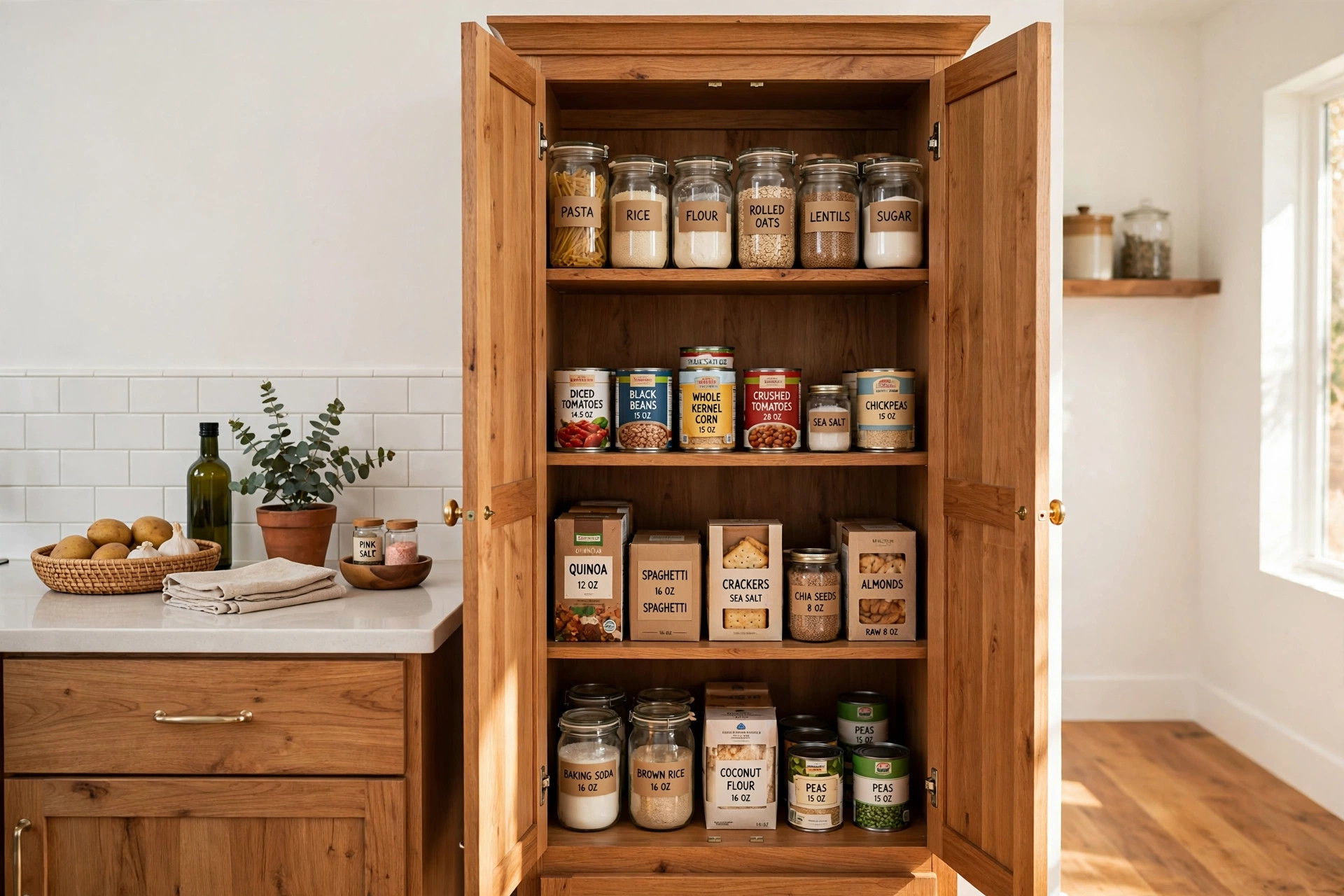

A kitchen pantry cabinet gives a home one clear place for food storage. Many families read this kitchen pantry cabinets reviews buying guide usa before they shop, because a pantry cabinet is a large buy. It takes up real space. It stays in the kitchen for many years. A poor choice means wasted money and daily frustration. A good choice means a tidy kitchen and fast meal work. This guide reviews the main types of pantry cabinets sold in the United States. It explains what to look for, what they cost, and how to care for them. It also answers the questions buyers ask most often. By the end, you will know which pantry cabinet suits your kitchen and your budget.
Why a Kitchen Pantry Cabinet Matters
Kitchens fill up fast. Dry goods, cans, spices, and small tools need a home. A pantry cabinet puts them all in one spot. This saves steps during cooking. It also keeps counters clear. A clear counter is safer and easier to clean.
Food keeps better in a pantry cabinet. Shelves keep boxes off the floor. Closed doors block light, which helps some foods last longer. A dry, cool cabinet is a good place for flour, rice, pasta, and canned goods. These foods stay fresh longer when they sit in a dark, steady spot.
A pantry cabinet also helps a family waste less food. When cans and boxes stand in rows, it is easy to see what is there. You buy less that you do not need. You use up what is close to its date. Over a year, this can save real money.
Pantry cabinets raise the value of a kitchen. Buyers like homes with good storage. A well-built pantry cabinet is a feature that agents point out on a tour. Even a simple unit makes a kitchen feel more finished. For renters, a freestanding pantry cabinet moves with you. It is storage you keep after you leave.
What to Look For When You Choose: Kitchen Pantry Cabinets Reviews Buying Guide Usa
Size comes first. Measure the wall where the cabinet will stand. Leave room for the doors to open all the way. A cabinet that blocks a walkway will cause daily trouble. Note the ceiling height too. Tall cabinets use space well, but they must fit under the ceiling with a small gap on top.
Depth is next. Kitchen pantry cabinets usually run from 12 to 24 inches deep. Shallow shelves make it easy to see every can. Deep shelves hold more, but goods can hide in the back. Pull-out trays solve this problem. They slide toward you so nothing stays out of reach.
Shelf count and spacing matter. Look for shelves you can move. Taller gaps hold cereal boxes and small appliances. Shorter gaps suit cans and jars. A cabinet with six shelves gives more freedom than one with four fixed shelves. Check how the shelves attach. Metal clips are common and work well.
Material affects life and price. Solid wood is strong and takes stain or paint well. It costs the most. Plywood with a wood face is a good middle ground. It is lighter than solid wood and still strong. Particleboard and MDF cost less. They work well in dry kitchens but do not like water. A leak under a sink near a particleboard cabinet can cause swelling.
Doors and hinges shape daily use. Soft-close hinges keep doors from slamming. This is worth the extra cost in a busy kitchen. Check that doors sit straight and close tight. A crooked door lets in light and dust. Some buyers prefer glass doors for a display look. Glass shows the food inside, which can be pretty, but it also shows clutter.
Weight capacity is easy to miss. Cans are heavy. A pantry cabinet full of soup and beans can weigh several hundred pounds. Read the rating for each shelf. Reinforced shelves hold more. Thick shelves sag less over time.
Types of Kitchen Pantry Cabinets
Freestanding pantry cabinets stand alone. You place them against a wall. No wall work is needed. They come in many widths, from narrow 18-inch units to wide 36-inch models. These suit renters and anyone who wants storage now. Prices run lower than built-in options. The back and sides are finished, so they look fine from any angle.
Built-in pantry cabinets are part of the kitchen. They match the other cabinets. A carpenter or a kitchen shop fits them to the wall. They cost more because of the labor. The gain is a clean, custom look and full use of the space. Many kitchen remodels add a tall built-in pantry at one end of the run. For ideas on matching the rest of the kitchen, see our guides to kitchen island seating for sale usa and quartz countertop installation american homes guide.
Pull-out pantry cabinets are narrow towers that slide out of a slot. They fit into gaps as small as six inches. Each side of the tower holds shelves or baskets. You pull the tower out to reach both sides. These cost more per cubic foot of storage. They shine in small kitchens where every inch counts.
Butler’s pantry cabinets sit between the kitchen and the dining room. They hold serving dishes, glasses, and linens as well as food. Some include a counter and a small sink. A butler’s pantry is a step up in price and space. It suits homes where the owners entertain often.
Corner pantry cabinets use corner space that is hard to reach. A lazy susan inside spins the shelves. This makes corner storage useful instead of dead space. They hold less than a straight cabinet of the same width. They work best as a second pantry spot rather than the main one.
Cost and Price Guide
Prices vary widely. A basic freestanding pantry cabinet from a big retailer runs from about 120 dollars to 400 dollars. These are often particleboard or MDF with a painted finish. They suit a tight budget and light use.
Mid-range cabinets run from about 400 dollars to 1,200 dollars. These use plywood bodies and wood faces. Hinges and slides are better. Doors align well. This range is the sweet spot for most buyers. A cabinet in this range can last twenty years with care.
High-end and custom pantry cabinets start near 1,200 dollars and can pass 4,000 dollars. Solid wood, custom paint, and hand-fitted joinery drive the cost. Built-in units add labor on top. If the pantry is part of a full remodel, the price folds into the project budget. Reviews on trusted sites such as Consumer Reports help sort out which brands hold up over time.
Extra features add cost. Pull-out shelves add 50 to 150 dollars per shelf. Soft-close hardware adds 30 to 80 dollars per door pair. Glass doors cost more than wood doors. Delivery and assembly matter too. Flat-pack cabinets cost less to ship but need assembly time. Assembled cabinets cost more to deliver and may need two people to move.
Think about total cost, not just the tag. A cheap cabinet that must be replaced in five years costs more than a mid-range cabinet that lasts twenty. Check the warranty. A five-year warranty is a good sign. A one-year warranty is the minimum most makers offer.
Care and Upkeep
A pantry cabinet lasts longer with simple care. Wipe spills right away. Water and sugar attract pests. Vinegar and water clean most shelf surfaces. Dry the shelf after wiping. This matters most for particleboard cabinets.
Line shelves with washable liners. Liners catch crumbs and spills. They pull out for a quick rinse. They also keep bottles from sticking to paint. Cut liners to fit each shelf.
Check screws and hinges once a year. Tighten loose screws. A drop of oil keeps hinges quiet. If a door rubs, adjust the hinge screws. Most modern hinges adjust in three directions. A five-minute fix keeps doors closing well.
Keep the inside cool and dry. A pantry cabinet near a stove or a dishwasher may run warm. Heat shortens the life of food. If you can, place the cabinet on an inside wall. Do not store cleaning products with food. Even sealed bottles can leak and spoil nearby food.
Repaint or refinish when the finish wears. A fresh coat of paint can add years to a wood cabinet. Sand lightly first. Use paint rated for cabinets. Two thin coats beat one thick coat. Let each coat dry fully before the next.
Safety Notes
Anchor tall cabinets to the wall. A pantry cabinet full of cans is top-heavy. A child who climbs the shelves can tip it over. Anti-tip straps cost little and mount in minutes. The United States Consumer Product Safety Commission warns about tip-over injuries from tall furniture. You can read more at CPSC and check current guidance.
Check for recalls before you buy. The CPSC lists recalls of furniture and storage products. A quick check takes two minutes and can prevent a hazard in your home.
Ventilation matters if you store batteries or aerosols in the cabinet. Most pantry cabinets hold only food, which needs no venting. If you store fuel or cleaners nearby, keep them in a separate locked space.
Watch for pests. Crumbs and open boxes draw ants and pantry moths. Keep flour, rice, and cereal in sealed containers. Glass or thick plastic jars work well. If you see moths, empty the cabinet and wash every shelf. Throw away any food that shows webbing or larvae.
FAQ
How wide should a kitchen pantry cabinet be? For most kitchens, 24 to 36 inches wide is right. A narrow kitchen does well with an 18-inch unit. Measure your space first. Leave room for doors to swing open.
Are pantry cabinets hard to install? Freestanding units need no install. You set them in place and anchor them. Built-in units need a carpenter. Pull-out towers need exact fitting. Most handy owners can handle a freestanding cabinet in an hour.
What is the best material for a pantry cabinet? Plywood with a wood face is the best value for most buyers. It is strong and takes paint well. Solid wood is best if the budget allows. Particleboard works in dry kitchens but suffers if it gets wet.
Can I put a pantry cabinet in a garage? Yes, but heat and damp can spoil food. A garage pantry suits cans and sealed goods better than flour or spices. Mice are a bigger risk in garages. Seal food in hard containers.
How do I keep cans from hiding in the back? Use shallow shelves or add pull-out trays. Stand cans in a single row with labels facing out. A lazy susan helps on wide shelves. Date labels on top make rotation easy.
Do pantry cabinets add resale value? They help. Buyers rank storage high on their wish list. A built-in pantry adds more value than a freestanding one. Keep the cabinet clean and in good repair when you show the home.
A Short Final Word
A kitchen pantry cabinet is a simple piece with a big job. It holds the food a family uses every day. Choose one that fits your space, your budget, and your cooking style. Read reviews before you buy. Check the build quality in person when you can. Retailers such as Home Depot and Lowes carry wide selections to compare side by side. For how-to guidance on a full kitchen refresh, sites like This Old House and Bob Vila offer steady, practical advice. Appliance and cabinet makers such as GE Appliances, Bosch, and Whirlpool publish useful product detail pages. Energy guides from Energy Star help with efficient choices, and home style ideas at The Spruce show how pantry cabinets look in real rooms. If you pair your pantry with new cooling, our guide to french door refrigerators buying guide usa walks through that choice too.
References
Bob Vila. (n.d.). Home improvement advice. https://www.bobvila.com Bosch. (n.d.). Home appliances. https://www.bosch-home.com Consumer Reports. (n.d.). Product reviews and ratings. https://www.consumerreports.org ENERGY STAR. (n.d.). Energy efficient products. https://www.energystar.gov GE Appliances. (n.d.). Kitchen and home appliances. https://www.geappliances.com Lowe’s. (n.d.). Home improvement products. https://www.lowes.com The Home Depot. (n.d.). Home improvement products. https://www.homedepot.com The Spruce. (n.d.). Home and garden advice. https://www.thespruce.com This Old House. (n.d.). Home renovation guidance. https://www.thisoldhouse.com U.S. Consumer Product Safety Commission. (n.d.). Product safety information. https://www.cpsc.gov Whirlpool. (n.d.). Home appliances. https://www.whirlpool.com
Was this guide helpful?

About Robert Taylor
The My Garden US editorial team writes practical, in-depth home and garden guides for American homeowners — tested advice, no fluff.
You May Also Like
Butcher Block Countertops: Where to Buy in the USA
August 25, 2026 0 views
Dual Fuel Ranges for Sale USA: A Complete Buyer Guide
July 4, 2026 0 views
Dual Fuel Ranges Buying Guide USA: How to Choose the Right Gas and Electric Combination
March 29, 2026 0 views