---
Table of Contents
Table of Contents
Dahlias are the show-offs of the late summer garden, but they are tender souls. Native to the highlands of Mexico, their tubers cannot survive a hard freeze in the ground in most of the country. The good news is that lifting and storing them is straightforward, and one afternoon of work in the fall buys you free plants next spring. This guide shows how to store dahlia tubers indoors over winter so they come through plump, firm, and ready to grow.
Store Dahlia Tubers: Know When to Dig
When it comes to store dahlia tubers, getting the details right makes all the difference.

Many homeowners find that store dahlia tubers is easier than they expected once they know the basics.
Wait for the first hard frost to blacken the foliage. That frost is nature's signal that the growing season is over, and it tells the plant to push its energy down into the tubers. If you can, leave the tubers in the ground for a week or two after that first frost. This curing time in the soil toughens the tuber skins, which helps them survive months in storage (The American Dahlia Society).
Watch the weather during that waiting period. A light frost is fine, but a deep freeze will kill tubers in the ground. If bitter cold is coming, dig right away. Gardeners in the warmest zones can sometimes leave tubers in the ground under heavy mulch, but indoor storage is the safe play everywhere else (Positive Bloom).
Before you dig, label every plant. Tie a tag with the variety name around the base of each stem. Months from now, bare tubers all look alike, and you will not remember which was which. If you are still choosing varieties, our dahlia bulb buying guide can help you pick reliable performers.
Digging Up the Tubers
Many homeowners find that store dahlia tubers is easier than they expected once they know the basics.
The key to store dahlia tubers is choosing the right approach for your space and budget.
Cut the stalks back to about four to six inches above the ground. Then start digging well away from the stem, a good foot out, and work inward with a garden fork or spade. Dahlia tubers are brittle and snap easily, so pry gently and lift the whole clump in one piece rather than stabbing under it (Garden Guides).
Shake off the loose soil. At this point you have a choice: wash or not. Some growers rinse the clumps with a hose to see what they are working with; others leave the soil on, believing it protects the skins in storage. Both methods work. If you wash, the tubers must dry completely before packing, or they will rot (Penn State Extension).
Trim away the thin feeder roots and any damaged or mushy tubers. Cut the remaining stalk down short, since hollow stems can channel rot down into the crown. Turn the clumps upside down for a day or two so water drains out of the stems. This one step prevents more storage losses than almost any other (Ashridge Trees).
To Divide Now or Later
The key to store dahlia tubers is choosing the right approach for your space and budget.
With a little planning, store dahlia tubers can fit even a busy schedule.
A dahlia tuber needs three parts to grow: a body, an intact neck, and at least one eye on the crown. Eyes are the small buds that become next season's shoots, and they are much easier to see in spring when they start swelling. For that reason, many experienced growers store whole clumps and divide in spring. Dividing in fall means smaller pieces to store, but you risk cutting blind and losing viable eyes (Penn State Extension).
If you do divide now, use a sharp, clean knife and make sure every division keeps a piece of crown with an eye. A full division walkthrough with photos sits in this guide (The Art of Doing Stuff). Either way, our fall perennial division guide covers the general technique for the rest of the garden.
Curing Before Storage
With a little planning, store dahlia tubers can fit even a busy schedule.
Before you start, it helps to understand how store dahlia tubers works in real homes.
Do not pack freshly dug tubers straight into boxes. Let them cure for several days in a cool, shaded, airy spot, out of direct sun and safe from freezing. The skins will toughen and surface moisture will evaporate. The goal is dry but not shriveled: firm tubers with a slightly leathery skin. Tubers that wrinkle are losing too much moisture; tubers that feel damp are headed for rot (Gardening Chores).
Packing the Tubers for Winter
Before you start, it helps to understand how store dahlia tubers works in real homes.
A good plan for store dahlia tubers saves time, money, and frustration.
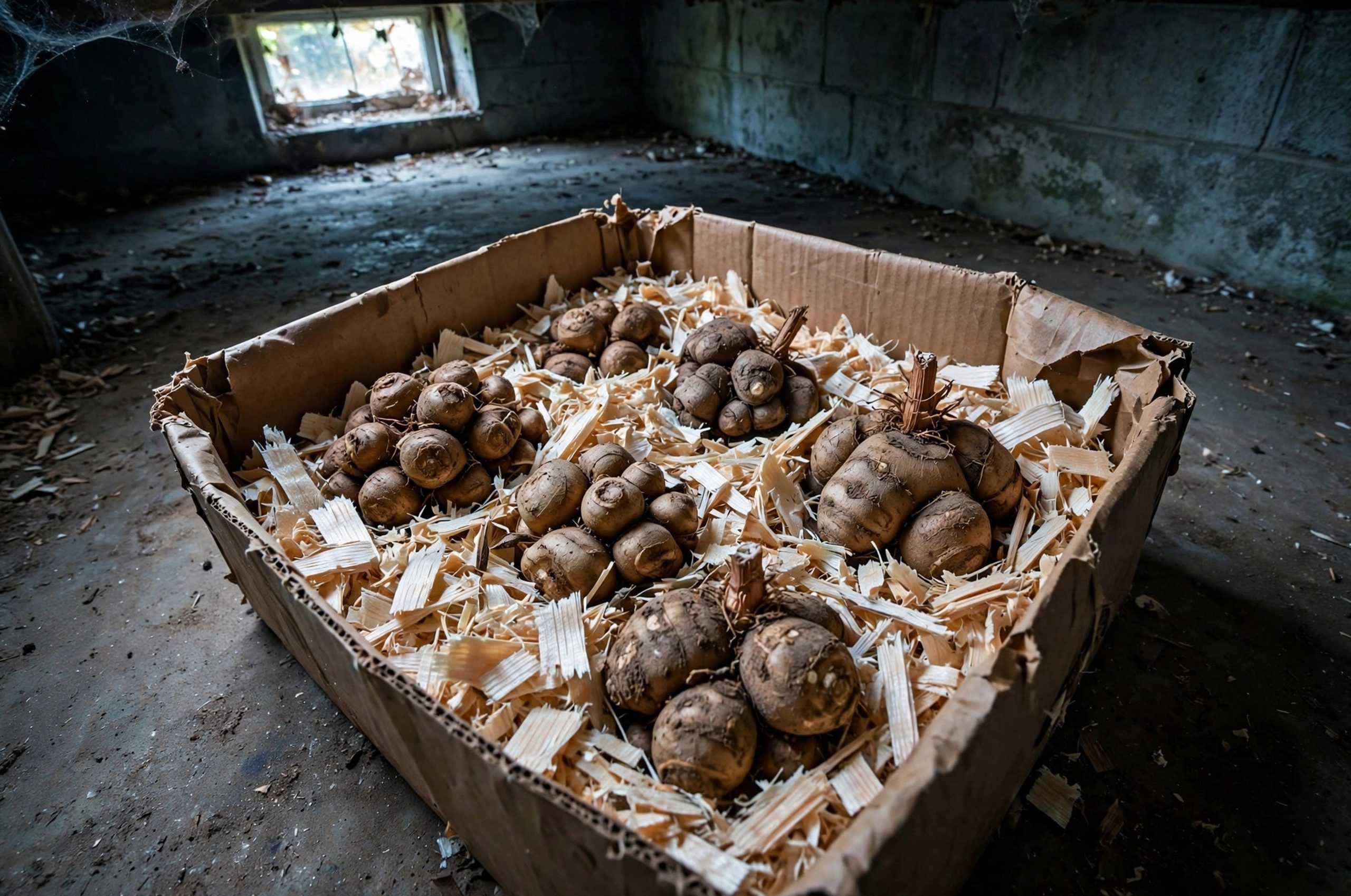
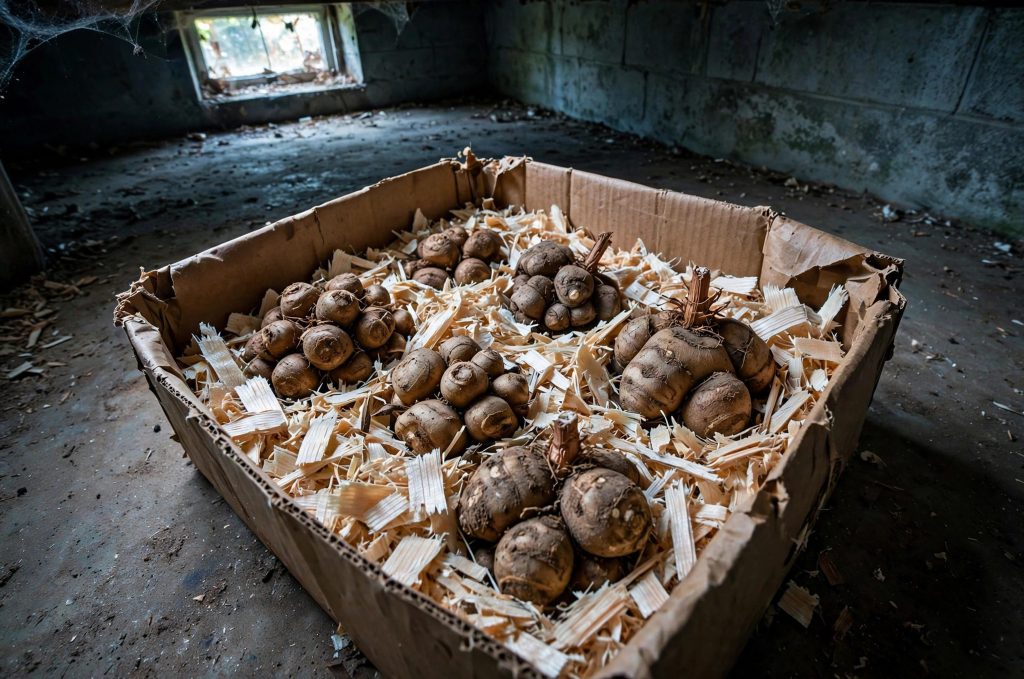
The storage medium needs to do two jobs: cushion the tubers and manage moisture. Good options include coarse vermiculite, wood shavings, dry sand, or shredded newspaper. The American Dahlia Society notes that experienced growers warn against peat moss: dry peat pulls moisture out of tubers until they shrivel, while damp peat encourages rot (The American Dahlia Society).
Coarse vermiculite is a favorite because it holds a little moisture without sitting wet against the skin. Nestle the tubers in the medium so none of them touch each other; rot spreads on contact. Cardboard boxes and paper bags breathe, which helps. Sealed plastic traps moisture and should be avoided, or at least left vented (Penn State Extension).
Some growers wrap each tuber individually in plastic wrap after a light dusting of sulfur, a method the American Dahlia Society now favors for keeping tubers separate and humidity stable (The American Dahlia Society). Whichever method you choose, label every box or bag with the variety name.
Where to Keep Them
A good plan for store dahlia tubers saves time, money, and frustration.
The ideal storage spot is dark, cool, and frost-free, holding steady between 40 and 50 degrees Fahrenheit. An unheated basement, an insulated garage, a root cellar, or a cool closet can all work. Below freezing kills tubers outright. Much above 50 degrees and they start sprouting months too early or dry out (The American Dahlia Society).
Keep the boxes off bare concrete, which wicks moisture and cold. A wooden pallet or shelf works. And keep them dark: light triggers premature sprouting.
Checking Through Winter
For most people, store dahlia tubers comes down to a few smart choices.
Do not seal the boxes and forget them until spring. Check once a month. Pick up each tuber and feel it. Firm is good. Soft, mushy, or blackened tubers should be thrown out immediately so rot cannot spread to their neighbors. If tubers are shriveling and feel light, the air is too dry: mist them lightly or pack the medium a little tighter (Shiplap and Shells).
A monthly check takes only a few minutes, and it is the difference between opening healthy tubers in spring and opening a box of disappointment.
Waking Them Up in Spring
If you are new to store dahlia tubers, start with the simplest option and build from there.
When the danger of hard frost has passed, bring the tubers into warmth and light. Pot them up in moist potting mix or plant them directly in the garden once the soil has warmed. If you stored whole clumps, this is the ideal moment to divide: the eyes will be swelling and obvious, so every cut can keep a growing bud (The Art of Doing Stuff).
Plant tubers a few inches deep in rich, well-drained soil in full sun, and water them in. Within weeks, the same tubers you tucked away in fall will be pushing up strong new growth. For the best selection to expand your collection, see our dahlia deals guide and the in-depth dahlia bulb reviews.
Common Storage Mistakes
When it comes to store dahlia tubers, getting the details right makes all the difference.
Digging too early. Tubers dug before the frost has finished them have thin skins and store poorly. Wait for the blackened foliage.
Packing wet tubers. Surface moisture is the fastest route to rot. Cure until the skins feel dry and leathery.
Storing too warm. A heated basement or a spot near the furnace dries tubers out or wakes them early. Find the coolest frost-free corner you have.
Letting tubers touch. One rotten tuber can take its neighbors. Keep packing material between every tuber.
Skipping the monthly check. Small problems caught in December are easy. The same problems found in March are disasters.
Frequently Asked Questions About Storing Dahlia Tubers
Many homeowners find that store dahlia tubers is easier than they expected once they know the basics.
Can I store dahlia tubers in the refrigerator? Yes, for small batches. Put each tuber in a paper bag with a handful of slightly damp vermiculite, leave the bag open a crack for air, and set it in the crisper drawer. Keep them away from fruit, which gives off gases that can wake the tubers early. Check them monthly just as you would boxes in the basement.
What is the plastic wrap method? Some growers wrap each single tuber tight in plastic wrap, like a sandwich. Each tuber gets its own sealed package. If one rots, the rot stays put and cannot reach the others. This works best in spots where the air is on the dry side. It uses a lot of plastic, so many gardeners save it for their rarest varieties.
My tubers sprouted in the box. Are they ruined? Not at all. Pale sprouts in late winter are normal. They mean the tuber is alive. If the sprout is short and firm, plant the tuber with the sprout just at soil level. If the sprout is long, pale, and stringy, snap it off and let the tuber push a fresh one. Tubers hold plenty of backup eyes.
How long can stored tubers stay dormant? A full winter season is the normal span. By the time spring planting weather arrives, most tubers are waking up on their own. Do not try to hold them over for a second winter. They will be spent. Plant them or give them away.
Do I have to store the tubers at all? In warm-winter regions where the ground never freezes, you can leave them in the ground under a deep mulch. Everywhere else, lifting is the safe move. One hard freeze turns tubers to mush, and mush never blooms.
Can I take cuttings from stored tubers? Yes, and it is a good way to multiply a favorite variety. Pot up a tuber in damp mix in late winter and set it in warmth and light. When shoots reach three or four inches, cut them off at the base with a sliver of tuber attached and root them in damp mix under a plastic dome. Each cutting becomes a new plant that will form its own tubers by fall.
Worth the Effort
Storing dahlia tubers is one of the best bargains in gardening. A single afternoon of digging, curing, and packing turns one season's plants into next season's plants, free. Do it well, and your dahlias will greet you each spring like old friends.
References
Ashridge Trees. (n.d.). How to dig up and store dahlia tubers over winter. https://www.ashridgetrees.co.uk/blogs/garden-plants/overwintering-dahlias/
Garden Guides. (n.d.). How to winterize dahlia tubers. https://www.gardenguides.com/123690-winterize-dahlia-tubers/
Gardening Chores. (n.d.). How to lift, store, and divide dahlia tubers for stronger, earlier blooms next year. https://www.gardeningchores.com/dig-store-divide-dahlias/
Penn State Extension. (n.d.). Don't ditch those dahlias: Easy tips for winter storage. https://extension.psu.edu/dont-ditch-those-dahlias-easy-tips-for-winter-storage
Positive Bloom. (n.d.). What Georgia dahlias need as temperatures begin to cool this fall. https://positivebloom.com/what-georgia-dahlias-need-as-temperatures-begin-to-cool-this-fall/
Shiplap and Shells. (n.d.). How to store dahlia tubers over winter. https://shiplapandshells.com/how-to-store-dahlias-tubers-during-the-winter-months/
The American Dahlia Society. (n.d.). Coping with dahlias after the first frost. https://www.dahlia.org/growing/tubers-2/8574-2/
The American Dahlia Society. (n.d.). Digging, dividing, and storing tubers. https://www.dahlia.org/docsinfo/articles/digging-dividing-and-storing-tubers/
The Art of Doing Stuff. (n.d.). How to dig, divide and store dahlia tubers. https://www.theartofdoingstuff.com/how-to-split-dahlia-tubers/comment-page-1/
Was this guide helpful?

About My Garden US
The My Garden US editorial team writes practical, in-depth home and garden guides for American homeowners — tested advice, no fluff.