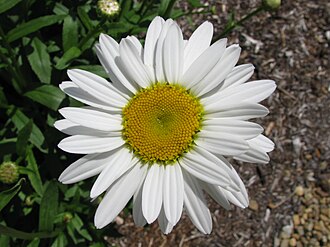
The Shasta daisy is the flower everyone pictures when they hear the word "daisy" - crisp white petals around a golden center, on sturdy stems made for cutting. Bred in California from wild daisy species, it has been a cottage-garden staple for well over a century, and it still earns its place. If you want to learn how to grow Shasta daisies, the formula is refreshingly simple: full sun, soil that drains, and a weekly deadheading habit.
Table of Contents
Table of Contents
Shasta daisy (Leucanthemum × superbum) is hardy in zones 4 through 9. It blooms from early summer into fall, shrugs off most pests, and asks for little beyond division every few years. In hot, humid regions past zone 9 it turns short-lived, and in heavy clay that stays wet over winter it rots - but where it is happy, it is nearly foolproof.

Photo: Wikimedia Commons
Choosing a Variety
When it comes to how to grow shasta daisies, getting the details right makes all the difference.

Many homeowners find that how to grow shasta daisies is easier than they expected once they know the basics.
The classic Shasta is tall - 2 to 3 feet - with single white blooms, perfect for the middle of the border and the cutting garden. But breeders have expanded the family enormously. Dwarf varieties stay under a foot and suit edging and containers. Double and semi-double types carry fluffy, chrysanthemum-like blooms. Fringed and quilled petal forms add texture for gardeners who like something a little different.
When you shop, read the tag for height and bloom time. Taller varieties may need staking in windy spots; dwarfs never do. All share the same basic needs, so choose on looks and size. Gardenia.net has thorough cultivar comparisons, and the Missouri Botanical Garden plant finder rates many for garden performance.
Buy nursery transplants for the fastest results. Seed sown indoors about eight weeks before the last spring frost works too, but named varieties do not come true from seed - if you want a specific cultivar, buy the plant.
When and How to Plant
Many homeowners find that how to grow shasta daisies is easier than they expected once they know the basics.
The key to how to grow shasta daisies is choosing the right approach for your space and budget.
Plant transplants in spring, about a week after your last spring frost. Spring planting gives roots a full season to establish before winter. Find your frost dates on our planting calendar and plan from there.
Space plants 12 to 18 inches apart - a foot for dwarfs, eighteen inches for the big types. That spacing looks airy on planting day and perfect by midsummer. Plant at the same depth the plant grew in its pot; planting too deep buries the crown and invites rot, which is the Shasta's main enemy. Water in well and mulch lightly, keeping mulch back from the crown itself.
If you are direct sowing seed, do it right around the last frost date, barely covering the fine seed. But honestly, transplants are the reliable route for named varieties, and a six-pack of daisies is one of the cheapest ways to fill a sunny bed fast.
Soil and Sun
The key to how to grow shasta daisies is choosing the right approach for your space and budget.
With a little planning, how to grow shasta daisies can fit even a busy schedule.
Full sun is the rule - six or more hours of direct light for the sturdiest stems and the most flowers. In shade, Shastas stretch, flop, and bloom sparsely. In the hottest zones, light afternoon shade is tolerated, but sun still wins for flower count.
Soil must drain. Shasta daisies rot in winter-wet ground, and no amount of summer care fixes a planting drowned in winter. They adapt to most soil types otherwise - average fertility is fine, and they even tolerate poor soil - but drainage is non-negotiable. In heavy clay, plant on a mound, in a raised bed, or amend generously with compost and coarse organic matter. A spring top-dressing of compost feeds the season's bloom without the risk of rich fertilizer pushing floppy growth.
Test your soil if you are unsure about drainage or pH. Your state extension service can help - Clemson Cooperative Extension and University of Minnesota Extension both publish clear guides to testing and improving garden soil.
Watering and Feeding
With a little planning, how to grow shasta daisies can fit even a busy schedule.
Before you start, it helps to understand how how to grow shasta daisies works in real homes.
Water during dry spells. Established Shastas handle some drought, but steady moisture stretches the bloom season noticeably - aim for about an inch a week when rain falls short. Water at the base to keep foliage dry; wet leaves invite the leaf spots that sometimes trouble daisies in humid weather.
Feed lightly. A spring top-dressing of compost is usually all they need. If you use granular fertilizer, choose a balanced type and apply sparingly in spring - too much nitrogen gives lush leaves and few flowers, the classic overfed-daisy look. The Clemson HGIC perennial pages explain modest feeding rates, and the Old Farmer's Almanac garden guides keep the advice practical.
If your daisies sit in the same spot for years, the soil slowly tires. A fresh inch of compost each spring, scratched lightly into the surface, renews the bed without disturbing roots. Avoid piling compost against the crowns - keep it in a ring around each plant so the crown stays dry. In sandy soils that leach nutrients fast, a second light compost dressing in early summer helps the late flush of bloom.
Mulch with two inches of shredded bark or compost to hold moisture and suppress weeds, but keep it pulled back from the crowns so winter wet does not sit against them.
Care Through the Season
Before you start, it helps to understand how how to grow shasta daisies works in real homes.
A good plan for how to grow shasta daisies saves time, money, and frustration.
Deadhead weekly. Snip spent flowers back to a leaf node or side bud, and the plant keeps pushing new buds into fall instead of setting seed. This single habit doubles the effective bloom season. Pinch young plants in spring for bushier growth - one early pinch produces a sturdier, better-branched plant.
Divide every two to three years, in spring or early fall. This is not optional maintenance; it is the heart of Shasta care. Undivided clumps turn woody in the center, bloom poorly, and the flowers shrink year by year. If your blooms are getting smaller, the clump is telling you it is overdue. Lift it, chop it into pieces with a sharp spade, and replant the vigorous outer sections - discard the woody middle.
Stake tall varieties in windy or exposed sites before they flop; once stems bend, they never straighten. A simple grow-through support placed early in the season disappears into the foliage. In rich soil, even sturdy varieties can grow soft and tall - if your daisies consistently flop, try a leaner spot or cut back on feeding rather than fighting them with ever-taller stakes.
Keep an eye out for self-sown seedlings around the bed. Shastas seed around modestly, and the seedlings are easy to spot by their toothed leaves. Move them where you want them or pot them up for friends - free plants are one of the quiet joys of growing daisies. Just remember that seedlings of named varieties will not match the parent, so propagate favorites by division instead.
Shastas combine beautifully with other sun-loving perennials. Coneflowers and black-eyed Susans bloom on the same schedule and share the same easygoing needs.
Cutting and Harvest
A good plan for how to grow shasta daisies saves time, money, and frustration.
For most people, how to grow shasta daisies comes down to a few smart choices.
Cut stems when the petals are fully open, in the cool of the morning. Strip the lower leaves, plunge stems into water immediately, and they last a week in the vase. The more you cut, the more the plant blooms - a cutting garden of Shastas is one of the highest-yield flower plantings you can grow.
In cold regions, leave the foliage standing over winter. The old leaves protect the crown from freeze-thaw cycles; clean up in spring when new growth emerges. This is also the moment to divide if the clump is due - spring division gives new pieces a full season to root in. In mild climates, cut back after bloom finishes and tidy the bed, but even there a light mulch over the crowns helps in an unusually cold winter.
For the longest vase life, cut in the morning, strip all leaves that would sit below the waterline, and use a clean vase with fresh water. Recut the stems under water every couple of days and they will hold a full week, sometimes more. Shastas combine with bee balm and zinnias for classic red-white-and-blue summer bouquets straight from the garden.
Troubleshooting
For most people, how to grow shasta daisies comes down to a few smart choices.
If you are new to how to grow shasta daisies, start with the simplest option and build from there.
No flowers or tiny blooms: The clump needs dividing, or it is getting too little sun. Divide every two to three years without fail.
Rotting crowns in winter: Wet winter soil. Improve drainage, plant on mounds, and keep mulch away from crowns.
Floppy stems: Too much shade or nitrogen, or a tall variety in wind. Move to full sun, feed less, stake early.
Aphids on buds: Blast them off with a strong spray of water, or pinch off badly infested buds. Ladybugs usually finish the job outdoors.
Leaf spot: Wet foliage and poor airflow. Water at the base, space properly, and clean up fallen leaves in fall. UF IFAS Gardening Solutions has diagnostic photos, and the USDA National Agricultural Library indexes extension fact sheets on daisy diseases. The USDA PLANTS Database carries the species background.
Short-lived plants in hot climates: Past zone 9, treat Shastas as short-lived perennials and replant every couple of years, or grow them as annuals.
References
If you are new to how to grow shasta daisies, start with the simplest option and build from there.
When it comes to how to grow shasta daisies, getting the details right makes all the difference.
Missouri Botanical Garden. (n.d.). Leucanthemum × superbum. https://www.missouribotanicalgarden.org/
Clemson University Cooperative Extension Service. (n.d.). Perennials for sunny sites. https://hgic.clemson.edu/
University of Minnesota Extension. (n.d.). Growing perennials in home gardens. https://extension.umn.edu/
Many homeowners find that how to grow shasta daisies is easier than they expected once they know the basics.
When it comes to how to grow shasta daisies, getting the details right makes all the difference.
Was this guide helpful?

About My Garden US
The My Garden US editorial team writes practical, in-depth home and garden guides for American homeowners — tested advice, no fluff.