
City water in the United States almost always carries chlorine. Water plants add it to kill germs, and that work must be done. Yet chlorine removal whole house filter reviews show that many home owners wish to take chlorine out of their water once it reaches the house. This article walks through why people filter chlorine at the whole house level, how to choose a system, what types exist, what they cost, how to keep them up, and how to stay safe. The goal is plain help, written in plain words.
Why Chlorine Removal Matters at the Whole House Level
A small filter at the sink cleans one tap. A whole house filter cleans every tap, shower, and washing machine in the home. Chlorine touches more than the glass of water on the table. It touches skin in the shower. It touches clothes in the wash. It can dry the skin and fade fabric dyes over time.
Chlorine also carries a taste and a smell. Many people call it a pool smell. Reviews of whole house chlorine removal filters note that this smell often drops away in the first week after a system is fitted. Cooking water tastes milder. Ice cubes come out clear of the faint chemical tang that city water can leave.
There is also the matter of the pipes and fixtures. Chlorine can be hard on rubber seals and on some types of plumbing over many years. A whole house unit takes the load off the whole system at once, rather than tap by tap. That is the main reason people buy this kind of filter instead of a small counter model.
How to Choose: What the Reviews Really Tell You: Chlorine Removal Whole House Filter Reviews
Chlorine removal whole house filter reviews come from real home owners. They speak of flow rate, ease of fitting, and how long the media lasts. Media is the stuff inside the tank that catches the chlorine. The review points below matter most when you compare models.
Match the Flow Rate to Your Home
Flow rate is counted in gallons per minute. A small house may need about 5 gallons per minute. A large house with two baths and a laundry room may need 10 to 15. If the filter is too small for the house, water pressure can drop when two taps run at once. Look for the rated service flow on the label. Many reviewers at large home improvement retailers mention pressure drop as the top complaint when a unit was sized too small. Buy for your peak use, not your average use.
Look at the Chlorine Removal Rating
Good reviews often note how well a unit handles both chlorine and chloramine. Chloramine is a mix of chlorine and ammonia. Some cities use it instead of plain chlorine. It is harder to remove. Carbon media works well on plain chlorine. Catalytic carbon does better work on chloramine. Check what your city uses before you buy. The EPA site explains how public water systems disinfect water and what chemicals they may use.
Check Ease of Fitting and Space
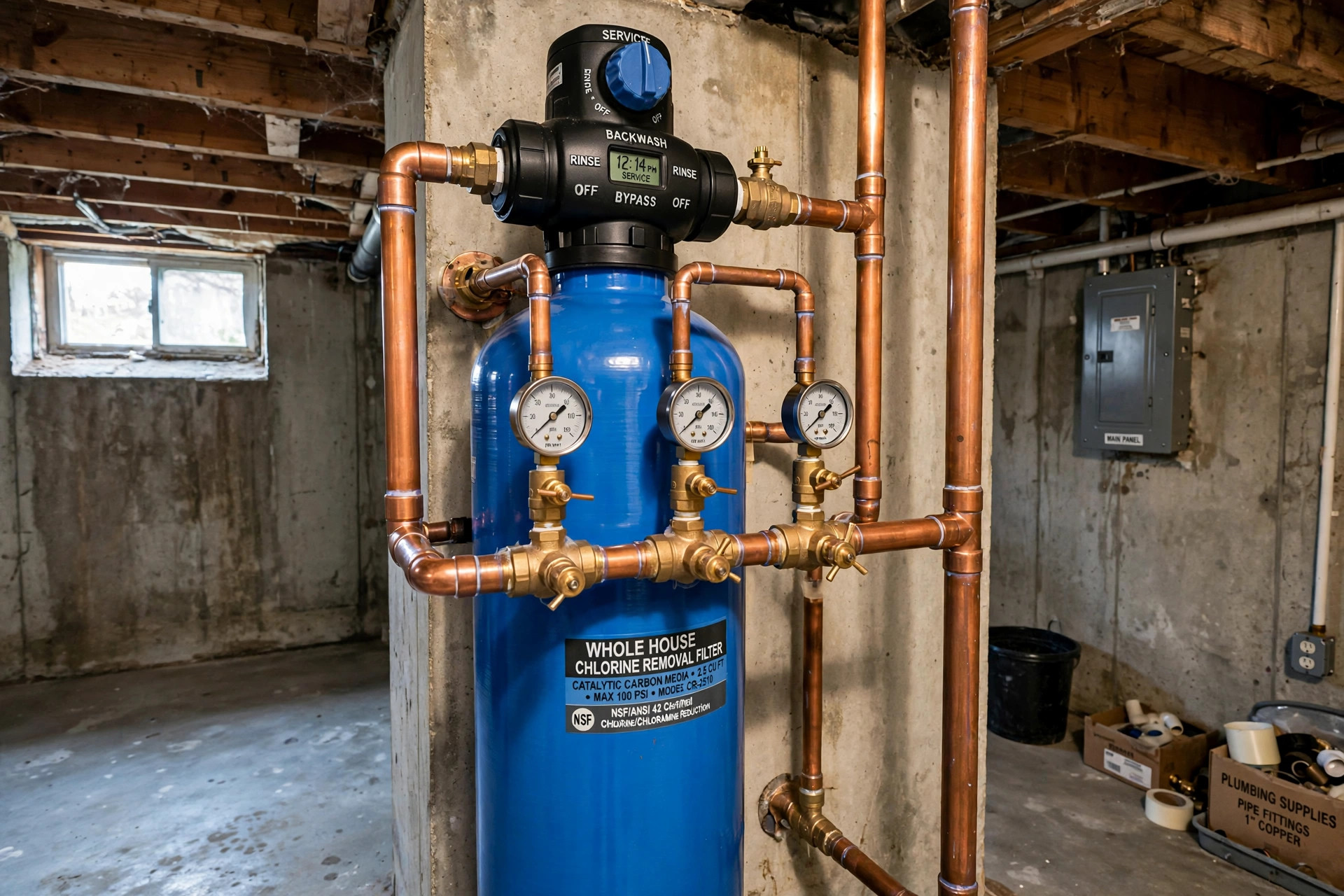
A whole house filter needs a place near the main water line, often in the basement or garage. It needs room above it for cartridge swaps or tank service. Reviews praise units that come with clear fitting guides and standard pipe sizes. Many home owners fit the unit themselves with basic tools. Others hire a plumber. Guides at This Old House walk through typical whole house plumbing projects and can help you judge whether you can do the work yourself.
Mind the Drain and the Bypass Valve
Some systems need a drain for backwash cycles. Others do not. A bypass valve lets you route water around the filter when you change media or service the unit. Reviewers call the bypass valve one of the most useful parts of the whole setup. If your unit lacks one, ask your plumber to add one during the fit.
Types of Whole House Chlorine Removal Filters
Granular Activated Carbon Tanks
The most common type uses a tall tank filled with granular activated carbon. Water passes through the carbon bed, and the carbon grabs the chlorine. These tanks handle high flow rates well. They last two to five years before the media needs a change. The tank can be heavy, and fitting it takes some skill. Many reviews say this type gives the best value per year for a family home.
Catalytic Carbon Tanks
Catalytic carbon looks like regular carbon, but its surface has been treated to speed up chemical change. It is the better pick when the water holds chloramine. It costs more than plain carbon. Reviews note that it shines in cities that have moved to chloramine disinfection. If your water report lists chloramine, look here first.
Carbon Block Cartridge Systems
These use one or more large cartridges inside housings. They are smaller and easier to swap than tanks. Cartridges may need a change every three to six months in a busy house. Long-term media cost runs higher than with a tank. They suit homes with low flow needs or tight space. Shoppers often compare cartridge systems side by side on Lowe’s pages, where owner ratings point out which housings seal well and which leak at the threads.
Upflow vs. Downflow Designs
Water can flow down through the media bed or up through it. Downflow is the common design. Upflow designs lift the bed slightly as water passes, which can cut channeling. Channeling is when water cuts a fast path through the media and skips the rest. Reviews from installers on Family Handyman note that upflow units can keep pressure steadier over time, though they cost a bit more up front.
Cost and Price
Price runs in a wide band. A simple cartridge housing with carbon cartridges may cost 100 to 300 dollars. A mid size carbon tank system often runs 500 to 1,200 dollars. Large catalytic carbon systems with valves and meters can pass 1,500 dollars. Fitting by a plumber adds 200 to 600 dollars in most markets.
Running cost matters as much as the ticket price. Cartridge swaps for a cartridge system can run 50 to 150 dollars each time, two to four times a year. Tank media changes run 300 to 800 dollars but come only every few years. Do the math over five years. In many reviews, the tank wins the long race even when it costs more on day one.
Some brands sell lines through big box stores and through their own sites. For example, Aquasana sells whole house units direct, and fixture makers like Moen, Kohler, and Delta Faucet are names home owners already trust in the bath and kitchen, which helps when judging build quality of housings and valves.
Care and Upkeep
A whole house filter is not a set and forget device. It needs steady care to keep working well.
Test the water each year. Simple test strips show free chlorine in a minute. If chlorine starts to show past the filter, the media is spent. Change it. Do not wait for taste to tell you. Taste lags behind the real numbers.
Change cartridges on schedule. Mark the dates on the housing with a grease pencil. Late swaps let chlorine pass and can let sediment build. Many owners tie the swap to a fixed season, such as spring and fall.
Backwash on schedule if your unit has the feature. Backwashing flushes trapped sediment out of the media bed. It takes a few minutes and a drain line. Units with auto backwash do this on their own. Manual units need you to turn the valve.
Watch the pressure gauges. Put a gauge before and after the filter. A wide gap between the two means the media is clogged or spent. Gauges cost little and save guesswork. Home owners who compare notes on garbage disposals for septic systems and other fixtures often learn the same lesson: a small gauge tells you more than a guess.
Keep spare parts on hand. O-rings, a spare cartridge, and food grade silicone grease for the seals belong in a small box near the unit. A torn O-ring at the wrong time can shut the water off until a store opens.
Safety
A whole house chlorine removal filter makes water taste better, but it does not make unsafe water safe. Chlorine kills germs in the pipes on the way to your house. Once the filter takes chlorine out, water sitting in your home pipes has less guard against germs. This is normal and fine for most homes, but keep two points in mind.
First, if your water comes from a private well, test for bacteria before you fit a chlorine removal unit. Well water has no city chlorine to begin with. A filter alone cannot fix a bacteria problem. Test first, treat second.
Second, service the unit on time. Spent carbon can shed fine particles into the water. A worn bed can also host biofilm if water sits still for long spells. Regular media changes and backwash cycles keep the system clean. When in doubt, flush the lines after a long trip away from home.
Also note the drain line rules in your town. Backwash water must go to a legal drain. Most towns allow a laundry sink or floor drain. Check local code before you run the line. Reviews sometimes skip this step, and it can cause trouble at sale time.
For context on broader plumbing costs, many owners read up on burst pipe repair costs before they open walls for any plumbing work, including a filter fit. It pays to know what a plumber visit costs in your area before you call.
FAQ
Will a whole house filter remove fluoride too?
Most carbon units do not remove much fluoride. Carbon targets chlorine, taste, odor, and many organic chemicals. Fluoride needs a different process, such as reverse osmosis. If fluoride is your worry, look at point of use reverse osmosis under the sink instead. You can also compare countertop options in a Berkey vs Alexapure water filter comparison to see how those units handle fluoride claims.
How long does the filter media last?
It depends on the media type and your water. Plain carbon tanks often last two to five years. Catalytic carbon lasts about the same. Cartridge systems need swaps every three to six months. High chlorine levels in the city water shorten the life. A yearly chlorine test tells you when the end is near.
Does the filter soften hard water?
No. Chlorine removal and water softening are two different jobs. Carbon takes out chlorine and taste. A softener takes out calcium and magnesium. Many homes run both: a softener for hard water and a carbon filter for chlorine. They sit in line one after the other.
Can I fit the unit myself?
Many home owners do. You need basic plumbing skill, the right fittings, and a way to shut off the main water. If your main line is old galvanized pipe or you are not sure about soldering, hire a plumber. A bad joint at the main line can flood a basement fast.
Will water pressure drop?
A small drop is normal, often one to three pounds per square inch. A big drop means the unit is too small for the house or the media is spent. Size the unit to your peak flow and keep up with service, and pressure should stay close to normal.
Is filtered water safe for fish tanks?
Aquarium owners often ask this. Carbon filtered water still needs care for fish. Tap water may hold chloramine or metals that carbon does not fully catch. Use a proper aquarium conditioner as well. Do not rely on the house filter alone for a tank.
A Short Final Word
Chlorine removal whole house filter reviews point to one clear lesson. Buy the right size, know what your city puts in the water, and keep up with service. A carbon tank suits most family homes. Catalytic carbon suits chloramine cities. Cartridge systems suit tight spaces and small flows. Match the tool to the job, test the water once a year, and the whole house will run on cleaner tasting water for years.
References
Aquasana. (n.d.). Water filtration systems. https://www.aquasana.com Delta Faucet. (n.d.). Kitchen and bathroom faucets. https://www.deltafaucet.com Family Handyman. (n.d.). DIY home repair and maintenance. https://www.familyhandyman.com Kohler. (n.d.). Bathroom and kitchen fixtures. https://www.kohler.com Lowe’s. (n.d.). Home improvement products. https://www.lowes.com Moen. (n.d.). Faucets and plumbing fixtures. https://www.moen.com The Home Depot. (n.d.). Home improvement products. https://www.homedepot.com This Old House. (n.d.). Home renovation guidance. https://www.thisoldhouse.com U.S. Environmental Protection Agency. (n.d.). Protecting human health and the environment. https://www.epa.gov
Was this guide helpful?

About James Carter
The My Garden US editorial team writes practical, in-depth home and garden guides for American homeowners — tested advice, no fluff.
You May Also Like

Waterfall Bathroom Faucet Pros Cons: An Honest USA Guide
March 23, 2026 0 views
What Is the Emergency Plumber Near Me 24 Hour Cost?
January 27, 2026 0 views
Best Sump Pump for Crawl Space USA: A Practical Homeowner Guide
February 28, 2026 0 views