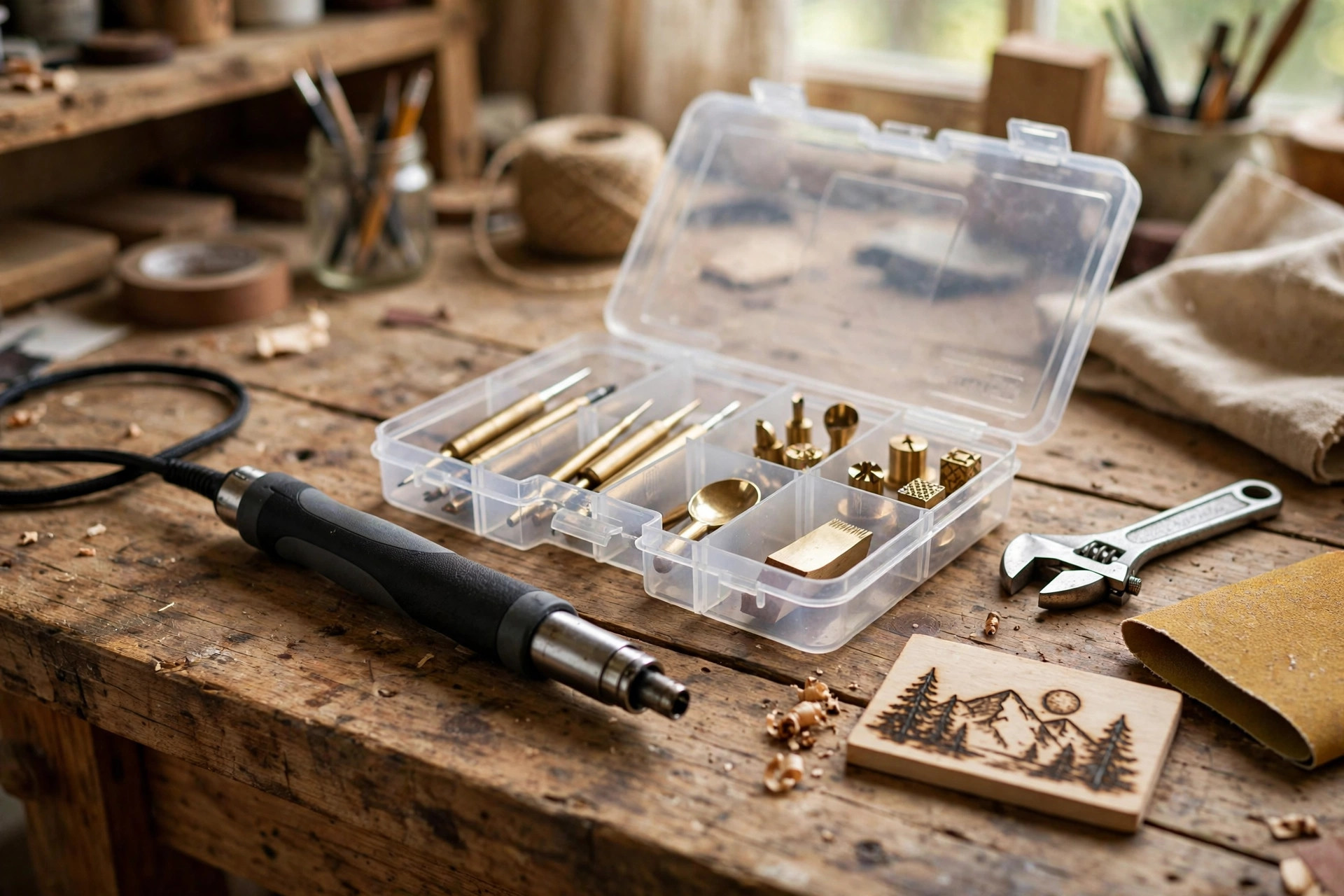
A wood burning pen tips replacement set crafts lovers keep on hand is one of the simplest ways to keep this hobby affordable. The tips are the small metal points that screw into the end of a wood burning pen. They get hot, press into wood or leather, and leave a dark burned line. With steady use the tips wear down. They bend. They lose heat. A replacement set lets a crafter swap in a fresh point and keep working, instead of buying a whole new tool.
Wood burning, also called pyrography, has been around for centuries. In recent years it has grown popular again as a home craft. People burn names into cutting boards, patterns into jewelry boxes, and wildlife scenes into pine plaques. The pen itself lasts for years. The tips are the parts that wear out, so knowing how to pick a replacement set matters to anyone who burns wood more than once in a while.
Why a Good Tip Set Matters
A single worn tip changes the whole look of a project. When a tip point grows blunt, lines come out thick and uneven. When the metal surface gets pitted, the heat spreads in strange ways and the burn marks look blotchy. A crafter who tries to finish a sign with a tired tip often ends up with wobbly letters and a project that looks rushed.
A replacement set solves this in a direct way. Most sets hold twenty or more tips in different shapes. They sit in a plastic case with small slots. The crafter picks the shape that fits the line they want to draw and screws it into the pen with the little wrench that usually comes in the box. The whole swap takes a minute. The new tip heats evenly and the burned lines come out clean again.
There is also a cost reason. A single tip bought alone often costs two or three dollars with shipping. A set of twenty or thirty tips often costs less than ten dollars. For anyone who burns wood on a regular basis, the math is simple. The set pays for itself fast.
Beyond price, a full set opens up more creative choices. Many starter kits, including a good wood burning kit for home crafts, come with only a handful of basic tips. A replacement set adds points for shading, stamping, and fine detail. The crafter is no longer stuck with one line width. They can outline a bird with a fine point, fill in the wing with a shading tip, and add a dotted border with a stencil-like stamp tip.
Types of Wood Burning Pen Tips: Wood Burning Pen Tips Replacement Set Crafts
Tip shapes look small and plain, yet each one makes a different mark on wood. Learning the common shapes helps a buyer pick the right set.
The Universal Tip
The universal tip is the workhorse. It looks like a small bent wedge. It draws medium lines, fills in small areas, and makes simple curves. Most replacement sets include several of these because they do the most work in a project.
The Fine Point
The fine point comes to a sharp end like a pencil lead. It draws thin lines for lettering, faces, and small details. It heats fast and burns fast, so the crafter must move it with a light touch. Beginners often burn too deep with this tip at first. A little practice on scrap wood fixes that.
The Shading Tip
The shading tip is flat and wide, shaped like a small spoon. It spreads heat across a flat area. Crafters use it to shade skies, fur, and shadows. It is the tip that gives a burned picture its depth. Without it, pictures look flat and harsh.
The Stamp Tips
Some sets include tips with patterns pressed into the end: small dots, stars, hearts, and leaf shapes. The crafter heats the tip and presses it straight down. It leaves a single neat mark. These tips are popular for borders and for quick decorations on boxes and signs.
The Calligraphy and Knife Tips
A knife tip has a sharp edge for cutting thin lines. A calligraphy tip has an angled face for lettering with thick and thin strokes. These show up in larger sets of forty or fifty pieces. They are not needed for basic work, but they add variety for crafters who want to try new styles.
How to Choose a Replacement Set
The most important detail is fit. Wood burning pens come in two main styles. The older craft-style pen has a wide barrel and takes screw-in tips with a large thread. The newer wire-nib pen has a thin wire point and does not use screw tips at all. Replacement tip sets are made for the craft-style pen. Before ordering, the buyer should check the pen. If it takes screw-in tips, the standard sets will fit.
Thread size is worth a look as well. Almost all replacement sets follow one common size, but a few off-brand pens use a odd size. Reading the product listing for the words “fits most standard wood burning pens” is usually enough. When in doubt, the crafter can measure the old tip or bring it to the store to compare.
What the Tips Are Made Of
Most replacement tips are made of brass. Brass takes heat well and gives it back to the wood in a steady way. It also lasts longer than cheaper metals. Some very cheap sets use soft metal that bends the first time it touches wood. It is better to pay a little more for solid brass tips. The package often says “brass” right on the front.
How Many Tips to Buy
Sets come in sizes from ten to more than fifty pieces. A set of twenty to thirty covers the common shapes with spares of the ones that wear out fastest. Beginners do well with this size. Larger sets add specialty shapes that most crafters use only once or twice. They make a fine gift, but they are not needed for everyday projects.
Cost and Price
Replacement tip sets are one of the cheapest parts of this hobby. A set of twenty brass tips usually sells for six to twelve dollars. A larger set of fifty or more runs from twelve to twenty-five dollars. Single replacement tips, sold in packs of two or three, cost more per piece and are rarely the better buy.
Prices vary a little by where they are sold. Craft stores like Michaels and JOANN carry them in the tools aisle, often with a coupon that lowers the price. Home stores such as The Home Depot stock them near the woodworking tools. Big general retailers like Amazon and Walmart list many brands side by side, which makes it easy to compare counts and prices. Art supply shops such as Blick Art Materials carry sets from trusted craft brands.
Shipping can change the true cost. A six-dollar set with five-dollar shipping is really an eleven-dollar set. Buying from a store that offers free pickup at the counter avoids that problem. For a first set, buying in person also lets the crafter hold the tips and check the fit.
Care and Upkeep
Tips last longer when they are treated with care. The heat does the real work, so the crafter should not press down hard. Heavy pressure bends the tip and pushes carbon deep into the metal. A light hand lets the heat burn the wood while the tip keeps its shape.
Cleaning matters too. After the pen cools, the crafter can wipe the tip with fine sandpaper or a folded piece of brown paper bag. This takes off the dark buildup without scratching the metal. Some crafters use a small brass brush. Steel wool works but wears the tip down faster, so it is better to use it only for heavy buildup.
Storage is simple. Tips are small and easy to lose. Keeping them in the case they came in, or in a small jar with a lid, keeps them together and keeps the sharp points from snagging on other tools. The pen itself should cool on its metal stand before it is put away. The hot tip should never touch the table directly, since that scars the wood and dulls the tip.
One more habit keeps tips in good shape: tightening them gently. The tip must sit firm in the pen for heat to flow. But turning it too hard strips the threads. A firm finger-tight turn with the little wrench is enough.
Safety Rules
A wood burning pen runs hot enough to start a fire. Safety is not a side note. It is part of the craft.
Work in a room with moving air. Burning wood makes smoke, and some woods give off fumes that hurt the lungs. An open window with a small fan pulling air out of the room is the usual setup. The crafter should never burn wood with paint, stain, or glue on it. Treated lumber and plywood with glue can give off fumes that are truly harmful. Plain natural wood, such as basswood or pine, is the safe choice.
The pen should rest in its stand whenever it is not in the hand. It should never be left face down on the table. A crafter with small children or pets in the house should work on a high table and unplug the pen the moment the work stops. The tip stays hot for several minutes after the pen is unplugged, so it needs a cool-down period before it is touched or stored.
It is also wise to keep a damp cloth nearby. A quick wipe on the cloth removes buildup from the tip between burns, and the cloth also serves as a reminder of where the hot end is. Product safety guidance from the Consumer Product Safety Commission reminds buyers that heated craft tools carry a real burn risk, especially for younger users. Many brands label their pens for ages fourteen and up, and that rule deserves respect.
Frequently Asked Questions
How often should the tips be replaced?
It depends on use. A tip used an hour a week may last several months. A tip used every day may wear down in a few weeks. The signs are clear: lines grow thick, burns look uneven, or the tip feels loose in the pen. When cleaning no longer restores the point, it is time for a fresh tip.
Do replacement tips fit every wood burning pen?
They fit most craft-style pens with screw-in tips. They do not fit wire-nib pens, which use thin bent-wire points instead. The buyer should check which style they own before ordering. When the pen came with screw-in tips, standard replacement sets almost always fit.
Can the same tips be used on leather and gourds?
Yes, with care. Wood burning pens work on leather, gourds, cork, and even thick paper. Each material needs a different heat setting and speed. Leather burns faster than wood, so a lower setting and a light touch give cleaner lines. Scrap pieces should be tested first.
Are cheap replacement sets worth buying?
The very cheapest sets, often under four dollars, can be a false saving. The metal is soft, the shapes are rough, and the threads may not fit well. A mid-priced brass set from a known craft brand lasts far longer and burns more evenly. For a tool that gets this hot, quality is worth the small extra cost.
What other tools pair well with wood burning?
Many crafters use a stencil set for home decor projects to plan letters before burning them in. A hot glue gun for craft projects helps attach hangers and felt backs to finished plaques. Both tools live in the same craft space and get used on the same projects.
A Final Word
A wood burning pen tips replacement set crafts buyers choose with care keeps the pen working like new. Fit, brass metal, and a sensible tip count are the three things that matter. Good how-to guides at Family Handyman, This Old House, and Bob Vila can answer questions that come up as skills grow. With fresh tips, safe habits, and a little practice, the pen turns plain boards into keepsakes that last for years.
References
Amazon. (n.d.). Online shopping. https://www.amazon.com Blick Art Materials. (n.d.). Art and craft supplies. https://www.dickblick.com Bob Vila. (n.d.). Home improvement advice. https://www.bobvila.com Family Handyman. (n.d.). DIY home repair and maintenance. https://www.familyhandyman.com JOANN. (n.d.). Fabric and craft supplies. https://www.joann.com Michaels. (n.d.). Arts and crafts supplies. https://www.michaels.com The Home Depot. (n.d.). Home improvement products. https://www.homedepot.com This Old House. (n.d.). Home renovation guidance. https://www.thisoldhouse.com U.S. Consumer Product Safety Commission. (n.d.). Product safety information. https://www.cpsc.gov Walmart. (n.d.). Everyday low prices. https://www.walmart.com
Was this guide helpful?

About Emily Rodriguez
The My Garden US editorial team writes practical, in-depth home and garden guides for American homeowners — tested advice, no fluff.